


TL;DR:
- Real-time production tracking provides immediate visibility, enabling faster responses and reducing waste. It significantly cuts unplanned downtime, improves equipment utilization, and enhances product quality through in-process alerts. Success depends on organizational culture, proper solution selection, and continuous process improvement efforts.
Operational efficiency is no longer a competitive advantage you can afford to pursue gradually. Production managers who still rely on end-of-shift reports or weekly batch summaries are making decisions on stale information, and the financial consequences accumulate quickly. Real-time production tracking closes that gap by giving you immediate visibility into what is happening on the shop floor, right now. This article explores the core benefits, examines the outcomes leading manufacturers have achieved, compares your solution options, and helps you make a confident, well-informed decision.
| Point | Details |
|---|---|
| Real-time drives savings | Adopting real-time tracking can yield millions in annual savings through less downtime and waste. |
| Boosts quality and uptime | Live data empowers quicker reactions, reducing scrap and increasing equipment reliability. |
| Improves decisions fast | Access to up-to-the-minute insights transforms both daily operations and strategic choices. |
| Choose solutions wisely | Selecting integrated, scalable tools is crucial for long-term success. |
Building on the need for better insights, let us examine why real-time tracking is critical for your operation.
Traditional performance tracking methods were designed for a different era. Paper logs, spreadsheet-based batch reports, and manually compiled shift summaries all share a common flaw: they tell you what went wrong after it has already cost you money. By the time a supervisor identifies a quality deviation or an unplanned equipment stoppage in a morning meeting, the affected batches have already moved downstream. The waste is done.
This lag creates three persistent problems in production environments:
Real-time tracking for efficiency addresses these problems directly. Sensors and connected equipment feed data continuously into a central system, giving your production team an accurate, live picture of every line and process. You no longer wait for a report. You act on what is happening now.
The business case is compelling. One manufacturing company implemented real-time data operations and achieved $4.5M annual savings, with unplanned downtime reduced by 75%, equipment availability rising from 84% to 95%, and scrap falling by 60%. These are not incremental improvements. They represent a structural shift in how production performs.
“Real-time visibility is the foundation of responsive manufacturing. Without it, you are always reacting to yesterday’s problems.”
With the motivation established, let us break down the key advantages you can expect when you implement real-time production tracking in your facility.
Immediate bottleneck identification. When cycle times on a specific workstation begin to drift, a real-time system flags it immediately. Your team resolves the issue in minutes rather than discovering it during a shift debrief. This single capability alone can recover several hours of lost production per week.
Significant reduction in unplanned downtime. Equipment failures rarely happen without warning signals. Real-time tracking surfaces those signals, including vibration anomalies, temperature spikes, and cycle time deviations, before they become full stoppages. Leading manufacturers have achieved reducing downtime by as much as 75%, which directly translates to higher throughput and lower maintenance costs.
Higher equipment utilisation. When you can see machine occupancy and performance rates continuously, scheduling decisions improve. Idle time is reduced, planned maintenance is better timed, and overall equipment effectiveness (OEE) rises. The case study referenced earlier demonstrates this clearly, with equipment availability improving from 84% to 95% after implementing real-time data operations.
Real-time scrap monitoring and defect reduction. Quality deviations detected at the point of occurrence, rather than at end-of-line inspection, prevent defective units from progressing. The result is a 60% reduction in scrap in documented cases, which cuts material costs and supports compliance with quality standards.
Stronger compliance and quality assurance. Real-time systems maintain a continuous, timestamped record of production parameters. This makes lot traceability straightforward and audit preparation significantly less burdensome. You always know exactly what happened, when, and on which line.
Measurable financial impact. The $4.5M annual savings achieved through real-time data operations demonstrate that this is not a theoretical benefit. These are documented outcomes from actual manufacturing environments. You can follow a step-by-step optimisation approach to reach similar results in your own facility.
Strokovni nasvet: Integrating your real-time tracking system with quality controls creates compound benefits. When a quality parameter breach triggers an automatic production hold and notifies the relevant team member simultaneously, you close the loop between data and action far faster than any manual process can achieve.
Statistic spotlight: A manufacturing operation deploying real-time data reduced unplanned downtime by 75% and lifted equipment availability from 84% to 95%, generating over $4.5 million in annual savings.
Beyond operational gains, the availability of real-time data reshapes how strategic decisions are made across production, quality, and resource management.
The most immediate change is the feedback loop. In a traditional environment, a production manager might review OEE figures once per day and identify that a particular shift consistently underperforms. Corrective action might take days to design and implement. With real-time data, the same manager sees the deviation as it develops and can intervene during the same shift. This speeds up learning cycles significantly and prevents recurring losses from compounding.
Predictive maintenance is another area where real-time data delivers lasting value. By connecting equipment sensors to your tracking system, you can monitor the role of manufacturing data in identifying wear patterns before failures occur. Scheduled interventions replace reactive repairs, which typically cost three to five times more than planned maintenance activities.
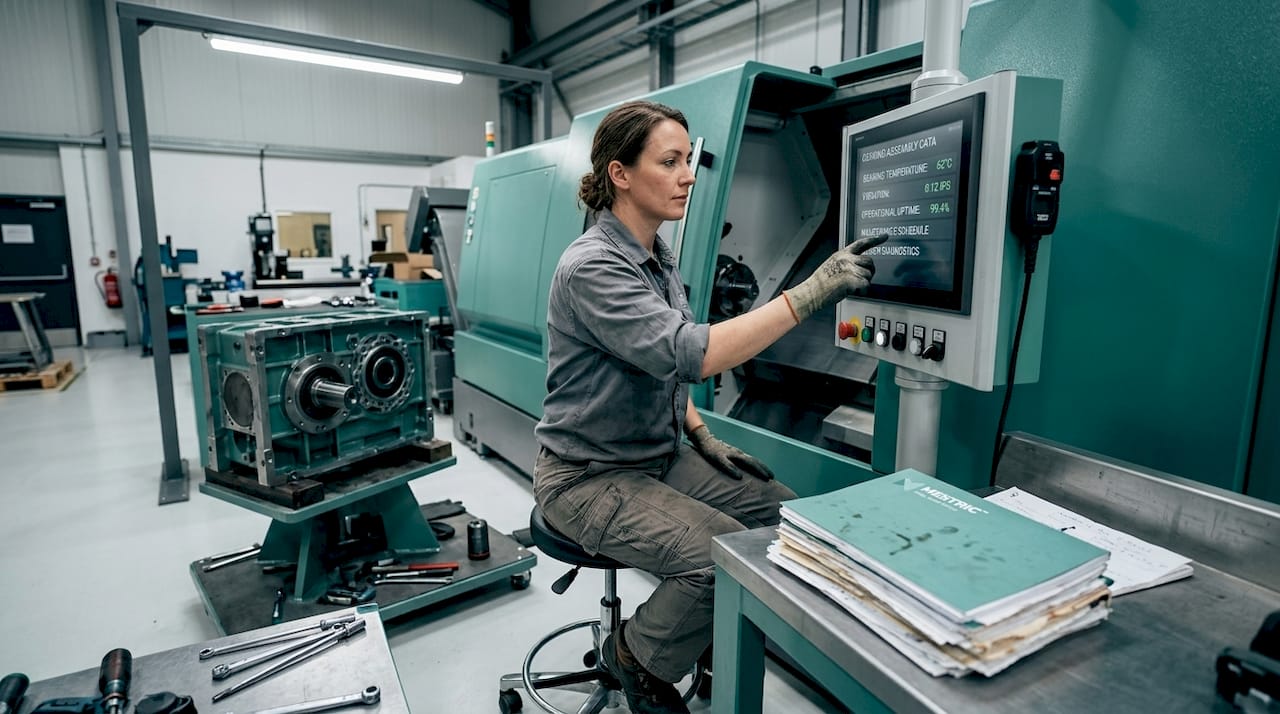
The table below illustrates how decision-making differs between traditional and real-time approaches across key operational areas:
| Decision area | Traditional approach | Real-time approach |
|---|---|---|
| Downtime response | Detected post-shift, resolved next day | Detected within minutes, resolved same shift |
| Quality control | End-of-line inspection, batch rework | In-process alerts, immediate correction |
| Shift planning | Based on historical averages | Based on current capacity and live demand |
| Maintenance scheduling | Calendar-based or reactive | Condition-based, triggered by live sensor data |
| Scrap reporting | Daily or weekly summaries | Continuous, linked to specific machines and operators |
These comparisons are not hypothetical. Production monitoring transformations in live manufacturing environments consistently show that faster decision cycles reduce cost, improve quality, and increase team accountability.
Real-time data also improves the following decisions directly:
The effect is a manufacturing environment that is continuously self-correcting, guided by factual, up-to-the-minute information rather than assumptions.
With the business impact established, the next step is selecting the right platform. Not every real-time tracking solution delivers the same results, and the wrong choice can create new problems rather than solving existing ones.
You broadly have three solution categories to consider:
| Solution type | Key strengths | Key risks |
|---|---|---|
| MES platform | Integrated, proven, scalable, user-friendly | Higher initial investment |
| Custom IoT dashboard | Highly flexible, tailored to specific needs | Long build time, maintenance burden |
| Legacy upgrade | Lower upfront cost, familiar environment | Data silos, limited real-time capability |
When evaluating any solution, apply the following criteria:
Risks to watch for include vendor lock-in, where proprietary data formats make it difficult to switch platforms later, and data silos, where information collected on the shop floor never connects with business intelligence or planning systems. You should also scrutinise any vendor’s claim of “real-time” capability. Some systems batch data every few minutes, which is not truly real-time in a high-speed production context.
Learning about streamlining manufacturing before committing to a platform helps you understand which processes need to change alongside the technology. Similarly, reviewing automation in tracking gives you a practical benchmark for what connected production environments can achieve. For a thorough overview of what good real-time production data looks like in practice, exploring documented implementations is time well spent.
Strokovni nasvet: Prioritise solutions with verified, quantified operational outcomes. A platform that has already helped manufacturers achieve $4.5M annual savings with documented improvements in downtime and scrap rates gives you far more confidence than one promising results without evidence.
Here is something most technology discussions omit. The software is the enabler, not the solution.
We have seen manufacturing operations invest in world-class real-time tracking platforms and still fail to achieve meaningful results. Not because the technology did not work, but because the organisation did not change. Data appeared on dashboards that nobody reviewed consistently. Alerts fired and were ignored. Reports were generated but never linked to action.
The manufacturers who achieve the most from real-time tracking share one characteristic: they build a culture of accountability around the data. Frontline team members are trained not just to use the system, but to understand why specific metrics matter and what actions to take when they move outside acceptable ranges. Supervisors review live data during shifts, not after them. Quality teams respond to in-process alerts rather than waiting for end-of-line results.
This is the uncomfortable truth about digital transformation in manufacturing. Technology creates the potential. People and processes realise it. Investing in workflow cost cut strategies alongside your tracking system is therefore not optional. It is essential.
The manufacturers who sustain performance gains over years, rather than months, are those who treat real-time tracking as a continuous improvement tool rather than a one-time implementation project. They revisit their processes regularly, link data insights directly to operational decisions, and champion learning at every level of the organisation. That operational ownership is the true competitive edge.
Ready to take the next step toward operational excellence?
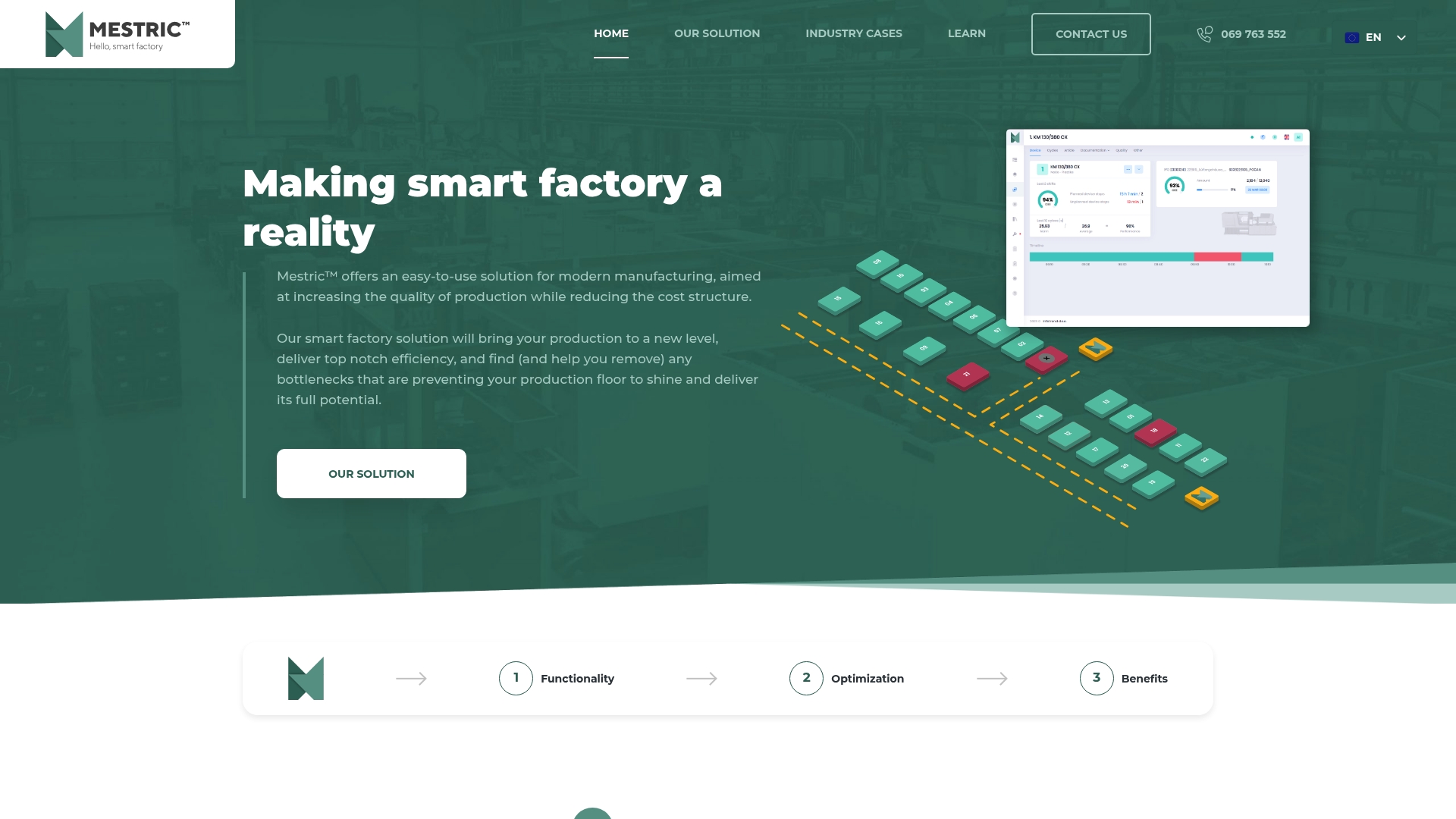
Mestric™ provides manufacturing teams with an accessible, powerful MES that connects directly with your equipment, giving you live visibility into every KPI that matters. From downtime and scrap rates to machine occupancy and cost analysis, all the data you need to make fast, confident decisions is available in one place.
Whether you are evaluating your first real-time tracking system or looking to replace a legacy platform that is no longer serving your operation, we have the resources to support your decision. Compare MES versus traditional approaches to understand the full financial and operational case. Explore our guidance on manufacturing efficiency 2026 for a forward-looking perspective on where production optimisation is heading. When you are ready to go deeper, our real-time production data guide walks you through what genuinely effective implementation looks like. Book an onsite demonstration and see how Mestric™ connects with your machinery in a real production setting.
Leading manufacturers have reported up to $4.5M annual savings with downtime reduced by 75% and significant improvements in equipment availability and scrap reduction. Returns of this scale are achievable when tracking is integrated with quality and process controls.
Equipment availability, unplanned downtime, and scrap rates see the largest gains, as demonstrated by documented manufacturing outcomes showing a rise in availability from 84% to 95% and a 60% reduction in scrap.
Most manufacturers notice meaningful operational improvements, particularly in downtime transparency and response speed, within the first few months of implementation, especially when staff are trained and processes are aligned with the new data flows.
Ensure the system integrates cleanly with your existing ERP and shop floor equipment, scales with your operation, and provides genuinely real-time data rather than batched updates. Reliable vendor support during and after implementation is equally important.
Yes. Real-time tracking enables in-process detection and correction of quality deviations, and documented cases show scrap reductions of up to 60% when tracking is combined with immediate corrective action workflows.


 069 763 552