

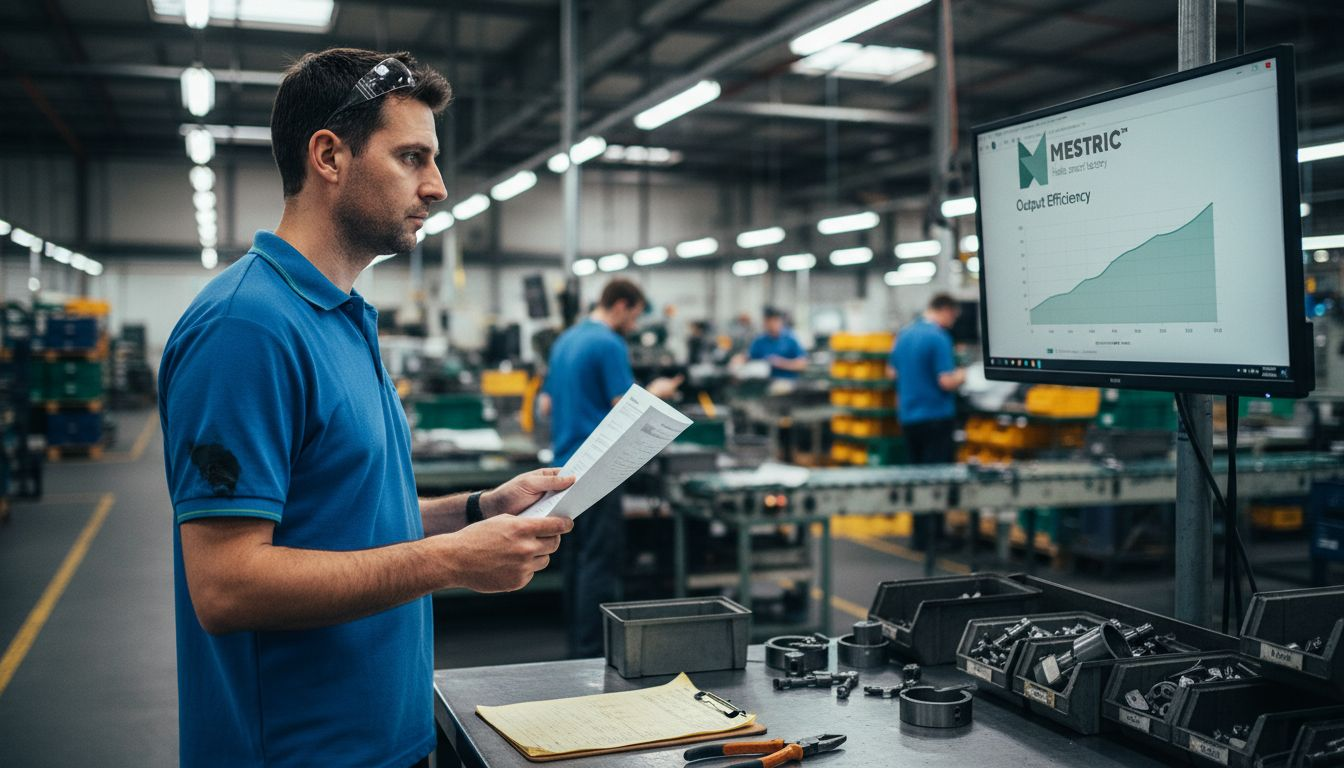
Every manufacturing plant manager knows that accurate production data is the bedrock of operational optimisation. Without a clear view of current performance, chasing improvements can mean wasted time and rising costs, especially for North American manufacturers competing on global standards. This guide outlines a practical path to digital transformation, showing how to extract real value from your production data, spot hidden bottlenecks, and take action for continuous efficiency gains. Embrace systematic data analysis as your foundation for measurable progress.
| Essential Insight | Clear Explanation |
|---|---|
| 1. Accurate Data Assessment is Crucial | Collecting comprehensive and precise production data is the foundation for identifying areas of optimisation and ensuring operational improvements. |
| 2. Identify Bottlenecks Systematically | Use various diagnostic techniques to map and analyse production inefficiencies, allowing manufacturers to pinpoint critical performance limitations. |
| 3. Implement Real-Time Monitoring | Establish systems for direct tracking of key performance indicators, enabling active management of manufacturing processes and immediate corrective actions. |
| 4. Employ AI for Process Optimisation | Leverage AI-driven techniques to analyse complex datasets, facilitating proactive management and continuous improvement of manufacturing operations. |
| 5. Rigorous Workflow Verification is Necessary | Regular evaluation of performance metrics and workflow adjustments ensures that operational changes lead to sustainable improvements and optimised production dynamics. |
Accurately assessing your manufacturing production data is the critical first step towards meaningful operational optimisation. Effective production data analysis allows manufacturers to understand current performance baselines and identify improvement opportunities.
To systematically evaluate your production performance, begin by gathering comprehensive data across multiple dimensions. Focus on collecting metrics that provide genuine insights into your manufacturing processes:
When collecting this data, precision matters. Use standardised measurement protocols and ensure data collection happens consistently across shifts and production lines. Digital Manufacturing Execution Systems can automate this process, reducing manual recording errors and providing real-time insights.
Reliable data forms the foundation of all meaningful manufacturing improvements.
Ensure your data collection method captures nuanced performance variations. Statistical process control techniques help distinguish between normal operational fluctuations and genuine performance issues that require intervention.
Pro tip: Invest in automated data collection systems that integrate directly with your production equipment to minimise human error and capture granular performance metrics.
Identifying manufacturing bottlenecks requires a systematic and data-driven approach to understanding where your production process experiences critical performance limitations. Detailed bottleneck analysis enables manufacturers to pinpoint exact locations where workflow interruptions and productivity losses occur.
To effectively map out inefficiencies, employ multiple diagnostic techniques that provide comprehensive insights into your manufacturing ecosystem:
Each technique offers unique perspectives on potential bottlenecks. Process flow mapping visualises the entire production journey, highlighting areas where tasks accumulate or stall. Time and motion studies reveal granular details about individual workstation performance, helping you understand precise moments where efficiency drops.
Manufacturing bottlenecks are rarely obvious without systematic, data-driven investigation.
Statistical analysis becomes crucial in distinguishing between normal operational variations and genuine performance constraints. Look for consistent patterns of delay, unexpected waiting times, or recurring equipment downtime that suggest systemic issues rather than isolated incidents.
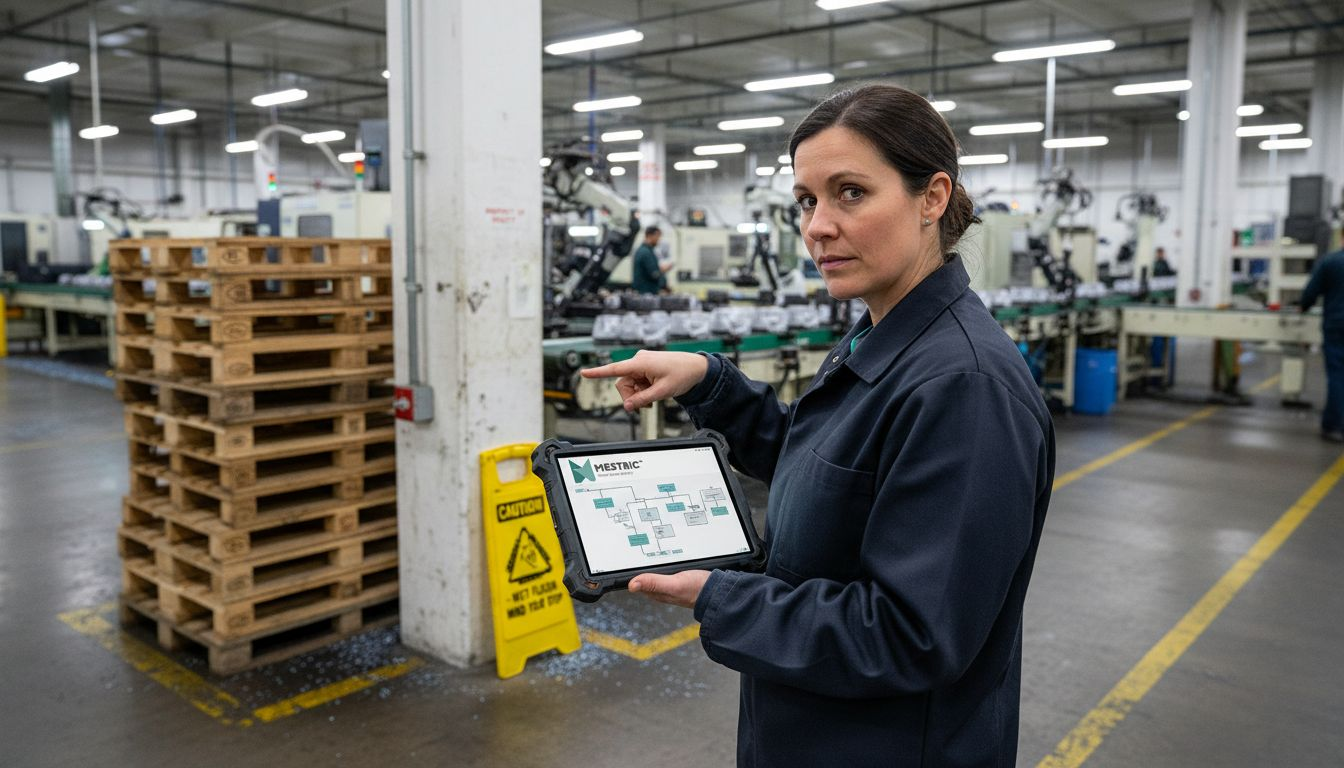
Pro tip: Cross-reference multiple data sources to validate bottleneck identification and avoid making improvements based on isolated observations.
Real-time performance monitoring transforms manufacturing operations by providing instantaneous insights into production processes. Advanced manufacturing analytics enable manufacturers to track critical metrics with unprecedented precision and responsiveness.
To successfully implement real-time monitoring, integrate these essential components across your production ecosystem:
Successful implementation requires a strategic approach that goes beyond mere data collection. Comprehensive monitoring means creating a holistic view of your manufacturing environment, capturing nuanced performance indicators that reveal underlying operational dynamics. Each sensor and data point becomes a window into your production’s real-time health and efficiency.
Real-time monitoring transforms data from a passive record into an active management tool.
Ensure your monitoring system provides actionable intelligence by configuring intelligent reporting mechanisms that highlight critical deviations, predict potential disruptions, and suggest immediate corrective actions. The goal is not just observation, but proactive performance management.
Pro tip: Select monitoring tools that offer customisable dashboards and integrate seamlessly with your existing manufacturing execution systems to maximise implementation effectiveness.
AI-powered process optimisation represents a transformative approach to manufacturing efficiency, enabling unprecedented insights and automated improvements. Advanced AI optimization techniques provide manufacturers with intelligent tools to analyse complex production datasets and recommend strategic operational enhancements.
To successfully implement AI-driven process optimisation, focus on these critical implementation strategies:
Successful AI implementation requires a holistic approach that combines technological sophistication with strategic understanding. Intelligent process mapping allows manufacturers to uncover hidden inefficiencies and create dynamic, self-optimising production environments. Each algorithmic iteration becomes an opportunity to refine and improve operational performance.
AI transforms manufacturing from reactive management to proactive performance engineering.
Ensure your AI implementation focuses on actionable intelligence, creating systems that not only analyse data but generate meaningful recommendations. The ultimate goal is developing a manufacturing ecosystem that continuously learns, adapts, and improves without constant human intervention.
Here’s a comparison of traditional and AI-powered manufacturing process optimisation approaches:
| Aspect | Traditional Optimisation | AI-Powered Optimisation |
|---|---|---|
| Data Handling | Periodic, often manual | Continuous, automated |
| Decision Making | Human-driven, slower | Algorithm-driven, rapid |
| Adaptability | Static, infrequent adjustments | Dynamic, self-improving |
| Issue Detection | Based on visible signs | Predicts hidden patterns earlier |
| Resource Use | Potential underutilisation | Maximises efficiency consistently |
Pro tip: Start with pilot programmes targeting specific, measurable processes to validate AI optimisation strategies before full-scale implementation.
Verifying and refining manufacturing workflows requires a systematic, data-driven approach that transforms initial improvements into sustainable operational excellence. Rigorous process verification techniques enable manufacturers to validate and continuously enhance their production strategies.
To effectively verify and refine your workflows, implement these critical evaluation strategies:
Successful workflow refinement demands more than simple data collection. Performance trajectory analysis helps manufacturers understand not just current results, but the underlying dynamics driving operational changes. Each measurement becomes an opportunity to understand deeper system interactions and potential optimisation pathways.
Continuous improvement is not a destination, but a deliberate and systematic journey.
Ensure your verification process focuses on holistic performance evaluation, looking beyond isolated metrics to understand comprehensive system dynamics. The goal is creating adaptive workflows that can self-adjust and improve with minimal human intervention.
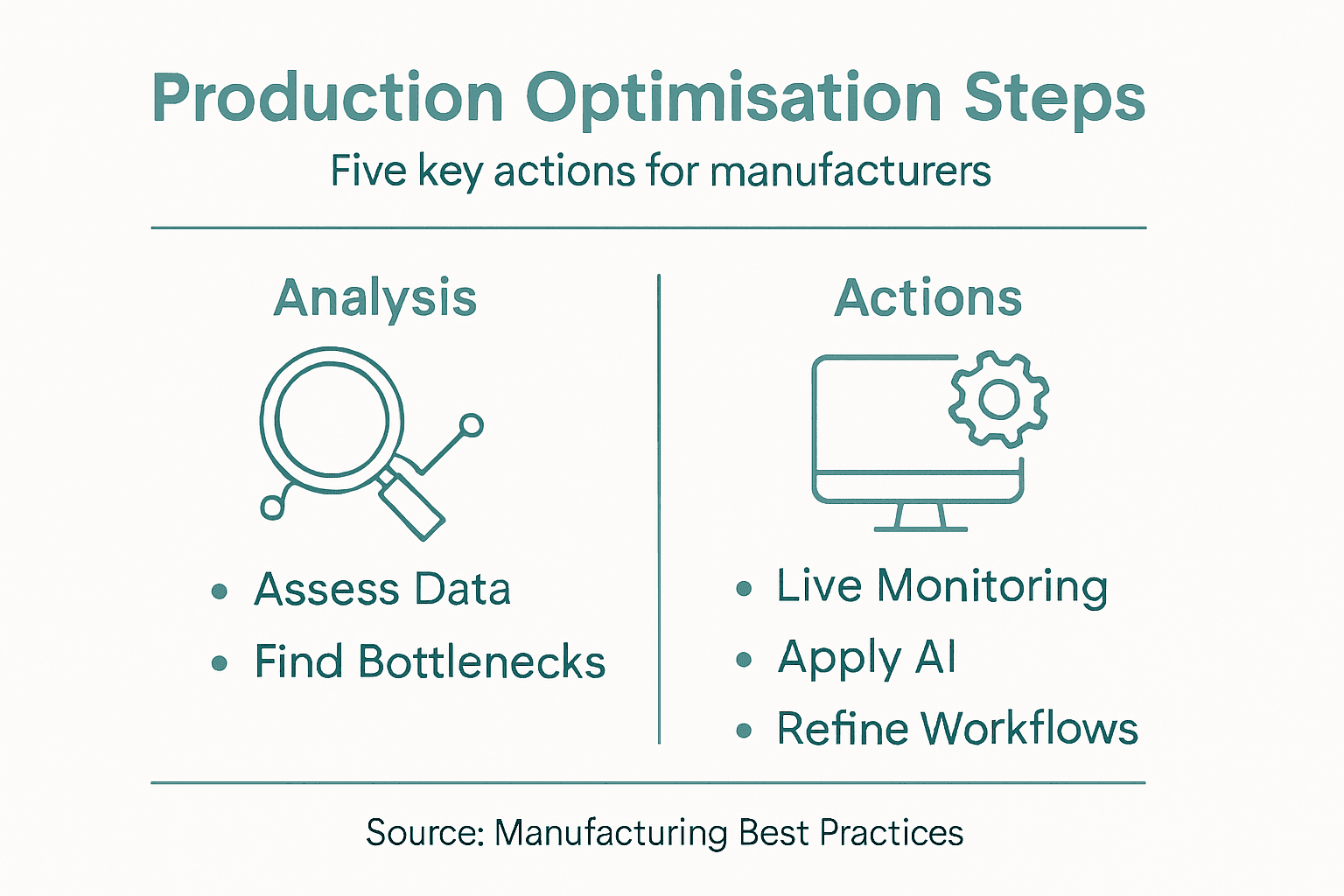
Below is a summary of essential evaluation strategies for refining manufacturing workflows:
| Strategy | Purpose | Example Outcome |
|---|---|---|
| Statistical Significance Testing | Validate that improvements are real | Confirms higher yield is not random |
| Benchmarking Frameworks | Compare against industry standards | Identifies performance shortfalls |
| Iterative Adjustment Protocols | Facilitate continuous fine-tuning | Sustained reduction in defects |
Pro tip: Implement a quarterly review cycle that systematically assesses workflow performance, allowing for incremental refinements based on accumulated operational data.
If you are striving to overcome bottlenecks, improve real-time performance monitoring, and embrace AI-powered optimisation as discussed in “Step by Step Production Optimisation for Manufacturers” then Mestric™ is your essential partner. Understanding the challenges of tracking accurate production data, identifying inefficiencies, and continuously refining workflows is key to operational excellence. With Mestric™, you gain access to a user-friendly Manufacturing Execution System (MES) that connects directly to your equipment, transforming raw data into actionable insights for quality improvement, cost reduction, and resource optimisation.
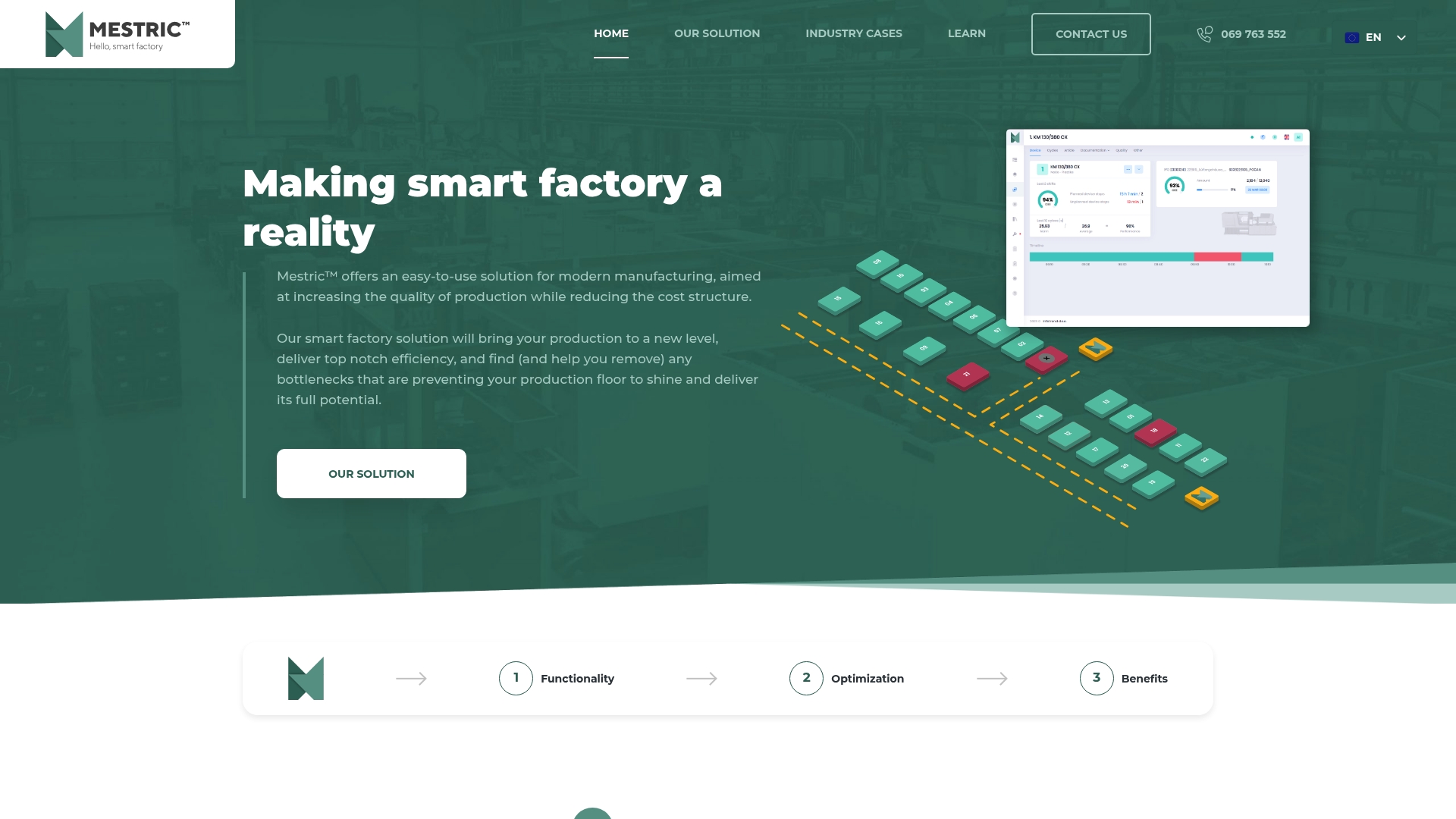
Experience how Mestric™ brings concepts like real-time performance monitoring and intelligent process control to life. Explore our resources in Learn - Mestric to deepen your knowledge while taking a strategic step towards transformation at Mestric™. Don’t wait to make manufacturing improvements that matter—request a demonstration today and see how modern technology can elevate your production workflows.
To assess your manufacturing production data accurately, gather comprehensive metrics such as machine performance rates, cycle times, and quality control measurements. Begin by standardising your data collection processes and automate where possible to minimise human error.
To identify bottlenecks, utilise techniques like process flow mapping and time and motion studies. Map the entire production process to highlight where delays occur, enabling you to target specific areas for improvement within a few weeks.
Implement real-time performance monitoring by integrating Internet of Things (IoT) sensors and centralised dashboard systems into your production environment. Focus on setting up automated alerts for critical deviations to enhance responsiveness and decision-making.
AI enables manufacturers to analyse complex datasets and provide automated, actionable insights for process optimisation. Start by integrating machine learning algorithms to create predictive models that help enhance efficiency over time.
Verify your workflow refinements by comparing performance metrics before and after implementation, and conducting statistical significance testing. Establish a systematic evaluation process to ensure that your improvements lead to measurable enhancements, aiming for regular assessments every quarter.
Adopt continuous improvement strategies by documenting incremental changes and establishing benchmarking frameworks. Create iterative adjustment protocols that allow your workflows to self-improve, aiming for sustainable operational excellence within an ongoing cycle of assessment.


 069 763 552