

TL;DR:
- Focus on trends that deliver measurable improvements in productivity, cost reduction, and quality.
- Autonomous operations and AI-driven smart factories are increasingly transforming manufacturing efficiency.
- Incremental technology adoption reduces risk and enhances sustainable operational improvements.
Manufacturing executives face a mounting challenge in 2026: rapid technology change, rising input costs, and pressure to deliver measurable efficiency gains simultaneously. The shift toward autonomous smart operations using AI-powered self-managing systems represents the leading edge of this transformation. Knowing which trends genuinely move the needle, and which are noise, is the decision that separates high-performing operations from those that stall. This article gives you practical criteria, evidence-backed trends, and clear guidance to help you act with confidence.
| Pont | Részletek |
|---|---|
| Autonomous operations dominate | Smart factories using AI and robotics are set to become the norm, driving broad efficiency gains. |
| Incremental adoption reduces risk | Manufacturing leaders favour step-by-step technology integration for stable, sustainable improvements. |
| Industrial robots transform workforce roles | Routine work is increasingly automated, freeing human talent for strategic exception management. |
| Productivity is on the rise | Manufacturing sectors continue recovering with positive output trends supported by new technologies. |
| Criteria-driven trend selection | Choosing trends based on measurable impact and operational fit is essential for successful transformation. |
With the challenge outlined, let us define what makes a manufacturing trend truly worth adopting. Not every technology that generates headlines deserves a line in your capital budget. The trends that matter most are those delivering measurable improvements in three core areas: productivity, cost reduction, and quality consistency.
When evaluating any new technology, apply these criteria before committing resources:
Balance optimism about what new tools can do with honest assessment of your current infrastructure. A system that works brilliantly in a greenfield factory may create friction in a plant running legacy machinery from two decades ago.
Use a structured optimisation checklist to score each trend against these criteria before committing. This removes subjective enthusiasm from the evaluation and keeps decisions grounded in operational reality.
Pro Tip: Prioritise trends where peer manufacturers in similar sectors have already demonstrated measurable results. Case studies and pilot data from comparable operations reduce your risk considerably. Your process improvement guide can also help you map how a new trend connects to specific bottlenecks in your current workflow.
Once criteria are set, autonomous operations and smart factories emerge as a leading trend. The concept is straightforward: AI-powered systems monitor equipment, analyse data streams, and make real-time adjustments without waiting for human instruction.
Here is how autonomous operations typically unfold in a production environment:
“The shift toward autonomous and smart operations uses AI-powered self-managing systems, sensors, analytics, and automated controls to minimise human intervention and improve efficiency.”
The scale of adoption is significant. Over 542,000 industrial robots were installed globally in 2024, roughly double the numbers seen in earlier cycles. This is not a niche experiment. It is an industry-wide movement.
Integrating these systems with legacy infrastructure remains the biggest practical hurdle. Older PLCs and proprietary machine protocols do not always communicate easily with modern AI platforms. Solutions such as laser automation efficiency demonstrate how targeted automation investments can deliver efficiency without requiring a wholesale infrastructure replacement.
Understanding the role of AI in manufacturing helps operations managers set realistic expectations. Human validation remains essential for edge cases, safety decisions, and situations where the AI encounters conditions outside its training data. The goal is to reduce routine burden on your team, not to remove human intelligence from the equation. If you want to go further, exploring how to optimise workflow with AI provides a practical framework for phased implementation.
Building on smart factories, the surge in robotics drives another layer of transformation. Industrial robots are no longer reserved for automotive giants. Mid-sized manufacturers across food processing, electronics, and precision engineering are integrating robotic cells into their lines at a growing pace.
| Metric | 2022 | 2024 |
|---|---|---|
| Global robot installations | ~270,000 | 542,000+ |
| Primary application | Assembly and welding | Quality, assembly, logistics |
| Workforce focus shift | Mixed manual and automated | Exception management |
| Waste reduction impact | Mérsékelt | Significant, AI-driven |
The productivity case for robotics is strong. AI-driven controls reduce material waste by catching deviations in real time. Robotic systems maintain consistency across shifts, eliminating the variability that manual processes introduce at scale. Reviewing available cost-saving methods shows that robotics consistently rank among the highest-return investments when deployed with clear production goals.
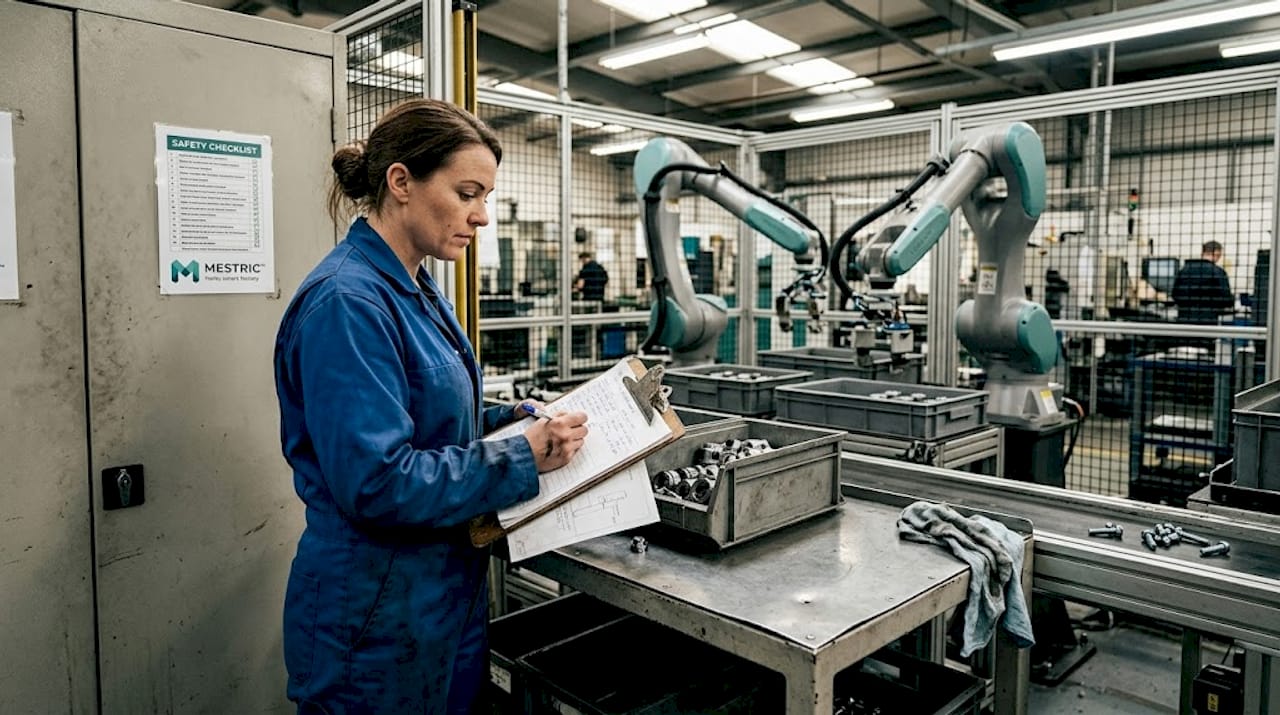
The workforce impact is real, but it is often mischaracterised. Robots do not simply replace workers. They redistribute effort. Your team moves away from repetitive physical tasks and toward monitoring, exception resolution, and process improvement. This shift demands upskilling, but it also creates more engaging roles that are easier to retain.
Key benefits your operation can expect from robotics integration:
Exploring laser trends 2026 highlights how specialised automation technologies are expanding into new manufacturing segments, broadening the range of operations that can benefit from robotic integration.
Pro Tip: Plan your workforce upskilling programme before the robots arrive, not after. Operators who understand the systems they oversee will resolve exceptions faster and contribute to continuous improvement far more effectively.
A smart MES solution connects robotic outputs with your broader production data, giving you visibility across the full line rather than isolated performance snapshots.
Adoption hurdles demand a careful approach, and incremental execution delivers measurable results. The manufacturing sector in 2026 sits in a genuinely complex position. Optimism about technology coexists with persistent operational pressures.
“Leaders are embracing incremental execution over sweeping changes, balancing technology investment with the realities of trade uncertainty and rising input costs.”
The data reflects this tension clearly. NAM’s survey shows 75% positive outlook among manufacturers, with projected sales growth of 3.8%. Yet the same survey records trade uncertainty affecting 70.6% of respondents and input cost pressures running at 4.1%. These are not conditions that favour betting everything on a single large-scale transformation.
| Approach | Risk level | Time to measurable ROI | Disruption to operations |
|---|---|---|---|
| Big-bang transformation | High | 18 to 36 months | Significant |
| Incremental deployment | Low to medium | 3 to 9 months | Minimal |
| Pilot-then-scale model | Low | 6 to 12 months | Contained |
The practical path forward looks like this:
This structured approach supports your step-by-step optimisation plan and reduces the risk of costly over-investment in technologies that may not fit your specific environment. Incremental adoption also allows your team time to build competence alongside the technology rather than being overwhelmed by simultaneous changes.
Focusing on workflow cost cuts at each stage keeps the programme grounded in financial reality, ensuring every phase of adoption pays for the next.
Reflecting on the trends covered, a clear pattern emerges. The manufacturers who extract the most value from technology are not those who adopt the most trends. They are those who adopt the right ones, in the right order, with a clear measurement framework.
Trend lists create a false sense of urgency. The fear of missing out on autonomous AI or the latest robotics platform can push teams into investments that are technically impressive but operationally premature. Shallow adoption, where technology is deployed without integrating it into workflow decision-making, produces disappointment and erodes internal appetite for future improvements.
Pragmatic execution outperforms trend-hopping every time. A strong digital foundation, including reliable real-time data, connected equipment, and trained staff, creates more lasting efficiency than any single emerging technology. Before you add the next layer, confirm the previous one is working as intended.
The criteria introduced at the start of this article are not just evaluation tools. They are a governance framework. Applying them consistently means your investment programme builds momentum rather than generating isolated wins that do not compound. Your process improvement best practices should sit at the centre of that framework, connecting each new technology to a defined operational goal.
The trends covered here are not abstract possibilities. They are actively shaping how competitive manufacturers operate right now, and the tools to act on them exist today.
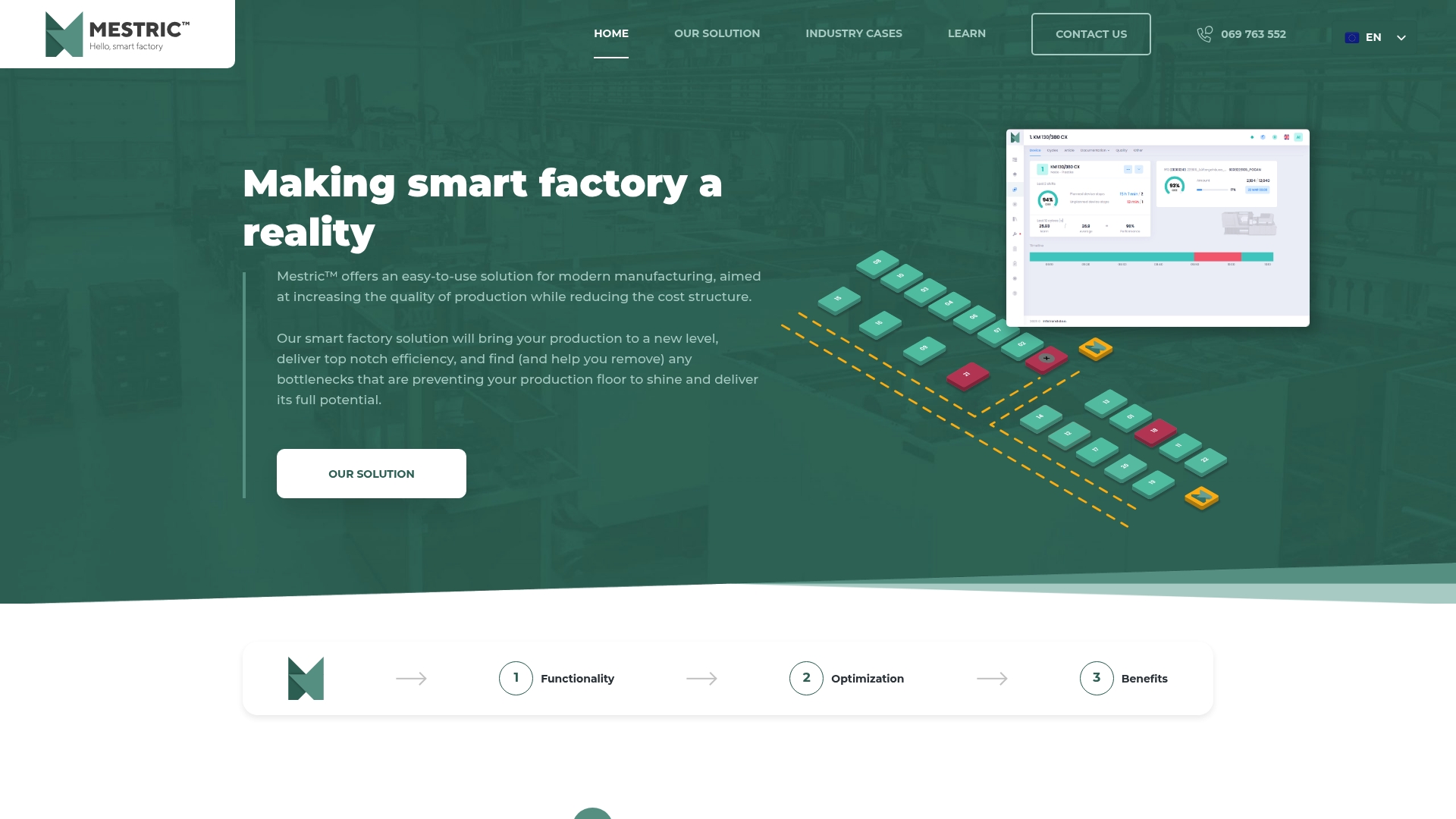
Mestric™ connects directly to the trends shaping 2026. From understanding AI’s role in efficiency to evaluating MES vs traditional manufacturing approaches, our platform gives production managers real-time visibility, AI-powered analytics, and the structured data needed to make confident decisions. If you are ready to streamline operations for efficiency, Mestric™ provides the foundation to do it incrementally, measurably, and with clear results at every stage.
The rise of autonomous smart operations powered by AI-driven self-managing systems leads the field, offering the greatest potential for reducing human intervention while increasing output consistency and efficiency.
Robots handle routine production tasks while workers shift focus to exception management, process oversight, and continuous improvement. This workforce transition requires planned upskilling but tends to create more engaging and sustainable roles.
Gradual rollout reduces operational risk and delivers measurable results at each stage. With trade uncertainty affecting over 70% of manufacturers, a pilot-then-scale approach protects cash flow while building internal capability.
Recent data shows 3.3% productivity growth across Q1 to Q3 2025, and technology adoption through AI, robotics, and MES platforms is positioned to sustain and build on that trajectory through 2026.


 069 763 552