

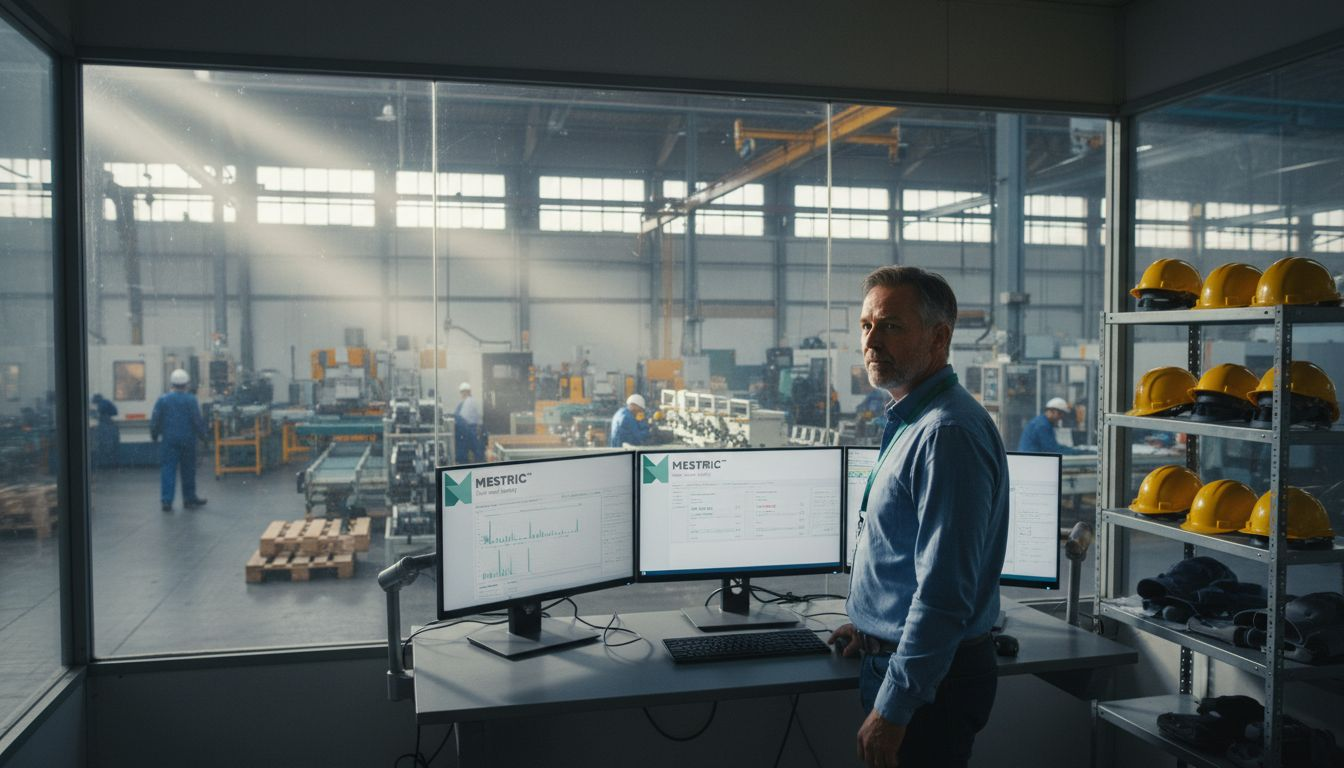
Manufacturing leaders face mounting pressure to optimise operations whilst 70% of manufacturers still rely on manual data collection, creating substantial inefficiencies. Real-time visibility into production processes has shifted from competitive advantage to operational necessity. This article explains why streamlining production operations through Manufacturing Execution Systems (MES) is essential for maintaining profitability and meeting market demands in 2026.
| Pont | Részletek |
|---|---|
| Manual processes cost efficiency | Seventy percent of manufacturers still use manual data entry, reducing visibility and slowing response times. |
| Real-time visibility is essential | Instant access to production data enables rapid identification of bottlenecks and operational issues. |
| MES design complexity matters | Oversimplified routing logic forces manual workarounds that undermine system authority and data integrity. |
| Market adoption accelerating | Global MES investment projected to reach $25.78 billion by 2030, reflecting widespread recognition of value. |
| Operator involvement drives success | Early engagement with shop floor teams ensures practical system design and improves adoption rates. |
Manufacturing operations today face unprecedented pressure from multiple directions. Shorter lead times, tighter profit margins, and increasing customisation demands require precision that manual processes simply cannot deliver. Yet 70% of manufacturers continue using manual data collection despite these mounting challenges. This reliance on spreadsheets, paper forms, and disconnected systems creates blind spots that prevent managers from identifying problems until they’ve already impacted production schedules and costs.
The shift towards real-time visibility as an operational necessity reflects fundamental changes in market expectations. Customers demand shorter delivery times whilst expecting consistent quality. Regulatory requirements grow more stringent, requiring detailed traceability that manual systems struggle to provide. Production managers need instant access to accurate data about machine performance, quality metrics, and work order progress to make informed decisions quickly.
Modern MES platforms address these challenges by connecting directly to manufacturing equipment and providing centralised visibility across the entire production floor. Real-time production monitoring enables managers to spot bottlenecks as they emerge rather than discovering them through delayed reports. When a machine experiences unexpected downtime or quality parameters drift outside acceptable ranges, automated alerts ensure immediate response rather than costly delays.
Key operational pressures driving MES adoption include:
“The manufacturing landscape has fundamentally changed. Real-time data isn’t a luxury anymore; it’s the foundation for staying competitive and profitable in increasingly demanding markets.”
MES technology transforms production efficiency through sophisticated work order dispatch, routing, and sequencing capabilities. Rather than relying on supervisors to manually determine which jobs run where and when, MES systems use configurable logic to optimise scheduling based on multiple factors. These include machine capabilities, current workload, material availability, and operator skills. The system automatically directs work to appropriate stations whilst maintaining visibility throughout the entire production process.
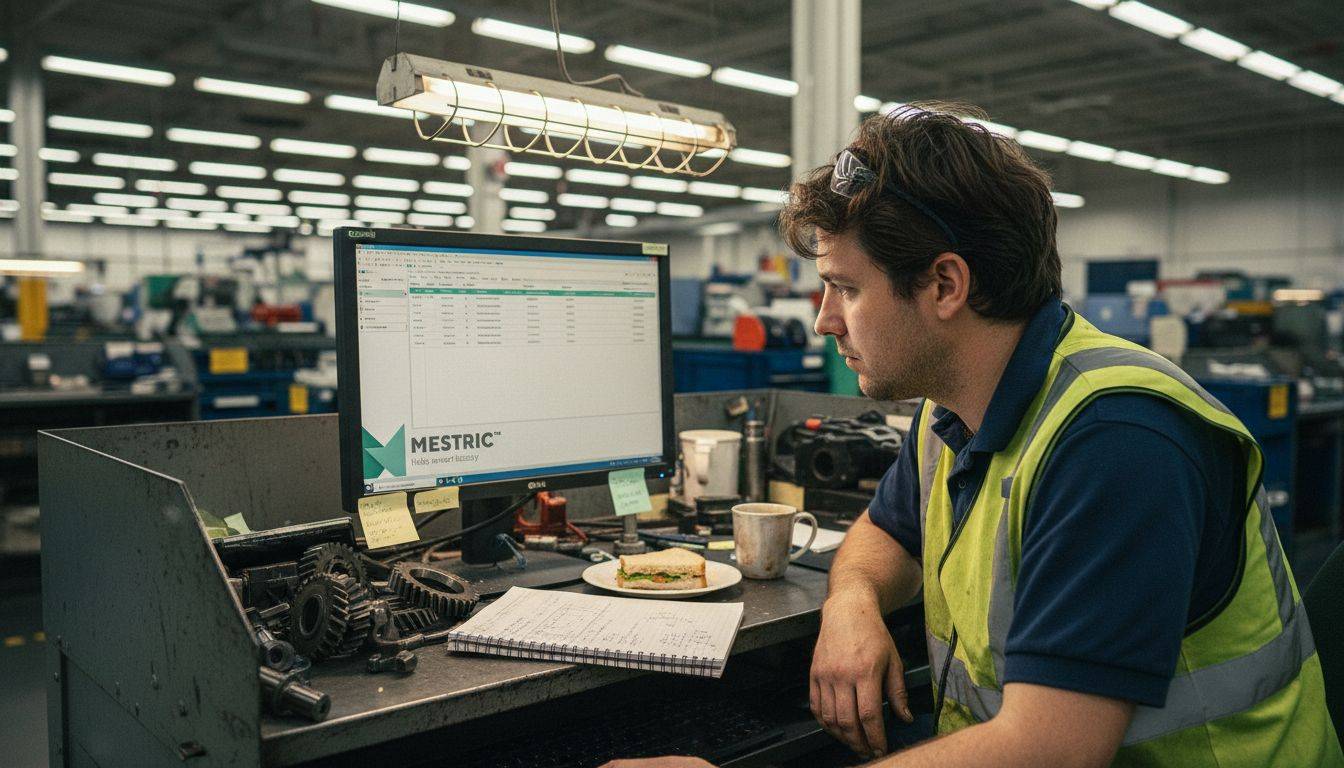
Effective MES implementations improve work order dispatch by accurately representing how manufacturing plants actually operate rather than imposing idealised workflows. Real production environments involve complexity that simple linear routing cannot capture. Parts may require rework, alternative work centres might handle overflow, and parallel operations often run simultaneously. MES systems that model these realities enable operators to follow established procedures whilst maintaining complete data integrity.
Controlled resequencing capabilities prove particularly valuable when production priorities shift. Rather than forcing supervisors to manually track changes across multiple systems, MES platforms provide structured methods for adjusting work order sequences whilst preserving traceability. This ensures that quality records, material consumption tracking, and performance metrics remain accurate even when production plans change. The system maintains a complete audit trail showing why priorities shifted and how resources were reallocated.
Implementing MES successfully requires careful attention to several critical factors:
Pro Tip: Involve operators and supervisors during MES design rather than treating them as end users who simply receive a finished system. Their practical knowledge of production realities ensures the system supports actual work patterns instead of creating new frustrations.
The operational benefits extend beyond simple automation. MES tools for manufacturing efficiency enable data-driven continuous improvement by capturing detailed information about every production run. Managers can analyse patterns showing which factors contribute to quality issues, where bottlenecks consistently emerge, and how different operators achieve varying performance levels. This insight drives targeted improvements rather than broad initiatives that may miss root causes.
Integration with other manufacturing software types amplifies MES value. When production execution systems connect to ERP platforms, material requirements planning becomes more accurate because it reflects actual consumption rather than theoretical standards. Quality management systems receive real-time data about test results and inspection findings, enabling faster response to emerging issues. Maintenance systems can trigger preventive work based on actual equipment usage rather than arbitrary schedules.
Oversimplified MES routing logic creates operational friction that undermines system value and user trust. When the configured system cannot accommodate normal production scenarios, operators develop workarounds. These might include manual notes on paper forms, offline approval processes, or simply ignoring the system for certain decisions. Each workaround represents a point where MES system authority erodes and data integrity suffers.
Consider a facility where parts occasionally require rework after inspection. If the MES only models a simple linear flow from machining to inspection to shipping, operators face a dilemma when rework becomes necessary. They must either force the part through an inappropriate routing sequence or handle the rework outside the system entirely. Neither option maintains accurate data about actual production costs, cycle times, or resource consumption.
Robust MES design anticipates these realities by modelling alternate work centres, parallel operations, and potential rework loops. This doesn’t mean creating unnecessarily complex routing for simple processes. Rather, it requires understanding which variations actually occur in practice and ensuring the system can handle them gracefully. The goal is maintaining complete visibility even when production doesn’t follow the ideal path.
| Simplified MES Approach | Comprehensive MES Design | Impact on Operations |
|---|---|---|
| Single linear routing path | Multiple routing options reflecting actual practice | Operators trust system guidance; fewer workarounds needed |
| Manual override for exceptions | Structured exception handling with proper authorisation | Complete audit trail maintained; data integrity preserved |
| Fixed work centre assignments | Alternate work centres for capacity management | Flexibility to balance workload without losing visibility |
| No rework accommodation | Configured rework loops with quality tracking | Accurate cost and cycle time data for continuous improvement |
The table illustrates how design choices fundamentally affect whether MES becomes a trusted operational tool or an obstacle that people work around. Systems that reflect actual manufacturing complexity support efficient operations whilst maintaining the data quality needed for meaningful analysis.
Pro Tip: Map current production flows including all the unofficial workarounds and exceptions before designing MES routing logic. These “exceptions” often represent normal operating conditions that the system must accommodate rather than edge cases to ignore.
Parallel operations present another design challenge requiring careful consideration. Some manufacturing processes involve tasks that can occur simultaneously rather than sequentially. Assembly operations might include subassembly work happening in parallel with main line activities. Quality testing could run concurrently with documentation preparation. MES design best practices ensure these parallel activities receive proper representation so the system accurately tracks progress and resource allocation.
Material tracking adds further complexity that oversimplified systems struggle to handle. Real production environments involve material substitutions when preferred components aren’t available, lot tracking requirements for traceability, and scrap recording that affects inventory accuracy. MES platforms must capture these details without creating administrative burden that slows production. The system should make it easy for operators to record what actually happened rather than forcing them to pretend reality matches the original plan.
Manufacturers implementing comprehensive MES solutions report substantial improvements across multiple performance dimensions. Reduced lead times emerge as one of the most significant benefits. When production teams have instant visibility into work order status, material availability, and equipment capacity, they can make faster decisions about priorities and resource allocation. This responsiveness translates directly into shorter customer delivery times and improved service levels.
Cost reduction represents another major advantage. Automated data collection eliminates labour spent on manual recording and reduces errors that cause rework or scrap. Better visibility into actual production costs enables more accurate pricing decisions and identifies opportunities for process improvement. Energy monitoring capabilities help facilities optimise consumption during peak rate periods. Maintenance scheduling based on actual equipment usage rather than arbitrary intervals reduces both planned and unplanned downtime.
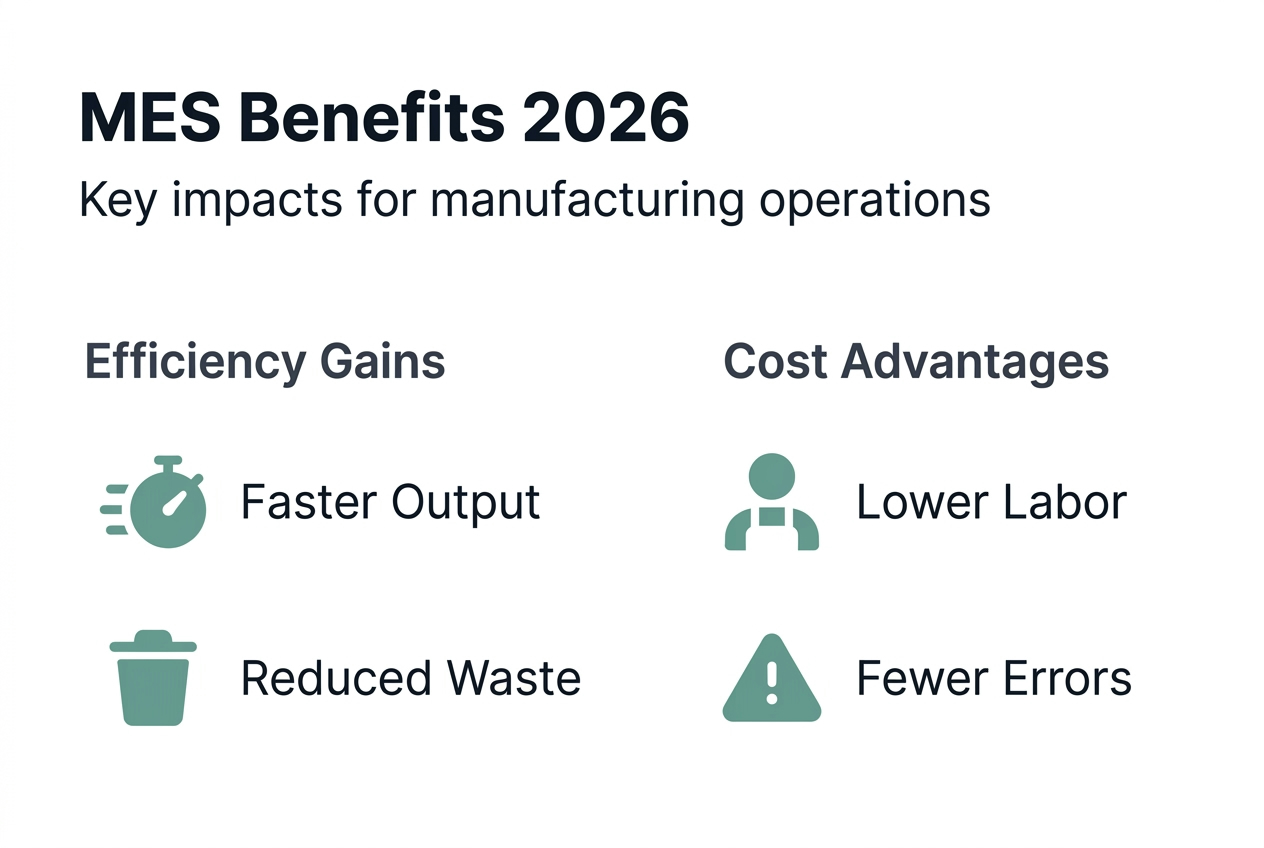
A global MES market reaching $25.78 billion by 2030 with 10.1% compound annual growth rate demonstrates widespread recognition of these benefits. Alternative forecasts project even stronger growth, with the MES market hitting $41.78 billion by 2032. This investment surge reflects manufacturers’ understanding that streamlined operations provide competitive advantage in increasingly demanding markets.
| Benefit Category | Typical Impact Range | Key Contributing Factors |
|---|---|---|
| Lead time reduction | 15-30% | Real-time visibility, automated scheduling, faster decision-making |
| Quality improvement | 20-40% fewer defects | Immediate deviation detection, traceability, statistical process control |
| Inventory optimisation | 10-25% reduction | Accurate consumption tracking, better demand visibility, lot management |
| Labour productivity | 10-20% increase | Reduced manual data entry, guided workflows, instant information access |
| Operational costs | 5-15% decrease | Energy optimisation, preventive maintenance, reduced rework and scrap |
These improvements compound over time as manufacturers develop expertise in using MES data for continuous improvement. Initial implementations typically focus on achieving basic visibility and establishing reliable data collection. Subsequent phases leverage accumulated historical data to identify patterns, optimise parameters, and predict potential issues before they impact production.
Manufacturers gain operational agility that enables rapid response to changing conditions:
The ability to streamline manufacturing processes through integrated MES platforms positions companies for future competitive challenges. Market demands will continue evolving towards greater customisation, faster delivery, and stricter quality requirements. Manufacturers with robust digital foundations can adapt more readily than those still relying on manual systems and disconnected data sources.
Advanced capabilities like AI-powered optimisation and predictive analytics build upon the data foundation that MES platforms provide. These technologies require consistent, accurate, real-time information about production operations. Facilities that have already implemented comprehensive MES can more easily adopt emerging innovations, whilst those starting from manual processes face much longer transformation timelines.
A Gyártásoptimalizálási útmutató demonstrates how systematic approaches to improvement leverage MES capabilities. Rather than relying on intuition or isolated initiatives, manufacturers can use data-driven methods to identify highest-impact opportunities and measure results objectively.
Understanding the principles behind effective production streamlining represents an important first step. Implementing these concepts in your facility requires tools designed specifically for manufacturing environments. Mestric offers comprehensive MES capabilities that connect directly to equipment, provide real-time visibility, and support the complexity of actual production operations.
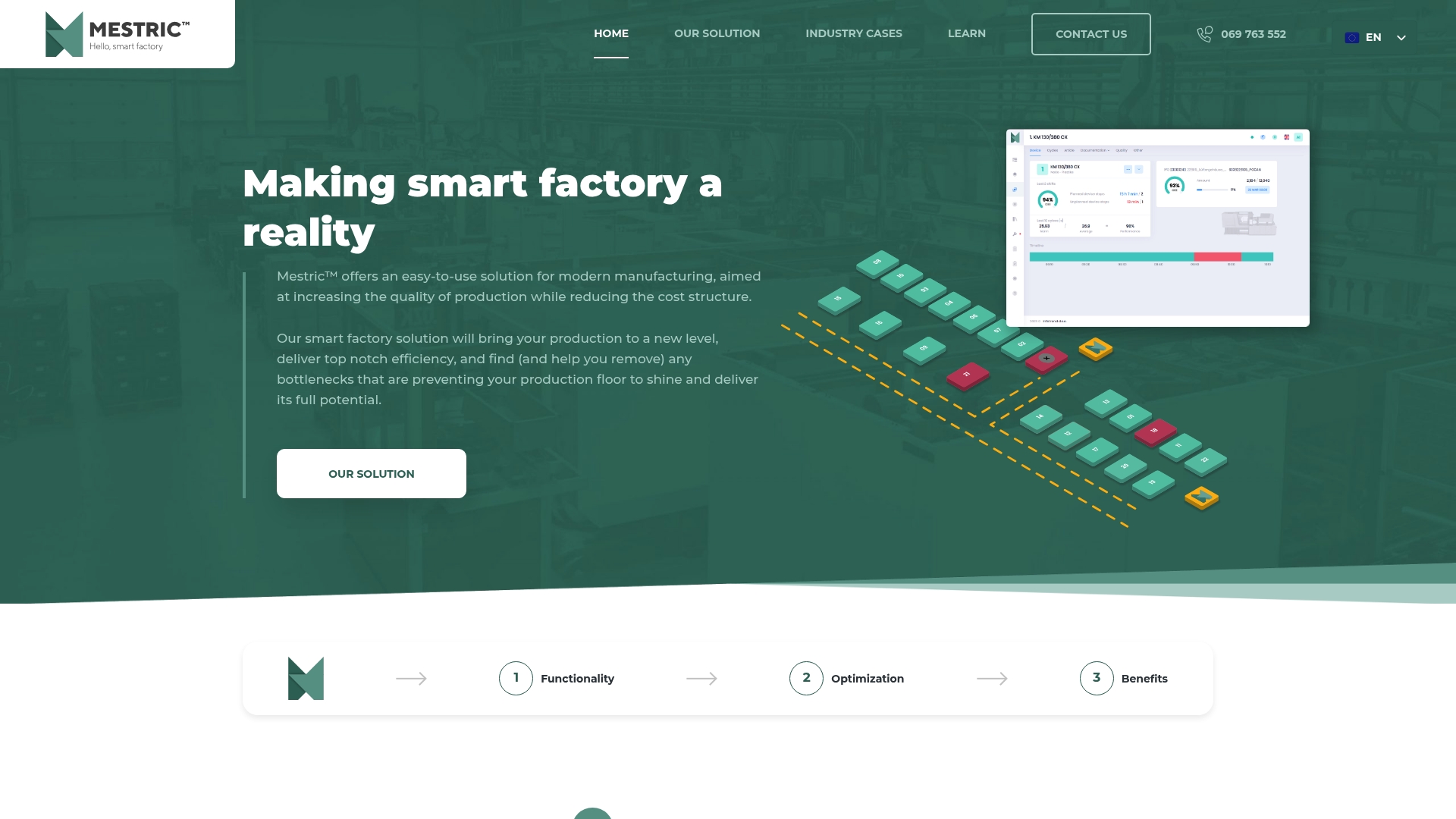
Our platform addresses the challenges discussed throughout this article, from accurate routing representation to flexible exception handling. The system captures detailed data automatically whilst providing operators with intuitive interfaces that support rather than hinder their work. Production managers gain instant access to performance metrics, quality trends, and operational insights that enable informed decision-making.
Explore our comprehensive guide to streamlining manufacturing processes for practical implementation strategies. Learn about different manufacturing software types and how they integrate to create complete operational visibility. Discover proven approaches to manufacturing execution system efficiency that deliver measurable results. Mestric helps manufacturers transform operational performance through technology designed for real production environments.
Real-time visibility enables immediate identification of bottlenecks, quality deviations, and equipment issues before they significantly impact production schedules or costs. Manual data collection creates delays between when problems occur and when managers learn about them, often making issues much more expensive to resolve. Instant access to accurate production data supports rapid decision-making that maintains efficiency and prevents small problems from becoming major disruptions.
MES platforms improve routing by accurately representing actual plant conditions including alternate work centres, parallel operations, and rework paths. This alignment with reality enables operators to follow system guidance confidently rather than developing workarounds. The system maintains complete visibility and data integrity even when production deviates from ideal linear flows, ensuring accurate tracking of costs, cycle times, and resource consumption.
Oversimplified routing that ignores production realities represents the most frequent design error. When systems cannot accommodate normal variations like rework loops or alternate work centres, operators resort to manual notes and offline approvals that undermine data integrity. This erosion of system authority reduces user trust and limits the value organisations can extract from their MES investment.
Early involvement ensures the system reflects actual work patterns rather than imposing theoretical workflows that create operational friction. Operators possess detailed knowledge about production realities that designers may miss without direct engagement. Their input during configuration prevents expensive redesign work later whilst building ownership that improves adoption rates and system utilisation.
Initial visibility improvements typically emerge within weeks of implementation as real-time data becomes available. Measurable efficiency gains usually appear within 3-6 months as teams develop proficiency using the system. Substantial performance improvements accumulate over 12-18 months as historical data enables sophisticated analysis and continuous improvement initiatives target high-impact opportunities identified through MES insights.


 069 763 552