

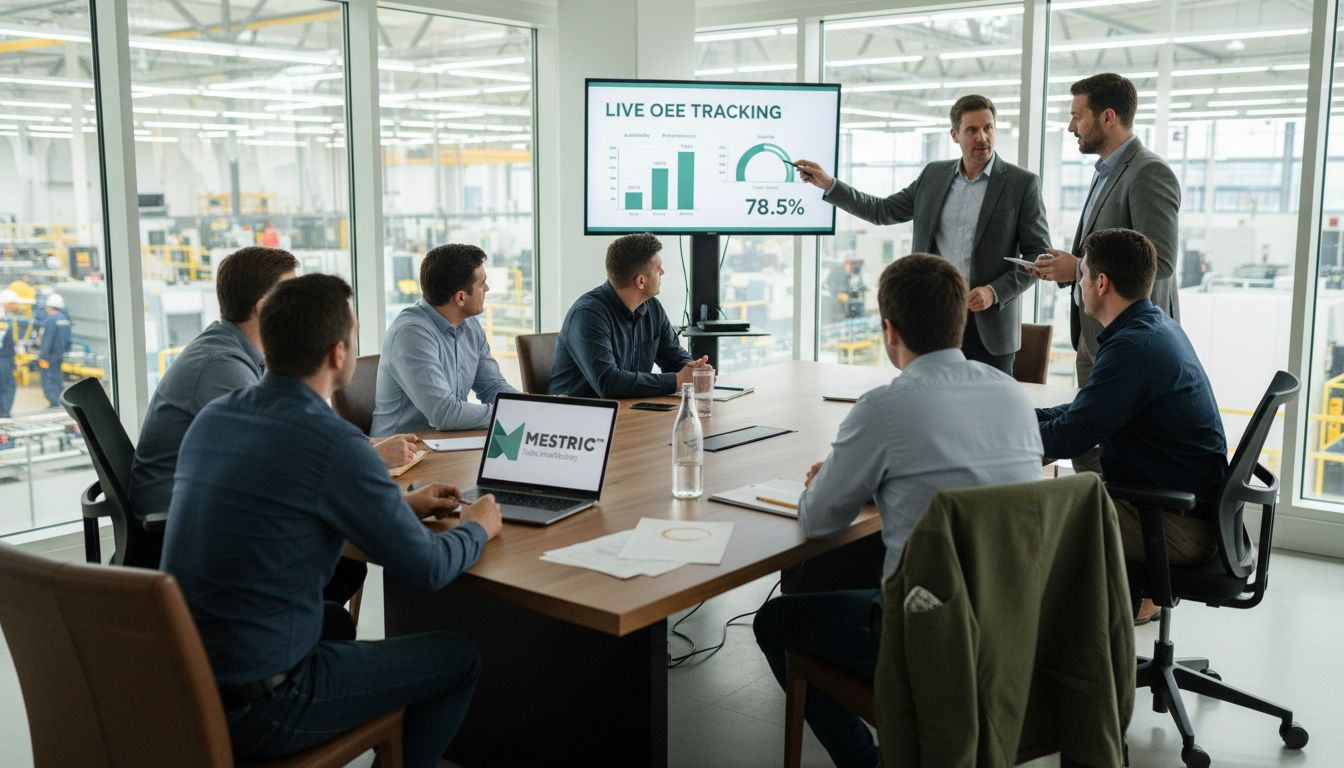
Manufacturing plants across North America lose millions annually due to unplanned downtime and production inefficiencies stemming from poor real-time visibility. AI-integrated workflow optimisation reduces downtime by 45% and drastically improves product quality. This guide explains how to implement real-time tracking and AI tools effectively, from infrastructure prerequisites through dynamic optimisation and measurable outcomes.
| Point | Details |
|---|---|
| AI predictive maintenance | Cuts unplanned downtime by 45% and saves millions annually through early fault detection. |
| AI vision systems | Reduce defects by over 60% with 99% accuracy, cutting scrap and customer returns dramatically. |
| Real-time tracking | Boosts OEE and accelerates decision-making by providing live visibility of production KPIs. |
| Prerequisites essential | Clear KPIs, cross-functional teams, and digital infrastructure ensure successful AI adoption. |
| Common pitfalls | Avoid unclear goals, data silos, and workforce resistance through proper planning and training. |
Before deploying AI-driven workflow optimisation tools, you must establish the foundational infrastructure and organisational readiness. Digital infrastructure including IoT sensors and PLC connectivity forms the backbone of real-time data acquisition. Without this connectivity, AI models cannot access the production data necessary for analysis.
Baseline KPIs such as OEE, downtime, and quality metrics must be clearly defined. You need measurable targets to evaluate AI performance against existing operations. Forming a cross-functional team including operations, maintenance, IT, and quality assurance ensures alignment across departments and prevents data silos.
Establishing clear ROI goals and performance success criteria is essential to avoid costly pilot failures. Only 24% of manufacturers scaled generative AI because many lacked defined success metrics from the outset. Without measurable objectives, projects drift and budgets evaporate.
Key readiness steps include:
Readiness ensures successful AI adoption and project scalability. When you lay this groundwork properly, you avoid the frustration of stalled pilots and wasted investment. Manufacturing efficiency workflow cost cuts depend on this preparation phase. The step by step production optimisation guide offers detailed checklists to validate your plant’s readiness before moving forward.
Real-time production tracking systems provide the live visibility you need to make informed decisions quickly. Install IoT sensors on critical machines and connect legacy equipment using PLC/OPC-UA connectors. This connectivity enables continuous data streaming from the production floor to centralised dashboards.
Deploy dashboards showing live OEE, downtime, and quality KPIs with refresh rates measured in seconds, not hours. Real-time AI process optimisation relies on five pillars including data acquisition and edge computing. Immediate visibility allows operators to respond to deviations before they cascade into larger problems.
Set up automated alerts for anomalies and performance deviations to prompt immediate action. When a machine’s vibration signature changes or temperature spikes, alerts notify maintenance teams instantly. AI-driven workflow automation accelerates approvals and reduces downtime by triggering corrective workflows automatically.
Benefits include improved operational visibility, faster decision-making, and foundational data for AI analysis. You transform from reactive fire-fighting to proactive management. Real-time production monitoring creates the data streams AI models need to identify patterns and predict failures.
Implementation steps:
Pro Tip: Prioritise connecting critical bottleneck machines first to maximise impact and accelerate ROI. You’ll see faster payback and build momentum for broader rollout.
| Metric | Before Real-Time Tracking | After Real-Time Tracking |
|---|---|---|
| OEE Visibility | Updated daily or weekly | Live updates every 5-10 seconds |
| Downtime Detection | Discovered hours later | Alerted within minutes |
| Decision Speed | Slow, data-lagged | Immediate, data-driven |
| Data Granularity | Aggregated shift totals | Machine-level, second-by-second |
Automating production tracking in automotive and other industries proves that real-time systems cut waste and improve throughput. Once tracking is live, you’re ready to layer AI tools on top of this data foundation.
AI-powered predictive maintenance and computer vision systems enhance workflow efficiency by reducing unplanned downtime and improving defect detection accuracy. Use machine learning models analysing sensor data to predict early fault signs and prevent failures. These models learn normal operating patterns and flag deviations that signal impending breakdowns.
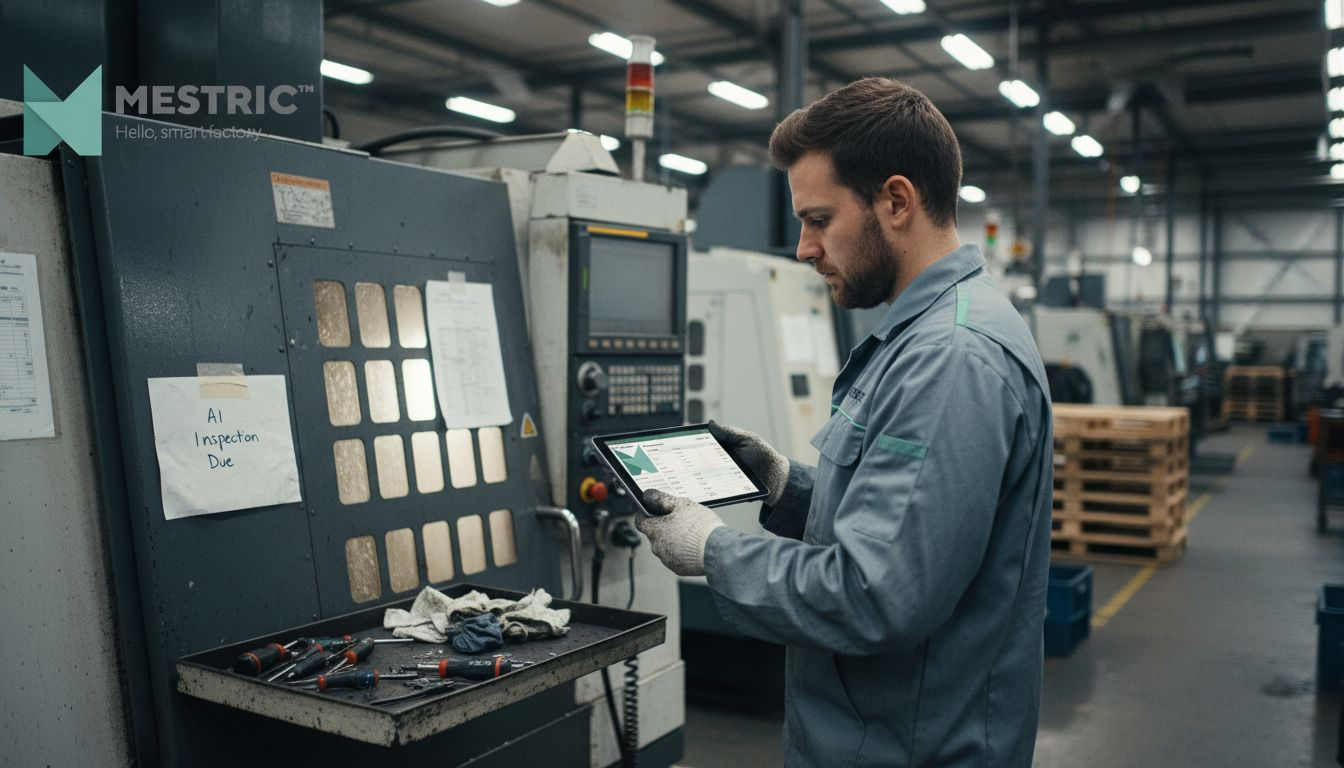
Deploy AI vision systems for defect detection with over 99% accuracy to reduce scrap and returns. Machine vision AI detects defects with 99.2% accuracy and reduces customer returns by 63%. Vision systems inspect products at speeds impossible for human operators, catching microscopic flaws in real time.
Automate alerts and quality deviation responses based on AI triggers for faster corrective actions. When a defect pattern emerges, the system can halt production, notify quality teams, and log the incident for root cause analysis. This automation prevents defective batches from progressing downstream.
AI-powered predictive maintenance reduces downtime by 45% and saves $27 million annually at facilities like GE’s plants. Compare this to traditional reactive maintenance, where you only address failures after they occur, often during critical production runs.
| Approach | Downtime Impact | Cost Profile | Defect Detection |
|---|---|---|---|
| Reactive Maintenance | High, unplanned outages | Emergency repairs expensive | Manual inspection, 85-90% accuracy |
| Scheduled Maintenance | Moderate, planned but rigid | Routine costs, some unnecessary | Manual inspection, 85-90% accuracy |
| Predictive Maintenance (AI) | 45% reduction in unplanned downtime | Optimised, targeted interventions | AI vision 99.2% accuracy |
Key integration steps:
Pro Tip: Regularly validate AI models with fresh production data to maintain accuracy and avoid false alarms. Models drift over time as equipment ages or processes change, so continuous retraining is essential.
The role of AI in manufacturing extends beyond maintenance to quality control, inventory optimisation, and workforce safety. Production quality monitoring becomes proactive rather than reactive, catching issues before they reach customers.
AI dashboards and analytics identify bottlenecks and enable automated workflow adjustments to improve efficiency, throughput, and resource allocation. Use AI dashboards to detect bottlenecks and conduct Pareto analysis of production issues. These dashboards visualise where delays occur most frequently, allowing you to focus improvement efforts where they matter most.
Automate routine work orders and approvals triggered by AI notifications to speed workflow. When a machine requires maintenance, the system generates a work order, assigns it to the appropriate technician, and tracks completion automatically. AI-driven workflow automation accelerates approvals and reduces downtime, enabling lean manufacturing principles.
Continuously monitor OEE, downtime, and quality metrics to validate improvements. AI systems track these KPIs in real time, comparing current performance against historical baselines and targets. You see immediately whether changes deliver the expected benefits.
Adjust resource allocations dynamically according to AI recommendations based on current conditions. If demand surges for a specific product, AI can suggest rebalancing labour and machine hours to meet delivery commitments without overtime penalties.
Advantages of dynamic AI workflow optimisation include:
Pro Tip: Regularly review AI-generated insights with cross-functional teams to ensure alignment. AI recommendations are only valuable when operations, maintenance, and quality teams understand and act on them collaboratively.
Streamlining manufacturing processes requires this continuous feedback loop between AI insights and human expertise. Manufacturing efficiency workflow cost cuts materialise when you empower teams to act on AI recommendations quickly and confidently.
Frequent errors in AI adoption can derail projects and waste significant investment. Failing to define clear success metrics leads to wasted investment and project failure. Manufacturers waste $380,000 on AI pilots without defined success criteria, resulting in rapid shutdowns. Without measurable goals, you cannot evaluate whether AI delivers value or justify continued funding.
Data silos caused by siloed teams limit AI effectiveness; integration is essential. When operations, quality, and maintenance use separate systems that don’t communicate, AI models lack the complete picture needed for accurate predictions. Breaking down these silos through integrated platforms is critical.
Workforce resistance can be mitigated by involving engineers early and providing training. Engineers may resist AI fearing job loss, but AI actually augments their problem-solving capabilities. When you involve floor staff in pilot design and show how AI makes their work easier, adoption accelerates.
Avoid over-automation that removes critical human judgement; maintain manual override points. AI should support decisions, not remove human expertise from the loop. Complex situations requiring contextual knowledge still need human intervention.
Common mistakes and corrective actions:
The manufacturing optimisation checklist helps you avoid these pitfalls systematically. Understanding the role of AI in manufacturing clarifies where AI adds value and where human expertise remains irreplaceable.
Key performance indicators quantify the benefits of AI-driven workflow optimisation. Aim to improve OEE from the industry average of 60% to over 85%, a world-class benchmark. This improvement reflects better availability, performance, and quality across your production lines.
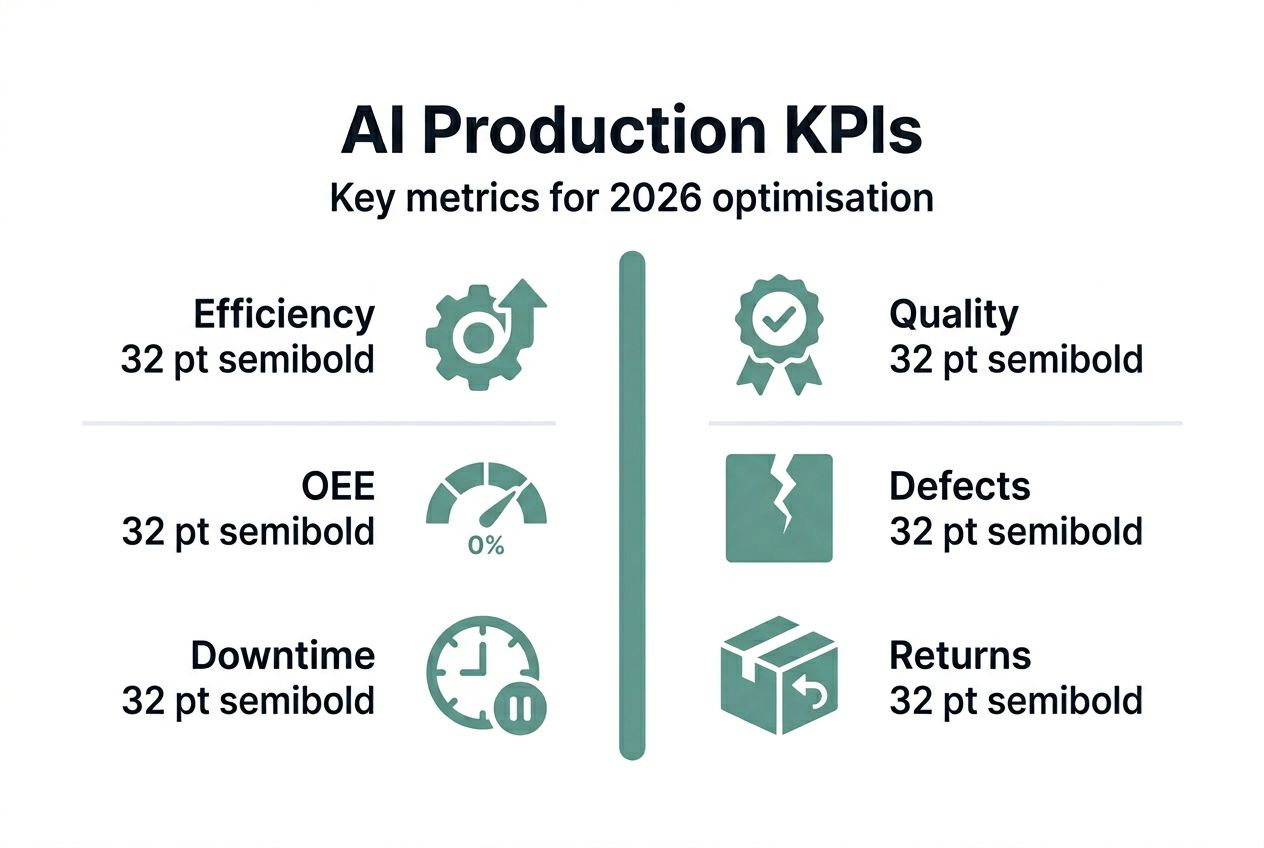
Reduce unplanned downtime by 40-45% using predictive maintenance. Manufacturers achieve 40-45% less downtime with AI by addressing failures before they occur. This translates directly into more productive hours and higher output.
Cut quality defects by over 60% with AI vision systems, sometimes reaching 99% defect reduction. Implementing AI improves energy efficiency by 20% and reduces quality defects by 99%. Fewer defects mean less rework, lower scrap costs, and higher customer satisfaction.
Achieve total production cost savings between 20-30% through waste reduction and efficiency gains. These savings come from reduced downtime, lower scrap rates, optimised energy consumption, and better labour productivity.
| KPI | Before AI Optimisation | After AI Optimisation | Improvement |
|---|---|---|---|
| OEE | 60% (industry average) | 85%+ | +25 percentage points |
| Unplanned Downtime | Baseline hours | 40-45% reduction | Significant availability gain |
| Defect Rate | Baseline percentage | 60-99% reduction | Quality excellence |
| Production Costs | Baseline total | 20-30% savings | Substantial cost reduction |
Actionable tips to track and report success metrics effectively:
The manufacturing optimisation checklist provides templates for tracking these metrics systematically. Measuring success rigorously builds confidence in AI investment and justifies scaling across additional production lines.
Selecting the right manufacturing software is essential to support AI-driven optimisation and real-time tracking. Modern MES platforms integrate seamlessly with IoT sensors, AI analytics engines, and legacy production equipment, providing the unified visibility you need. Explore various software types addressing real-time data, workflow automation, and MES integration to find the best fit for your plant’s unique requirements.
These tools streamline processes, cut costs, and boost plant efficiency by automating routine tasks, surfacing actionable insights, and enabling faster decision-making. 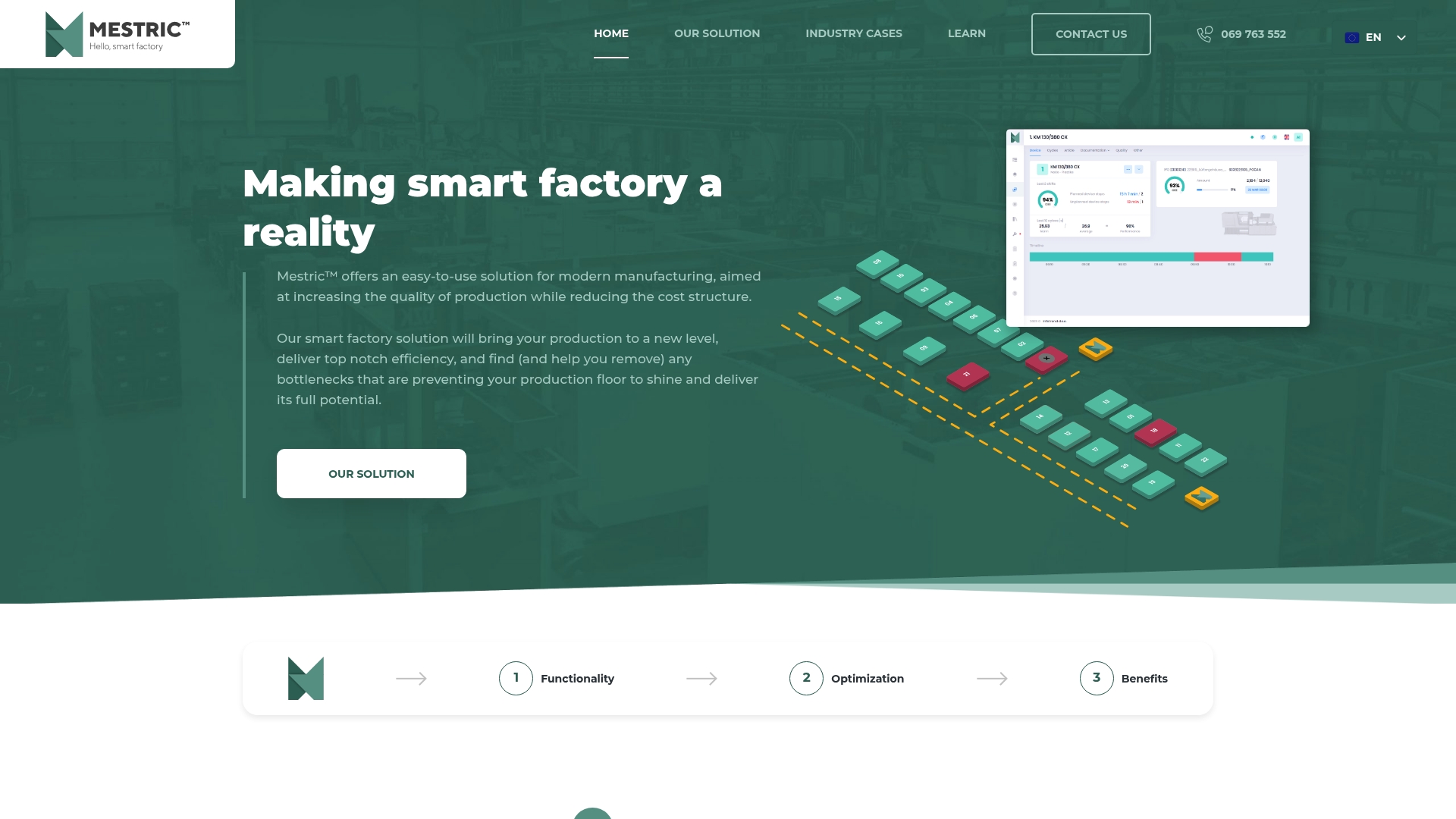
Learn about the 7 types of manufacturing software every plant manager should know to make informed technology investments. Discover practical strategies to streamline manufacturing processes and eliminate bottlenecks systematically. Understand how manufacturing efficiency workflow cost cuts become achievable with the right MES platform and AI integration.
Begin with digital infrastructure and aligned KPIs. Install IoT sensors, establish PLC connectivity, and define baseline metrics like OEE and downtime. Form a cross-functional team that includes operations, IT, and maintenance to ensure buy-in and data integration across departments.
Initial improvements often become visible within weeks to months of deployment. You’ll notice faster anomaly detection and reduced downtime almost immediately. Gradual optimisation continues as AI models refine with accumulated data, delivering compounding benefits over the first year.
AI supports, not replaces, human expertise and judgement. It augments operators by providing real-time insights, predictive alerts, and automated routine tasks. Human oversight remains critical for complex decisions, contextual problem-solving, and handling edge cases AI cannot anticipate.
Integration of siloed data systems across facilities presents the largest obstacle. Each plant may use different equipment, legacy systems, and data formats. Ensuring consistent training and acceptance across teams also requires significant change management effort and ongoing communication.
Track OEE, downtime, and quality defects pre- and post-implementation using baseline measurements. Calculate cost savings from reduced defects, lower scrap rates, decreased energy consumption, and improved labour efficiencies. Compare these savings against your AI investment to determine payback period and long-term ROI.


 069 763 552