


Production leaders across the automotive sector face growing pressure to deliver efficiency and cost savings without sacrificing quality. Manual tracking often leaves critical blind spots, leading to slowdowns and missed opportunities for improvement. Automated production tracking systems offer a smarter approach, giving plant managers and supervisors real-time insights that help detect defects early, optimise workflows, and sharpen decision-making. This guide explores how integrating advanced tracking can unlock greater control over your manufacturing environment and set the stage for consistent performance gains.
| Pont | Részletek |
| Automated Production Tracking | These systems enhance operational visibility and control, utilising integrated technologies for real-time data analysis. |
| Impact on Manufacturing | Automation allows for agile responses to production demands, leading to improved efficiency and reduced downtime. |
| Benefits Realisation | Key advantages include operational efficiency, continuous quality control, and enhanced traceability throughout the product lifecycle. |
| Implementation Challenges | Successful integration requires addressing technological, cultural, and training barriers to overcome resistance and ensure system effectiveness. |
Automated production tracking systems represent a sophisticated technological approach designed to monitor and analyse manufacturing processes with unprecedented precision. These advanced systems leverage integrated technologies to provide real-time visibility into product and material flow throughout production environments.
At their core, these systems combine multiple technological components to create a comprehensive monitoring infrastructure. Integrated technologies enable flexible tracking including:
Robotic systems for precise movement and handling
Sensor networks capturing granular performance data
Software platforms processing and visualising production metrics
Actuator mechanisms enabling responsive manufacturing adjustments
The fundamental purpose of automated production tracking extends beyond mere observation. Manufacturers utilise these systems to achieve critical operational objectives such as early defect detection, workflow optimisation, and continuous quality improvement. Real-time data collection technologies allow production managers to make informed decisions quickly, reducing potential bottlenecks and minimising production inefficiencies.
Automated tracking transforms manufacturing from reactive monitoring to proactive performance management.
By integrating multiple technological layers, these systems create a holistic view of manufacturing processes. Tracking encompasses everything from individual component movements to overall production line performance, enabling unprecedented levels of operational transparency and control.
Pro tip: Implement incremental system integration to minimise disruption and gradually build comprehensive production tracking capabilities.
Modern manufacturing has undergone a profound transformation through the integration of advanced automation technologies that fundamentally reshape production paradigms. Advanced software enables flexible production systems that can rapidly adapt to changing manufacturing requirements and market demands.
The integration of automation encompasses multiple sophisticated technological layers that work harmoniously to create intelligent manufacturing environments:
Adaptive software platforms that reconfigure production workflows
Intelligent machine interfaces enabling real-time communication
Data analytics engines processing complex manufacturing metrics
Machine learning algorithms predicting potential production disruptions
Sensor networks providing continuous performance monitoring
These technological components create a dynamic ecosystem where manufacturing processes become increasingly responsive and intelligent. Automated systems transcend traditional mechanical approaches by introducing cognitive capabilities that enable machines to learn, adjust, and optimise performance autonomously.
For a clear overview, here’s how key automation technologies impact modern manufacturing:
| Technology Type | Primary Function | Business Impact |
| Adaptive Software | Customises workflow | Rapid response to shifting demand |
| Machine Learning | Predicts disruptions | Minimises downtime, improves planning |
| Sensor Networks | Monitors performance | Enables real-time quality control |
| Robotic Systems | Handles materials | Increases precision and safety |
Automation transforms manufacturing from a rigid, linear process into a fluid, intelligent network of interconnected technological systems.
By leveraging sophisticated software and hardware integrations, manufacturers can achieve unprecedented levels of precision, efficiency, and adaptability. The convergence of robotic technologies, advanced sensors, and intelligent software platforms represents a paradigm shift in how production environments conceptualise and execute manufacturing processes.
Pro tip: Start your automation integration strategy by mapping current production workflows and identifying incremental technological opportunities for digital transformation.
Automated production tracking represents a transformative approach for manufacturers seeking to enhance operational performance across multiple critical dimensions. Optimising overall equipment effectiveness becomes achievable through sophisticated data capture and analysis technologies that provide unprecedented insights into manufacturing processes.
The key benefits of automated tracking systems can be categorised into three primary strategic domains:
Operational Efficiency through reduced downtime and streamlined workflows
Quality Control via continuous real-time performance monitoring
Enhanced Traceability enabling comprehensive product lifecycle documentation
Predictive Maintenance identifying potential equipment failures before they occur
Resource Utilisation maximising human and mechanical productivity
Manufacturing intelligence emerges as a direct consequence of these integrated tracking technologies. By collecting granular data across production lines, manufacturers can develop a comprehensive understanding of their operational ecosystems, enabling precise interventions and strategic improvements.
Automated tracking transforms raw data into actionable intelligence, converting potential operational challenges into strategic opportunities.
These systems provide manufacturers with a holistic view of production processes, breaking down traditional silos between different operational segments. The ability to capture, analyse, and respond to real-time manufacturing data represents a fundamental shift from reactive to proactive management strategies.
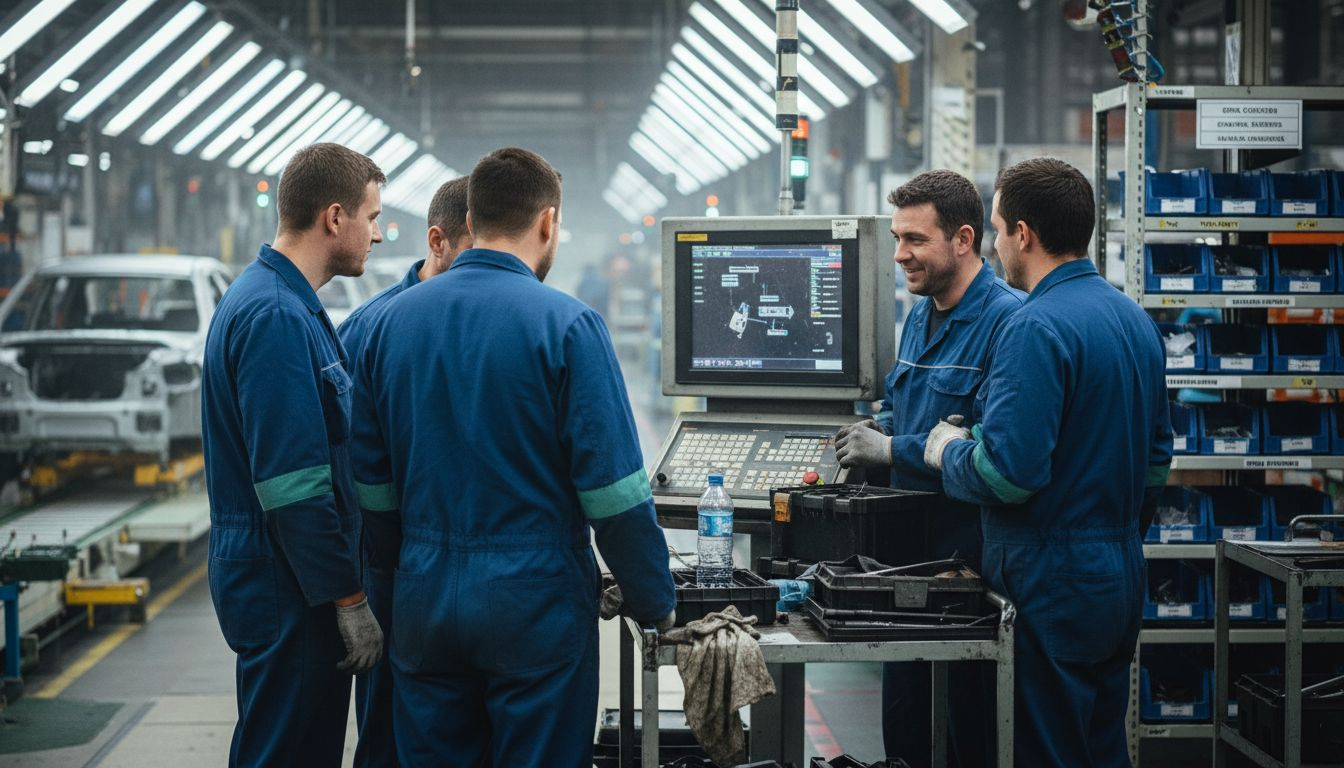
Pro tip: Implement a phased tracking system rollout, starting with one production line to validate effectiveness and build organisational confidence.
Artificial intelligence has revolutionised manufacturing by transforming raw production data into intelligent, actionable insights. Advanced planning systems leverage data fusion to create sophisticated analytical frameworks that enable manufacturers to make proactive, strategic decisions.
The key capabilities of AI-powered production tracking encompass multiple transformative technologies:
Predictive pattern recognition identifying potential production anomalies
Machine learning algorithms continuously improving analytical accuracy
Real-time anomaly detection monitoring equipment performance
Dynamic resource allocation optimising workforce and machinery utilisation
Adaptive scheduling responding to unexpected manufacturing challenges
Manufacturing intelligence emerges through sophisticated AI-driven continuous machine monitoring, which enables unprecedented levels of operational transparency and control. These systems transcend traditional monitoring by providing contextual understanding of complex manufacturing ecosystems.
AI transforms production tracking from a reactive observation process into a proactive, intelligent decision-making framework.
By integrating advanced machine learning techniques with granular sensor data, manufacturers can develop highly responsive production environments that adapt in real-time to changing operational conditions. The result is a more resilient, efficient, and intelligent manufacturing approach that minimises disruptions and maximises productivity.
Pro tip: Begin your AI integration journey by identifying specific, measurable operational challenges where machine learning can provide immediate, tangible improvements.
Transitioning to automated production tracking involves navigating a complex landscape of technological and organisational challenges. Implementation barriers require strategic approaches that address both technical and human factors to ensure successful digital transformation.
The most critical implementation risks can be categorised into several key domains:
Technological Integration challenges with existing legacy systems
Data Consistency ensuring accuracy and reliability of tracking metrics
Cultural Resistance managing workforce apprehension about technological change
Software Compatibility aligning new systems with current infrastructure
Training Requirements developing comprehensive skill development programmes
Organisational transformation demands a nuanced approach that balances technological capability with human adaptability. Agile methodologies help mitigate implementation risks by providing flexible, iterative strategies for system deployment and user acceptance.
Successful implementation is less about technology and more about managing the human elements of change.
Manufacturers must adopt a holistic perspective that considers both technical specifications and organisational dynamics. This involves creating comprehensive change management strategies, developing robust training programmes, and maintaining transparent communication throughout the implementation process.
To assist decision-makers, here’s a summary of common implementation challenges and strategies:
| Challenge Area | Risk Overview | Mitigation Approach |
| Legacy Integration | Compatibility issues | Gradual deployment, modular upgrades |
| Staff Engagement | Resistance to change | Targeted training, transparent communication |
| Data Accuracy | Metric inconsistency | Standardised protocols, continuous validation |
| Infrastructure Alignment | Software mismatches | System testing, staged integration |
Pro tip: Conduct a thorough organisational readiness assessment before implementation, identifying potential resistance points and developing targeted mitigation strategies.
Automotive plants face complex challenges like legacy system integration, real-time quality monitoring, and the need for adaptive workflows to stay competitive. This article highlights the critical importance of shifting from reactive monitoring to proactive production tracking using integrated automation technologies. Pain points such as bottlenecks, inconsistent data, and workforce resistance can hinder digital transformation efforts. High-precision tracking and AI-powered insights are essential to unlock operational efficiency, optimise resource utilisation, and ensure traceability.
Mestric™ specialises in solving these challenges by offering an intuitive Manufacturing Execution System tailored to automotive manufacturing needs. Designed to connect directly with your machinery, Mestric™ provides real-time KPIs on performance metrics, downtime, quality parameters, and cost analysis coupled with AI-based optimisation. By deploying Mestric™, production managers gain full visibility into their processes enabling rapid decision-making, reducing manual errors, and boosting product quality. Explore how automated production tracking can accelerate your plant’s digital transformation journey with Mestric™ digital platform.
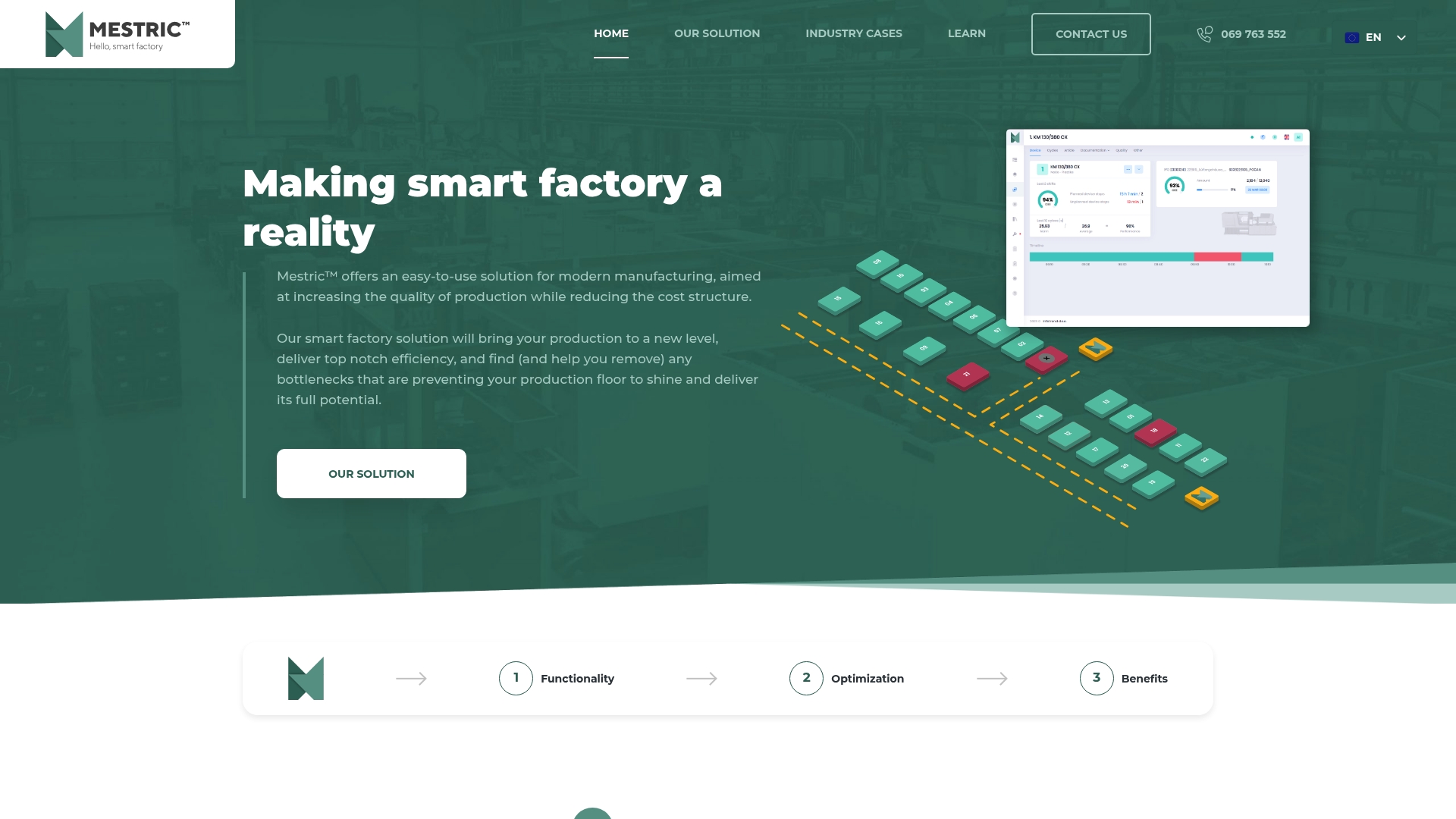
Ready to conquer the complexities of automotive production tracking and gain unmatched operational control? Visit Mestric™ now to request your onsite demonstration and see how connected manufacturing equipment transforms your workflow. Don’t delay improving efficiency, quality, and traceability in your automotive plant with proven MES technology.
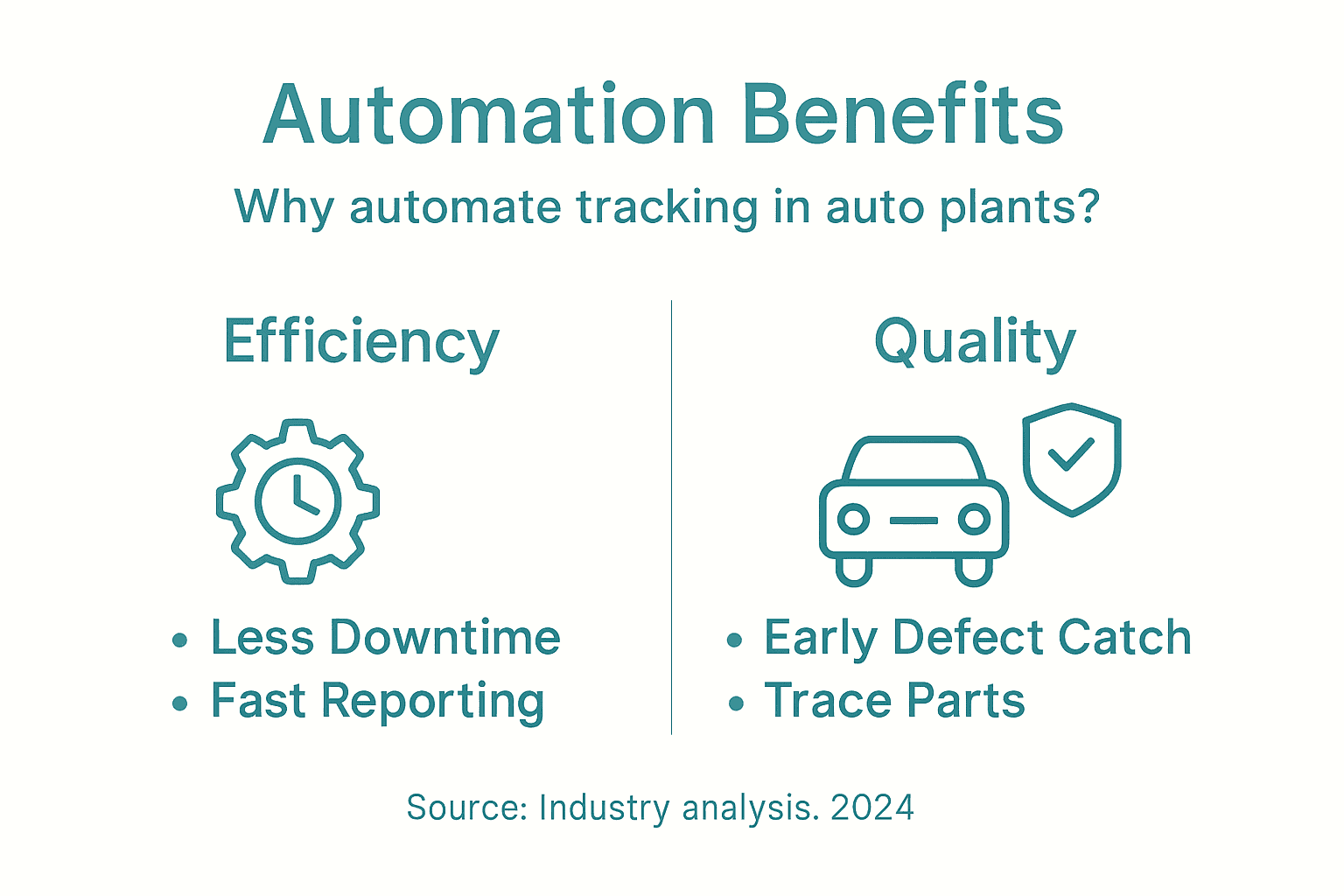
Automating production tracking enhances operational efficiency by reducing downtime, improving quality control through real-time performance monitoring, and ensuring better traceability of the manufacturing process.
Automation allows continuous monitoring of production metrics, enabling early defect detection and immediate corrective actions. This leads to higher quality standards and consistent product outcomes.
Automated production tracking systems combine robotic systems, sensor networks, software platforms, and machine learning algorithms to create an intelligent, responsive manufacturing environment.
To mitigate implementation risks, manufacturers should conduct organisational readiness assessments, develop robust training programmes, and adopt an agile methodology for gradual integration of new technologies.


 069 763 552