


TL;DR:
- Building reliability into production reduces defects and protects profitability.
- Essential checklists cover documentation, standards, suppliers, in-process checks, calibration, and environment.
- Implementing and sustaining a quality culture with digital tools enhances long-term operational excellence.
Poor quality costs manufacturers far more than most executives realise. Scrap, rework, warranty claims, and customer attrition quietly erode margins while production targets demand constant attention. Striking the right balance between speed and consistency is one of the most persistent challenges on the factory floor. A structured quality improvement checklist gives you a repeatable framework to prevent defects before they escalate, align your teams around shared standards, and build the kind of operational discipline that sustains long-term performance. This article walks you through the essential criteria, a comparison of leading checklist formats, and practical steps to put your programme into action.
| Pont | Részletek |
|---|---|
| Quality foundation pillars | Strong quality outcomes begin with process control, training, equipment care, and data monitoring. |
| Customised checklist criteria | Tailoring your checklist to operations ensures coverage of all critical quality factors. |
| Comparison guides selection | Analysing major checklist formats helps executives choose tools that match their needs and culture. |
| Implementation is crucial | Effective rollout with team buy-in and real-time metrics secures lasting quality gains. |
Manufacturing quality is not simply about passing inspection. It is about building reliability into every stage of your production process, from raw material intake to final dispatch. When quality is treated as a system rather than a checkpoint, defects become far less likely to reach the customer.
The foundation of any effective quality improvement effort rests on four core pillars:
These pillars work together. Neglecting any one of them creates gaps that hidden defects can slip through. For example, even a well-trained team cannot compensate for a machine that drifts out of calibration. Similarly, excellent equipment means little if operators lack the knowledge to interpret quality signals correctly.
The business case for integrating these pillars is clear. Under 1% defect levels are maintained by best-in-class manufacturers, directly protecting profitability. That benchmark is not accidental. It is the result of deliberate, structured quality management.
For a broader view of how these principles connect to operational performance, the process improvement guide from Mestric offers practical frameworks worth reviewing. You can also explore quality control tips to sharpen your approach at the production level.
Leading standards bodies reinforce this thinking. As the ISO 9001 principles outline, a process-based approach to quality management enables organisations to plan, execute, and improve with consistency. Adopting these principles is not just good practice. It is a competitive advantage.
“Quality is never an accident; it is always the result of intelligent effort.” This principle underpins why structured systems outperform reactive fixes every time.
Building on these pillars gives your checklist a solid foundation to stand on.
Building on these foundational pillars, the next step is to ensure your checklist covers all essential quality elements. A well-constructed checklist removes ambiguity, creates accountability, and gives your teams a clear standard to work towards.
Here are the core criteria every manufacturing quality improvement checklist should include:
Standardised checklists reduce error rates and improve audit scores across industries, making this investment in structure well worth the effort. For a broader view of operational efficiency, the productivity checklist from Mestric is a useful companion resource. You can also follow a step-by-step improvement process to implement these criteria systematically.
Research from McKinsey quality insights confirms that organisations with disciplined quality systems consistently outperform peers on cost and customer satisfaction metrics.
Pro Tip: Involve cross-functional teams, including production, engineering, and procurement, when reviewing and updating your checklist. Different perspectives surface blind spots that single-department reviews miss. Schedule a formal checklist review at least twice per year.

With the essential criteria defined, it is helpful to see how leading checklist formats compare. No single framework suits every operation, so understanding the strengths and ideal applications of each helps you make a more informed choice.
| Checklist type | Structure | Key strengths | Ideal use case |
|---|---|---|---|
| Lean-based | Flow-focused, waste elimination steps | Reduces non-value-adding activities, improves cycle time | High-volume, repetitive production environments |
| Six Sigma (DMAIC) | Data-driven, statistical process control | Targets root causes, reduces variation measurably | Complex processes with high defect costs |
| ISO 9001-based | Process-oriented, documentation-heavy | Internationally recognised, audit-ready, scalable | Regulated industries and export-focused manufacturers |
Lean and Six Sigma checklists are linked to measurable quality gains and reduced lead times, making them strong candidates for manufacturers seeking tangible, trackable results.
When selecting a checklist format, consider the following questions:
Adapting an established checklist to your specific context is often more effective than adopting one wholesale. For example, you might combine Lean waste-reduction checkpoints with ISO 9001 documentation requirements to create a hybrid that fits your operation precisely. Explore cost-saving methods that complement whichever framework you choose.
For a broader understanding of quality methodology, the Lean Six Sigma resources from the American Society for Quality provide detailed guidance on both approaches.
Selecting or designing your checklist is only the beginning. Strategic implementation is what drives results. A checklist that sits in a folder delivers no value. One that is embedded into daily operations becomes a genuine performance tool.
Follow these steps to implement your quality improvement checklist effectively:
The impact of structured implementation is measurable. Consider these benchmarks:
| Metric | Before implementation | After implementation |
|---|---|---|
| Defect rate | 3.5% average | Under 1% (best-in-class) |
| Rework hours per week | 18 hours | 6 to 9 hours |
| Audit compliance score | 68% | 89%+ |
| Checklist completion rate | Ad hoc | 95%+ with digital tools |
Plants monitoring real-time quality metrics see up to 30% fewer reworks, which translates directly into cost savings and improved throughput. For a structured rollout approach, the production optimisation steps guide from Mestric provides a clear pathway.
Additional guidance on successful quality management from Manufacturing.net reinforces the importance of structured rollout and leadership commitment.
Pro Tip: Digital monitoring tools integrated with your MES can automate checklist prompts, flag incomplete items in real time, and generate audit-ready reports automatically. This removes the manual burden and significantly improves completion rates.
Here is something worth saying plainly: a checklist is a tool, not a culture. We have seen well-designed checklists fail within months because leadership treated them as a compliance exercise rather than a genuine improvement mechanism.
The difference between box-ticking and authentic problem-solving is significant. When teams view a checklist as something done to them rather than with them, completion rates drop and quality gains stall. Leadership must model the behaviour they expect. If executives and managers visibly engage with quality data, ask questions, and act on findings, teams follow.
Real transformation comes when checklists are paired with a culture of continuous improvement. That means creating psychological safety for operators to flag issues without fear, and using quality for operational excellence as a strategic priority rather than a departmental function.
Digital and real-time feedback tools accelerate this shift. When data is visible, actionable, and trusted, quality conversations move from reactive to proactive. That is where sustained improvement lives.
A well-structured checklist sets the standard. Mestric helps you exceed it. Our Manufacturing Execution System connects directly with your production equipment to deliver real-time quality monitoring, performance analytics, and AI-powered insights that go far beyond what any paper-based or spreadsheet checklist can offer.
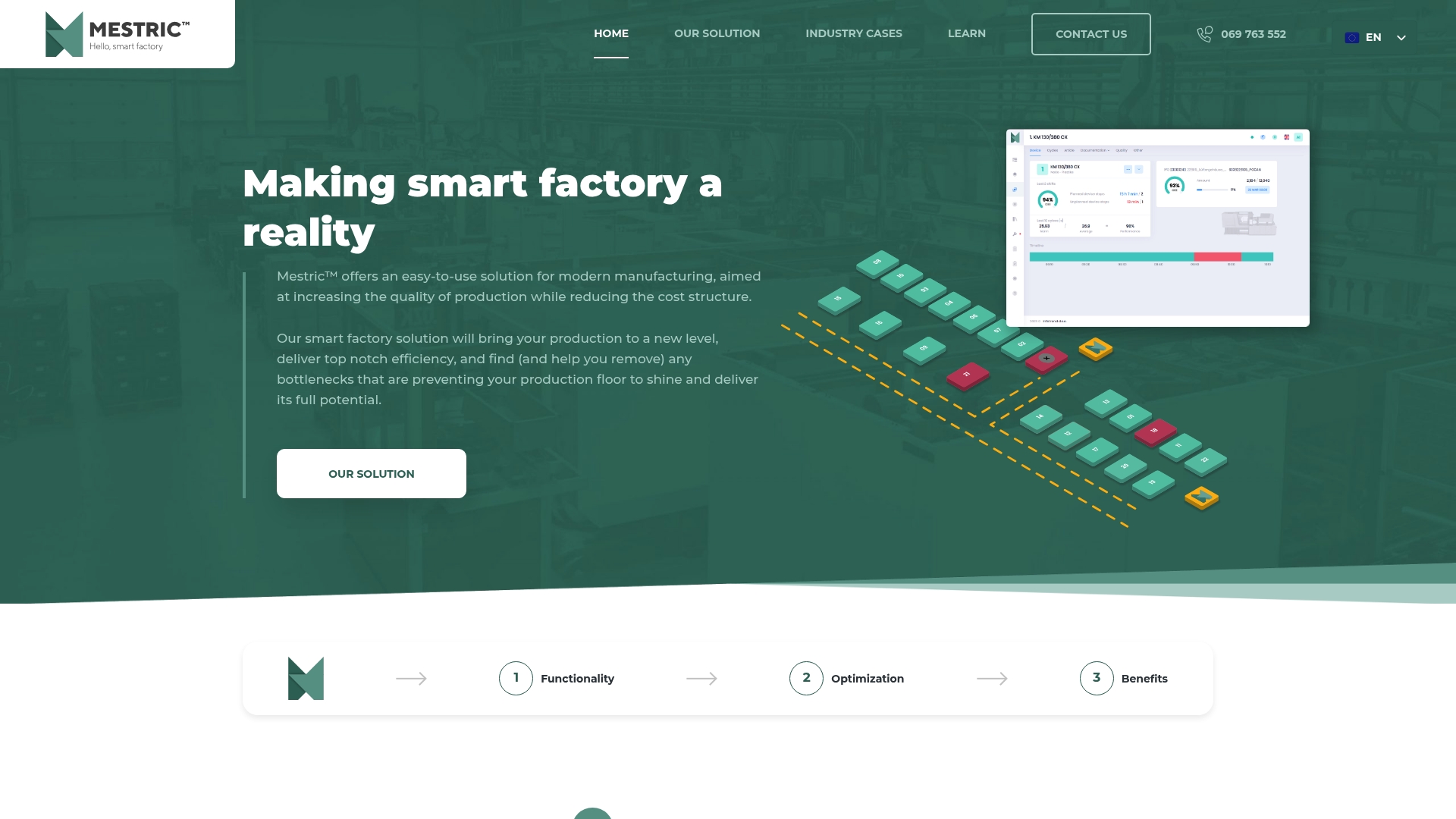
When you are ready to move from structured checklists to fully integrated quality management, Mestric provides the digital infrastructure to make that transition smooth and measurable. Explore how MES vs traditional manufacturing approaches compare, access real-time production data capabilities, and see how production quality monitoring works in practice. Your next step towards operational excellence starts here.
It ensures all essential quality actions are standardised, tracked, and optimised to prevent defects and improve outcomes. Checklists formalise quality protocols and reduce human error across production environments.
Review and update checklists at least quarterly, or whenever you introduce new processes, machinery, or face regulatory changes. More frequent reviews are advisable during periods of rapid production change.
Yes, digital MES solutions increase checklist completion rates and provide real-time analytics for fast correction. Real-time digital monitoring ensures checklist adherence and reduces errors at the point of production.
A quality improvement checklist focuses on process enhancement and long-term results, while a quality control checklist tracks conformity for ongoing production. Both are valuable, but they serve distinct purposes within your quality management system.


 069 763 552