

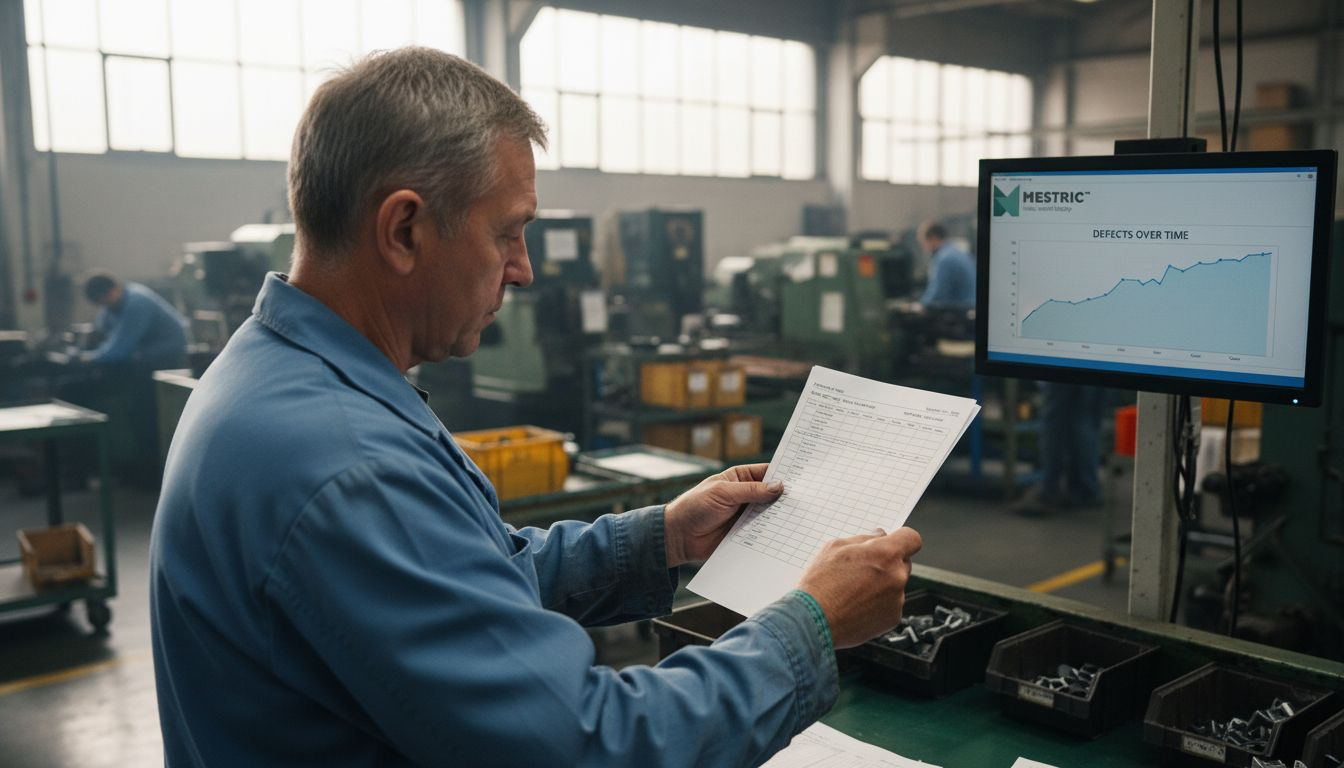
Digital quality assurance integrated with Manufacturing Execution Systems can slash defects by up to 30% while driving significant operational cost savings. Many mid-sized manufacturers struggle with inconsistent product quality and high costs due to fragmented, manual approaches. This guide explains what quality assurance means in modern manufacturing, the challenges you face, and how digital tools deliver measurable improvements in efficiency and profitability.
| Pont | Részletek |
|---|---|
| Quality assurance is process-wide | Proactive controls throughout production prevent defects before they occur, unlike reactive quality control inspections. |
| Digital MES transforms QA effectiveness | Real-time monitoring and AI analytics reduce defects by 30% and operational costs by 18% in mid-sized plants. |
| Manual approaches limit visibility | Fragmented processes lead to missed defects, higher rework costs, and production delays. |
| Structured frameworks drive results | Combining process audits, operator training, digital tools, and AI analytics creates sustainable quality improvements. |
| Misconceptions hinder adoption | Beliefs that QA is only final inspection or too expensive prevent manufacturers from capturing proven benefits. |
Quality assurance encompasses the systematic processes and controls you implement throughout production to ensure consistent product quality and operational efficiency. Unlike quality control, which focuses on inspecting finished products to catch defects, QA takes a proactive stance by preventing problems before they occur.
The distinction matters because reactive inspections only identify issues after resources have been wasted on defective production. Quality assurance involves process-wide controls that ensure consistent product quality and efficiency. QA integrates into every production stage, from raw material verification through final assembly.
Effective quality assurance delivers three core benefits:
Modern quality assurance relies on a layered framework combining traditional process controls with digital monitoring and AI analytics. Process controls establish standard operating procedures and inspection checkpoints. Digital monitoring provides real-time visibility into production parameters and quality metrics. AI analytics identifies patterns and predicts potential quality issues before they impact production.
This integrated approach transforms quality assurance from a cost centre into a strategic advantage. You gain the ability to make data-driven decisions, optimize resource allocation, and continuously improve manufacturing processes based on objective performance data.
Most mid-sized manufacturers face significant obstacles in maintaining consistent quality assurance. Manual inspection processes consume substantial labour hours while providing limited coverage of actual production. Your quality team can only sample a small percentage of output, leaving gaps where defects slip through undetected.
Lack of real-time visibility compounds the problem. Without connected equipment and digital monitoring, you discover quality issues hours or days after production, when entire batches may be affected. Fragmented or manual QA processes lead to missed defects and higher rework costs.
Resource constraints create tough choices. You want comprehensive quality assurance but face budget limitations and staffing challenges. Key pain points include:
Common misconceptions worsen these challenges. Many managers view quality assurance as purely final product inspection, missing the preventive process controls that deliver real value. Others assume digital quality monitoring technology costs too much for mid-sized operations, overlooking modern scalable solutions.
Pro tip: Operator training delivers outsized returns on investment. Even basic training on quality standards and proper equipment operation can reduce human error related defects significantly. Don’t underestimate this low-cost, high-impact improvement lever when building your quality assurance strategy.
These challenges result in measurable costs through higher defect rates, increased production downtime for rework, and elevated operational expenses. Breaking this cycle requires addressing both the technological gaps and the process weaknesses in your current approach.
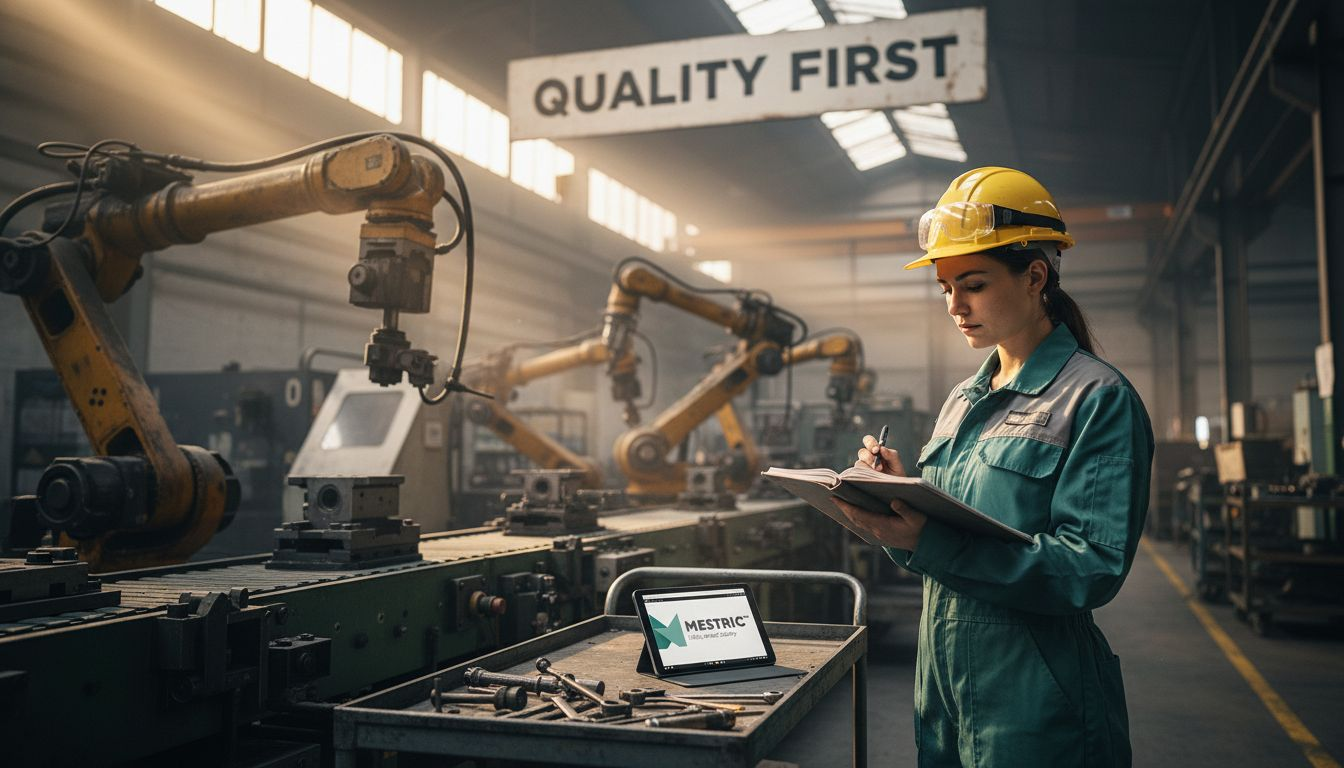
Digital MES platforms fundamentally transform quality assurance by providing capabilities impossible with manual methods. Real-time monitoring connects directly to your production equipment, capturing quality parameters continuously rather than through periodic sampling. You see deviations immediately, enabling rapid response before defects multiply.
Quality dashboards consolidate data from across your plant into actionable insights. Instead of waiting for shift reports or manual data entry, production managers view live quality metrics, trend analysis, and exception alerts. This visibility enables proactive intervention when processes drift from specifications.
Equipment connectivity forms the foundation of digital quality assurance. Sensors and PLCs feed measurement data directly into the MES, eliminating transcription errors and data gaps. You capture 100% of production rather than sample-based estimates, revealing quality patterns that manual methods miss.
AI integration takes quality assurance beyond reactive monitoring into predictive territory. Machine learning algorithms analyse historical quality data, equipment parameters, and environmental factors to forecast potential defects before they occur. Implementing a digital MES with real-time quality monitoring reduces defect rates by up to 30% in mid-sized manufacturing plants.
The measurable benefits extend across multiple dimensions:
Modern MES solutions designed for mid-sized manufacturers offer user-friendly interfaces that reduce training time and accelerate adoption. Cloud-based deployment eliminates large upfront infrastructure investments, making enterprise-grade quality assurance accessible at any scale.
Pro tip: Prioritize MES systems with intuitive dashboards and mobile access. When your quality team can monitor production from anywhere and the interface requires minimal training, you maximize ROI and ensure consistent usage across all shifts.
Integrating manufacturing execution system for efficiency with AI in manufacturing quality monitoring enables you to streamline manufacturing processes while maintaining rigorous production quality monitoring. Understanding different manufacturing software types helps you select solutions that improve manufacturing efficiency with MES tools appropriate for your operation.
Implementing effective quality assurance requires a systematic approach that combines people, processes, and technology. Follow this structured framework to build sustainable quality improvements:
Structured operator training can reduce human error-related defects by around 20%, demonstrating human factors are manageable. This framework addresses both technical and human elements of quality assurance.
Key activities and benefits at each implementation phase:
A step-by-step production optimisation guide demonstrates how understanding the role of data in manufacturing efficiency helps you optimise production processes with MES. This structured approach ensures you capture both quick wins and long-term sustainable improvements.
Successful implementation typically takes three to six months from initial audit through full MES deployment. Plan for iterative rollout, starting with high-impact production lines before expanding plant-wide. This phased approach manages change effectively while demonstrating value to stakeholders.
Understanding the practical differences between manual and digital quality assurance helps you evaluate the business case for modernization. The performance gap between approaches has widened as digital technology has advanced, making the choice increasingly clear for mid-sized manufacturers.
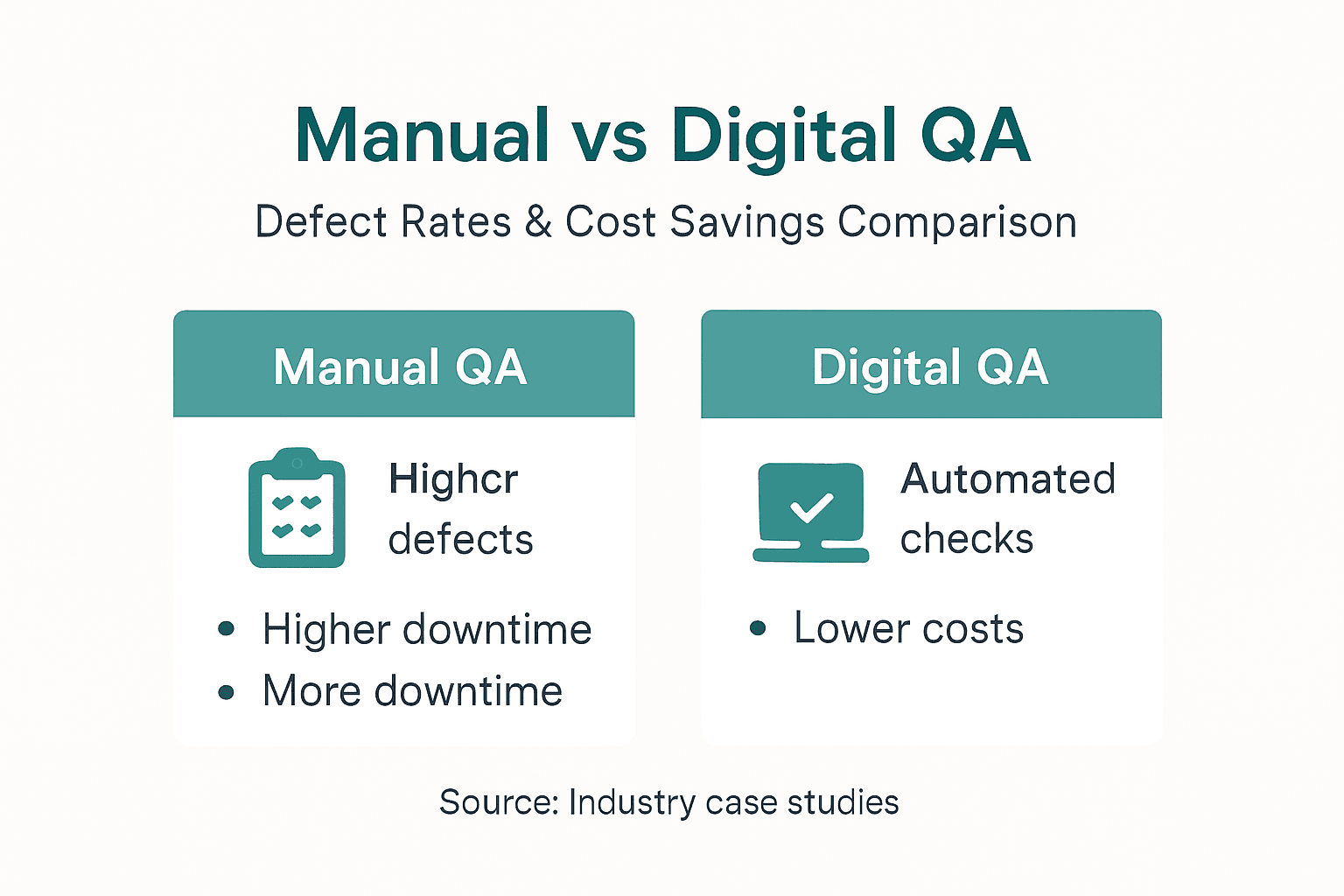
| Aspect | Traditional Manual QA | Digital MES-Based QA |
|---|---|---|
| Defect Detection Rate | 60-75% of defects caught | 90-95% of defects caught |
| Data Collection | Manual sampling, delayed entry | Automated real-time capture |
| Process Visibility | Limited to inspection points | Continuous monitoring across production |
| Response Time | Hours to days | Immediate alerts and intervention |
| Labor Requirements | High inspector staffing | Optimized with digital monitoring |
| Cost per Unit | Higher due to waste and rework | 18% lower operational costs |
| Predictive Capability | None | AI-powered defect forecasting |
| Resource Utilization | Reactive allocation | Data-driven optimization |
Manual approaches rely heavily on human inspection, which introduces variability based on inspector experience, fatigue, and sampling limitations. You catch problems only after production, when corrective action is most expensive. Documentation gaps make root cause analysis difficult, preventing systematic improvement.
Digital quality assurance delivers comprehensive coverage through automated monitoring, catching deviations as they occur. Real-time data enables immediate corrective action, minimizing defective output. Complete production records support detailed analysis of quality trends and root causes, driving continuous improvement.
The operational cost difference stems from multiple factors. Digital systems reduce waste by catching defects earlier, lower rework expenses through prevention, and optimize resource allocation based on actual quality risk rather than arbitrary schedules. These savings typically offset technology investment within 12 to 18 months.
For mid-sized manufacturers, the choice increasingly favours digital approaches. Modern MES platforms offer scalability and affordability that makes enterprise-grade quality assurance accessible regardless of plant size. The performance advantages and cost savings make manual-only approaches difficult to justify.
Several persistent myths about quality assurance prevent manufacturers from adopting effective strategies and tools. Understanding the reality behind these misconceptions helps you make informed decisions about your quality approach.
Myth: Quality assurance is only final product inspection. Many manufacturing managers incorrectly believe quality assurance is only about final inspection, ignoring the process-wide approach needed. Reality: Effective QA requires continuous monitoring and controls throughout production. Final inspection catches problems too late, after you’ve invested resources in defective production.
Myth: Quality technology is too complex or expensive for mid-sized operations. Reality: Modern MES platforms are specifically designed for ease of use and scalable implementation. Cloud-based solutions eliminate large upfront investments, and intuitive interfaces minimize training requirements. The technology has become more accessible, not less.
Myth: Quality improvements don’t significantly impact costs. Reality: Digital quality assurance delivers measurable financial returns. Plants typically reduce operational costs by approximately 18% through lower waste, reduced rework, and optimized resource allocation. These savings flow directly to your bottom line.
Myth: Human errors in quality can’t be effectively managed. Reality: Structured training programs demonstrably reduce human-error-related defects by around 20%. Combining training with digital monitoring and automated checks creates multiple layers of protection against mistakes. Human factors are manageable with the right approach.
Myth: Quality assurance and quality control are interchangeable terms. Reality: QA focuses on preventing defects through process controls, while QC involves detecting defects through inspection. Confusing these concepts leads to over-reliance on inspection rather than prevention, which costs more and delivers worse results.
These misconceptions often stem from outdated experiences with earlier quality systems or lack of exposure to modern digital capabilities. Correcting them opens the door to significant operational improvements and competitive advantages through superior quality performance.
Real-world results from mid-sized manufacturing plants demonstrate the tangible benefits of implementing digital quality assurance through Mestric™ MES solutions. These examples show measurable improvements across key performance indicators.
Plants implementing Mestric™ MES achieved significant defect rate reductions, cost savings, and improved delivery metrics. One automotive components manufacturer reduced defects by 28% within six months of deployment, directly improving customer satisfaction scores and reducing warranty claims.
A food processing facility achieved 22% lower operational costs through decreased waste and optimized quality inspection schedules. Real-time monitoring enabled them to identify process drift before entire batches were affected, saving thousands in raw material costs monthly.
Key performance improvements observed across implementations:
A metal fabrication plant achieved ROI in 14 months through combined savings from reduced scrap, lower rework costs, and improved throughput. The QA digital implementation case study demonstrates how connected equipment and real-time dashboards transform quality management.
The quantitative evidence consistently shows that digital quality assurance delivers measurable value across diverse manufacturing sectors. Success factors include management commitment, thorough operator training, and phased implementation that demonstrates quick wins while building toward comprehensive quality monitoring.
These results reflect typical outcomes for mid-sized manufacturers implementing structured quality assurance frameworks supported by modern MES technology. Your specific results will vary based on current quality baseline, production complexity, and implementation thoroughness.
Ready to transform your manufacturing quality assurance and capture the proven benefits discussed throughout this guide? Mestric™ offers comprehensive MES solutions designed specifically for mid-sized manufacturers seeking to reduce defects, lower costs, and improve operational efficiency.
Our platform combines real-time quality monitoring, AI-powered analytics, and intuitive dashboards that your team can use immediately. Discover how different manufacturing software types integrate to improve manufacturing efficiency with MES tools tailored to your production environment. Explore our production quality monitoring solutions and schedule an onsite demonstration to see connected machinery benefits in your actual production setting.
Quality assurance focuses on preventing defects through process-wide controls, standard procedures, and continuous monitoring throughout production. Quality control involves inspecting finished products to detect defects after production is complete. QA is proactive and process-oriented, while QC is reactive and product-focused, making QA far more cost-effective for maintaining consistent quality.
Digital MES platforms connect directly to production equipment, capturing quality parameters in real time rather than through periodic manual sampling. This continuous monitoring catches deviations immediately, enabling rapid corrective action before defects multiply. AI analytics identify patterns and predict potential quality issues, while automated alerts notify managers of problems requiring attention, improving detection rates from 60-75% to 90-95%.
Mid-sized manufacturers typically struggle with resource constraints that limit comprehensive quality monitoring, reliance on manual inspection processes that provide incomplete coverage, and lack of real-time visibility into production quality. Fragmented quality systems prevent holistic analysis, while disconnected equipment makes it difficult to correlate quality issues with specific process parameters. Overcoming these challenges requires combining operator training with scalable digital monitoring solutions.
Manufacturers implementing digital quality assurance typically reduce operational costs by approximately 18% through decreased waste, lower rework expenses, and optimized resource allocation. Specific savings vary based on your current defect baseline and production complexity. Plants also see indirect cost benefits from improved on-time delivery, reduced customer complaints, and lower warranty expenses that compound the direct operational savings.
Begin with a comprehensive process audit to document current defect rates, identify failure points, and establish baseline quality metrics. This audit reveals specific improvement opportunities and provides ROI benchmarks. Next, implement operator training on quality standards and inspection techniques to reduce human-error-related defects. Then deploy digital monitoring on your highest-impact production lines before expanding plant-wide, enabling you to demonstrate value while managing change effectively.


 069 763 552