

TL;DR:
- Effective KPIs are relevant, measurable, and actionable to drive manufacturing improvements.
- Real-time and modified KPIs provide faster insights, enabling quick responses to operational issues.
- Customizing KPI frameworks to your specific plant ensures more meaningful performance measurement.
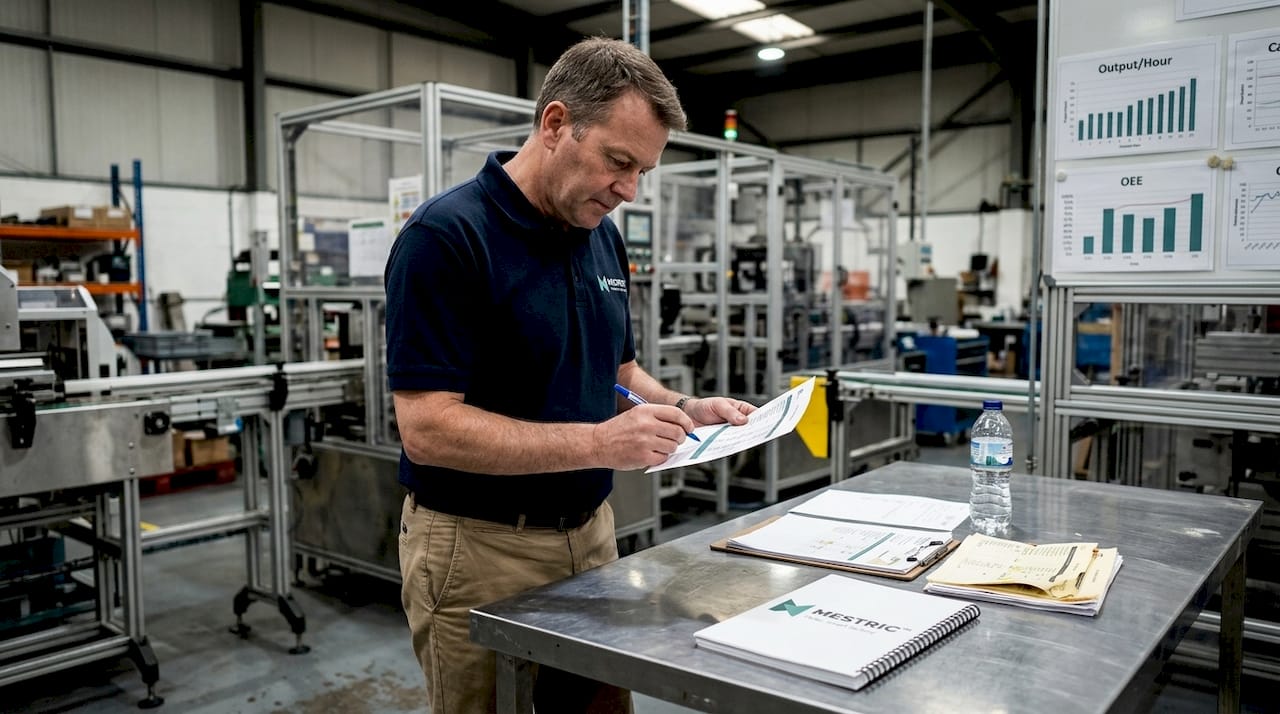
Choosing the right production KPIs is one of the most consequential decisions a manufacturing leader can make. Too many operations rely on generic metrics that look good on paper but fail to drive real improvement. Traditional measures like Overall Equipment Effectiveness (OEE) are widely used, yet MOEE incorporates downtime and ideal cycle time in ways that standard OEE simply does not. This article walks you through practical, evidence-backed examples of productivity and quality KPIs, explains how to select them for your specific operation, and shows you how modern, real-time approaches can give you a genuine competitive edge.
| Točka | Podrobnosti |
|---|---|
| Choose relevant KPIs | Tailor production KPIs to your plant’s unique needs, not generic benchmarks. |
| Understand KPI evolution | New metrics like MOEE address gaps left by older KPIs and are more responsive to real-world changes. |
| Balance productivity and quality | Employ KPI examples that measure both output and product quality for holistic improvements. |
| Leverage real-time data | Modern KPIs allow manufacturers to react quickly to operational issues and customer demands. |
Now that the importance of choosing meaningful KPIs is clear, let us break down how to select the most impactful ones for your operation.
Not every metric belongs on your dashboard. The best KPIs share three core qualities: they are relevant to your production goals, measurable with the data you actually collect, and actionable so your team can respond when numbers shift. If a metric does not prompt a decision or a change, it is taking up space.
A common mistake is copying KPI frameworks from industry benchmarks without adapting them. What works for a high-volume, single-product line will not serve a job shop running dozens of different parts each week. Tracking the right KPIs means aligning metrics with your production style, not just your industry.
Here are the key criteria to apply when evaluating any KPI:
One of the most instructive examples of KPI evolution is Modified OEE (MOEE). Standard OEE measures availability, performance, and quality, but MOEE incorporates downtime and ideal cycle time alongside customer demand factors. This makes it far more relevant for high-mix, low-volume environments where standard OEE can be misleading. Understanding manufacturing metrics types helps you see where MOEE fits relative to other frameworks.
Pro Tip: Before finalising any KPI, ask your production team whether they can act on it within a single shift. If the answer is no, the metric may be better suited as a monthly review indicator rather than a live operational KPI.
Avoid the trap of tracking too many KPIs at once. A focused set of five to eight well-chosen metrics will outperform a sprawling dashboard of twenty. Prioritise depth over breadth.
With selection criteria in mind, let us examine specific productivity KPIs and how manufacturers use them to boost efficiency.
Productivity KPIs measure how effectively your resources, machines, people, and time, are converted into output. Below are the most widely used ones, along with notes on where each works best.
| KPI | Definition | Najbolj primerno za |
|---|---|---|
| OEE | Availability × Performance × Quality | High-volume, repetitive production |
| MOEE | OEE adjusted for downtime and customer demand | High-mix, low-volume job shops |
| Throughput | Units produced per unit of time | Assembly lines, continuous flow |
| Cycle time | Time to complete one unit from start to finish | Process optimisation projects |
| Machine utilisation | Percentage of available time a machine is running | Capital-intensive facilities |
OEE remains the most recognised productivity KPI, but it has well-documented limitations. MOEE incorporates downtime and ideal cycle time in a way that reflects real operational complexity, particularly where customer order patterns vary significantly.
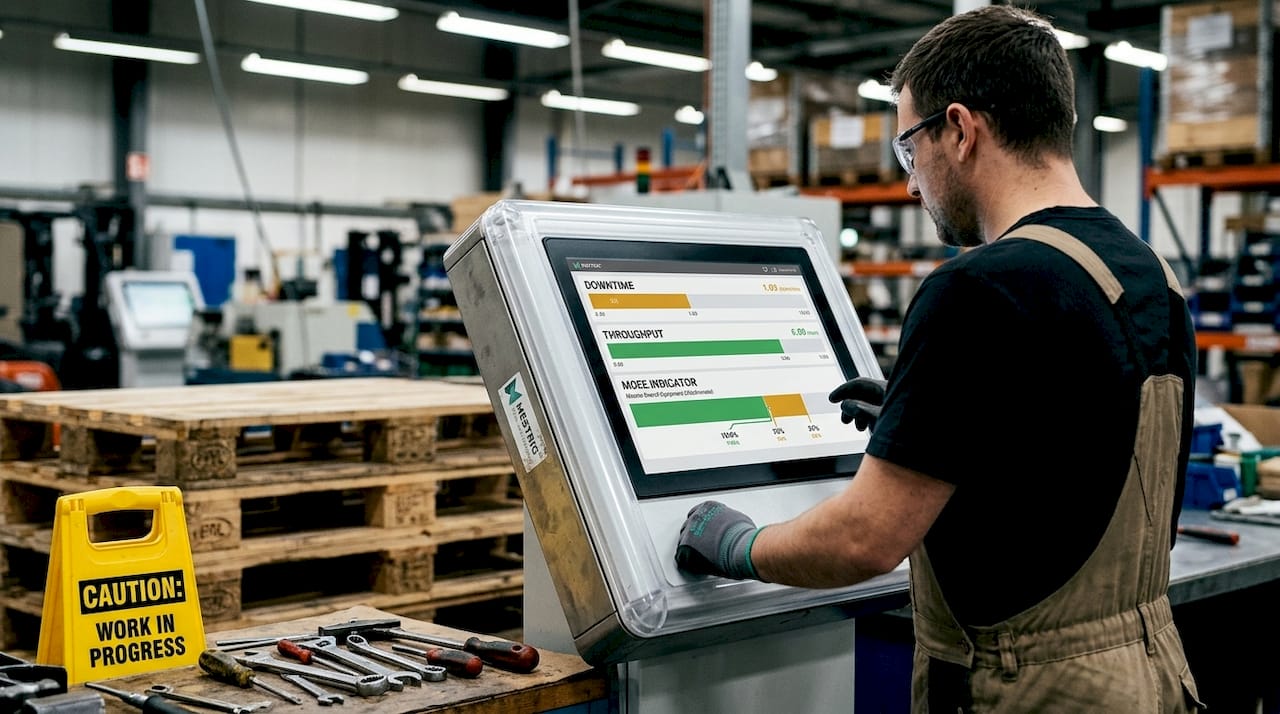
Throughput is straightforward and powerful. It tells you how many units your line produces per hour or per shift. When throughput drops, you know immediately that something has changed, whether it is a machine fault, a staffing issue, or a materials delay.
Cycle time is especially valuable during process improvement projects. Shortening cycle time without sacrificing quality is a direct path to higher capacity. Pair it with monitoring production quality data to ensure speed gains do not introduce defects.
Machine utilisation matters most in facilities with expensive capital equipment. A CNC machining centre sitting idle at 60% utilisation represents a significant cost. Combining utilisation data with real-time monitoring lets you identify patterns and schedule maintenance proactively.
Key points to remember when applying productivity KPIs:
Having explored productivity metrics, we now turn to quality KPIs, which are crucial for maintaining standards and customer trust.
Quality KPIs measure how consistently your operation produces conforming products. They are directly linked to customer satisfaction, warranty costs, and brand reputation. The four most impactful ones are defect rate, first-pass yield, return rate, and customer complaints.
Defect rate is the percentage of units that fail to meet specification. It is simple to calculate and immediately actionable. A rising defect rate signals a process problem that needs investigation now, not at the end of the month.
First-pass yield (FPY) measures the percentage of units that pass quality checks without rework. High FPY means your process is stable and well-controlled. Low FPY means you are spending time and materials fixing mistakes rather than making good product.
| Approach | Traditional quality KPIs | Real-time quality KPIs |
|---|---|---|
| Data frequency | End-of-shift or daily | Continuous, per unit |
| Response time | Hours to days | Minutes |
| Defect detection | After the fact | During production |
| Customer impact visibility | Low | Visoko |
As the table shows, MOEE incorporates downtime and ideal cycle time and similar real-time approaches address what traditional OEE misses, namely the immediate customer demand signal. The same logic applies to quality KPIs: real-time data lets you act before defective product reaches the customer.
To implement quality KPIs effectively, follow these steps:
Pro Tip: Link your first-pass yield data directly to customer complaint records. When FPY drops below your target, check whether customer complaints rise in the following weeks. This connection makes the business case for quality investment far more compelling to senior stakeholders.
Modern manufacturing needs more responsive KPI frameworks. Here is how real-time and modified approaches make a genuine difference.
Traditional KPIs are often calculated at the end of a shift or a day. By the time you see the number, the production run that caused the problem is long finished. Real-time KPIs change that entirely. They give you visibility into what is happening on the floor right now, not what happened eight hours ago.
This matters most in edge-case environments. Job shops running high-mix, low-volume work face constant variability in setup times, cycle times, and quality requirements. A single OEE figure calculated across all jobs obscures far more than it reveals. Real-time monitoring benefits are most pronounced in exactly these settings, where conditions change job by job.
“Modified OEE (MOEE) proposals address gaps found in standard metrics by integrating downtime and customer-driven factors, making performance measurement far more responsive to real operational conditions.”
Accessing real-time production data means your team can respond to a developing issue within minutes rather than discovering it during the next morning’s review meeting. That speed of response is the difference between a minor adjustment and a costly batch rejection.
The benefits of responsive, real-time KPI frameworks include:
The shift from periodic to real-time KPI monitoring is not just a technology upgrade. It is a change in how your operation thinks about performance. When data is always current, decisions improve at every level.
Conventional wisdom says that adopting industry-standard KPIs is the safe choice. We would argue it is often the riskiest one.
Generic KPIs give you a false sense of control. You are measuring something, but not necessarily the right thing for your operation. A plant producing 500 variants of a component needs different metrics than one running a single product line at full speed. Copying a framework without adapting it means your KPIs reflect someone else’s priorities, not yours.
The hard-won lesson from working with manufacturing operations is this: the best KPIs are built, not borrowed. Start with your biggest operational pain point. Build a metric around it. Test it for a quarter. Refine it. That iterative process produces metrics that your team trusts and acts on.
Understanding the full range of types of manufacturing metrics gives you the vocabulary to design something genuinely useful. KPI customisation is not a one-time task. It is a discipline.
Pro Tip: Schedule a quarterly KPI review with your production and quality leads. Ask one question: is this metric still driving the right behaviour? If the answer is uncertain, it is time to revise.
For leaders ready to refine their production KPIs and operational strategies, dedicated tools and expert support can make the difference.
Mestric™ connects directly with your manufacturing equipment to deliver real-time KPI tracking, quality monitoring, and productivity analytics in one platform. Whether you are comparing MES vs traditional manufacturing approaches or exploring the full range of manufacturing software types, Mestric™ gives you the data and tools to act with confidence.
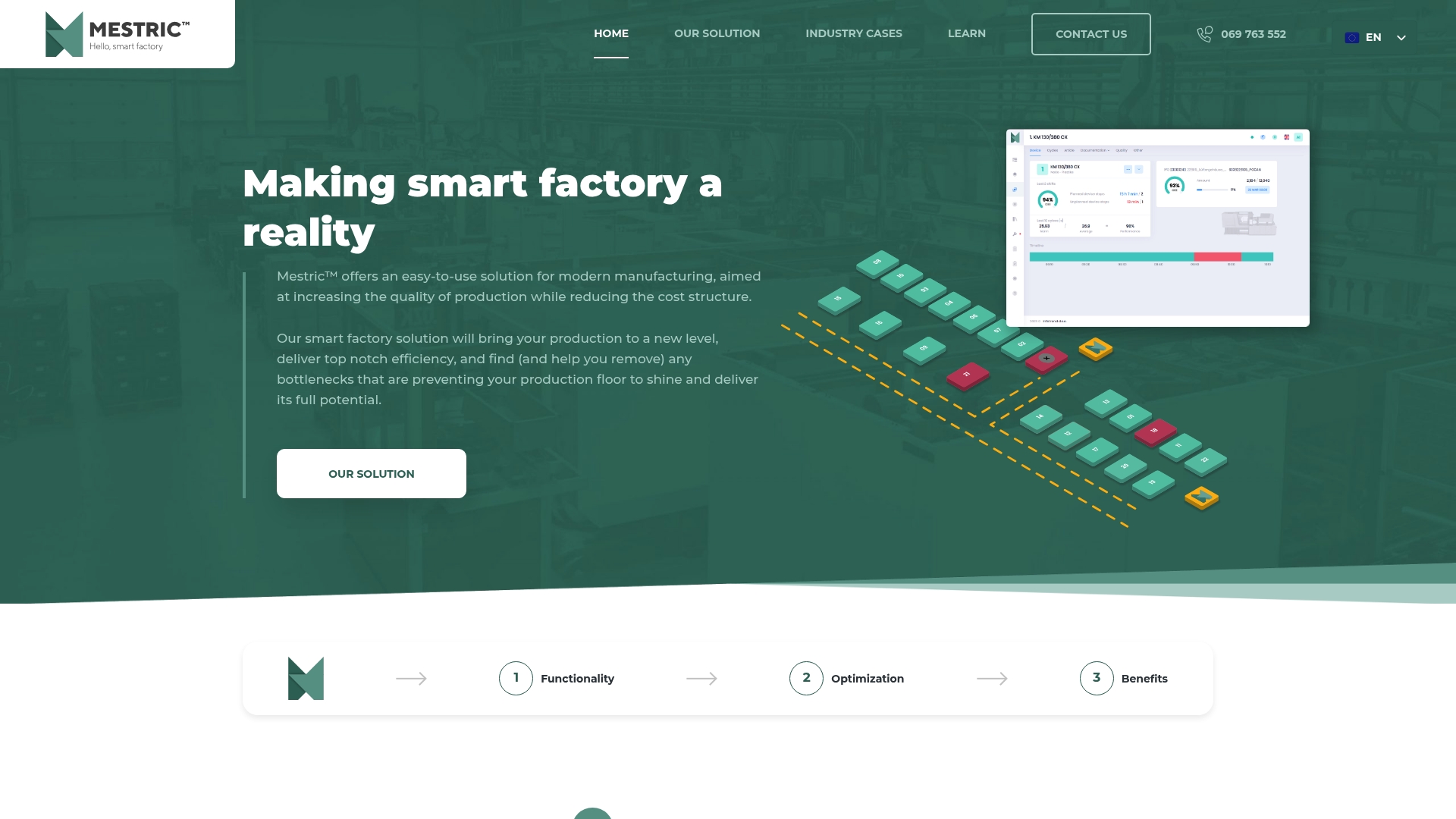
If you are looking to streamline production operations and move beyond generic metrics, our team can walk you through a live demonstration tailored to your facility. The right KPIs, supported by the right system, turn data into decisions.
Choose KPIs based on your plant’s production style, business goals, and customer demand rather than relying on generic templates. Traditional OEE is not universal and should be adapted for high-mix, low-volume operations where standard metrics can mislead.
MOEE adds factors like unplanned downtime and customer demand to traditional OEE, making it more responsive for modern manufacturing. MOEE proposals incorporate downtime and ideal cycle time beyond what standard OEE captures.
Real-time KPIs help you adapt quickly to operational issues and changing customer needs, boosting both efficiency and quality. Modified OEE considers real-time factors such as customer demand that periodic reporting simply cannot reflect.
Yes, but the selection and implementation should be customised to your operation’s complexity and product mix for best results. MOEE proposals address customisation needs within KPI frameworks, and the same principle applies to quality metrics across all production environments.


 069 763 552