

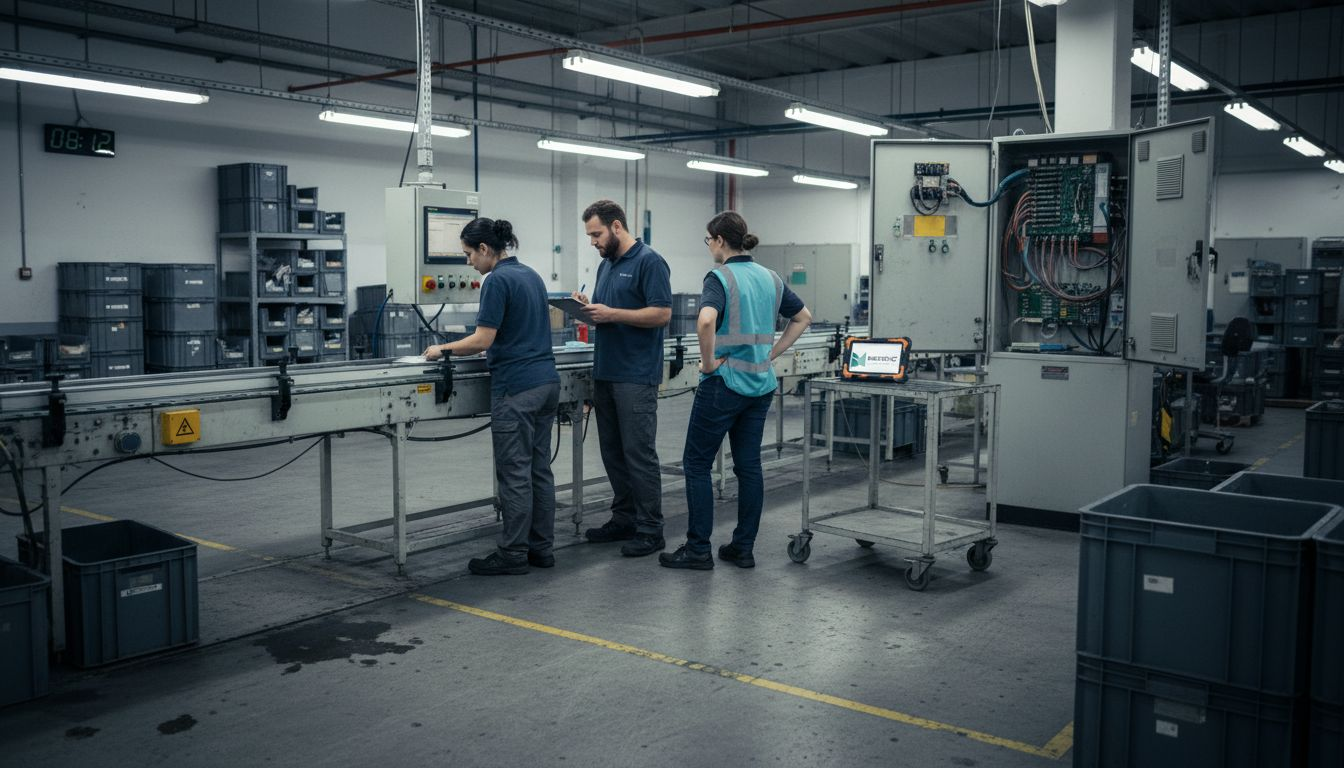
Manufacturing plants often struggle with inefficient shop floor processes that drive up costs and downtime. Real-time data monitoring can boost operational efficiency by up to 25%, transforming how you manage production workflows. This guide explores why optimising shop floor processes matters and how digital solutions help you achieve these gains. You’ll discover practical frameworks, key metrics, and proven strategies that reduce waste while improving quality and throughput across your manufacturing operations.
| Pont | Részletek |
|---|---|
| Optimisation drives efficiency, quality, and agility beyond simple cost reduction | Digital MES platforms provide visibility that enables swift responses to production challenges |
| Real-time monitoring reduces manual errors by up to 40% and improves decision speed | Automated data capture eliminates delays inherent in manual collection methods |
| Structured frameworks prioritise high-ROI improvements with minimal disruption | Baseline KPIs before changes to measure improvement accurately and adjust strategies |
| Track downtime, yield consistency, and resource utilisation to measure success | These metrics quantify improvements and guide continuous refinement efforts |
| Human oversight remains essential alongside digital tools for sustained results | Technology augments expertise but doesn’t replace skilled operator judgement |
Shop floor processes encompass the sequential activities occurring on manufacturing floors, including equipment operation, workflow coordination, and quality control procedures. These processes directly influence production throughput, product quality, and operational costs. Understanding their scope is essential before implementing any optimisation strategy.
The typical shop floor involves complex interactions between machinery, materials, and personnel. Each element affects overall efficiency. Manufacturing plants lose 7-10% of production capacity to unplanned downtime, making process optimisation critical for maintaining competitive advantage. Inefficient equipment use, workflow bottlenecks, and human errors compound these losses, creating significant opportunities for improvement.
Key shop floor activities include:
These activities interconnect in ways that amplify small inefficiencies into major productivity drains. A delay in materials handling cascades into machine idle time, which affects downstream quality checks. Recognising these dependencies helps you identify where optimisation efforts deliver maximum impact. The foundation for improvement lies in mapping current processes and understanding how each component contributes to overall performance.
Equipment downtime represents the most visible efficiency drain. Average manufacturing plants experience 7-10% production capacity loss due to unplanned machine failures and maintenance issues. This downtime directly translates to revenue loss and missed delivery commitments. Beyond equipment issues, workflow bottlenecks emerge from poor layout design, inefficient materials handling, and inadequate coordination between production stages.
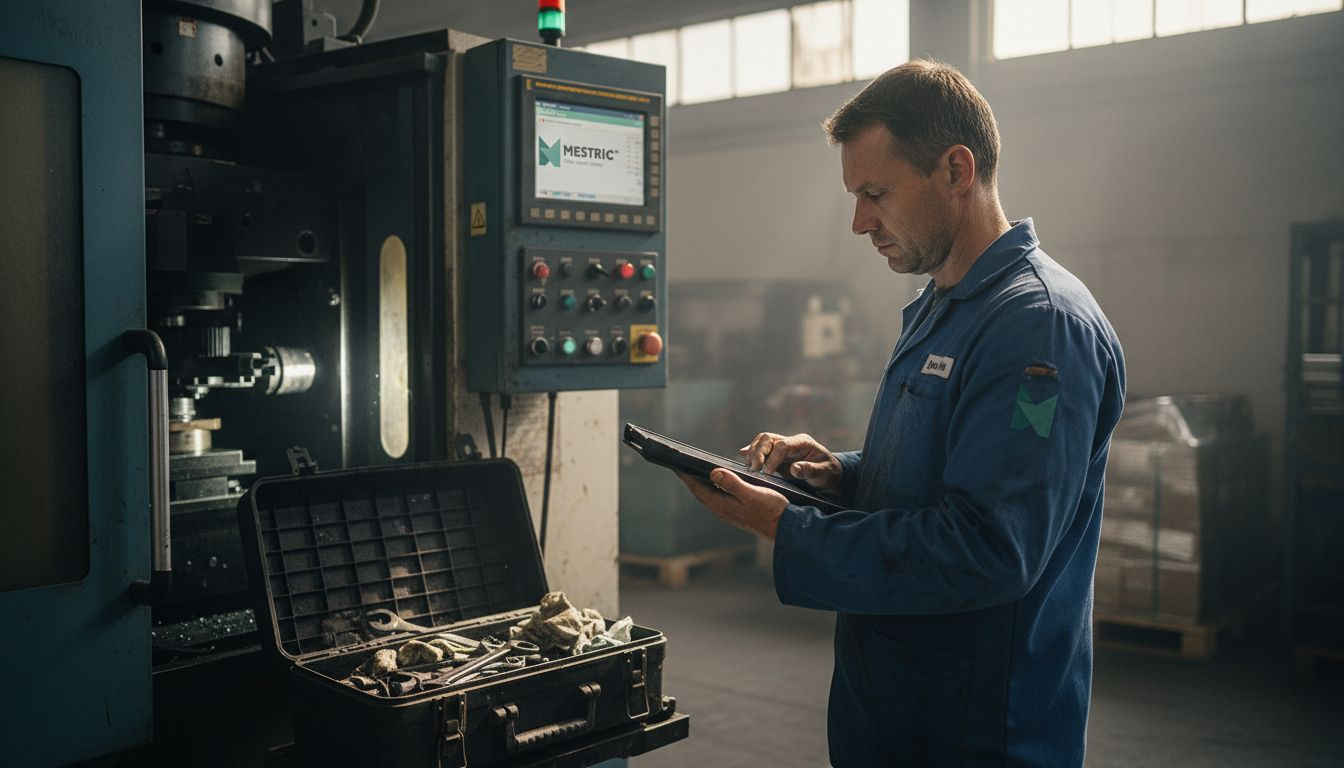
Manual data collection creates significant delays that hinder timely decision making. When operators record information by hand or through disconnected systems, you lose critical hours between problem occurrence and response. This lag allows defects to propagate through production runs, multiplying scrap costs and rework requirements. Manual processes increase error rates by 40% compared to automated systems, further compromising efficiency.
| Factor | Manual Collection | Digital MES Monitoring |
|---|---|---|
| Visibility | Delayed 8-24 hours | Real-time updates |
| Error Rate | 40% higher | Automated accuracy |
| Response Time | Hours to days | Minutes to hours |
| Data Completeness | Partial capture | Comprehensive logging |
Common inefficiency causes include:
Poor communication compounds these issues, especially during shift changes when critical information fails to transfer effectively. Without standardised handover procedures and digital records, incoming teams repeat mistakes or miss emerging problems entirely. These inefficiencies accumulate, creating substantial operational costs that optimisation efforts can address systematically.
Manufacturing Execution Systems provide real-time visibility into every aspect of shop floor operations, enabling swift decision making when problems arise. You gain immediate insights into machine performance, quality parameters, and production progress. This visibility eliminates the guesswork that plagues manual monitoring approaches. MES platforms reduce manual errors by 40% through automated data capture and process control.
AI-powered analytics take optimisation further by predicting equipment failures before they occur. Predictive maintenance schedules interventions based on actual machine condition rather than arbitrary time intervals. This approach reduces unplanned downtime by up to 15% whilst extending equipment lifespan. You avoid unnecessary maintenance that wastes resources whilst preventing catastrophic failures that halt production.
Digital MES benefits include:
Integrating MES with existing equipment doesn’t require complete infrastructure replacement. Modern systems connect to legacy machinery through standard protocols, gradually building comprehensive monitoring capabilities. You can streamline manufacturing processes incrementally, starting with critical bottlenecks before expanding coverage. The key is selecting platforms that improve manufacturing efficiency with MES tools designed for practical implementation.
Profi tipp: Combine MES technology with trained staff oversight for optimal results. Digital tools augment human expertise but don’t replace the judgement and problem-solving skills that experienced operators bring to complex production challenges.
A AI in manufacturing impact extends beyond maintenance into quality control, demand forecasting, and process optimisation. Machine learning algorithms identify subtle patterns in production data that humans miss, suggesting adjustments that improve yield and consistency. This combination of real-time monitoring and intelligent analysis creates a foundation for continuous improvement.
Many plant managers believe optimisation focuses primarily on cost cutting, but this narrow view misses the broader operational benefits. Whilst reduced costs emerge as a natural outcome, the primary drivers are improved quality and enhanced agility. Better processes produce more consistent products with fewer defects, which strengthens customer satisfaction and reduces warranty claims. Increased agility allows faster responses to demand changes and production challenges.
Another widespread misconception suggests that digital tools automatically solve all efficiency problems. In reality, effective optimisation requires ongoing human oversight and process adjustment. Technology provides data and insights, but you must interpret these findings and implement appropriate changes. MES impact on production processes depends heavily on how well your team uses the available information.
The belief that manual data collection suffices for modern manufacturing operations ignores the competitive disadvantages it creates. Manual methods introduce delays of up to 24 hours between problem occurrence and detection, preventing timely corrective action. During this lag, defects propagate through production runs, multiplying scrap costs exponentially. Real-time digital monitoring eliminates these delays, enabling immediate responses that contain issues before they escalate.
Misconception versus reality:
Optimisation primarily drives quality and agility beyond cost-cutting, with financial benefits emerging naturally from improved operational performance.
Recognising these misconceptions helps you approach optimisation with realistic expectations and appropriate resource allocation. The goal isn’t eliminating human involvement but enhancing it with better tools and information. Digital platforms amplify your team’s capabilities, enabling them to focus on high-value problem solving rather than routine data collection.
Successful optimisation requires structured approaches that maximise return on investment whilst minimising production disruption. Start by identifying bottlenecks through systematic process mapping and data analysis. Once you’ve catalogued problem areas, rank them by impact on throughput, downtime frequency, quality defects, and implementation complexity. This prioritisation ensures you address high-value improvements first.
Unstructured changes often create temporary disruptions that outweigh benefits. Without proper planning, new procedures confuse operators, equipment modifications cause unexpected downtime, and conflicting priorities waste resources. A methodical framework prevents these pitfalls by establishing clear implementation stages with defined success criteria. You can track progress objectively and adjust strategies based on measured results.
Optimisation framework steps:
| Approach | Pros | Cons |
|---|---|---|
| Structured Framework | Maximises ROI, minimises disruption, clear metrics | Requires upfront planning time |
| Unstructured Changes | Faster initial implementation | Higher risk of failure, unpredictable results |
A manufacturing optimisation checklist 2026 provides detailed guidance for systematic implementation. Following proven frameworks reduces trial-and-error whilst building organisational confidence in continuous improvement initiatives. Each successful project creates momentum for broader optimisation efforts.
Profi tipp: Always baseline current KPIs before implementing changes so you can measure improvement clearly and demonstrate value to stakeholders objectively.
Phased rollouts allow you to prove concepts on limited production lines before full-scale deployment. This approach reduces risk whilst building operational expertise gradually. Your team learns to use new tools effectively in controlled environments, developing best practices that scale across the entire facility.
Downtime reduction serves as a primary indicator of improved reliability and equipment availability. Track both planned maintenance downtime and unplanned failures separately to understand where optimisation delivers value. Reducing unplanned downtime by 15% translates directly to increased production capacity without additional capital investment. Monitor mean time between failures and mean time to repair as leading indicators of equipment health.
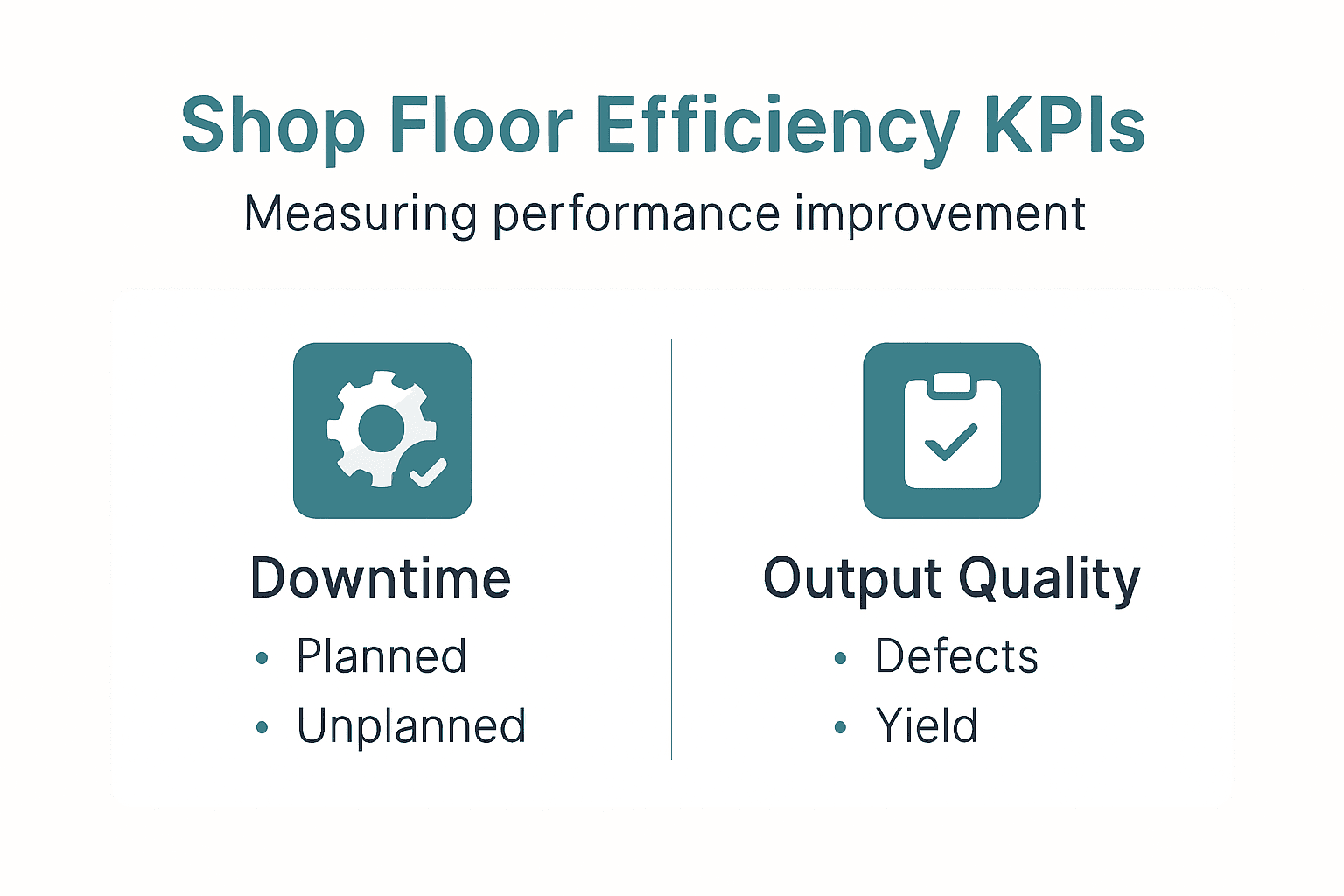
Production yield consistency measures quality improvements resulting from process standardisation and early defect detection. Calculate first-pass yield, which represents the percentage of products manufactured correctly without rework. Higher consistency reduces scrap costs and improves delivery predictability. Resource utilisation metrics reveal how effectively you deploy labour and equipment across production schedules.
Key performance indicators include:
| Metric | Pre-Optimisation Benchmark | Post-Optimisation Target | Typical Improvement |
|---|---|---|---|
| Unplanned Downtime | 7-10% of capacity | 5-6% of capacity | 15-30% reduction |
| Manual Error Rate | 8-12% of transactions | 3-5% of transactions | 40-60% reduction |
| First-Pass Yield | 85-90% | 93-97% | 5-8% increase |
| Resource Utilisation | 65-75% | 80-88% | 15-20% increase |
Establishing clear measurement systems before optimisation begins provides objective evidence of improvement. Use these metrics to guide ongoing refinement and identify new opportunities. Operational efficiency in manufacturing depends on sustained attention to performance data rather than one-time improvements. Regular review cycles ensure optimisation efforts remain aligned with business objectives.
Quality assurance and defect reduction metrics demonstrate how process improvements translate to customer satisfaction and reduced warranty costs. Track customer complaints, return rates, and quality audit results alongside internal production metrics. This comprehensive view shows the full value chain impact of shop floor optimisation.
Shop floor optimisation delivers measurable improvements across efficiency, quality, and cost performance. The 25% efficiency boost achievable through real-time monitoring represents substantial competitive advantage in today’s manufacturing environment. Digital MES platforms provide the visibility and control needed for continuous process improvement, eliminating delays inherent in manual systems.
Structured frameworks ensure you prioritise high-impact improvements whilst minimising implementation risks. By tracking relevant KPIs like downtime, yield consistency, and resource utilisation, you quantify progress objectively and adjust strategies based on evidence. These metrics demonstrate value to stakeholders and build organisational support for ongoing optimisation initiatives.
The combination of digital tools and skilled human oversight creates sustainable improvement systems. Technology handles routine monitoring and data analysis, freeing your team to focus on strategic problem solving and process innovation. This partnership between people and systems drives long-term operational excellence.
Profi tipp: Start small with high-impact pilot projects to demonstrate tangible benefits before full-scale rollout, building confidence and refining implementation approaches with minimal risk.
Discover how modern manufacturing software types can transform your operations with comprehensive tools designed for practical implementation. Access expert guidance on ways to streamline manufacturing processes using proven digital approaches that deliver measurable results. Our manufacturing optimisation checklist provides actionable steps tailored to help you cut costs and improve production in 2026. Explore Mestric’s platform today to begin your optimisation journey with solutions built specifically for manufacturing excellence.
Real-time visibility eliminates the 8-24 hour delays inherent in manual data collection, allowing immediate reaction to emerging problems. When you spot quality issues or equipment anomalies instantly, you prevent defects from propagating through production runs. This immediacy reduces scrap costs dramatically whilst improving overall throughput.
Digital MES platforms reduce manual errors by 40% and maintenance costs by up to 15% through predictive scheduling. These improvements translate to significant savings across labour, materials, and equipment expenses. Most plants achieve payback within 12-18 months whilst building foundations for continuous improvement.
Yes, optimisation directly enhances quality by standardising processes and enabling early defect detection. Consistent procedures reduce variation that causes quality problems, whilst real-time monitoring catches issues before they affect large production batches. This combination maintains the consistent output customers expect.
Focus on bottlenecks causing the most downtime or quality issues, then evaluate potential changes by ROI and implementation complexity. High-impact, low-disruption improvements should take priority, building momentum for larger initiatives. Always baseline current performance so you can measure improvement objectively.
Human oversight ensures data insights are correctly interpreted and optimisations adapt to real-world conditions that algorithms miss. Experienced operators bring contextual understanding and problem-solving skills that complement digital monitoring. Technology augments expertise but doesn’t replace the judgement needed for complex production challenges.


 069 763 552