


Kurzfassung:
- Manufacturing leaders who adopt real-time monitoring reduce unplanned downtime and achieve significant cost savings.
- This technology enhances predictive maintenance, improves product quality, and accelerates decision-making processes.
Manufacturing leaders who have not yet invested in real-time monitoring are leaving significant value on the table. Evidence from real-world implementations shows annual savings of $4.5M alongside dramatic reductions in costly unplanned downtime. Whether you manage a single plant or a multi-site operation, the pressure to reduce costs, improve quality, and maintain a competitive edge grows year on year. This article outlines seven evidence-based benefits of real-time monitoring, giving you the practical insight needed to evaluate its impact on your own operation.
| Punkt | Details |
|---|---|
| Massive downtime reduction | Manufacturers cut unplanned downtime by up to 75% with real-time data visibility. |
| Lower maintenance costs | Predictive analytics mean breakdowns decrease and servicing spends are slashed by 25%. |
| Enhanced product quality | Continuous monitoring ensures real-time process correction, driving higher compliance and yield. |
| Faster decisions | Live dashboards empower managers and executives to adapt and optimise operations instantly. |
| Pitfalls can be managed | Proper planning and process discipline overcome micromanagement, data silos, and integration risks. |
With the business case firmly in focus, the first and most widely reported benefit of real-time monitoring is downtime reduction. Unplanned downtime is one of the most expensive problems in manufacturing, affecting output, profitability, and customer commitments simultaneously. It rarely announces itself in advance, which is precisely why continuous visibility matters.
Real-world implementations demonstrate just how powerful this can be. Manufacturers have achieved 75% less unplanned downtime alongside equipment availability rising from 84% to 95%. That 11-percentage-point availability gain translated to $2.4M in direct cost recovery. For most plant managers, those are transformational numbers.
Real-time production monitoring delivers this result through several interconnected mechanisms:
The net effect is a production environment that recovers faster, wastes less time, and protects its output commitments. When availability climbs toward 95%, the capacity gains alone often justify the monitoring investment within months. Effective cutting of manufacturing downtime depends on acting on live data, not on end-of-week reports.
Pro-Tipp: Set graduated alert levels rather than a single alarm threshold. A yellow warning prompts an inspection; a red alert triggers an immediate stop. This tiered approach prevents alarm fatigue whilst ensuring genuinely critical issues get the response they deserve.
Beyond simply reducing downtime, real-time monitoring radically shifts how maintenance is performed. Traditional time-based maintenance schedules often service equipment either too early or too late. Condition-based, predictive maintenance eliminates that guesswork entirely.
IoT sensors continuously measure variables such as vibration, temperature, current draw, and lubricant quality. When those readings drift outside established baselines, the system flags a potential failure well before it occurs. According to independent research, predictive maintenance reduces breakdowns by 70% and cuts maintenance costs by 25%. Those figures come directly from IoT implementations in industrial settings, validated by Deloitte.
Here is how a transition to predictive maintenance typically unfolds when optimising production with data:
The financial benefits extend well beyond avoided repairs. Consider the true cost of a reactive breakdown: emergency callout rates, scrapped materials in the affected batch, knock-on production delays, and potential contractual penalties. Predictive maintenance eliminates all of those costs simultaneously.
| Maintenance approach | Average breakdown frequency | Typical maintenance cost index | Disruption to production |
|---|---|---|---|
| Reactive (run to failure) | Hoch | 100 (baseline) | Severe and unplanned |
| Preventive (time-based) | Mittel | 65 | Moderate and scheduled |
| Predictive (condition-based) | Low | 75 (reduced) | Minimal and pre-planned |
Pro-Tipp: Begin predictive monitoring on your three or four highest-value assets rather than attempting a full-plant rollout at once. The early wins build internal confidence and generate data that refines your models before you scale.
While asset reliability is essential, long-term viability depends equally on product quality, and live data is central to maintaining it. Quality failures are expensive in ways that go beyond the scrap bin. A single recall or compliance breach can cost millions, damage customer relationships built over years, and attract regulatory scrutiny.

Real-time monitoring gives you the ability to correct processes in the moment, rather than discovering problems during end-of-shift inspections or, worse, after products have left the facility. Continuous data streams from connected equipment detect statistical deviations as they develop, not after they have compounded into a defect pattern.
Key quality-related benefits include:
The link between quality and broader financial performance is direct. Yield improvement through production quality monitoring reduces both raw material waste and the labour cost of rework. When scrap rates fall by even a small percentage on a high-volume line, the savings accumulate rapidly across a production year.
“The ability to detect a process deviation in real time and act on it immediately is the single most effective way to protect both your product quality and your compliance position.” — Quality management perspective, Mestric™
Sustained quality monitoring also supports a culture of continuous improvement. When operators can see the immediate effect of a process adjustment on quality output, they engage more actively with improvement initiatives. The data from quality monitoring best practices reinforces the right behaviours rather than simply policing the wrong ones.
Manufacturers who have made this shift report measurable gains in overall financial outcomes, with quality improvements contributing a significant portion of those savings through reduced waste and rework costs.
Not only does real-time monitoring improve critical outcomes, but it also transforms how quickly leaders can act. Waiting for a morning debrief or a weekly management report to understand yesterday’s performance is no longer an acceptable operating model. By the time you read that report, the opportunity to intervene has passed.
Live KPI dashboards change that entirely. Production managers and senior executives access the same accurate, up-to-the-minute picture of operations. There is no need to chase supervisors for updates, reconcile conflicting spreadsheets, or wait for a shift handover to understand where problems lie.
With real-time performance tracking, the operational visibility benefits are concrete:
The ability to make evidence-based decisions in the moment rather than reacting hours later is a genuine competitive advantage. Understanding the role of data in manufacturing efficiency means recognising that faster decisions, grounded in accurate data, consistently outperform slower ones based on intuition or lagging reports.
When you combine real-time visibility across equipment, quality, and labour, you create conditions where small daily improvements compound into significant annual gains. The documented ROI from real-time data operations confirms that this operational agility is one of the primary drivers of the $4.5M savings figure cited earlier.
Even proven solutions require thoughtful implementation. Real-time monitoring delivers powerful results, but it also introduces risks that are worth understanding before you commit to a rollout strategy. Awareness of these challenges helps you plan your implementation in a way that maximises benefit and minimises disruption.
The most nuanced risk is one that is often overlooked. As real-time OEE measurement experts point out, reacting to every minor fluctuation in live OEE data can actually lead to counterproductive micromanagement. Second-by-second OEE readings are inherently volatile. Without appropriate time windows for loss analysis, operators may over-correct normal process variation, introducing more instability rather than less.
Other significant considerations include:
“The technology works. What determines success or failure is almost always the human and process layer surrounding it.” — Implementation experience, Mestric™
Addressing these challenges requires a deliberate approach to monitoring for operational excellence. Define your alert logic carefully, invest in integration architecture from the outset, and build cybersecurity into the design rather than bolting it on afterwards. Pilot programmes on bounded sections of your operation allow you to learn and refine before scaling.
Having covered both the upside and the cautionary considerations, there is a more fundamental point worth making directly. Real-time data is a catalyst, not a solution in itself. Many organisations invest in monitoring technology, deploy dashboards across their facilities, and then find that the anticipated results take longer than expected to materialise. The technology is rarely the problem.
The manufacturers who extract the most value from real-time monitoring share a common characteristic. They treat the data as the starting point for a structured response, not as an endpoint in itself. They build clear action protocols that define who responds to which alert, within what timeframe, and with what escalation path. Without that structure, live data becomes background noise.
Training is the other factor that separates high-performing implementations from disappointing ones. Operators who understand why a particular threshold triggers an alert, and what action is expected of them, respond more effectively than those who simply see a flashing indicator. When your team understands the process logic behind the data, they engage with it rather than ignoring it.
The most effective organisations also build feedback loops. When an alert leads to a maintenance action that prevents a breakdown, that outcome gets recorded and reviewed. When an alert turns out to be a false positive, the threshold gets refined. Over time, this iterative process makes the monitoring system progressively more accurate and more useful. Improving efficiency with MES tools is not a one-time project. It is an ongoing operational discipline.
The cultural dimension matters too. Real-time visibility can create tension if managers use live data to scrutinise individual operators rather than to improve systemic performance. The organisations that succeed treat monitoring as a collaborative improvement tool, not a surveillance mechanism. That distinction in approach makes a substantial difference to how readily teams adopt and engage with the technology.
For executives ready to harness these benefits, the question is no longer whether real-time monitoring delivers value. The evidence is clear. The question is how to implement it effectively, at the right pace, and with the right technology partner.
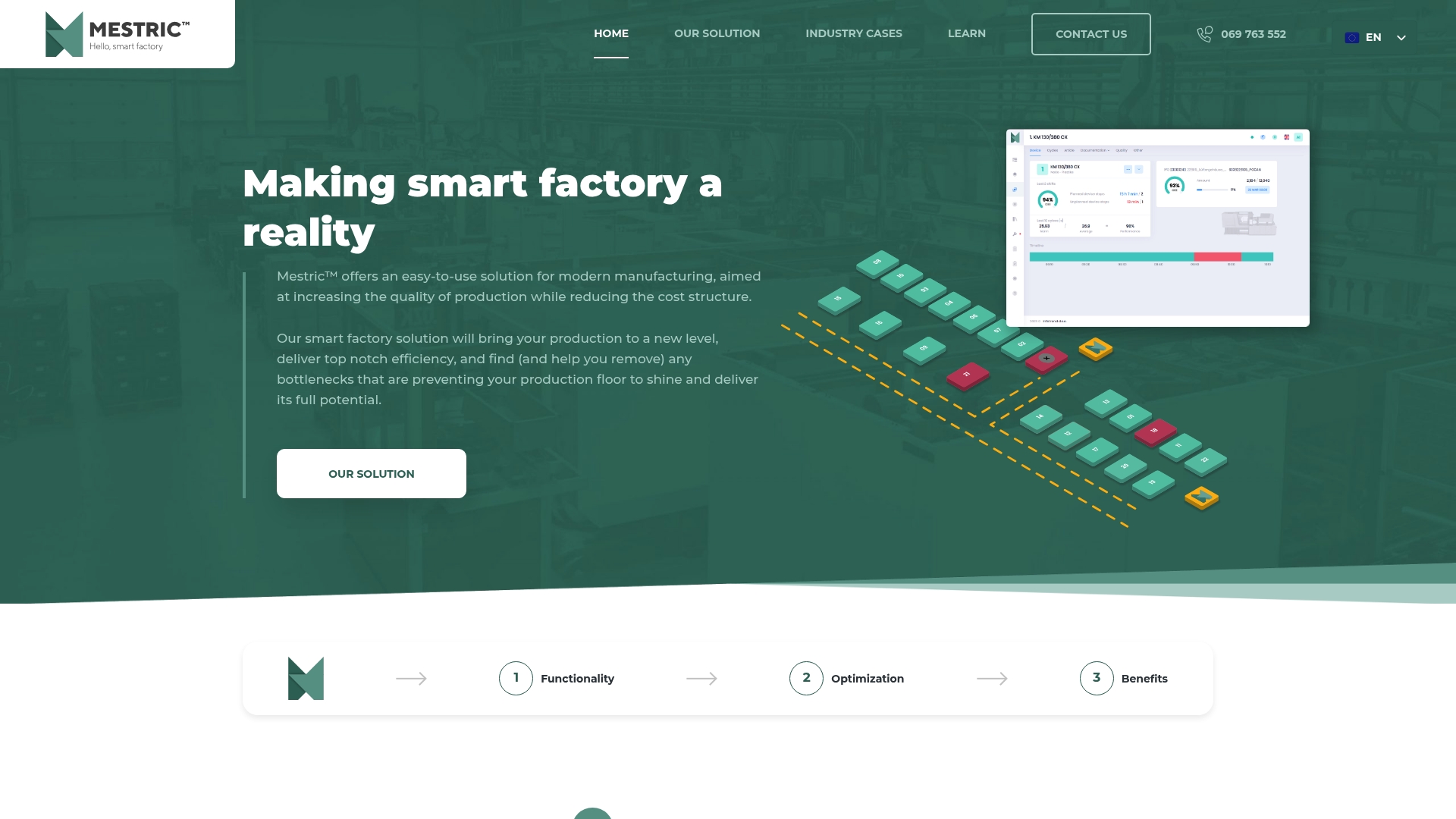
Mestric™ is built specifically for manufacturers who want rapid deployment without sacrificing depth of capability. Our platform connects directly with your existing equipment to surface live KPIs on downtime, quality, performance, and cost. Whether you are evaluating a modern MES approach against your current setup, seeking advanced production monitoring for a specific line, or looking to roll out performance tracking solutions across multiple sites, we can support you at every stage. Request an onsite demonstration and see how connected machinery transforms your production environment in a live setting.
It reduces unplanned downtime, increases asset utilisation, and equips managers with actionable data for faster decision-making, with leading plants reporting annual savings of $4.5M from these combined gains.
Leading plants have reported savings of up to $4.5M per year through reduced downtime costs, quality improvements, and better resource utilisation across their operations.
By identifying failures before they occur, predictive monitoring reduces breakdowns by 70% and cuts maintenance costs by 25%, eliminating emergency callouts and lost production batches.
Data overload, integration complexity, and cybersecurity remain the most frequent hurdles, alongside the risk of micromanagement when reacting to every minor fluctuation without appropriate time windows for analysis.
It provides instant feedback on process deviations, supporting compliance and improving yield by catching quality issues in the moment, contributing directly to the measurable savings that well-implemented monitoring systems consistently deliver.


 069 763 552