


SMED menjava orodij, the systematic reduction of changeover time between production runs, typically compresses setup times to below ten minutes by converting internal tasks into external ones. Case data shows reductions from hours to a fraction of that, freeing capacity without buying new machines. Your immediate next step: time your worst-performing changeover on video this week and pull together a small cross-functional team before you touch a single fixture.
TL;DR:
- Focus on quick organizational fixes first, such as colour-coded tool carts and quick-release clamps, which often provide faster ROI than capital upgrades.
- Measure changeover times separately for internal and external tasks to accurately track progress and set realistic targets based on machine use and cost impact.
- Standardize the new sequence with visual work instructions and weekly audits to sustain improvements and prevent regressions over time.
- Automated monitoring systems like MES can continuously track changeover efficiency, alerting supervisors early to regressions without manual stopwatch work.
SMED stands for Single Minute Exchange of Die, a method developed by the Japanese industrial engineer Shigeo Shingo while working with Toyota in the 1950s and 1960s. The goal is to shrink changeover time to under ten minutes wherever practical, though not every process reaches that target.
The method rests on one distinction: internal tasks require the machine to stop, while external tasks can happen while it keeps running. A die that needs unbolting can only happen once the press is idle, so that’s internal. Fetching the next die from the tool store, checking it against a specification sheet, or pre-heating a mould, none of that needs the machine stopped at all, so it’s external.
SMED identifies this split as the core mechanism behind every real reduction: the more tasks you shift from internal to external, the less time the machine sits idle between runs.
This matters for reasons beyond raw speed:
Practical SMED workshops follow a phased sequence, and you can run a compressed version of it in a single day on one machine.
A realistic one-day agenda: 60 minutes filming and mapping the current state, 90 minutes sorting internal versus external on the SMED table as a group, 90 minutes brainstorming and testing conversions on the shop floor, and a final hour standardising the new sequence and briefing the next shift. Standard practitioner guidance frames this baseline to standardise sequence as the backbone of any SMED workshop, and it scales down comfortably to a half-day session if the machine is simple.
Pick a pilot machine using three filters: how often it changes over, how long each changeover absolutely takes, and how much output it’s costing you while idle. A press that changes over four times a shift and takes 40 minutes each time is a far better pilot than one that changes over weekly, even if the weekly one looks more dramatic on paper.
The team itself needs a mix, not a lone champion:
Before the first session, confirm you have a working camera, a stopwatch, blank SMED table templates, and that any tooling you plan to test has passed a basic safety check.
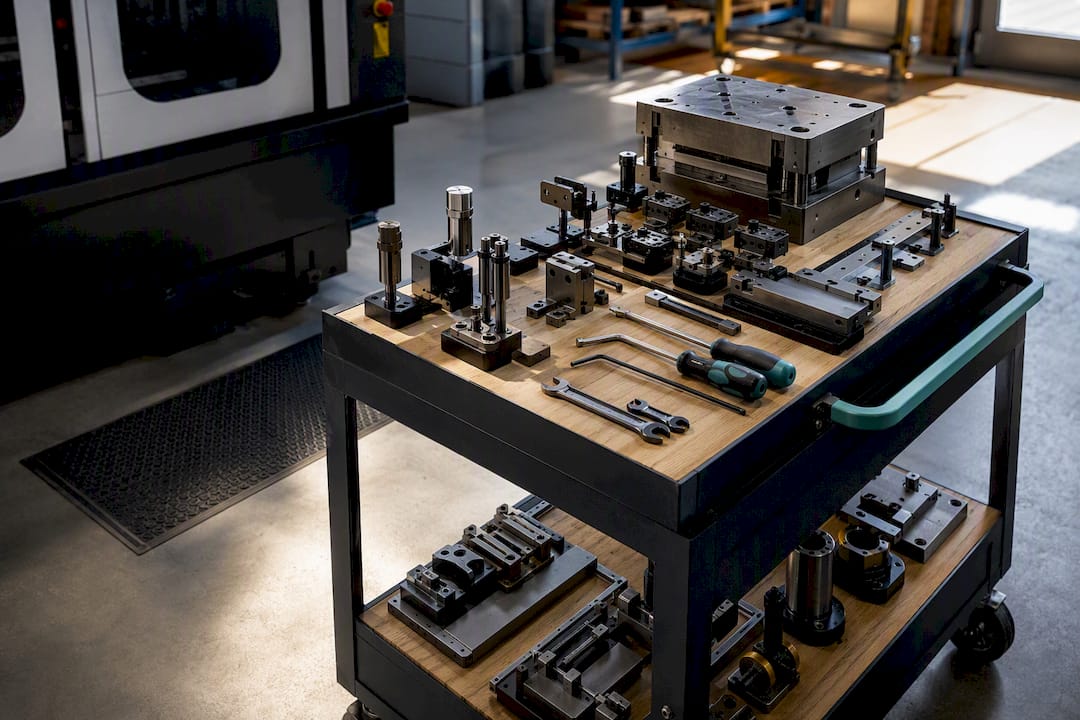
Most of the fastest gains come from organisation, not capital spend. Set up a SMED table, a dedicated cart holding every tool, gauge and fastener needed for that specific changeover, arranged in the order they’re used.
Colour-code sockets and spanners so an operator never hunts through a drawer mid-changeover.
For mechanical fixing, replace threaded bolts with quick-release clamps wherever tolerances allow, and consider hydraulic or pneumatic clamping on high-frequency machines where the payback period is short. Fixture and mechanisation upgrades like these are consistently cited as the interventions that deliver the largest single jump in changeover speed once internal tasks have been separated out.
Pro Tip: Test the cheap fixes first. A colour-coded tool cart costs almost nothing and often saves more time than the hydraulic clamp you were about to order.
Define your timing points precisely before you compare anything: changeover start is the last good part off the old run, changeover end is the first good part of the new run confirmed to specification. Track internal time and external time separately, because collapsing them together hides where your gains actually came from.
Track these KPIs on every changeover, not just the pilot:
Realistic targets vary by machine, but a documented foundry case recorded a drop from 463 minutes to 240 minutes after SMED implementation, close to a 48% reduction achieved without new capital equipment. Treat that figure as an illustration of what disciplined separation and conversion can achieve, not a guaranteed outcome for every process.
Gains from a single workshop fade within weeks if nobody locks them into daily routine. Write the new sequence into a standard work instruction with photos at each step, post it at the machine, and have a supervisor audit against it weekly for the first month.
This is where automated data capture earns its place. Manual stopwatch timing is fine for a pilot, but it doesn’t scale across every shift, every machine, every changeover.
The trap isn’t technical, it’s organisational. Teams run a great pilot workshop, hit a strong number, then let the next shift revert to old habits because nobody wrote it down properly or checked back in. The fastest unblocker I’ve seen in the underlying case data is cheap: a laminated standard work card at the machine and a five-minute weekly audit, not a capital project.
Small tool investments, colour-coded carts, quick-release clamps, pay back faster than most people expect, often within weeks rather than quarters. Bigger fixture spend, zero-point systems and hydraulic clamping, deserves a pilot first to prove the case before it hits a purchase order.
Run one machine, measure it honestly, standardise what works, then repeat. That’s the whole method.
— Andraž
Workshops and stopwatches get you the first result. Keeping that result, across every shift, every operator, every machine, is a different problem, and it’s the one manual tracking usually loses. Such a system replaces the clipboard with automated timing pulled straight from your machines, so a changeover that starts creeping back towards its old baseline shows up on a dashboard before it becomes next quarter’s bad number.
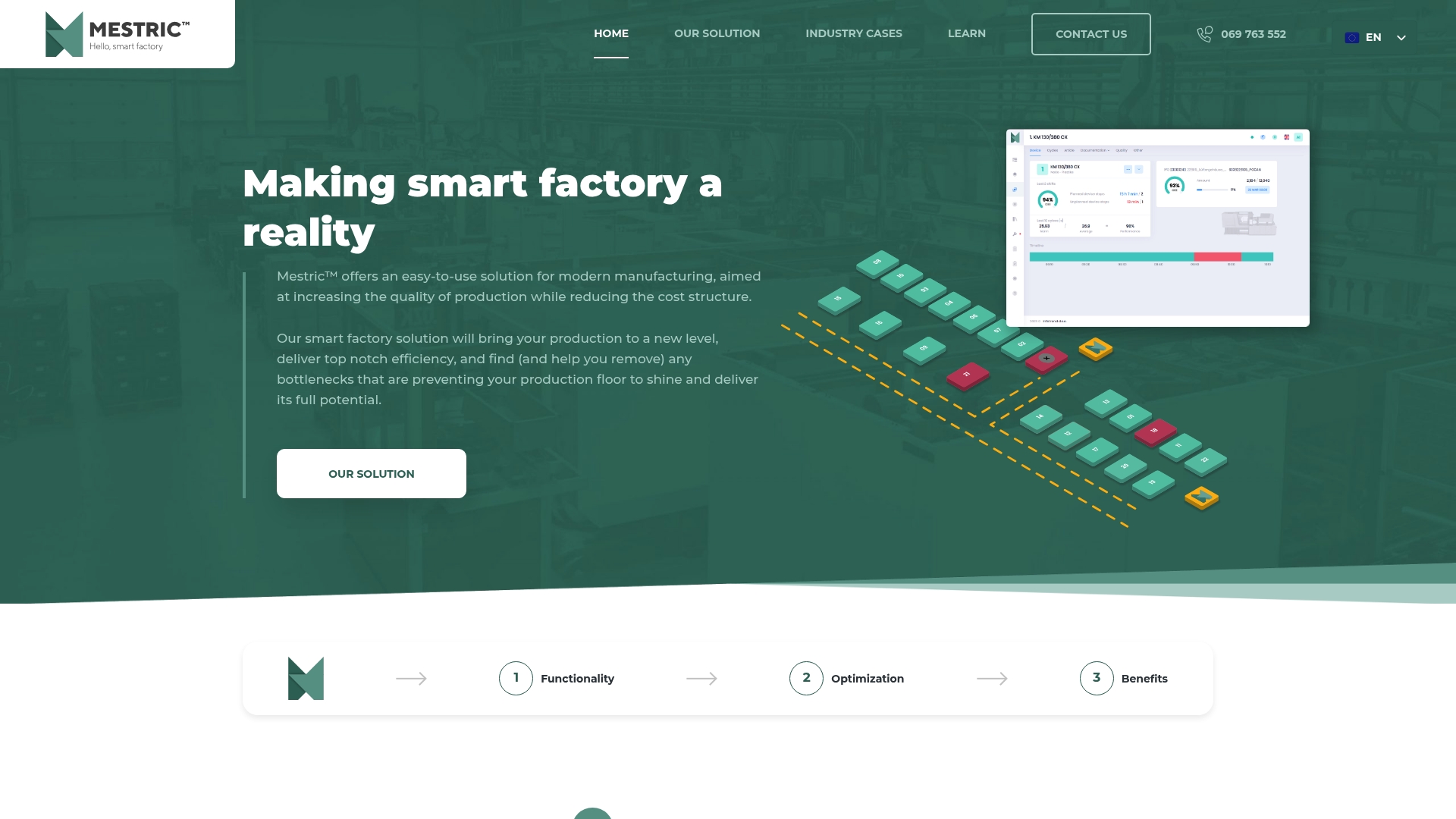
Compared with spreadsheet trackers or periodic time studies, this provides continuous, machine-level visibility into internal versus external task time without anyone standing at the line with a stopwatch. That means your SMED gains get audited automatically instead of drifting quietly for three months before someone notices. If you want to see how MES compares with traditional manual monitoring on a real production line, request an onsite demonstration and bring your worst-performing changeover as the test case.
Readers who want to go deeper into the sources behind this guide can start with the academic case study on foundry changeover times, which documents the 463 to 240 minute reduction referenced above in full methodological detail. For a Slovenian-language phased walkthrough of the four SMED steps, the practitioner explainer from ECG covers baseline capture through to standardisation.


 069 763 552