

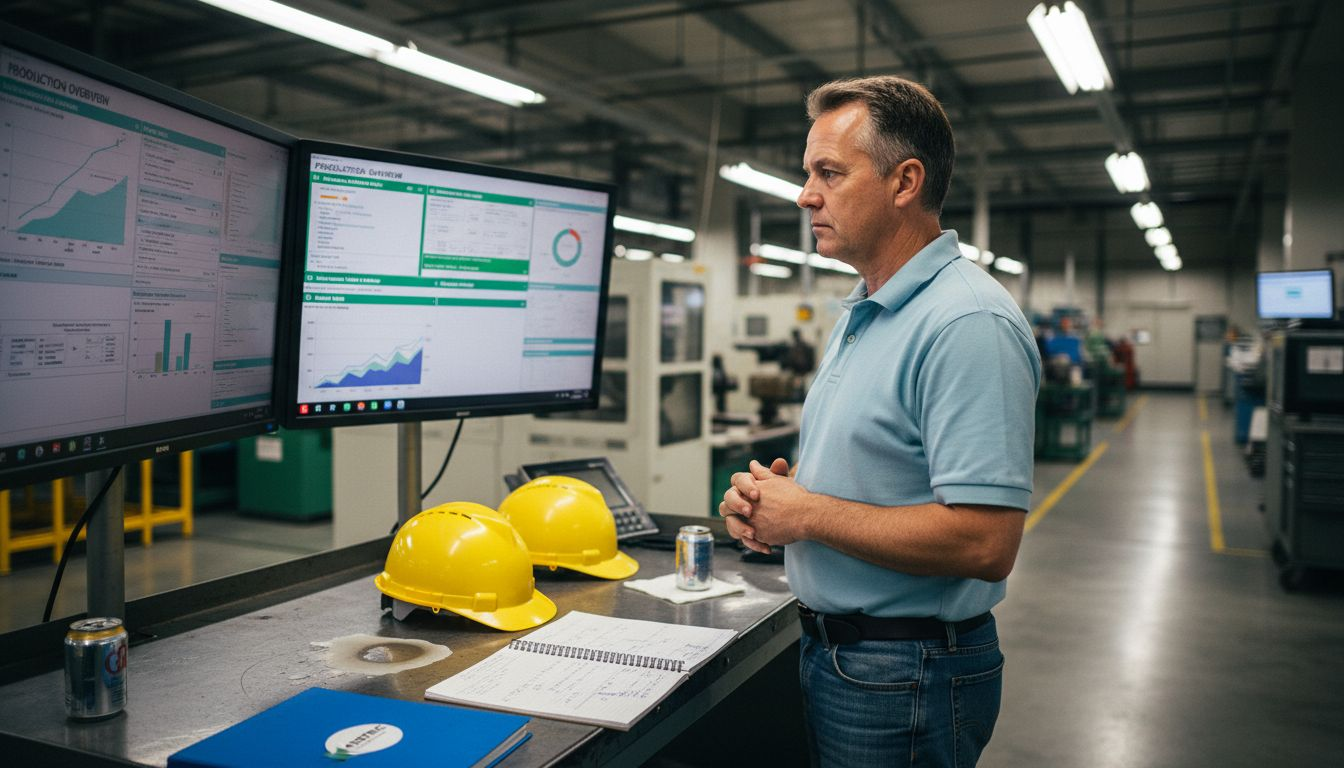
Every manufacturing plant manager faces the challenge of keeping production efficient while budgets get tighter. Finding digital tools that offer real-time performance analytics is becoming crucial for factories in places like Germany, China or Brazil. Modern Manufacturing Execution Systems now offer comprehensive production management, bridging the gap between manual methods and data-driven decisions. This overview explains how flexible, modular MES solutions can help reduce costs, optimise workflows and deliver lasting improvements in operational efficiency.
| Točka | Podrobnosti |
|---|---|
| Importance of MES | A Manufacturing Execution System is integral for real-time tracking, monitoring, and optimising manufacturing processes, enhancing operational efficiency. |
| Modular Deployment | MES solutions can be implemented modularly, helping businesses of all sizes adopt technology progressively without massive upfront costs. |
| Real-time Analytics | Modern MES enables sophisticated data processing that transforms production metrics into actionable insights, leading to improved quality control. |
| Financial Benefits | Implementing MES typically results in reduced operational costs and enhanced productivity, providing a strong return on investment through intelligent technology. |
A Manufacturing Execution System (MES) represents a sophisticated digital platform designed to track, monitor, and optimise production processes from raw material transformation to finished goods delivery. Unlike traditional manual tracking methods, modern MES solutions provide real-time insights that enable manufacturers to make data-driven decisions rapidly.
MES serves a critical role in bridging operational gaps between enterprise-level planning and shop floor control systems. Key capabilities include:
Despite its transformative potential, manufacturers often harbour several misconceptions about MES implementation. Common misunderstandings persist regarding system complexity, cost, and applicability across different business scales.
Many plant managers mistakenly believe MES solutions are exclusively suited for large enterprises with substantial technology budgets. However, contemporary MES platforms are increasingly modular, cloud-based, and scalable, making them accessible to businesses of all sizes. These systems can be implemented progressively, allowing manufacturers to adopt advanced digital capabilities without massive upfront investments.
MES is not just a data collection tool, but a comprehensive production management solution that provides end-to-end capabilities for improving operational efficiency.
Pro tip: Start with a modular MES implementation, focusing on one or two critical production areas to demonstrate value and build organisational confidence before full-scale deployment.
Manufacturing Execution Systems (MES) have evolved significantly, offering diverse deployment strategies that cater to varying organisational requirements. These deployment variations reflect the increasing sophistication of manufacturing technology and the need for flexible, adaptable digital solutions across different industrial contexts.
The primary MES deployment models include:
Manufacturing technology deployment strategies now emphasise modular approaches that allow incremental implementation. This means businesses can adopt MES capabilities progressively, reducing initial investment risks and allowing customisation according to specific operational needs.
Industry 4.0 has significantly transformed MES deployment, introducing advanced capabilities like AI-driven analytics and adaptive manufacturing technologies. Modern systems are designed to be inherently scalable, supporting everything from small manufacturing workshops to large industrial complexes. The key differentiator is no longer system complexity, but the ability to integrate seamlessly with existing technological ecosystems.

Here is a comparison of MES deployment models and their organisational suitability:
| Deployment Model | Ideal For | Typical Advantages |
|---|---|---|
| On-premise | Large firms with IT capacity | Full data control, custom integration |
| Cloud-based | SMEs, multi-site operations | Easy scaling, lower upfront costs |
| Hybrid | Firms needing flexibility | Balance of control and accessibility |
| Edge Computing MES | Real-time, high-speed needs | Low latency, localised processing |
Successful MES deployment is not about implementing the most advanced system, but selecting the most appropriate solution for your specific manufacturing environment.
Pro tip: Conduct a comprehensive infrastructure assessment before MES implementation to ensure compatibility and minimise integration challenges.
Manufacturing Execution Systems act as critical digital connectors, bridging communication across manufacturing ecosystems. By integrating shop floor operations with enterprise-level management systems, MES creates a seamless information flow that transforms fragmented manufacturing processes into cohesive, intelligent workflows.
The key process connections include:
Manufacturing system interoperability relies on sophisticated communication protocols that standardise data exchange between machines, operators, and management platforms. These digital connections allow for adaptive production management, where each machine and process becomes a responsive node in a larger, intelligent manufacturing network.
MES optimises processes by providing unprecedented visibility and control. Operational teams can now track production metrics in real-time, identify bottlenecks instantly, and make data-driven decisions that enhance overall manufacturing efficiency. The system transforms disconnected manufacturing activities into a synchronised, responsive operational environment.
Process optimization is not about controlling every detail, but about creating intelligent connections that enable seamless, adaptive manufacturing.
Pro tip: Begin your MES integration by mapping existing communication pathways and identifying key data exchange points to ensure smooth system implementation.
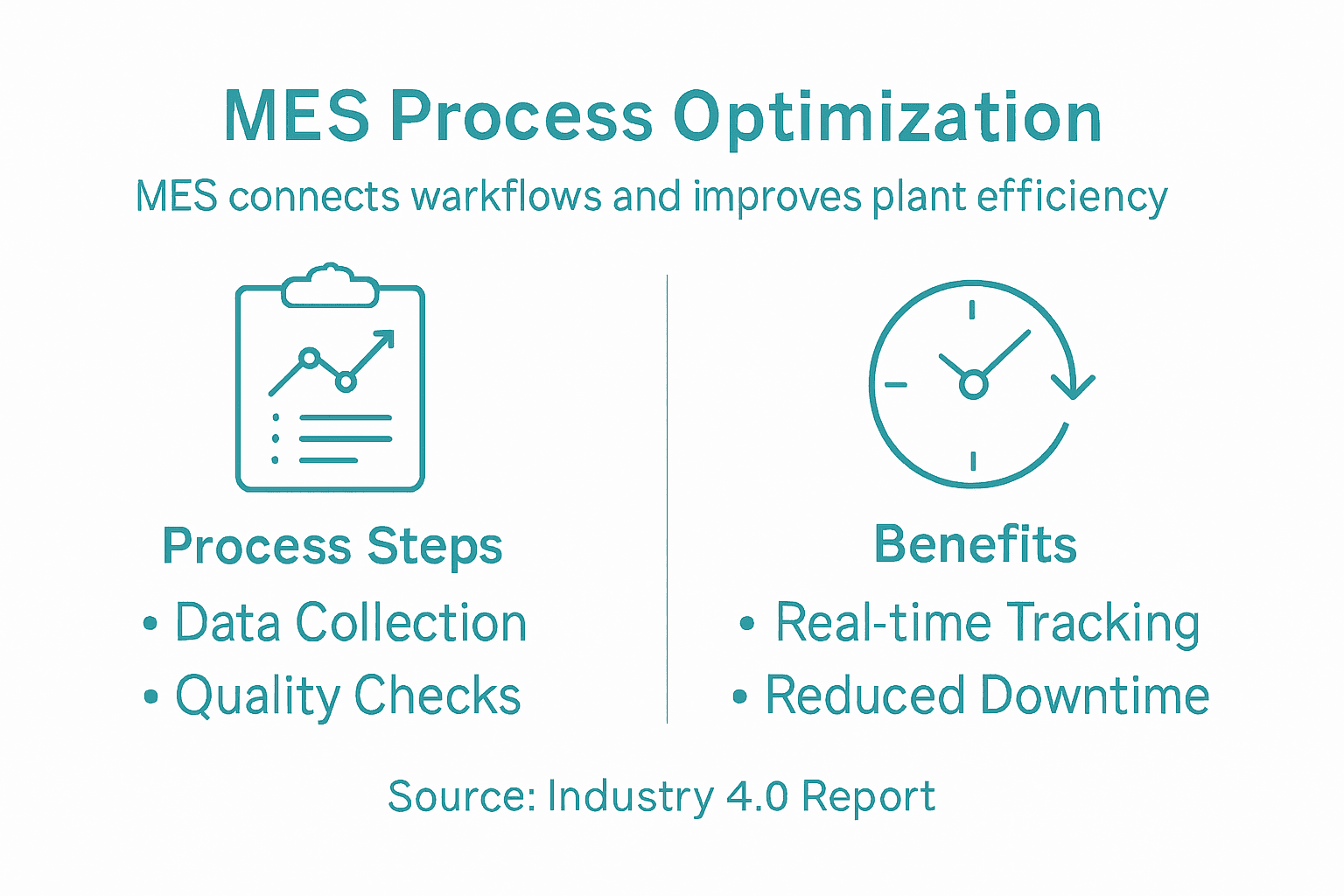
Real-time analytics have transformed manufacturing quality control, enabling sophisticated data processing frameworks that provide unprecedented operational insights. Modern Manufacturing Execution Systems leverage advanced sensor technologies and intelligent algorithms to capture, analyse, and interpret production data with remarkable precision and speed.
Key real-time analytics features include:
Manufacturing data visualization creates interactive dashboards that transform complex production metrics into comprehensible insights. These sophisticated tools enable operational teams to understand intricate performance patterns, identify potential quality issues, and make data-driven decisions with unprecedented speed and accuracy.
The integration of machine learning and artificial intelligence within MES platforms represents a quantum leap in manufacturing intelligence. By processing vast quantities of sensor data in real-time, these systems can predict potential quality issues, recommend process optimisations, and support continuous improvement strategies across entire production environments.
Real-time analytics are not just about collecting data, but about transforming information into actionable manufacturing intelligence.
Pro tip: Implement a phased approach to MES analytics, starting with critical production areas and gradually expanding data collection and analysis capabilities.
Implementing a Manufacturing Execution System represents a strategic investment with significant financial implications for modern manufacturing organisations. No-code MES solutions demonstrate substantial economic benefits by dramatically reducing implementation complexity and enabling faster return on investment compared to traditional manufacturing systems.
Key financial advantages include:
Companies typically experience measurable financial improvements through MES implementation, with potential savings manifesting across multiple operational domains. Quantifiable benefits often emerge through reduced downtime, improved process efficiency, and more accurate resource utilisation, which collectively contribute to substantial bottom-line improvements.
The return on investment (ROI) for Manufacturing Execution Systems extends beyond immediate cost savings. By enabling data-driven decision-making, predictive maintenance, and continuous process optimisation, MES platforms help organisations develop more resilient, adaptable manufacturing capabilities that generate long-term competitive advantages.
The table below highlights MES financial benefits and how they impact the business:
| Financial Benefit | Business Impact |
|---|---|
| Reduced operational costs | Improved profit margins |
| Minimized production waste | Sustainable resource utilisation |
| Enhanced workforce productivity | Faster production cycle times |
| Lower maintenance expenditures | Fewer unplanned shutdowns |
| Better resource allocation | Optimal equipment and staff use |
Financial transformation in manufacturing is not about cutting costs, but about strategically investing in intelligent, responsive technologies.
Pro tip: Calculate potential MES implementation savings by conducting a comprehensive baseline assessment of current operational inefficiencies before system deployment.
Navigating the complex landscape of Manufacturing Execution Systems requires careful consideration of potential alternatives and common pitfalls. MES solution selection demands strategic evaluation beyond traditional monolithic platforms, particularly for mid-sized manufacturers seeking flexible, cost-effective digital transformation.
Common alternatives to traditional MES include:
Mistakes manufacturers frequently encounter during MES implementation involve over-investing in complex systems with unnecessary features. Many organisations mistakenly pursue comprehensive solutions that introduce more complexity than value, overlooking the importance of targeted, scalable technological interventions that align precisely with specific operational requirements.
Successful digital manufacturing strategies prioritise adaptability, incremental implementation, and alignment with existing technological ecosystems. Rather than pursuing comprehensive ‘one-size-fits-all’ solutions, manufacturers should focus on modular, configurable platforms that can evolve alongside their operational needs and technological capabilities.
Technological transformation is not about acquiring the most advanced system, but implementing the most appropriate solution for your specific manufacturing context.
Pro tip: Conduct a comprehensive operational audit and prioritise MES solutions offering phased implementation and flexible integration capabilities.
The article highlights critical challenges in Manufacturing Execution Systems such as real-time production tracking, process optimisation, and overcoming misconceptions about system complexity. If you are striving to boost operational efficiency, reduce downtime, and gain unparalleled visibility into quality and performance metrics, Mestric™ offers a tailored solution designed to address these exact pain points. Our platform connects directly with your manufacturing equipment, empowering you to make informed decisions swiftly and confidently.
Discover how Mestric™ can transform your manufacturing environment today. Explore our resource-rich Learn - Mestric category for expert insights and practical guidance on implementing MES technology step-by-step. Ready for a hands-on experience? Request a demonstration at https://mestric.com and see how seamless integration and AI-powered analytics will elevate your production to new levels of efficiency. Start your journey towards operational excellence now.
A Manufacturing Execution System (MES) is a digital platform designed to track, monitor, and optimise production processes, providing real-time insights that enable manufacturers to make informed, data-driven decisions.
MES improves plant efficiency by providing real-time production tracking, optimising resource allocation, monitoring quality management, and offering detailed performance analytics to identify bottlenecks and streamline operations.
The primary deployment models for MES include on-premise systems, cloud-based solutions, hybrid architectures, and edge computing MES, each catering to different organisational requirements and scalability needs.
Implementing an MES can lead to reduced operational costs, decreased production waste, enhanced workforce productivity, lower maintenance expenses, and improved resource allocation efficiency, collectively contributing to substantial financial gains.


 069 763 552