


Manufacturing leaders often misunderstand plant automation as a simple worker replacement scheme. In reality, plant automation is a sophisticated integration of sensors, controllers, actuators, and communication protocols designed to enhance operational efficiency and product quality. This guide demystifies plant automation by exploring its core mechanics, evidence-backed benefits, deployment challenges, and strategic approaches. You’ll discover how modern automation systems function, what measurable improvements they deliver, and how to select the right strategy for your facility’s unique requirements.
| Točka | Podrobnosti |
|---|---|
| Holistic automation integration | Plant automation combines sensors, controllers, actuators and communications to boost operational efficiency and product quality rather than merely replacing workers. |
| Evidence of efficiency gains | Automation delivers faster changeovers, reduced downtime and shorter process times, translating into higher OEE and tangible returns on investment, with examples of 40 percent faster changeovers and over 50 percent reductions in unplanned downtime. |
| Vendor agnostic phased rollout | A phased, vendor agnostic strategy helps manage complexity, maximise benefits and enables smoother evolution of the system. |
| Open standards advantage | Open standards such as OPC UA support scalable interoperability and reduce reliance on proprietary technologies, lowering total cost of ownership. |
Plant automation operates through interconnected systems that continuously monitor and adjust manufacturing processes. The foundation consists of sensors detecting variables like temperature, pressure, and position. These sensors feed data to controllers such as programmable logic controllers (PLCs) or distributed control systems (DCS), which process inputs using algorithms like proportional-integral-derivative (PID) control. Actuators then implement the required changes through motors, valves, and drives. This closed-loop feedback system ensures consistent process control and rapid response to deviations.
Communication protocols enable seamless data exchange between devices and enterprise systems. Industrial networks like EtherNet/IP, Profibus, and Modbus connect field devices to supervisory systems. These protocols follow the ISA-95 hierarchical model, which organises automation architecture from Level 0 (field devices and sensors) through Level 1 (control systems), Level 2 (supervisory control), Level 3 (manufacturing operations management), to Level 4 (enterprise resource planning). This structure ensures data flows efficiently from the plant floor to executive dashboards, supporting informed decision-making at every organisational level.
Modern plant automation increasingly incorporates edge computing and artificial intelligence to process data locally and reduce latency. Edge devices analyse sensor streams in real time, identifying anomalies and triggering corrective actions without relying on cloud connectivity. This architecture proves particularly valuable in environments with intermittent network access or strict data sovereignty requirements. Understanding smart factory trends 2026 helps you anticipate how these technologies will evolve and integrate into existing systems.
Key automation components:
| Component | Function | Primeri |
|---|---|---|
| Sensors | Measure process variables | Temperature probes, pressure transducers, flow metres, proximity switches |
| Controllers | Process inputs and execute control algorithms | PLCs, DCS, PACs, industrial PCs |
| Actuators | Implement control decisions | Motor drives, pneumatic valves, hydraulic cylinders, solenoids |
| Communication | Enable data exchange | EtherNet/IP, Profibus, Modbus TCP, OPC UA |
| HMI/SCADA | Provide visualisation and operator control | Touch panels, industrial monitors, SCADA software |
Pro tip: Prioritise scalable, vendor-agnostic components when designing automation architecture. Open standards like OPC UA facilitate future system expansions and reduce dependence on proprietary technologies, lowering total cost of ownership whilst preserving upgrade flexibility.
Plant automation delivers quantifiable improvements across multiple operational dimensions. Manufacturing facilities implementing automation report faster changeovers, reduced downtime, accelerated process times, and decreased administrative overhead. These gains translate directly to enhanced overall equipment effectiveness (OEE) and measurable return on investment. Understanding the empirical evidence helps you build compelling business cases and set realistic performance targets.
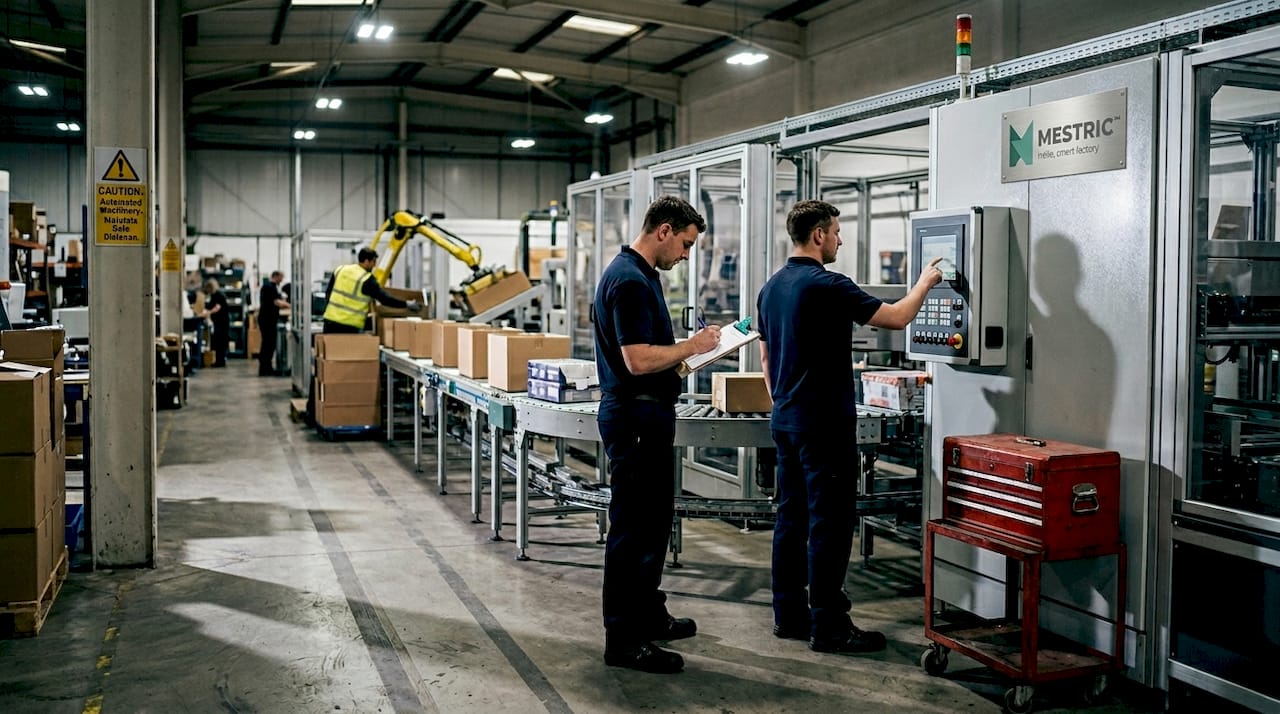
Cobot packaging implementations achieve 40% faster changeovers compared to manual operations. Robotic maintenance systems reduce unplanned downtime by 53% through predictive interventions. AI-powered work instructions decrease process times by 35% by eliminating confusion and reducing operator errors. Paperless computerised maintenance management systems cut administrative overhead by 65%, freeing maintenance teams to focus on value-adding activities rather than documentation.
Quality improvements represent another significant benefit category. Automated vision inspection systems detect defects with greater consistency than human inspectors, reducing scrap rates and warranty claims. Statistical process control integrated into automation systems identifies process drift before it produces non-conforming products. Real-time quality monitoring enables immediate corrective action, preventing entire production runs from falling outside specification limits. These capabilities prove particularly valuable in regulated industries where documentation requirements are stringent.
Measurable automation benefits:
Pro tip: Establish baseline measurements of OEE, defect rates, and changeover times before implementing automation. Accurate pre-automation metrics enable you to quantify actual improvements and justify additional investments. Consider interoperability between PLC vendors early in your planning to avoid vendor lock-in and facilitate future system expansions across multiple equipment manufacturers.
The financial impact extends beyond direct operational savings. Improved manufacturing efficiency workflow cost cuts through automation enhance competitive positioning by reducing per-unit production costs. Faster time-to-market for new products becomes achievable when changeovers take minutes rather than hours. Energy consumption typically decreases as automated systems optimise equipment operation and eliminate unnecessary idling. Following a step by step production optimisation guide ensures you capture these multi-dimensional benefits systematically.
Plant automation deployment presents significant technical and organisational challenges that require careful planning. Legacy system integration tops the list of obstacles, particularly in brownfield facilities with decades-old equipment. Existing PLCs, sensors, and control systems often use proprietary protocols that resist modern connectivity standards. Custom code scaling issues emerge when point-to-point integrations create tightly coupled systems that become brittle and difficult to maintain. Edge AI deployment faces compute constraints, electromagnetic interference, and model update complexities in harsh industrial environments.
Robotics applications encounter thousands of real-world edge cases that laboratory testing cannot anticipate. As one automation expert notes, “The 2,000 edge cases of real-world robotics include cable ties in unexpected locations, liquid spills creating slip hazards, and packaging variations that confuse vision systems.” These scenarios require extensive testing, iterative refinement, and fallback procedures that add time and cost to deployment schedules. Underestimating edge case complexity leads to project delays and operational disruptions.
Brownfield sites require hybrid approaches combining fixed and flexible automation to preserve existing capital investment. Ripping out functional equipment to install greenfield automation systems rarely makes financial sense. Instead, successful deployments layer new capabilities onto existing infrastructure through gateway devices, protocol converters, and middleware platforms. This phased approach allows you to modernise incrementally whilst maintaining production continuity. Focusing initial efforts on high-ROI areas like quality inspection demonstrates value and builds organisational confidence.
Common automation deployment pitfalls and mitigation strategies:
Organisational resistance often proves more challenging than technical obstacles. Operators fear job loss or skill obsolescence. Maintenance teams worry about supporting unfamiliar technologies. Production managers face pressure to maintain output during transitions. Addressing these concerns requires transparent communication about automation’s role in enhancing rather than replacing human capabilities. Demonstrating how automation eliminates repetitive, dangerous, or ergonomically challenging tasks whilst creating opportunities for higher-value work helps overcome resistance.
Successful automation projects incorporate lessons from optimise production workflow with ai implementations. Starting with pilot deployments in non-critical areas allows teams to develop expertise and refine approaches before tackling mission-critical processes. Establishing clear success metrics and governance structures ensures accountability and enables data-driven decision-making throughout the deployment lifecycle.
Manufacturing facilities must select automation strategies aligned with their production requirements, product mix, and market dynamics. Three primary approaches exist: fixed automation, flexible automation, and adaptive production. Each offers distinct advantages and limitations that make them suitable for different operational contexts. Understanding these differences enables you to match automation investment to business objectives.
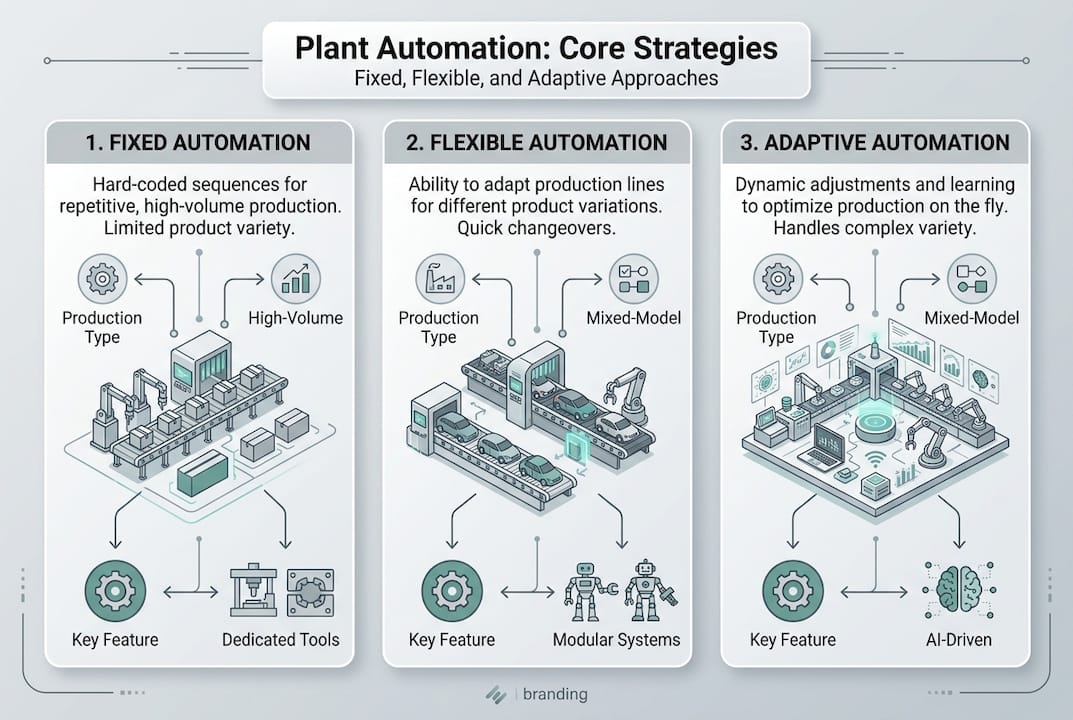
Fixed automation delivers maximum efficiency for high-volume, standardised production. Dedicated equipment and hard-tooled processes minimise cycle times and per-unit costs. Automotive assembly lines exemplify fixed automation, where specialised machinery performs identical operations on millions of units. However, this approach offers minimal flexibility. Product design changes or variant introductions require significant retooling investment and extended downtime. Fixed automation makes economic sense when production volumes justify the capital investment and product lifecycles span multiple years.
Flexible automation accommodates product variety through programmable equipment and reconfigurable tooling. Computer numerical control (CNC) machines, industrial robots, and modular assembly systems enable rapid changeovers between product variants. This adaptability comes at higher per-unit cost compared to fixed automation due to increased equipment complexity and longer cycle times. Flexible automation suits manufacturers producing multiple products in medium volumes or serving markets with frequent design changes. The premium cost balances against inventory reduction and faster market responsiveness.
Adaptive production extends flexibility by incorporating artificial intelligence that responds to real-time disruptions. Adaptive systems react to supply variations, equipment failures, and demand fluctuations without human intervention. Machine learning algorithms optimise production schedules, adjust process parameters, and reroute work to available resources. This capability proves increasingly valuable as supply chains become more volatile and customer expectations for customisation grow. Simulation alone cannot prepare systems for real-world chaos, making adaptive intelligence essential.
| Approach | Efficiency | Flexibility | Cost | Best use cases |
|---|---|---|---|---|
| Fixed automation | Very high | Very low | Low per-unit, high capital | Mass production, stable designs, long product lifecycles |
| Flexible automation | Moderate | Visoko | Moderate per-unit, high capital | Medium volumes, multiple variants, frequent design changes |
| Adaptive production | Visoko | Very high | Higher operating cost, AI investment | Volatile demand, supply disruptions, high customisation |
Factors influencing automation strategy selection:
Pro tip: Combine fixed and flexible elements for optimal brownfield integration. Use fixed automation for high-volume core processes whilst deploying flexible cells for variants and new product introductions. This hybrid approach maximises existing asset utilisation whilst adding adaptability where it delivers greatest value. The role of ai in manufacturing continues expanding, making adaptive capabilities increasingly accessible to mid-sized facilities.
Your automation strategy should evolve as business conditions change. Regular reviews of production mix, volume trends, and competitive dynamics help identify when strategy shifts become necessary. Moving from fixed to adaptive automation represents a significant investment, but delaying too long risks competitive disadvantage as more agile competitors capture market share.
Navigating plant automation complexity requires robust software infrastructure that connects equipment, analyses performance, and guides continuous improvement. Mestric provides manufacturing execution system capabilities specifically designed for modern automated facilities. The platform integrates seamlessly with diverse automation equipment, collecting real-time data from sensors, PLCs, and SCADA systems regardless of vendor.
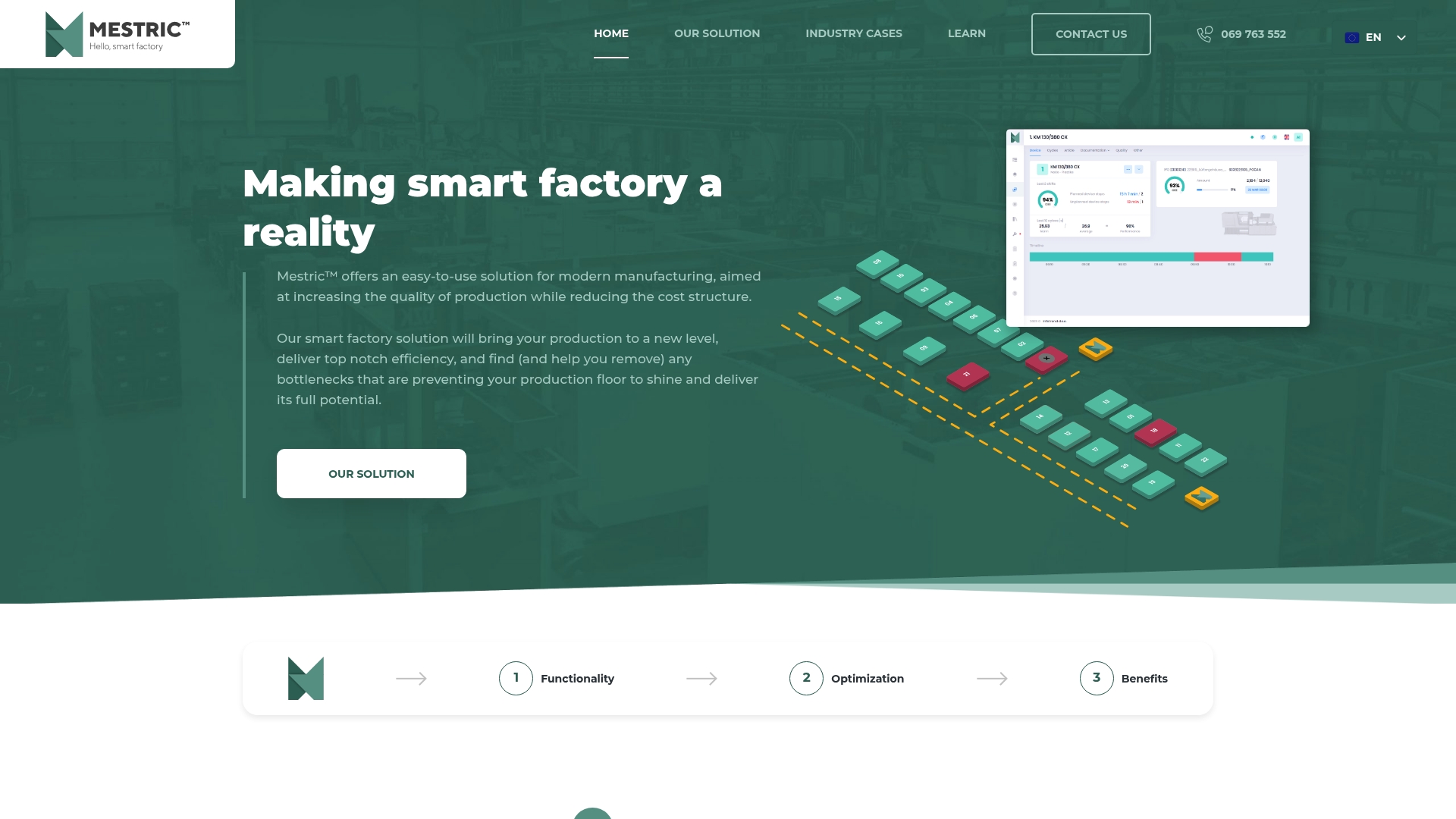
Mestric’s analytics engine transforms raw automation data into actionable insights about efficiency, quality, and cost performance. Production managers access unified dashboards showing OEE, downtime patterns, and quality metrics across all automated lines. AI-powered optimisation identifies bottlenecks and recommends process improvements based on historical patterns and current conditions. This intelligence accelerates your automation ROI by ensuring systems operate at peak capability.
Exploring mes vs traditional manufacturing boost efficiency demonstrates how modern software amplifies automation benefits. Understanding types of manufacturing software every plant manager should evaluate helps you build comprehensive digital infrastructure. Mestric works alongside your automation investments to streamline production operations manufacturing efficiency through better visibility and control.
Plant automation systems fall into three categories: fixed automation for high-volume standardised production, flexible automation using programmable equipment for product variety, and adaptive production incorporating AI for real-time disruption response. Each type suits different production requirements and offers distinct efficiency-flexibility trade-offs.
Automation enhances quality through consistent process execution, automated inspection systems detecting defects humans miss, and real-time statistical process control identifying drift before non-conforming products are produced. These capabilities reduce scrap rates by 30-50% whilst improving documentation for regulatory compliance.
Legacy integration challenges include proprietary communication protocols resisting modern connectivity, custom code creating brittle point-to-point integrations, and inadequate documentation of existing systems. Successful integration requires gateway devices, protocol converters, and phased approaches that preserve production continuity whilst adding new capabilities.
Consider adaptive automation when experiencing frequent supply disruptions, volatile customer demand requiring rapid schedule changes, or increasing product customisation requests. The investment makes sense when flexibility gains outweigh the higher operating costs and AI infrastructure requirements compared to fixed systems.
Accurate ROI measurement requires establishing baseline metrics for OEE, defect rates, changeover times, and administrative overhead before automation deployment. Track improvements quarterly and include both direct savings (reduced labour, lower scrap) and indirect benefits (faster time-to-market, improved customer satisfaction). Typical payback periods range from 18-36 months depending on project scope and existing efficiency levels.


 069 763 552