

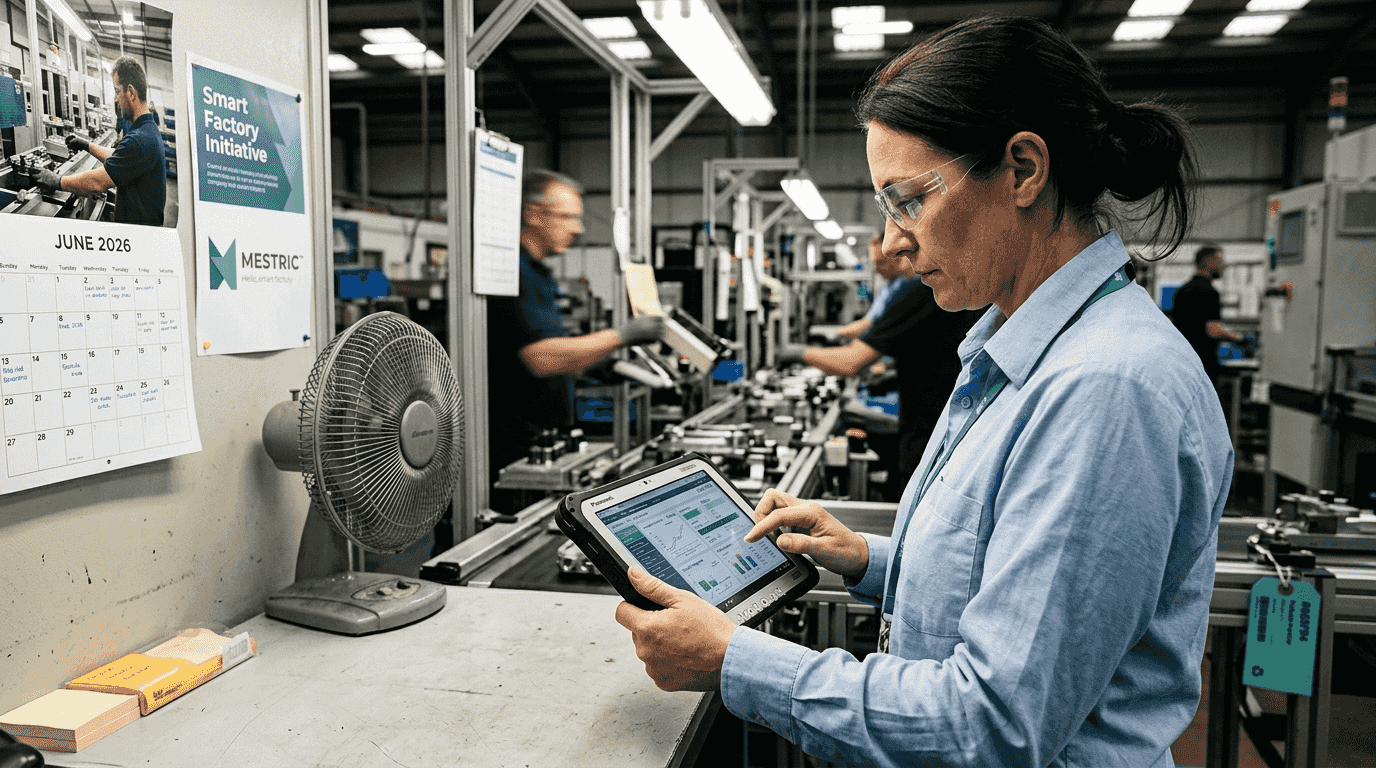
Manufacturing inefficiencies drain resources and profitability at an alarming rate, with unplanned downtime costing over $50 billion annually across industrial sectors. Production managers and executives face mounting pressure to reduce defects, minimise operational costs, and optimise workflows in increasingly competitive markets. Data-driven manufacturing offers transformative solutions by integrating artificial intelligence, machine vision, and predictive analytics into production environments. This guide provides actionable strategies for manufacturing leaders to implement data-driven approaches that deliver measurable efficiency gains, cost reductions, and quality improvements throughout 2026 and beyond.
| Point | Details |
|---|---|
| AI reduces defects substantially | Artificial intelligence systems can decrease defect rates by 30–50% through automated quality inspection and real-time process adjustments. |
| Hybrid computing optimises operations | Combining edge and cloud architectures balances processing speed with scalability whilst maintaining robust security protocols for sensitive production data. |
| Machine vision enhances quality control | Computer vision systems monitor product quality continuously, identifying defects instantly and reducing waste across production lines. |
| Predictive maintenance cuts downtime | AI-powered maintenance scheduling reduces unplanned downtime by 35–45% by anticipating equipment failures before they occur. |
| Continuous monitoring sustains gains | Real-time analytics dashboards and feedback loops ensure efficiency improvements persist long after initial implementation. |
Manufacturing executives confront a complex web of operational inefficiencies that directly impact profitability and competitiveness. Unplanned equipment failures represent one of the most significant challenges, with industrial downtime exceeding $50 billion in annual losses globally. These unexpected interruptions cascade through production schedules, creating bottlenecks that delay deliveries and strain customer relationships.
Quality defects compound these challenges, often accounting for up to 20% of total production costs when factoring in rework, scrap materials, and warranty claims. Traditional quality control methods rely heavily on manual inspection, which introduces human error and fails to identify subtle defects until they become systemic problems. The role of data in manufacturing becomes critical when addressing these quality concerns systematically.
Several interconnected factors amplify production inefficiencies:
Production managers frequently struggle with slow response times when addressing emerging problems. By the time quality issues surface through traditional inspection methods, hundreds or thousands of defective units may already exist. This lag between problem occurrence and detection creates substantial waste whilst eroding profit margins.
Understanding these fundamental challenges provides the foundation for implementing targeted data-driven solutions that address root causes rather than symptoms.
The complexity of modern manufacturing environments demands more sophisticated approaches than legacy systems can provide. Equipment generates vast quantities of operational data every second, yet most facilities capture only a fraction of this information. Without proper data infrastructure, manufacturers miss critical insights that could prevent costly failures and optimise production parameters. Recognising these limitations represents the essential first step towards transformation.
Successful implementation of data-driven manufacturing requires robust infrastructure and organisational alignment before deploying advanced technologies. Hybrid cloud-edge computing architectures have emerged as the preferred solution, balancing local processing speed with cloud scalability whilst maintaining security for sensitive production data. This approach processes time-critical operations at the edge near equipment, then transmits aggregated insights to cloud platforms for deeper analysis.
Edge computing delivers substantial advantages for manufacturing environments where millisecond response times determine quality outcomes. Processing data locally near sensors and equipment eliminates network latency that could delay critical interventions. Bandwidth consumption drops dramatically when only processed insights travel to central systems rather than raw sensor streams. The role of IoT in manufacturing expands significantly when edge infrastructure supports real-time decision-making at the equipment level.
Building integrated data pipelines requires careful planning across several dimensions:
| Infrastructure Component | Edge Capability | Cloud Capability | Hybrid Benefit |
| — | — | — |
| Processing speed | Millisecond response | Batch analytics | Real-time control with strategic insights |
| Data volume | Filtered streams | Comprehensive storage | Efficient bandwidth utilisation |
| Security | Local containment | Enterprise protection | Layered defence architecture |
| Scalability | Equipment-specific | Unlimited expansion | Flexible growth capacity |
Organisational readiness often determines implementation success more than technology selection. Cross-functional teams spanning operations, IT, and quality assurance must align on objectives and success metrics before deployment begins. Executive sponsorship ensures adequate resources and removes organisational barriers that might slow adoption.
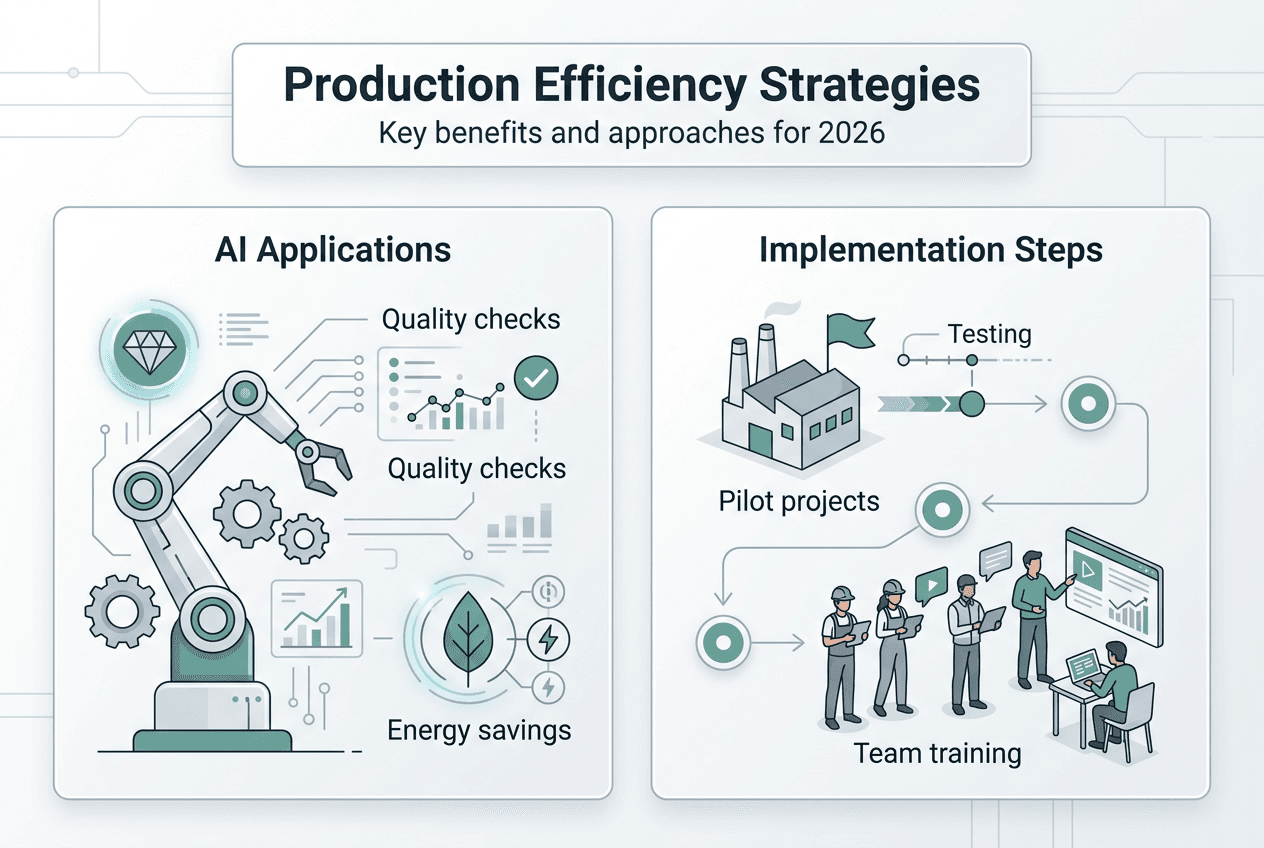
Pro Tip: Start with pilot projects on non-critical production lines to validate technology choices and refine processes before scaling across your entire facility.
Governance frameworks establish clear ownership for data quality, security protocols, and system maintenance responsibilities. Without these structures, even sophisticated technology implementations struggle to deliver sustained value. Define data standards early to ensure consistency as systems expand. Establish regular review cycles to assess infrastructure performance and identify optimisation opportunities. These foundational elements create the stable platform necessary for advanced analytics and artificial intelligence applications to thrive.
Implementing artificial intelligence and advanced analytics transforms theoretical efficiency gains into measurable operational improvements. AI-driven quality inspection systems reduce defect rates by 30–50% by identifying subtle variations that human inspectors might miss. These systems analyse thousands of products per hour with consistent accuracy, flagging anomalies instantly for human review or automated rejection.
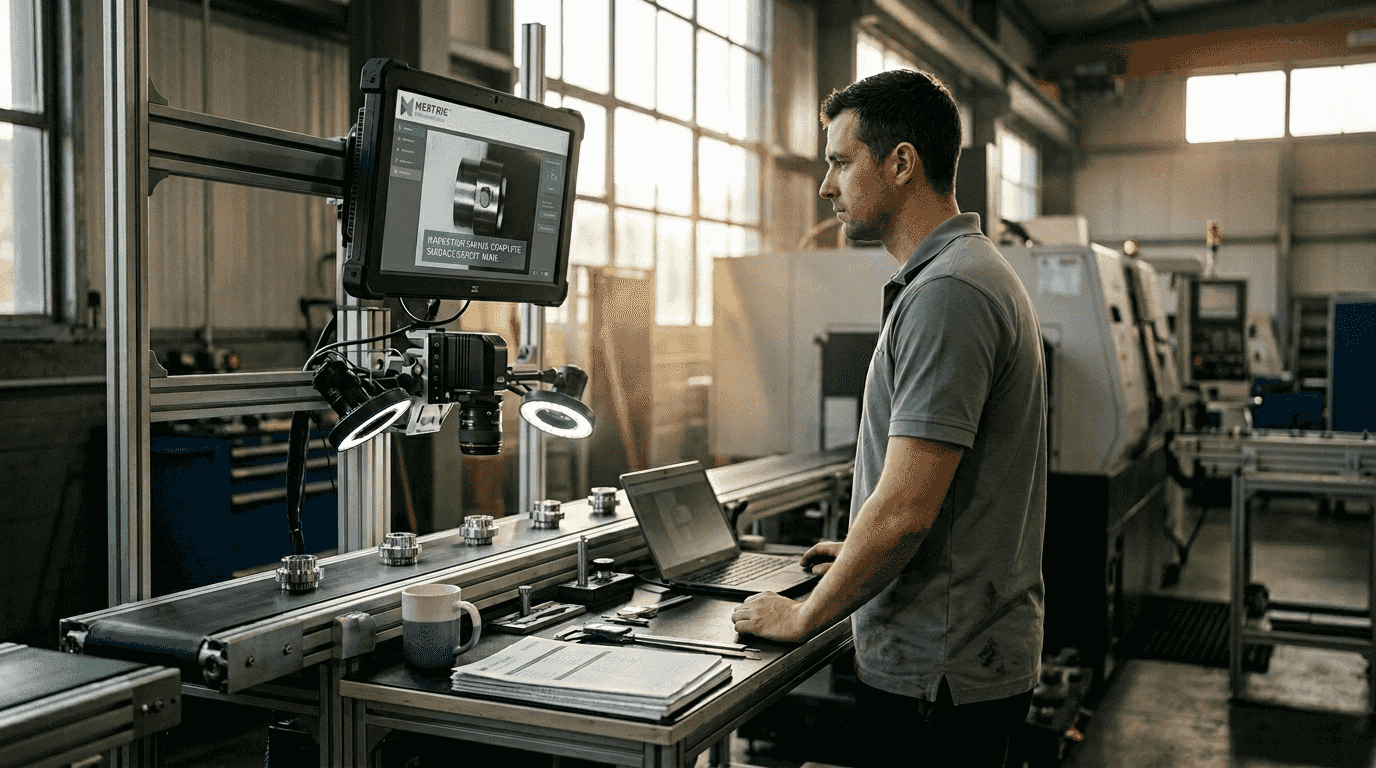
Predictive maintenance represents one of the highest-value applications of data-driven manufacturing. Machine learning algorithms analyse vibration patterns, temperature fluctuations, and performance metrics to forecast equipment failures days or weeks before they occur. This foresight allows maintenance teams to schedule interventions during planned downtime, with AI systems cutting unplanned downtime by 35–45% compared to reactive maintenance approaches.
Follow this systematic approach to deploy data-driven efficiency improvements:
Machine vision technology extends beyond simple pass/fail inspection to provide dimensional analysis, surface defect detection, and assembly verification. These systems operate 24/7 without fatigue, maintaining consistent quality standards across all shifts. Computer vision algorithms learn normal production patterns, then flag deviations that might indicate emerging quality issues before defect rates spike.
Energy optimisation through AI-driven operational adjustments delivers immediate cost reductions whilst supporting sustainability objectives. Algorithms analyse production schedules, equipment efficiency curves, and energy pricing to optimise when and how manufacturing processes run. These systems might shift energy-intensive operations to off-peak hours or adjust equipment parameters to minimise consumption without compromising output quality.
Pro Tip: Focus initial AI implementations on processes with the highest defect rates or longest cycle times to demonstrate quick wins that build organisational confidence in data-driven approaches.
Cross-functional collaboration accelerates implementation success and ensures solutions address real operational challenges rather than theoretical problems. Production managers bring process expertise, data scientists contribute analytical capabilities, and maintenance teams provide equipment knowledge. This collaboration produces more robust solutions than any single department could develop independently.
| Strategy | Primary Benefit | Implementation Timeframe | Expected ROI |
|---|---|---|---|
| AI quality inspection | 30–50% defect reduction | 3–6 months | 200–400% within first year |
| Predictive maintenance | 35–45% downtime reduction | 4–8 months | 150–300% within 18 months |
| Machine vision monitoring | Real-time quality control | 2–4 months | 180–350% within first year |
| Energy optimisation | 10–25% consumption reduction | 3–5 months | 120–250% within first year |
The role of AI in manufacturing continues expanding as algorithms become more sophisticated and computing power increases. Modern AI systems learn continuously from production data, refining their predictions and recommendations as they process more information. This adaptive capability means efficiency gains compound over time rather than plateauing after initial implementation. Manufacturing leaders who optimise production workflow with AI position their facilities for sustained competitive advantage throughout 2026 and beyond.
Measuring outcomes rigorously separates genuine efficiency improvements from temporary fluctuations or measurement errors. Establish comprehensive key performance indicators before implementing data-driven systems to create accurate baselines for comparison. Track defect rates, unplanned downtime frequency and duration, overall equipment effectiveness, energy consumption per unit, and production yield across all product lines.
Compare pre-implementation and post-implementation performance using statistical process control methods that account for normal variation. Simple before-and-after comparisons can mislead if they capture atypical periods or fail to control for external factors like seasonal demand changes. Run parallel measurements for at least three months to establish confidence in reported improvements.
Real-time analytics dashboards provide production managers with immediate visibility into operational health across all facilities. These interfaces display current performance against targets, highlight emerging issues before they escalate, and track progress towards efficiency objectives. Dashboard design should prioritise actionable insights over comprehensive data dumps that overwhelm users with information.
Continuous improvement frameworks ensure efficiency gains persist long after initial implementation excitement fades:
Manufacturers achieve strongest ROI combining data engineering, AI modelling, and deep operational integration rather than treating these as separate initiatives. Data infrastructure provides the foundation, AI generates insights, and operational integration ensures those insights drive actual behaviour changes on the production floor. This holistic approach delivers sustained value that isolated technology deployments cannot match.
Pro Tip: Create efficiency champions within each production team who receive advanced training on data systems and serve as local experts for troubleshooting and optimisation suggestions.
| Verification Method | Measurement Frequency | Key Metrics | Success Threshold |
|---|---|---|---|
| Defect rate tracking | Hourly/Daily | Parts per million defective | 30% reduction vs baseline |
| Downtime analysis | Daily/Weekly | Unplanned stops per shift | 35% reduction vs baseline |
| Energy monitoring | Daily/Monthly | kWh per unit produced | 15% reduction vs baseline |
| Yield assessment | Daily/Weekly | Good units per raw material | 10% improvement vs baseline |
Training programmes ensure production teams understand new systems and feel confident using data-driven insights to guide decisions. Resistance to change often stems from uncertainty rather than opposition, so comprehensive training that demonstrates clear benefits builds adoption momentum. Include hands-on practice with actual production scenarios rather than abstract classroom instruction.
The operational efficiency impact extends beyond immediate cost savings to include improved customer satisfaction through consistent quality, enhanced workplace safety from better equipment monitoring, and increased agility in responding to market demands. These secondary benefits often exceed the direct financial returns from reduced defects and downtime, creating compounding value that justifies continued investment in data-driven manufacturing capabilities.
Transforming production efficiency requires more than understanding data-driven principles; it demands practical tools that integrate seamlessly with existing manufacturing environments. Mestric delivers comprehensive solutions designed specifically for production managers seeking measurable efficiency improvements without overwhelming complexity.
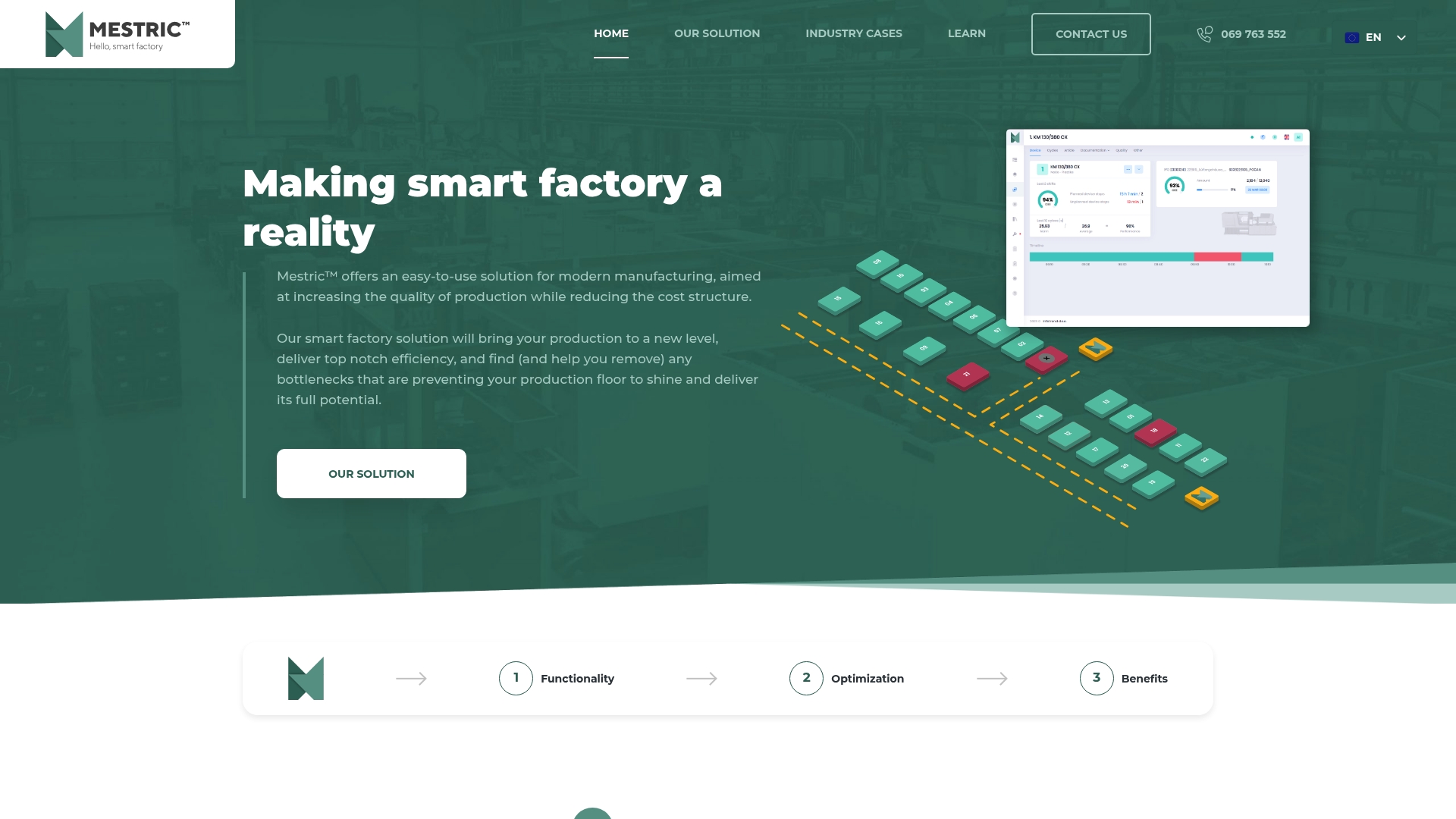
Our manufacturing execution system connects directly with equipment to capture real-time performance data, quality metrics, and operational parameters. This integration enables the predictive maintenance and AI-driven optimisation strategies discussed throughout this guide. Production managers gain immediate visibility into bottlenecks, quality deviations, and efficiency opportunities across all production lines.
Mestric’s platform supports the complete implementation journey, from initial data infrastructure setup through advanced AI deployment and continuous improvement. Whether you need to streamline manufacturing processes or deploy comprehensive manufacturing execution system efficiency improvements, our solutions adapt to your specific operational requirements. Explore our production optimisation guide to discover how leading manufacturers achieve sustained efficiency gains throughout 2026.
AI automates quality inspection through computer vision systems that analyse products at speeds impossible for human inspectors whilst maintaining consistent accuracy. Machine learning algorithms identify subtle patterns in production data that predict when defects are likely to occur, enabling preventive adjustments before quality degrades. AI systems reduce defect rates by 30–50% by catching anomalies instantly and learning continuously from production outcomes.
Hybrid cloud-edge computing combines local data processing near manufacturing equipment with cloud-based analytics and storage capabilities. Edge processing handles time-critical operations requiring millisecond response times, whilst cloud systems provide scalable computing power for complex analyses. Manufacturers adopt hybrid architectures to balance processing speed with security requirements, as sensitive production data remains on-site whilst aggregated insights leverage cloud scalability.
Track quantitative key performance indicators including defect rates, unplanned downtime frequency, overall equipment effectiveness, and energy consumption per unit produced. Establish baseline measurements before implementing data-driven systems, then compare performance using statistical methods that account for normal variation. Deploy real-time analytics dashboards that provide continuous visibility into operational health, and implement feedback loops where production teams regularly review metrics and suggest refinements.
Successful AI deployment requires sensor networks on critical equipment, edge computing infrastructure for local data processing, and secure communication protocols connecting equipment to analytics platforms. Invest in data storage solutions that balance immediate accessibility with long-term archival needs, and establish governance frameworks defining data ownership and security responsibilities. Most manufacturers begin with pilot projects on single production lines before scaling infrastructure across entire facilities.
AI quality inspection systems typically demonstrate measurable defect reductions within three to six months, with 200–400% ROI within the first year. Predictive maintenance implementations require four to eight months to establish baseline patterns and train algorithms, delivering 150–300% ROI within 18 months. Energy optimisation initiatives often show immediate consumption reductions, achieving 120–250% ROI within 12 months. Strongest returns come from integrated approaches combining multiple data-driven strategies rather than isolated implementations.


 069 763 552