


TL;DR:
- Multi-site production management coordinates operations across multiple facilities through unified planning systems. Success depends on standardized processes, real-time data visibility, and clear governance boundaries. It drives asset utilization, reduces inventory, and improves delivery reliability while fostering a network-oriented culture.
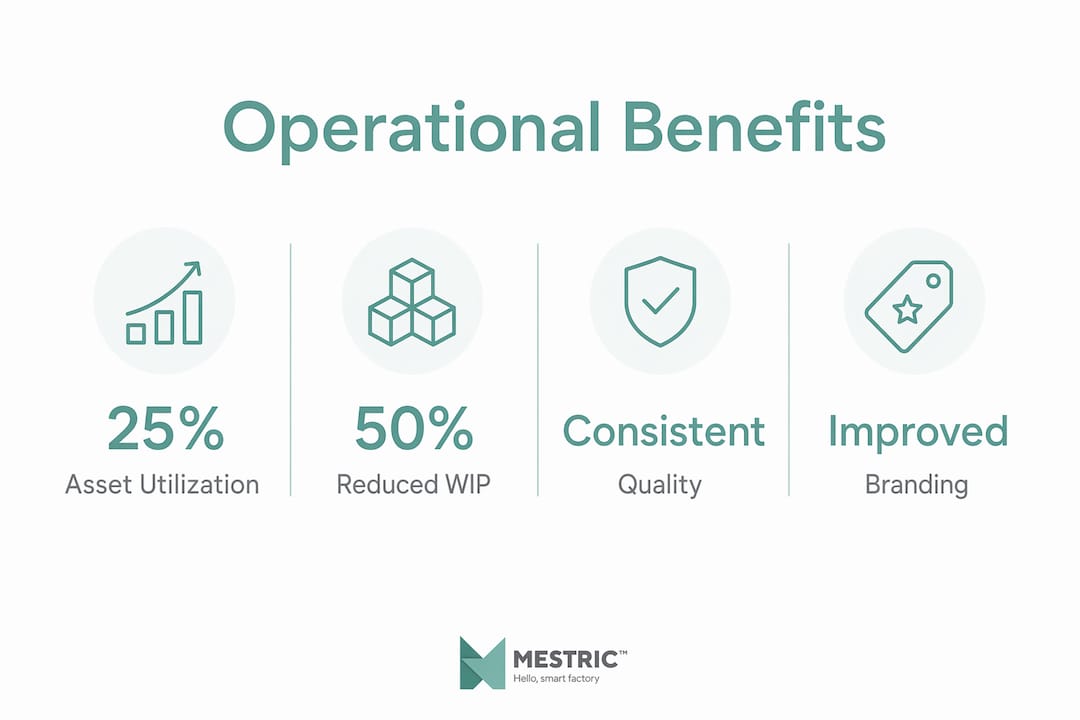
Multi-site production management is the coordinated control of manufacturing operations across two or more facilities through unified planning systems, standardised processes, and shared data visibility. The industry term for this discipline is multi-site manufacturing operations management, and it sits at the intersection of enterprise resource planning (ERP), Manufacturing Execution Systems (MES), and network-level governance. Companies implementing unified multi-site ERP report 25% asset utilisation improvement, a 50% reduction in work-in-progress inventory, and over 95% inventory accuracy. Those gains do not come from technology alone. They come from treating a network of plants as a single coordinated engine rather than a collection of independent operations.
The foundation of effective multi-site production management is a unified data layer. Without it, each facility operates on its own schedule, its own quality standards, and its own version of the truth. Manufacturing ERP systems transform fragmented operations into coordinated enterprises with unified scheduling and consolidated reporting. MES platforms sit below ERP and connect directly to production equipment, capturing real-time performance data at the machine level.
Three core components make this coordination work:
Profi tipp: Audit and align your workflows before deploying any enterprise-wide system. Standardising human processes before technology implementation is a prerequisite, not a side effect. Deploying software onto misaligned processes simply automates the chaos.
The sequencing matters. Organisations that skip process standardisation and go straight to software deployment consistently underperform those that do the groundwork first.

The business case for coordinated multi-location production strategies is grounded in hard numbers. Centralised production planning enables proactive bottleneck detection and dynamic order routing across sites, reducing both costs and lead times. Shared resource models report up to a 30% reduction in operational expenses. That figure reflects what happens when capacity decisions are made at the network level rather than the site level.
The specific benefits break down as follows:
Multi-site management also improves brand consistency across facilities. When every plant follows the same quality standards and process documentation, the product that leaves Site A is identical to the product that leaves Site B. That consistency is commercially significant for manufacturers supplying major retailers or regulated industries.
Profi tipp: Használat production efficiency data to identify which sites have spare capacity before committing to new capital expenditure. Redistribution is almost always faster and cheaper than building.
The most damaging mistake in multi-site operations is treating each facility as an independent profit centre. Treating sites as independent entities leads to internal competition and inefficiency. Plants optimise locally at the expense of enterprise objectives. One site hoards inventory. Another undercuts a sister facility on internal transfer pricing. The network loses.
The four challenges that consistently derail multi-site programmes are:
Profi tipp: Define the boundaries of central authority before go-live. Publish a clear governance document that specifies which decisions sit at the network level (quality standards, material flows, capacity allocation) and which remain at the site level (shift scheduling, local maintenance priorities). Ambiguity breeds conflict.
Effective governance of a multi-site network requires a clear split between what the centre controls and what sites manage locally. Multi-site management is more a business model strategy than a technical challenge. The technology enables the strategy, but the strategy must come first.
The practices that consistently produce results are:
The table below summarises the governance split that high-performing networks use:
| Decision area | Network-level authority | Site-level authority |
|---|---|---|
| Quality standards | Defined centrally | Monitored locally |
| Capacity allocation | Scheduled centrally | Executed locally |
| Material procurement | Consolidated centrally | Received locally |
| Shift scheduling | Guided by network plan | Managed locally |
| Folyamatos fejlesztés | Standardised centrally | Initiated locally |
The governance model above is not a constraint on site performance. It is the structure that allows each site to perform at its best within a network that performs better than the sum of its parts.
Multi-site production management delivers measurable network-wide gains only when centralised governance, standardised processes, and unified ERP or MES systems are deployed together.
| Pont | Részletek |
|---|---|
| Unified systems are non-negotiable | ERP and MES must share a single data layer across all facilities to enable coordinated scheduling. |
| Process standardisation comes first | Audit and align workflows before deploying technology, or the software will replicate existing inefficiencies. |
| Governance boundaries prevent conflict | Define centrally controlled decisions and site-level autonomy in writing before go-live. |
| Network-level metrics drive improvement | Track OEE, WIP, and on-time delivery across all sites simultaneously, not per facility in isolation. |
| Cultural change is the hardest part | Shifting site managers from local optimisation to network thinking requires deliberate leadership and aligned incentives. |
I have worked with manufacturing organisations that spent considerable sums on ERP implementations and came away disappointed. In almost every case, the technology was not the problem. The problem was that the organisation never made the cultural shift from managing plants to managing a network.
The instinct to protect your site’s numbers is deeply human. A plant manager whose bonus depends on facility-level output will make decisions that are rational for that facility and damaging for the network. I have seen this play out in inventory hoarding, in capacity sandbagging, and in outright resistance to order rerouting. No software fixes that. Only leadership and incentive alignment do.
What I find genuinely encouraging about 2026 is the maturity of AI-assisted scheduling tools and cloud-based MES platforms. These technologies make real-time network visibility accessible to mid-sized manufacturers who previously could not afford the infrastructure. The barrier is no longer cost. The barrier is the willingness to redefine what success looks like at the site level.
My honest view is this: the manufacturers who will outperform their peers over the next decade are not necessarily those with the most advanced technology. They are the ones who have the discipline to treat their network as a single production engine, make network-level decisions consistently, and build a culture where site managers are rewarded for network outcomes rather than local ones. That shift is harder than any software implementation. It is also far more valuable.
— Andraž
Managing multiple facilities without real-time data is like navigating without instruments. You know roughly where you are, but you cannot react fast enough when conditions change.
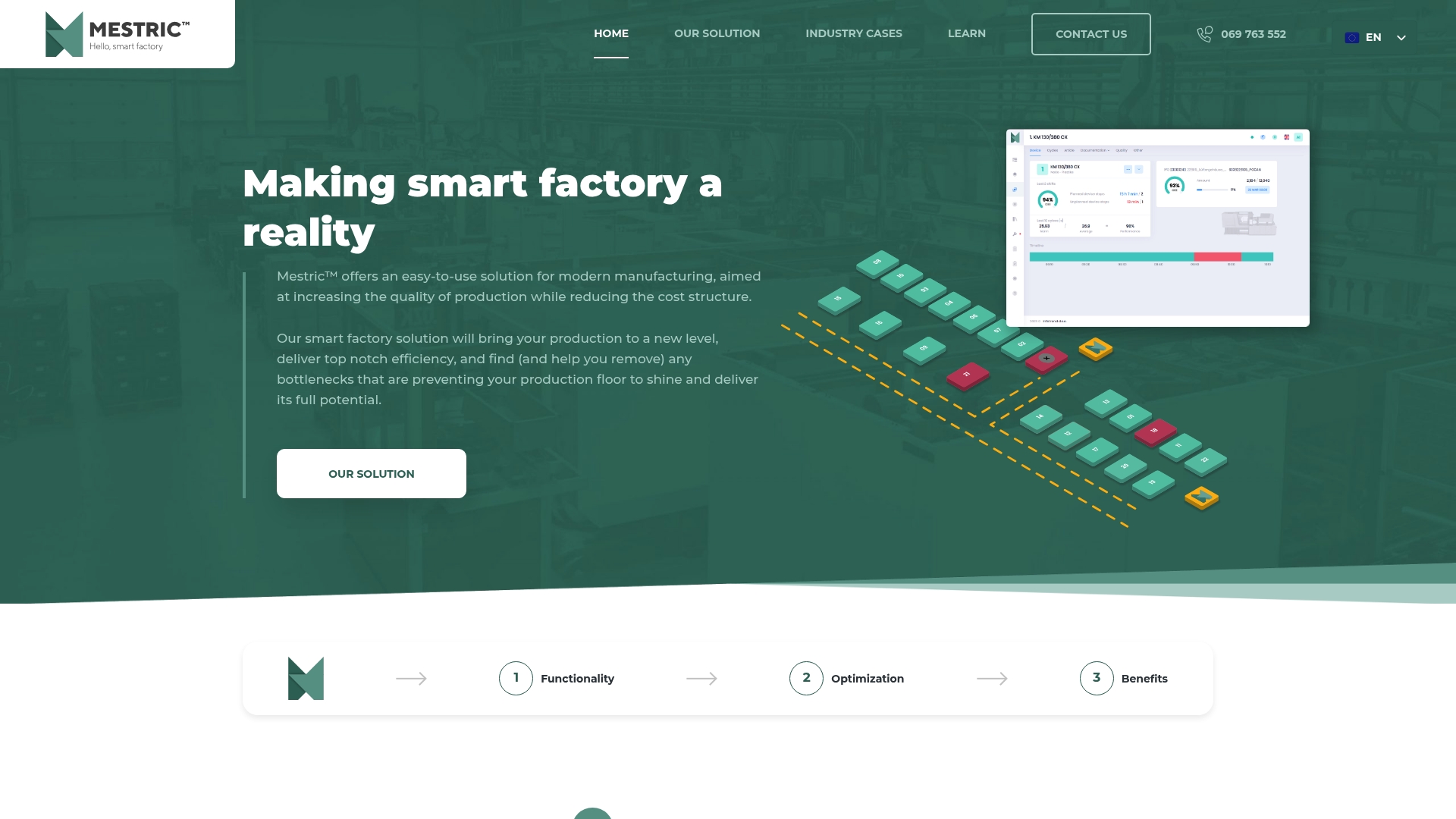
Mestric is a Manufacturing Execution System built for production managers who need unified visibility across their operations. It connects directly to manufacturing equipment, capturing KPIs such as machine occupancy, downtime, yield, and quality parameters in real time. Production managers can view real-time performance data across facilities from a single dashboard, identify bottlenecks before they escalate, and make capacity decisions based on live network data rather than yesterday’s report. For manufacturers evaluating their options, Mestric’s MES kontra hagyományos gyártás comparison sets out exactly what changes when you move to a connected system.
Multi-site production management is the coordinated control of manufacturing operations across multiple facilities using centralised planning, standardised processes, and unified ERP or MES systems. The goal is to operate the network as a single production engine rather than a collection of independent plants.
Companies implementing unified multi-site ERP report 25% improvement in asset utilisation, 50% reduction in work-in-progress inventory, and up to 30% reduction in operational costs through shared resource models and consolidated demand planning.
The biggest challenge is cultural. Shifting site managers from local optimisation to network-level decision-making requires deliberate leadership and aligned incentives, and it consistently proves harder than selecting or deploying the right technology.
The core tools are ERP systems for network-level scheduling and consolidated reporting, and MES platforms for real-time shop-floor data capture. Both must share a unified data layer and be supported by standardised process documentation across all sites.
Yes. Standardising human processes before technology deployment is a prerequisite, not an optional step. Deploying ERP or MES onto misaligned workflows produces conflicting data and poor system performance across sites.


 069 763 552