


Comparing manufacturing execution systems means sorting tools that track production data and quality from multiple platforms and vendors. Many MES vendors either restrict real-time machine integration to high-priced enterprise plans or do not support rapid cloud-based deployment. Plant managers, production managers, and operations directors can match MES options to their plant size, integration needs, and available IT resources.
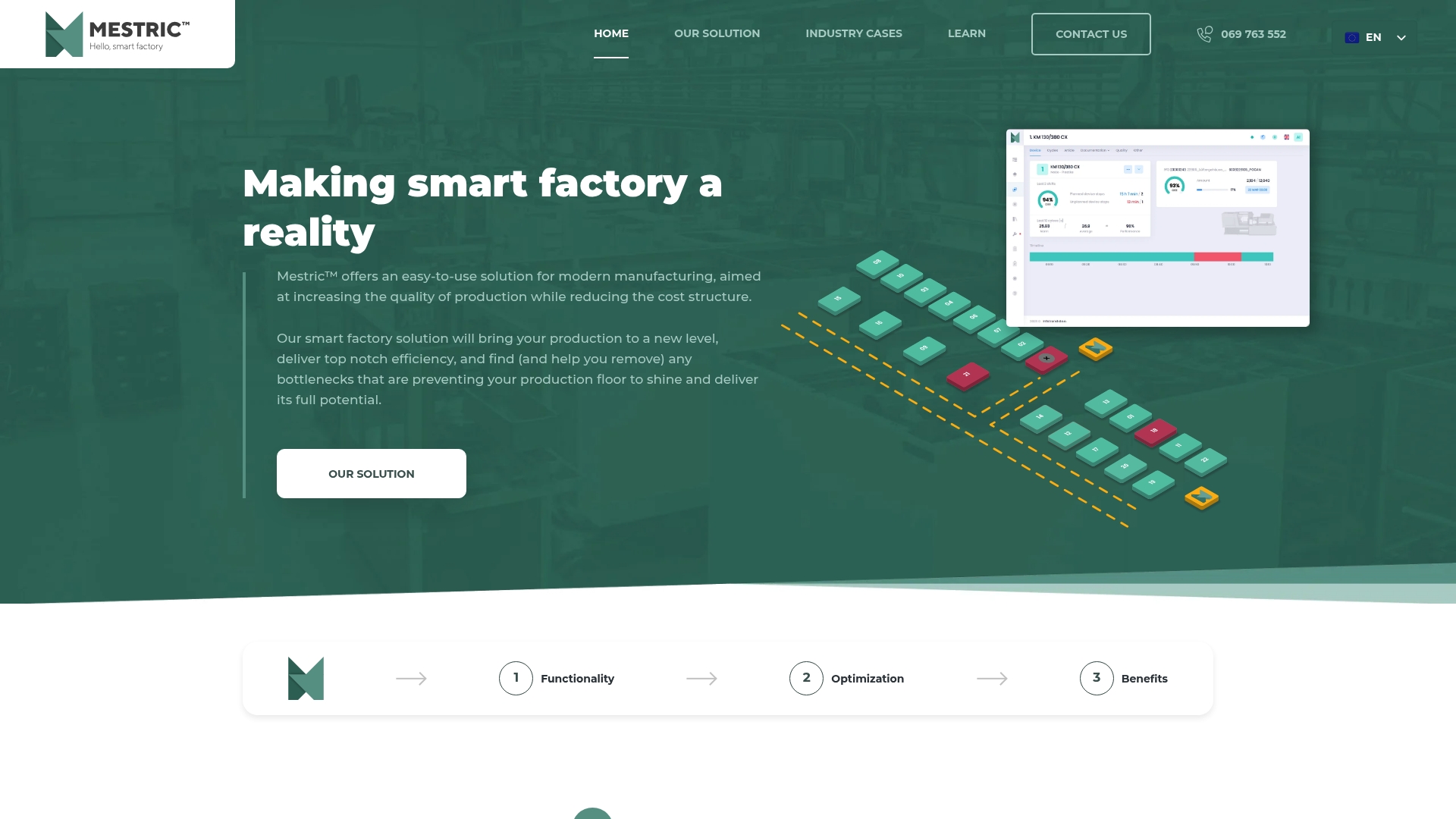
Connects directly to plant machinery to surface shift‑level KPIs, downtime, quality parameters, and cost analysis in real time. According to the company, an electronics customer cut costs by 15% in the first year. That figure is the principal vendor example of measured financial impact.
Mestric tracks real-time performance metrics by shift, product, or time period and monitors machine status alongside quality parameters and production costs. The platform includes predictive maintenance and downtime prevention plus workflow and planning management with performance comparison and alerts. It also provides optimisation for norms, processes, and resource allocation to feed decision systems.
Mestric pairs continuous machine-level monitoring with AI-driven optimisation tuned for smart factories. This combination ties immediate production signals to planning and cost modules so managers see cause and effect. The result is faster identification of bottlenecks and clearer routes to reduce waste and delay.
Mestric delivers comprehensive, live production and quality data that lets you spot underperforming machines and product defects as they occur. It integrates with ERP systems and CRM systems so production metrics feed business records and planning tools. Customisable dashboards let teams focus on the KPIs that matter, while predictive maintenance tools reduce unplanned stoppages. The vendor offers onsite demonstrations to show how connected machinery looks in a real production environment.
Manufacturing managers and operational leaders who need real-time visibility into production performance and cost drivers. You should consider Mestric if your plant runs multiple production lines and you plan to feed machine data into enterprise planning systems. It suits organisations ready to invest in integration work.
AI-driven optimisation that links machine KPIs to planning and cost analysis reduces time spent on manual root-cause investigation. By converting sensor and process data into prioritised issues and alerts, Mestric shortens the feedback loop between the shop floor and planners. That change helps you move from firefighting to scheduled interventions that protect throughput and quality.
An electronics manufacturer connected assembly line machines to surface machine status, quality metrics, and throughput. The team used Mestric to identify a recurring bottleneck and cut cycle times. The company claims a 15% reduction in costs in the first year; that figure illustrates the reported economic impact of the deployment.
Pricing is not publicly listed. Mestric appears to use custom enterprise contracts that include implementation and integration fees. Requesting an onsite demonstration is the usual route to receive a tailored proposal.
Website: https://mestric.com
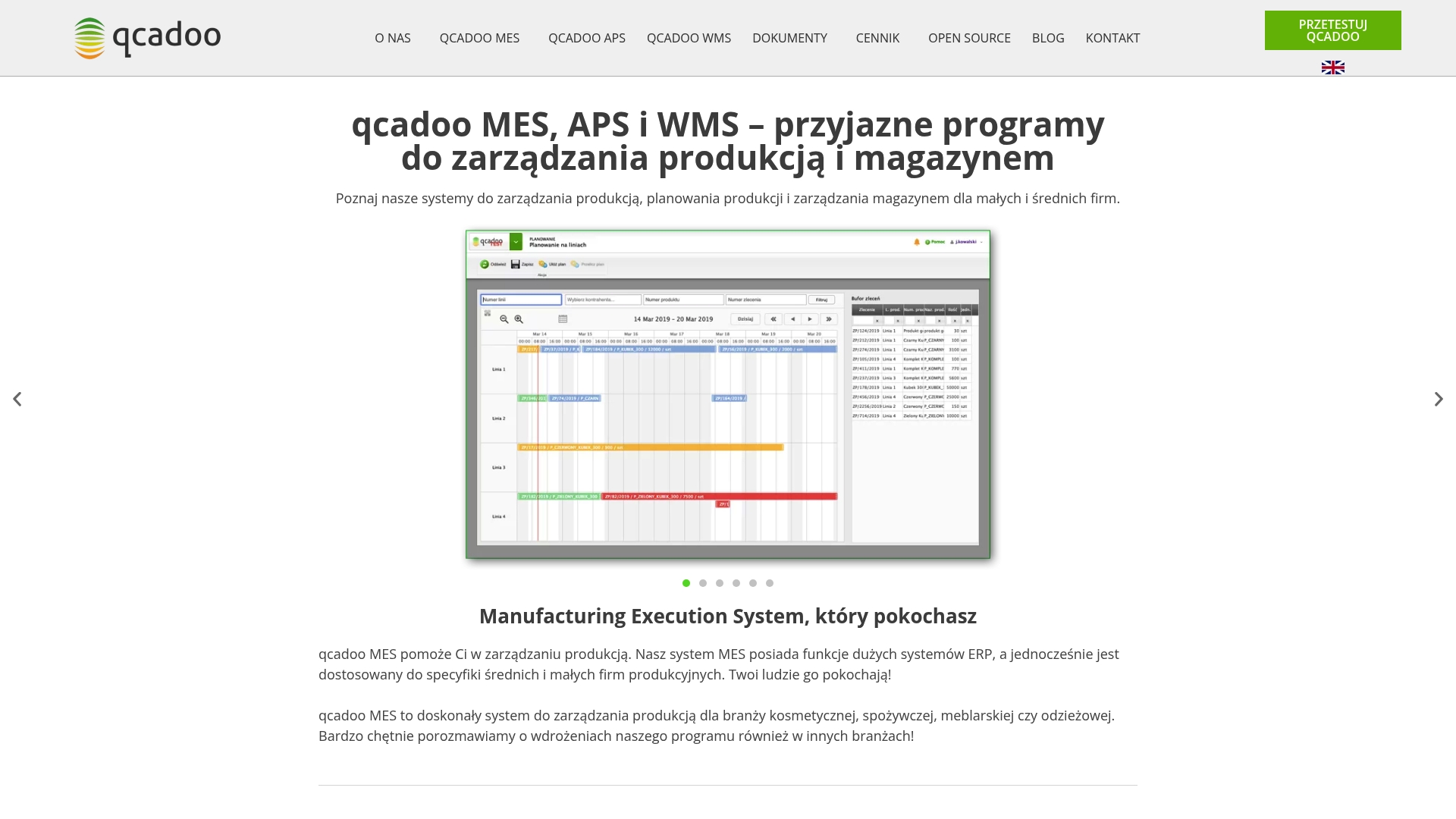
The vendor advertises automatic updates every two weeks, delivering new features and fixes on a regular cadence. qcadoo ships as both a SaaS cloud service and an Open Source edition, available through a web browser. It targets production planning, warehouse control, batch genealogy and quality checks for small and medium manufacturers.
qcadoo manages production orders, tracks work-in-progress and controls stock levels while offering order planning and scheduling tools. The system records batch genealogy, supports subcontractor workflows, and generates warehouse and production documents automatically. Cost calculations, quality parameter logging, and both automatic and manual updates complete a feature set aimed at end-to-end production and warehouse control.
qcadoo’s standout angle is its Open Source availability combined with the vendor’s frequent update cadence. That combination lets teams modify the source, apply bespoke integrations, and receive regular product improvements without waiting for long release cycles.
The interface is straightforward and browser-based, so teams can access production and warehouse data without local infrastructure. The Open Source option permits in-house customisation and extends control over workflows. Integrations with common Polish ERP packages mean data rarely needs manual transfer, and the reported fortnightly updates keep the installation current with small iterative changes.
If your factory must operate without internet access, qcadoo will not meet that requirement. If you lack internal IT skills for maintaining an Open Source instance, the effort of adaptation may outweigh the benefits. Organisations needing guaranteed rapid vendor support on a 24/7 basis should check service-level commitments before choosing a plan.
qcadoo lists ready connectors to Enova ERP, Subiekt GT, and Comarch ERP Optima. These integrations help keep master data and stock movements synchronised with accounting and sales systems.
Small and medium manufacturing companies that need basic production planning, warehouse control, batch traceability and quality logging will find qcadoo relevant. It suits teams that prefer browser access and those able to accept or manage an Open Source codebase. Companies already running one of the integrated ERPs gain faster deployment.
A clothing manufacturer uses qcadoo to plan cutting and sewing orders, track material consumption in real time, and record quality checks at inspection stations. The system provides batch genealogy for fabric lots and helps produce accurate cost reports for each garment run. That usage shortens order lead times and clarifies production cost accounting.
The vendor lists prices starting at 365 zł per month for five licences, with Basic, Optimal and PRO tiers available. PRO can be customised and quoted individually for larger deployments or bespoke requirements.
Website: https://qcadoo.com
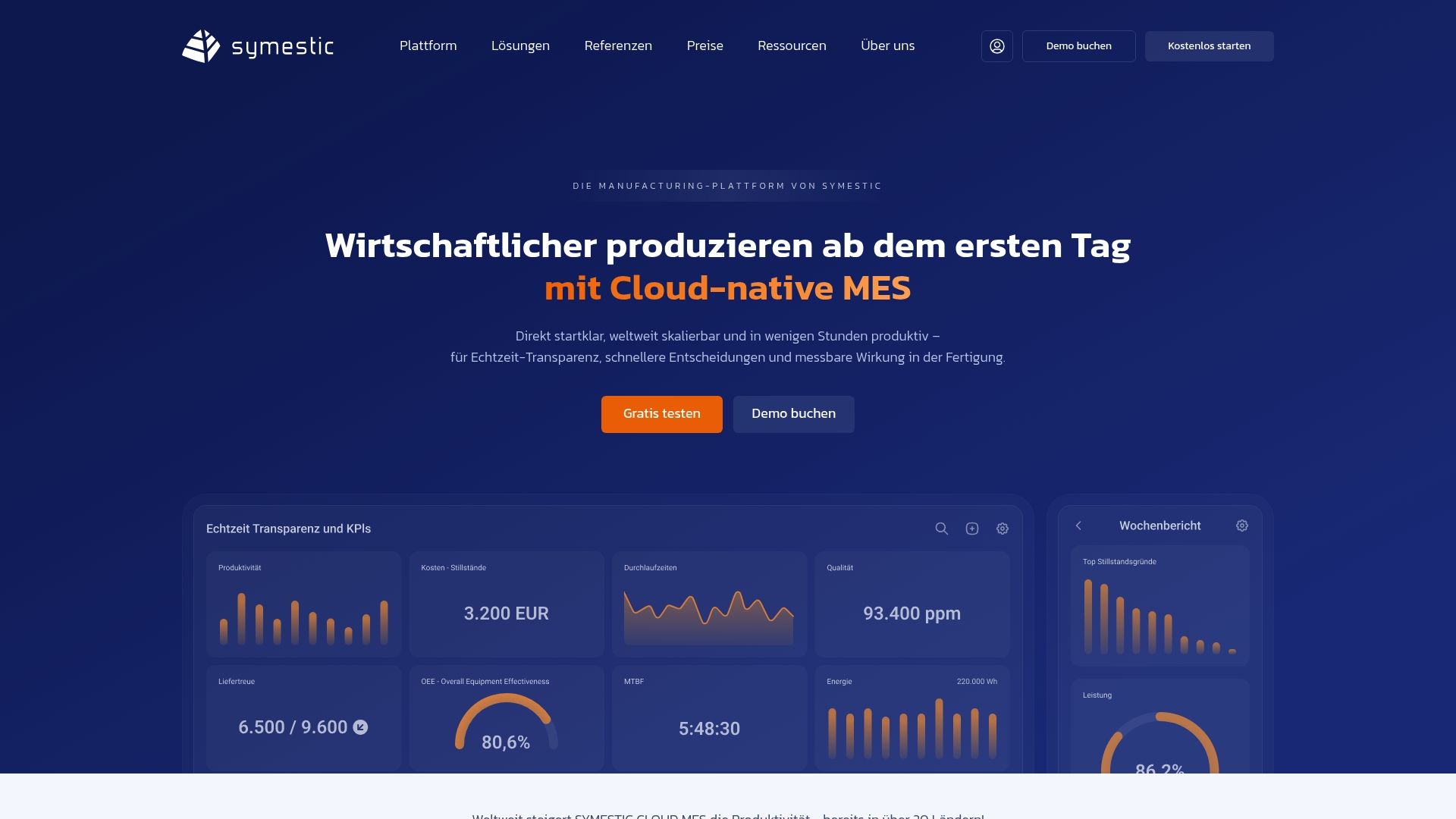
Symestic reports a production ready deployment in a few hours, and advertises global rollouts in hours rather than months. The platform targets manufacturers that want a cloud based MES without on site servers. That onboarding claim points to a low initial IT burden and fast time to observable results.
Symestic delivers a cloud native MES that offers real time transparency and control across assets, lines, and plants. The product emphasises rapid onboarding, scalability via SaaS, and an open architecture with API integration including OPC UA and REST for ERP connections. You can scale from a single machine to a multi-site rollout while centralising KPI measurement such as OEE and downtime.
The single standout is implementation speed paired with a server free architecture. That implementation speed shortens the timeline for operational visibility and reduces capital tied up in servers. Organisations that need a fast, cloud based path from installation to live dashboards will find that approach distinctive.
Symestic shows clear strengths for teams that must move quickly. The vendor frames implementation and payback as measurable within hours to days, which reduces project drag and helps justify the initial investment. The product avoids large up front server costs and licence overheads and supports common industrial standards for integration. Built in AI capabilities are planned, which promises predictive analysis once released.
Organisations with strict on site only policies or no reliable network links will struggle to adopt a cloud only deployment. Teams that need mature AI features today will find the platform premature for advanced predictive use. Buyers who require transparent, published pricing before contact should look elsewhere until the vendor publishes firm figures.
Plant managers, production managers, and operations directors in mid sized manufacturers who need rapid visibility and incremental rollouts will benefit most. The product suits teams with at least basic IT and network support and those willing to adopt a cloud first model for manufacturing control. Executive sponsors focused on quick return on implementation time will find the approach attractive.
A mid sized automotive supplier brought a new production line under monitoring within a single day using Symestic. Operators received live alerts for stoppages, and planners used the new visibility to rebalance load and improve machine occupancy. That short deployment period cut the time to meaningful production insight compared with typical multi month projects.
The vendor does not list public pricing. Pricing is available on request and typically follows a cloud subscription model rather than large up front server purchases. Prospective buyers should contact Symestic for a tailored quote and total cost of ownership details.
Website: https://symestic.com
Selecting the manufacturing execution system requires weighing features like real-time integration, adaptability, and maintenance requirements that address specific operational needs. This analysis compares Mestric, qcadoo, and Symestic to differentiate their strengths in aiding manufacturing operations.
Mestric leads in connecting operational metrics directly to decision-making processes through its AI-enhanced capabilities. This integration shortens the loop between issue detection and resolution, providing managers with impactful data for maintaining smooth production lines. Symestic, while offering a cloud-native solution with rapid deployment, lacks Mestric’s level of analytical depth as its predictive features remain under development. qcadoo, although effective for batch genealogy and document generation, focuses less on real-time analytics, making it more conventional in data processing.
qcadoo’s Open Source model offers flexibility for teams with the ability to modify and enhance their systems in-house. This makes qcadoo an advantageous choice for firms with IT proficiency. Conversely, Symestic ensures speed in deployment with its ready-to-operate cloud solution, which supports quick rollouts in a matter of hours—a crucial benefit where timelines are tight. Mestric, while powerful, requires dedicated IT support for its integration capabilities, which may elongate the setup phase.
For operational leaders prioritising powerful real-time monitoring coupled with AI-driven optimisation, Mestric represents the ideal choice. Its profound integration with enterprise planning systems ensures a significant positive impact on production workflows. However, for organisations prioritising cost efficiency or requiring immediate cloud deployment, alternative options like qcadoo or Symestic may better suit specific demands.
Selecting the optimal system for real-time production metrics and cost analysis requires comparing the unique features and capabilities of each option.
**| Product | Core Feature | Key Differentiator | Best For | Pricing | Notable Limitation |
|--------------------|--------------------------------------|-------------------------------------------------------|--------------------------------------------|------------------------|---------------------------------------------------|
| Mestric | Real-time production KPI and cost tracking | AI-driven optimisation for smart factories | Manufacturing managers with multiple lines | Price not published | Implementation complexity for IT-limited teams |
| qcadoo MES, APS | Production planning and warehouse control | Open Source availability with frequent updates | Small and medium manufacturers | From 365 zł/month | Advanced features may require customisation |
| Symestic Cloud MES | Cloud-native MES with rapid onboarding | Fast implementation and server-free architecture | Mid-sized manufacturers needing scalability| Price not published | Advanced AI features under active development |
Manufacturing managers and operational leaders often seek clear insight into production performance, quality, and costs to reduce waste and improve efficiency. Mestric offers a practical solution by connecting directly to machinery, delivering real-time KPIs on shift performance, downtime, and quality parameters. This approach helps identify bottlenecks quickly and supports AI-driven optimisation for faster decisions and cost savings.
Mestric provides:
Welcome to Mestric™ where you can see how digital transformation enhances manufacturing processes. Visit Mestric’s landing page today to request an onsite demonstration and understand the practical benefits for your production floors.
Mestric tracks real-time performance metrics by shift, product, or time period. It monitors machine status alongside quality parameters and production costs, allowing you to spot underperforming machines instantly. This capability helps you enhance operational efficiency and reduce downtime.
qcadoo offers a straightforward, browser-based interface that is accessible without local infrastructure. In contrast, Mestric provides comprehensive live production and quality data tailored for real-time visibility in manufacturing environments. Consider Mestric if you operate in dynamic settings requiring immediate data insights.
Mestric includes predictive maintenance and downtime prevention tools to minimise unplanned stoppages. This feature enhances operational reliability by identifying potential issues before they escalate. Investing in Mestric can lead to substantial cost savings by improving machine uptime.
Yes, Mestric integrates with ERP systems and CRM systems, ensuring seamless data flow for effective production planning. This integration allows you to achieve a rounded view of business metrics and operational performance, making it easier to manage resources and workflows.
Pricing for Mestric is not publicly listed, as the company uses custom enterprise contracts. To get specific pricing details, reach out to them directly for a tailored proposal that suits your manufacturing needs.


 069 763 552