

Finding the right platform can make all the difference when searching for solutions to fit your needs. The variety of choices is growing every year and newer options promise unique features and fresh approaches. Some focus on simplicity while others deliver advanced tools for demanding users. As technology evolves, so do the expectations for reliability, speed, and ease of use. Curious to see which alternatives are leading the way and how they differ from each other?
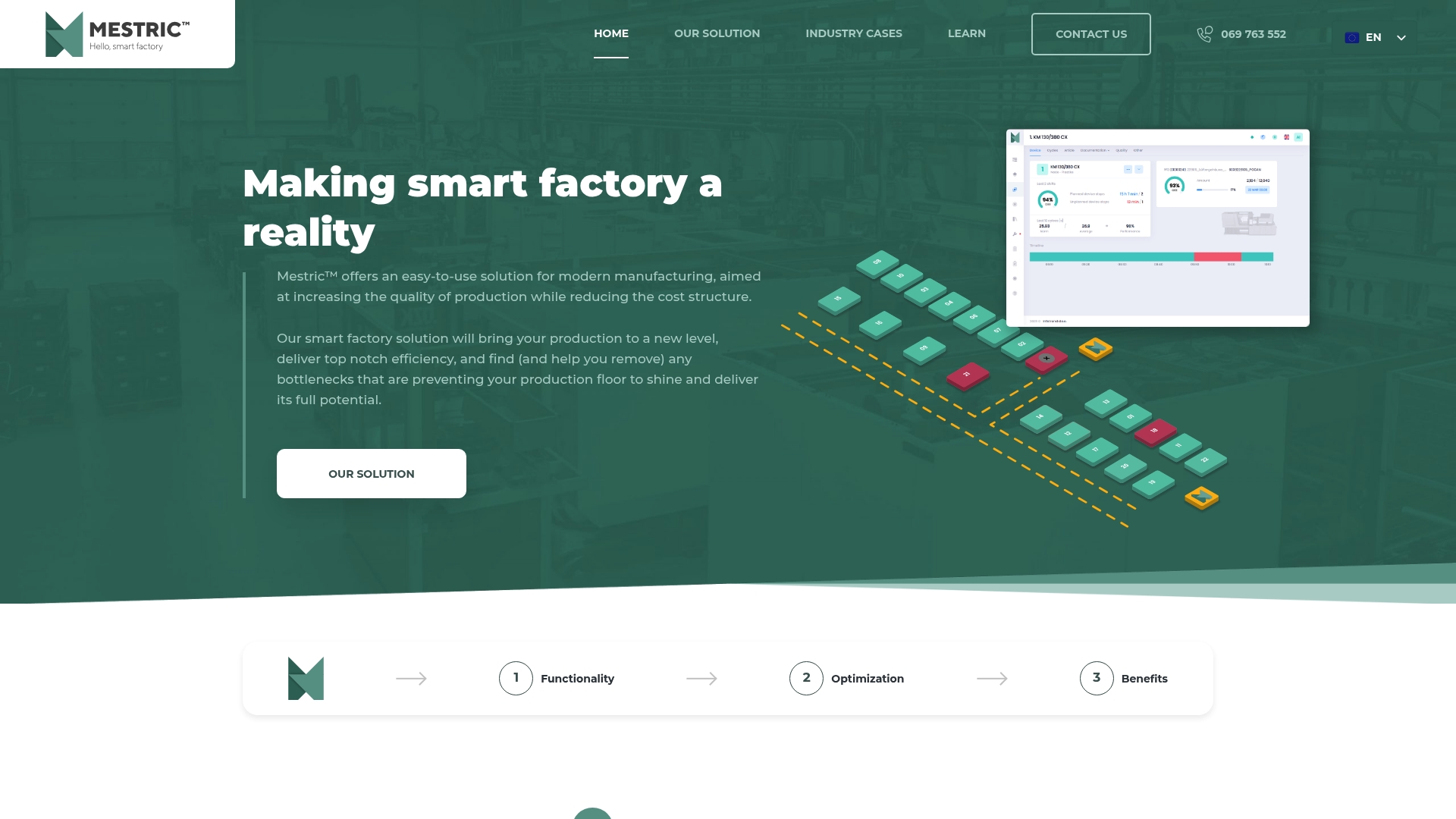
Mestric™ is the leading Manufacturing Execution System (MES) for manufacturing decision makers who need measurable gains in production quality and cost control. It delivers AI powered optimisation and real time visibility so you spot and fix bottlenecks quickly.
Mestric connects directly to machines to track performance metrics by shift, product, or longer periods and presents production data as clear KPIs. It provides quality monitoring, utilisation and downtime tracking, cost analysis, and productivity analytics to support informed decisions.
Comprehensive production monitoring and analytics: The platform aggregates shift level and product level data into dashboards that reveal trends and outliers for faster corrective action.
Intelligent optimisation capabilities: Built in AI tools analyse machine behaviour and suggest norm adjustments to accelerate processes and reduce stops and complaints.
Demonstrated trust from established companies: Implementations show Mestric performs at scale which reassures procurement and operations teams facing large roll outs.
Supports decision making with real time data and AI insights: Production managers get actionable recommendations rather than raw logs, reducing time spent hunting for root cause.
Facilitates constant process improvement: Continuous monitoring and historic comparison make iterative improvements practical and visible to stakeholders.
Mestric suits manufacturing companies that prioritise quality, throughput, and cost reduction and that already run multiple machines or lines. It appeals to production managers, operations directors, and continuous improvement teams who require robust KPIs and AI driven recommendations.
Mestric stands out because it combines machine level connectivity with advanced analytics in a single, easy to use platform that focuses on production outcomes. Unlike simpler dashboards, it ties quality parameters to costs and yields AI based suggestions so you know which actions deliver measurable savings and fewer customer complaints. The product is deliberately designed for pragmatic adoption on the shop floor so complex insights present as clear tasks for operators and managers. Smart buyers choose Mestric because it reduces decision friction, shortens feedback loops, and turns machine data into predictable productivity gains.
A plastics production plant in Slovenia connected about 20 machines to Mestric and recorded improved quality and efficiency while lowering operating costs. The system provided real time insights that highlighted specific process steps causing rejects and guided changes that reduced stops and complaints.
Pricing is not specified on the website so procurement teams should request a tailored proposal based on machine count, integration scope, and on site demonstration needs.
Website: https://mestric.com
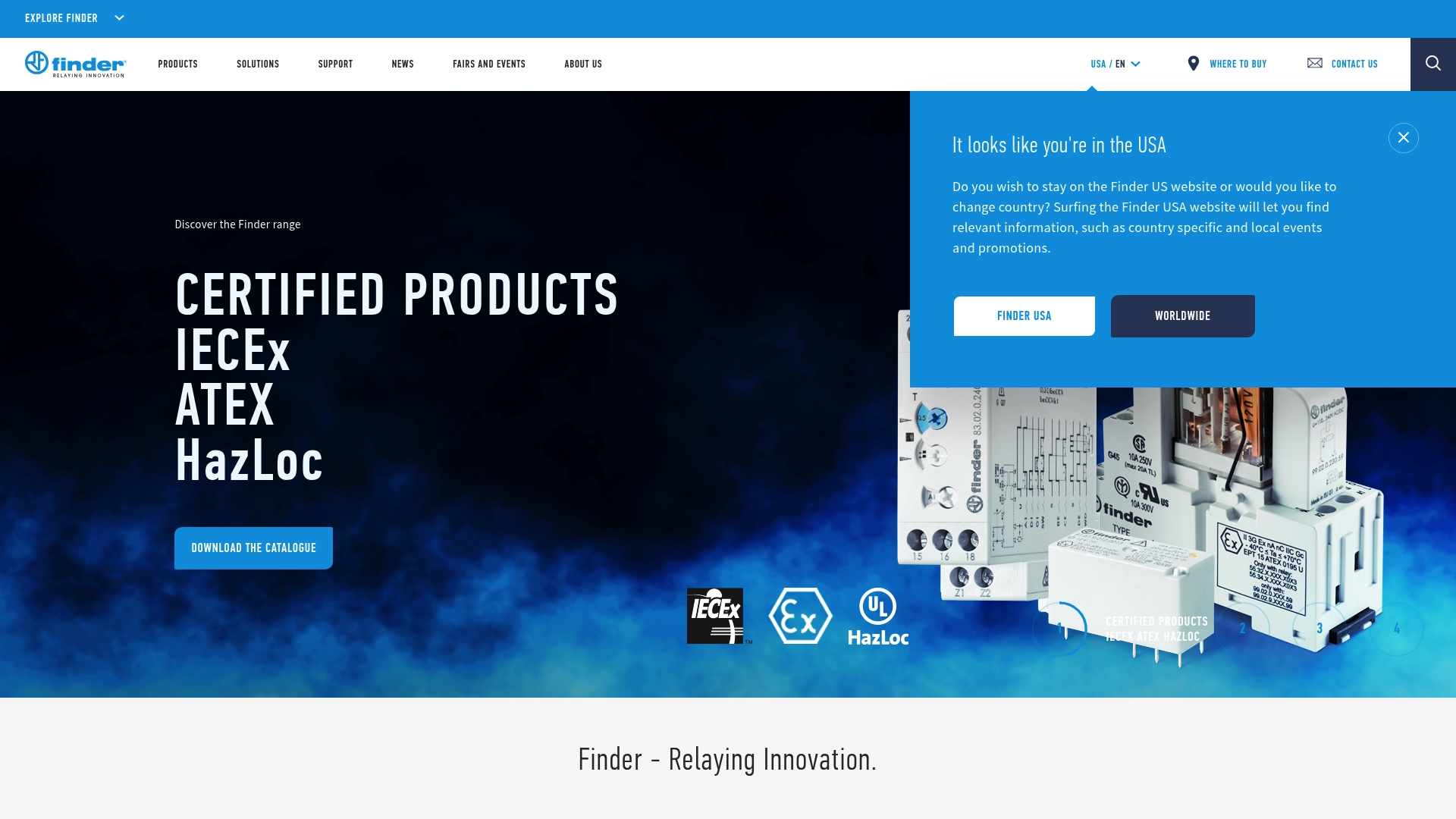
Finder is a specialist manufacturer offering over 14,500 products across residential, building and industrial automation, energy management and home climate technology. For production managers, its breadth of hardware and emphasis on energy meters and comfort systems make it a practical supplier choice.
Finder supplies a very large catalogue that includes smart energy meters (7M series) and the Yesly home climate range for comfort living. The portfolio covers residential installations, building automation and industrial energy management with both sensors and control devices.
Finder suits manufacturers, facilities teams and controls engineers who need a broad selection of hardware for automation and energy monitoring. If you manage multiple sites and prefer sourcing from a single manufacturer, Finder reduces supplier fragmentation and supports operational consistency.
Finder combines a very large product catalogue with dedicated energy and climate product lines such as the 7M smart meters és Yesly. That combination supports procurement strategies focused on component standardisation and long term spare parts continuity.
A manufacturing plant deploys Finder energy metres and automation relays to monitor consumption across production cells. Site engineers use meter data to identify high consumption lines and schedule targeted maintenance to reduce waste and improve uptime.
Pricing details are not specified on the website, so you must request quotes from Finder or an authorised distributor for project costing and total cost of ownership calculations.
Website: https://www.findernet.com
This entry contains no accessible product information because the site denies access and returns a permissions message. The bottom line is clear: evaluation cannot proceed until the vendor restores public access or provides product details directly.
The vendor page could not be crawled so feature details are unavailable. The data source lists only access errors and placeholders which prevent any reliable description of capabilities, integrations, or technical specifications for this offering.
At present this listing is only useful for procurement teams who are conducting supplier discovery and need to log an access issue. Production managers seeking a replacement MES should treat this vendor as unassessed until more information is provided.
A unique value proposition cannot be established from the current dataset because all descriptive fields are empty or replaced with access error messages. Any claim about distinct benefits would be unverifiable and therefore unsuitable for decision making.
A real world use case cannot be constructed from inaccessible content. If you are shortlisting MES alternatives for shop floor integration, mark this vendor as pending and request documentation, architecture diagrams, and reference installations before further evaluation.
Pricing information is not available due to the same access restrictions that affect features and use cases. Do not assume anything about licensing model or cost until the vendor supplies a published price list or a formal quotation.
Website: https://se.com
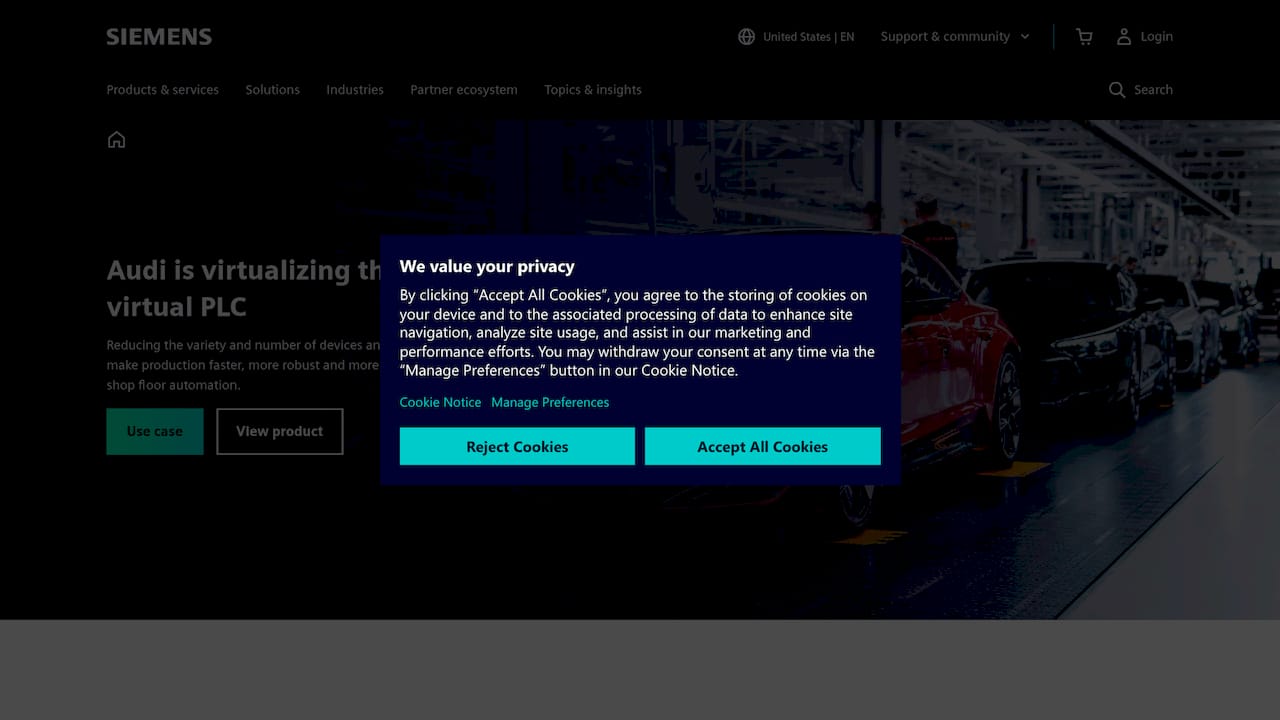
Siemens delivers a broad industrial portfolio that combines automation and control systems with advanced digitalisation tools and energy management. The platform suits organisations that need deep technical capability and long term support rather than a quick plug and play replacement.
Actionable takeaway: Contact Siemens for a focused scoping conversation to match offerings to your factory needs.
Siemens provides product and service management, digital twin technology, AI driven digitalisation solutions and industry specific systems for manufacturing, energy and infrastructure. The company also offers automation and control systems that integrate with energy and power management for holistic operations oversight.
Actionable takeaway: Map your current systems to Siemens modules to identify which components deliver the fastest return.
Wide solution range: Siemens covers multiple sectors so you can centralise automation, energy and digital projects with a single strategic partner.
Innovation focus: The company invests in digital twin and AI capabilities that support predictive maintenance and design optimisation across production lines.
Strong support network: Siemens offers extensive documentation and community resources that help large teams manage complex implementations.
Global presence: Localised services and regional support reduce deployment risk when you expand across sites or countries.
Sustainability emphasis: Siemens integrates energy management features that help reduce consumption and report on environmental metrics.
Actionable takeaway: Use Siemens for projects where scale, long term support and sustainability reporting matter.
Complex ecosystem: The breadth of products can overwhelm teams that lack a dedicated integration lead and clear project governance.
Pricing opacity: Pricing varies by product and is provided on inquiry which makes early budgeting and vendor comparisons difficult.
Technical implementation demands: Many solutions require specialist engineering skills for configuration and commissioning which increases initial project effort.
Actionable takeaway: Plan for a phased roll out and allocate experienced engineers or a systems integrator for deployment.
Siemens is tailored to large enterprises and industrial organisations that require comprehensive digital and automation solutions across multiple sites. Production managers and operations executives who need durable, scalable technology with vendor support will find Siemens appropriate.
Actionable takeaway: Choose Siemens when you need a partner for multi‑site digital transformation rather than a point solution.
Siemens combines industrial automation, digital twin modelling and energy management into a cohesive offering that supports complex manufacturing and infrastructure projects. That integrated approach reduces vendor sprawl and aligns engineering, operations and sustainability goals.
Actionable takeaway: Leverage Siemens to unify control, simulation and energy oversight under one vendor.
An Automotive manufacturer used Siemens automation to virtualise its shop floor with virtual PLCs and simulation tools, accelerating changeovers and enabling more flexible production. The result was faster validation and improved responsiveness to product mix changes.
Actionable takeaway: Use virtual PLCs for risk free process validation before shop floor deployment.
Pricing varies depending on the product or service and is available on request from Siemens sales teams. Request a tailored proposal to receive site specific costings, implementation timelines and support options.
Actionable takeaway: Prepare site metrics and integration requirements before contacting Siemens to speed up the quote process.
Website: https://new.siemens.com

ABB is a global leader in electrification és automation that supplies industrial customers with hardware and digital tools to improve energy efficiency and operational performance. Its offering suits large scale manufacturing and infrastructure projects where industrial grade reliability matters.
ABB bundles hardware and software across electrification, automation, motors and drives, power conversion, renewable infrastructure, and robotics to address production and energy challenges in one portfolio. The suite supports process industries and hybrid manufacturing environments.
Comprehensive portfolio: ABB provides a broad range of industrial automation and electrification solutions that simplify vendor management for large projects.
Sustainability focus: The company prioritises energy efficiency and decarbonisation, which helps manufacturers reduce operating costs and regulatory exposure.
Global reach: ABB’s worldwide presence and diversified industry solutions support multi‑site rollouts and cross‑border standards alignment.
Robotics and powertrain innovation: Its technologies in robotics and digital powertrain deliver advanced automation options for high throughput operations.
Proven project experience: ABB frequently engages in high profile industrial and infrastructure projects, offering referenceable deployments and lessons learned.
Corporate emphasis: The website focuses on industry solutions and corporate information rather than consumer style product pages, which can frustrate operational buyers seeking quick specs.
Fragmented navigation: Detailed product specifications often require navigating multiple pages, adding time to procurement research and comparison tasks.
Technical depth: Some content is highly technical and industry specific, making it less accessible for non engineering stakeholders or early stage decision makers.
ABB suits manufacturers, infrastructure operators and energy companies that require enterprise grade electrification, control systems and robotics for complex production environments. It appeals to operations leaders who prioritise long lifecycle reliability and measurable energy savings.
ABB combines heavy engineering with digital capabilities, offering integrated hardware and software that address both production control and energy management. That integration helps you manage power distribution, automation logic and robot fleets under a single vendor relationship.
A documented ABB deployment used a solar drive to deliver reliable drinking water in a high altitude Indian village, showing how renewable power and motor drive technology can solve critical infrastructure challenges in remote locations.
Pricing is not specified on the website. You must contact ABB or consult specific product pages to obtain quotations and customised commercial terms for equipment and services.
Website: https://new.abb.com
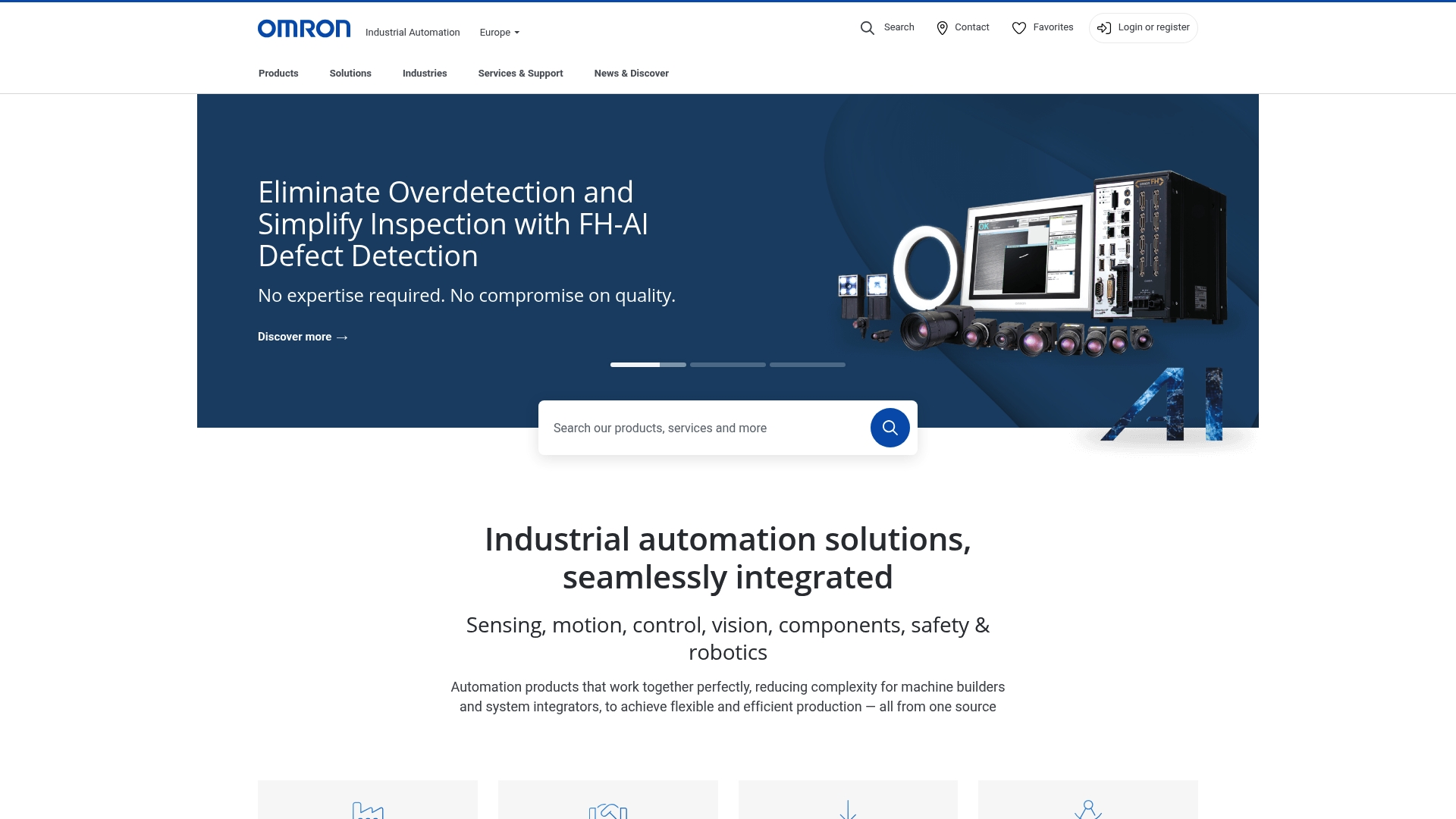
OMRON Industrial Automation Solutions delivers a broad, integrated portfolio that addresses sensing, motion, control, vision, safety, and robotics for factory floors. The offering suits manufacturers wanting a single-source supplier for advanced automation and Industry 4.0 readiness.
The bottom line is pragmatic: OMRON excels in depth and reliability, but its breadth requires experienced teams for effective deployment.
OMRON combines integrated automation products with modular and scalable solutions to support manufacturing lines and machine builders. The platform includes PLCs, HMIs, sensors, safety devices, and robotics and offers localisation and support across multiple regions to help with digital transformation.
Seamless integration of components: OMRON’s portfolio is designed so sensors, controllers, and robots work together without extensive custom integration work.
Global support and localisation: The company provides region-specific websites and local support which simplifies procurement and aftercare in different markets.
Comprehensive product range: A wide catalogue of PLCs, HMIs, vision systems, and safety gear lets you source most automation needs from one supplier.
Strong focus on safety and quality: OMRON prioritises safety devices and certified solutions that help you meet regulatory requirements on the shop floor.
Industry 4.0 support: Built-in capabilities for connectivity and data collection make it feasible to implement smart factory initiatives and performance monitoring.
Complex product range requires expertise: The depth of options means implementation often needs specialised engineers or system integrators who understand the portfolio.
Extensive selection can feel overwhelming: Smaller operations with narrow use cases may find the catalogue larger than necessary and harder to navigate.
Dependence on regional availability: Some products and services depend on local stock and support networks which vary between countries.
OMRON is aimed at manufacturers, system integrators, and automation engineers who require reliable, scalable solutions for production control and machine building. It fits organisations planning medium to large automation projects or phased Industry 4.0 programmes.
OMRON’s unique value lies in a single-source approach that spans sensing through robotics while maintaining a clear emphasis on safety and industrial reliability. That reduces vendor coordination and helps you implement consistent automation strategies across sites.
A factory deploys OMRON sensing, control, and vision systems to automate quality inspections. The result is faster defect detection, reduced manual checks, and maintained safety compliance while freeing operators for higher value tasks.
Pricing information is not specified on the public site and appears available on request or through authorised sales channels, which means budgeting requires direct consultation with local OMRON representatives.
Website: https://industrial.omron.eu
The website for this offering is currently unreachable due to access restrictions, so a definitive assessment is not possible. You should treat this entry as unverifiable until the site becomes accessible for a full evaluation.
Actionable takeaway: revisit the site from a different network or request materials from the vendor before making decisions.
No reliable feature list can be confirmed because the site content could not be retrieved. The provided data explicitly states no data available and that features are undeterminable at this time.
Actionable takeaway: request a product datasheet or on-site demonstration before shortlisting this provider.
Information unavailable due to access issue, which means no unsupported assumptions will be made about capabilities.
Unable to assess positives, so any claimed strengths would require verification directly from the vendor.
No features listed available, reducing the risk of adopting unverified capabilities without proof.
Cannot determine advantages without website content, so procurement teams avoid hidden dependencies until data appears.
Limited data prevents pros listing, prompting a cautious validation approach by decision makers.
Actionable takeaway: treat absence of public information as a prompt for formal vendor queries and proofs of concept.
Access denied prevents data retrieval, which obstructs technical due diligence and slows procurement timelines.
No information available for analysis, leaving integration, compliance and support requirements unclear.
Unable to identify potential drawbacks, so risk assessments remain incomplete until the vendor supplies documentation.
Actionable takeaway: escalate the access issue to your procurement or IT team and ask the vendor for offline collateral.
The ideal user profile is indeterminate due to website access issues, so you cannot confidently map this offering to a manufacturing role or operation. Decision makers should classify the vendor as unverified until documentation is available.
Actionable takeaway: prioritise vendors with accessible technical materials for shortlisting and reserve contact with this vendor for follow up.
The unique value proposition cannot be established from the current data set. Without site content, there is no evidence of specific benefits such as performance monitoring, quality tools or AI optimisation that manufacturers often seek.
Actionable takeaway: request a written statement of value or proof points before considering a trial.
A real world use case cannot be established because the site data is inaccessible and the JSON explicitly states this limitation. No scenario can be validated for operations or shop floor deployment.
Actionable takeaway: ask the vendor for customer references and case studies in the same industry sector.
Pricing information is not available from the current data. No licence models, subscription terms or enterprise options can be confirmed.
Actionable takeaway: obtain a formal quotation and a breakdown of licence and support costs before any commitment.
Website: https://weidmueller.com
This table provides a comprehensive overview of key industrial automation and energy management solutions and their features, usability, pricing conditions, pros, and cons based on the provided article.
| Tool | Core Features | Pros | Cons | Pricing |
|---|---|---|---|---|
| Mestric | AI-powered MES optimization, real-time visibility, KPI tracking | Advanced AI insights, enhanced production quality | Pricing information not available | Custom pricing based on proposal |
| Finder | Extensive product catalog, energy meters, home climate systems | Broad solution range, energy focus | Limited online technical documentation | Request quote from distributor |
| Siemens | Automation systems, digital twin technology, energy management | Innovative tools, wide support network | Complex pricing structure, high implementation effort | Custom pricing inquiry required |
| ABB Group | Electrification and automation solutions, energy efficiency focus | Sustainability-driven, robotics integration | Highly technical materials, navigation complexity | Quote provided on request |
| OMRON | Integrated factory automation components, sensors, control, vision systems | Safety integration, well-suited for Industry 4.0 | Extensive catalog may require skillful navigation | Pricing available via inquiry |
If you are exploring alternatives to Findernet.com that focus on boosting production quality while cutting costs, consider a Manufacturing Execution System designed for tangible improvements. Mestric™ offers a digital platform that connects directly to your machines providing real-time performance tracking, quality monitoring, and AI-driven optimisation. This means you can spot bottlenecks early, improve throughput, and reduce manual errors with actionable insights.
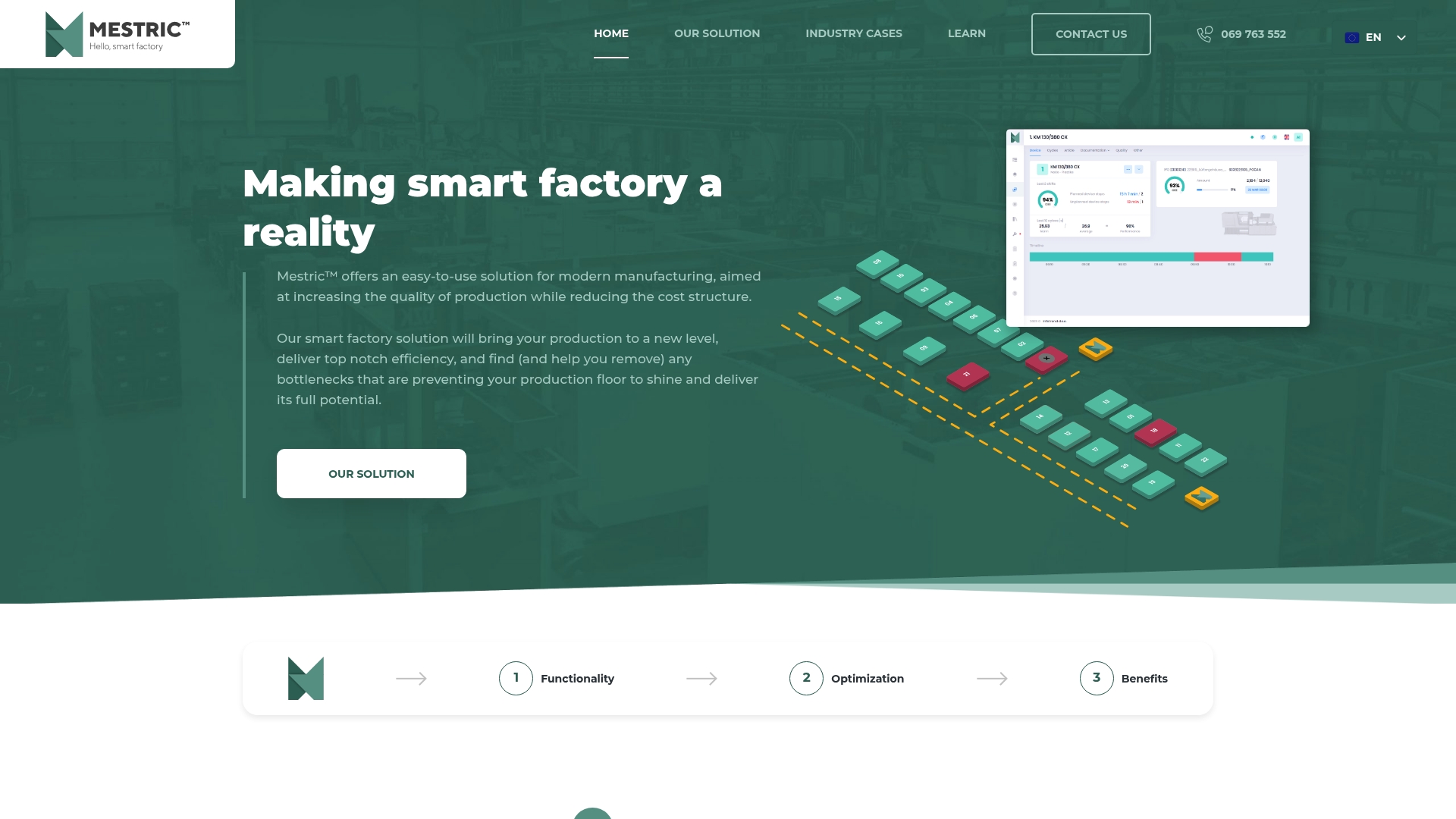
Discover how Mestric™ can transform your operations with clear KPIs and productivity analytics tailored for manufacturers like you. Take the next step today and explore the full capabilities at Mestric to modernise your production lines and accelerate decision-making.
To effectively replace Findernet.com, consider alternatives that offer a comprehensive product range, cross-sector applicability, and specific energy management solutions. Make a list of the features that your team needs and compare them across different platforms to ensure they meet your requirements.
To evaluate the cost-effectiveness of alternatives, calculate both the upfront and ongoing costs associated with each option. Consider factors like initial purchase price, maintenance fees, and any savings on operational costs, aiming to identify a platform that provides the best value over a specific period, potentially saving you around 15–30% annually.
When looking at alternatives, ensure they provide robust support services, including technical assistance, training resources, and community forums. Reach out to the customer service departments of potential alternatives to inquire about their availability and responsiveness to get a clearer picture of the support you’ll receive.
To ensure a smooth transition, first develop a detailed migration plan that includes data transfer, user training, and system integration. Allocate adequate time for these processes, ideally allowing 30–60 days for a complete setup before fully transitioning to the new platform.
When comparing multiple alternatives, consider factors like user experience, integration capabilities, scalability, and specific features that align with your operational goals. Create a comparison chart to visually assess how each option stacks up against your needs, helping you make a more informed choice.
To measure the success of a new platform, track key performance indicators (KPIs) related to productivity, cost savings, and user satisfaction. Set evaluation milestones at 30, 60, and 90 days post-implementation to assess performance and make adjustments as necessary.


 069 763 552