

AI-powered factory insights turn raw sensor and process data into prescriptive actions that cut unplanned downtime, raise yield, and shorten production ramp-up times. The term “AI-powered factory insights” is the informal way the industry describes what practitioners call closed-loop manufacturing intelligence: a continuous cycle of sensing, deciding, executing, and learning that feeds directly into MES and ERP workflows. Deloitte finds an average improvement potential of around 20% across core operational KPIs when AI is properly embedded, while BCG estimates 30%+ productivity gains when virtual and physical AI are combined. The six benefits you can take to a board meeting today:
Every claim above is evidence-backed and expanded in the sections below.
AI-powered factory insights deliver measurable operational gains, with predictive maintenance and vision-based quality inspection offering the fastest, most board-reportable returns for manufacturers who invest in data readiness first.
| Point | Details |
|---|---|
| Start with predictive maintenance | Targets 30–50% downtime reduction with 12–18 month payback; fastest route to board-level ROI. |
| Data readiness precedes model selection | Clean, labelled sensor data shortens time to a working model more than algorithm choice. |
| People foundations drive scale | BCG finds ~70% of transformation success depends on governance, cross-functional ownership, and change management. |
| Measure a baseline before the pilot | Four to eight weeks of pre-pilot KPI data is the minimum needed to validate improvement credibly. |
| Mestric closes the loop at the operator level | Real-time MES dashboards and AI alerts surface insights inside the workflow where operators can act on them immediately. |
The phrase covers a specific data-to-action pipeline, not a single product. At its core, it means connecting physical assets (machines, conveyors, environmental sensors) to software that applies machine learning and, increasingly, agentic AI to produce recommendations operators and automation systems can act on immediately.
The data flow works in four stages:
Accenture describes this as systemic AI: a closed loop of sense, decide, execute, and learn that compounds value across every phase of the plant lifecycle, from design and commissioning through to daily operations. The compounding effect is what separates embedded AI from one-off analytics projects.
Where insights integrate matters as much as how they are generated. An alert that sits in a separate analytics portal and requires a supervisor to log in separately rarely changes behaviour. Insights that surface inside the MES workflow the operator already uses, or that trigger an automated work order in the ERP, are the ones that move KPIs. The role of AI in manufacturing goes well beyond dashboards when the feedback loop is closed at the point of action.
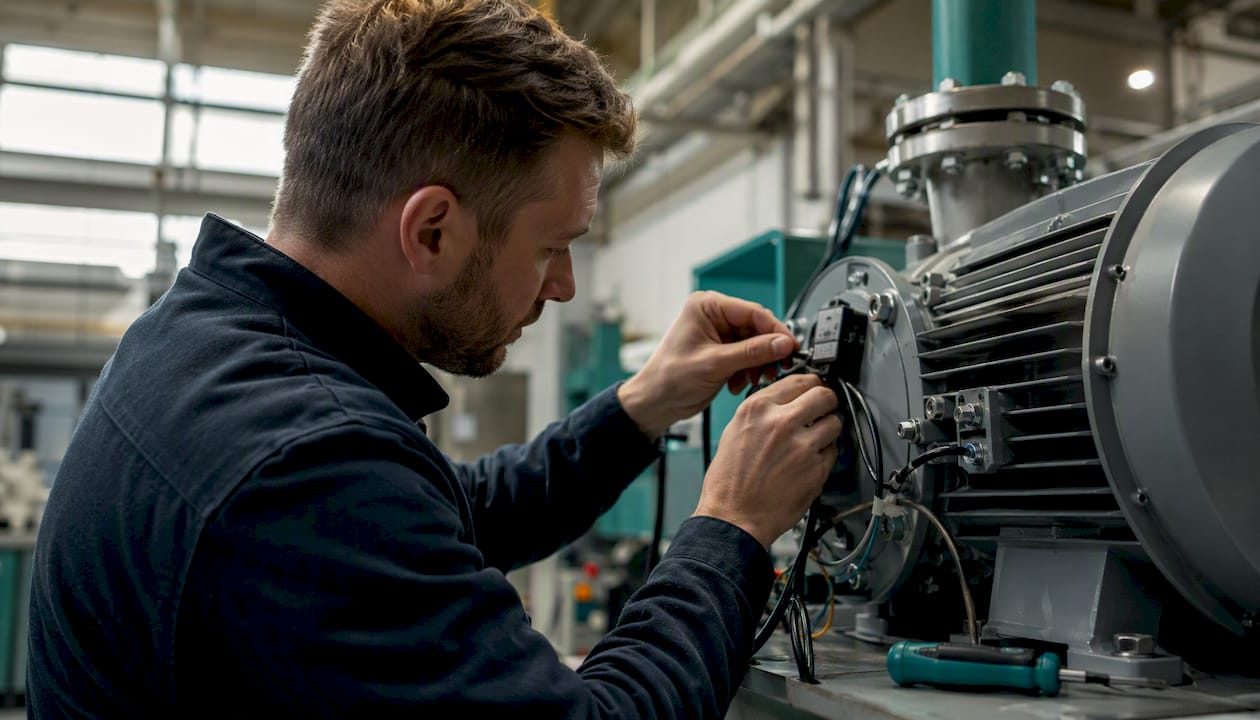
Unplanned downtime is the single most expensive line item for most production operations. Industry reporting puts the average cost at roughly US$260,000 per hour, and predictive maintenance models trained on vibration, temperature, and current-draw data can cut unplanned stoppages by 30–50%. A manufacturing control-tower implementation documented on AWS achieved up to a 36% reduction in unexpected downtime and roughly a 30% improvement in mean time to repair (MTTR), demonstrating what a unified data architecture delivers at scale.
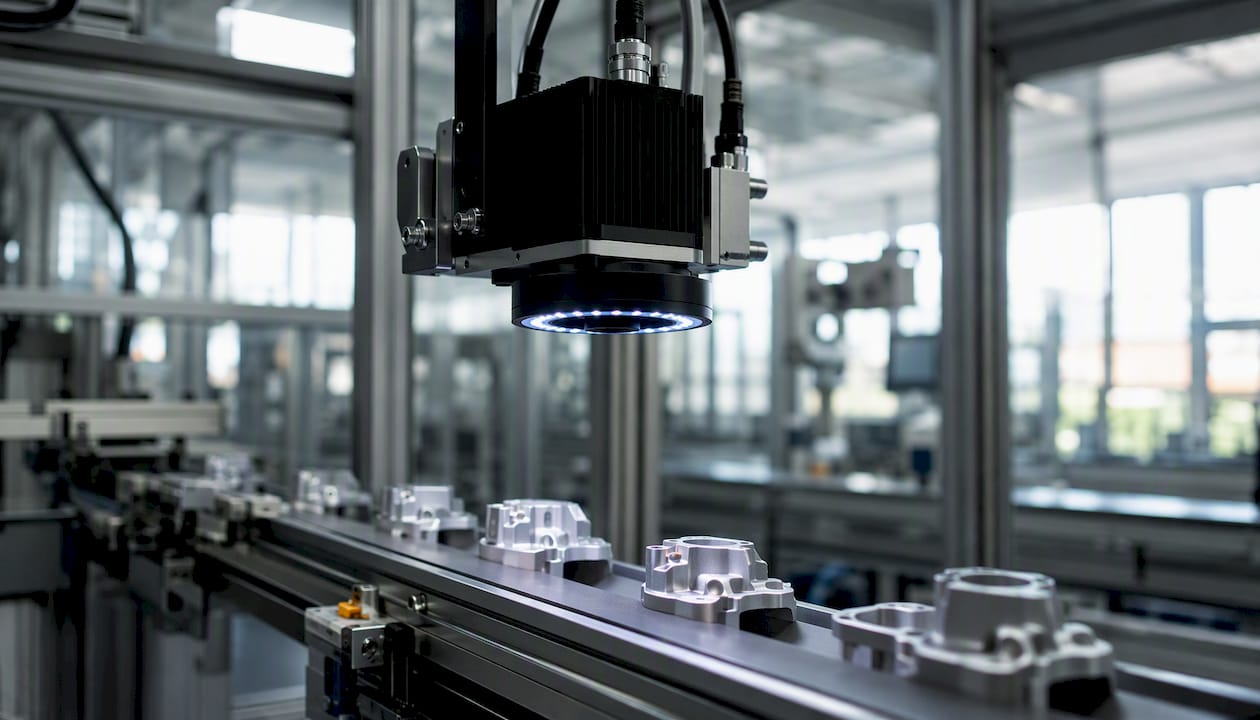
Computer vision systems inspect at speeds and consistency levels no manual process can match. Industry findings show 99%+ defect detection accuracy in some implementations, with measurable ROI typically appearing within 12–18 months when data readiness is adequate. Fewer escapes mean fewer customer complaints, lower rework costs, and a tighter process norm.
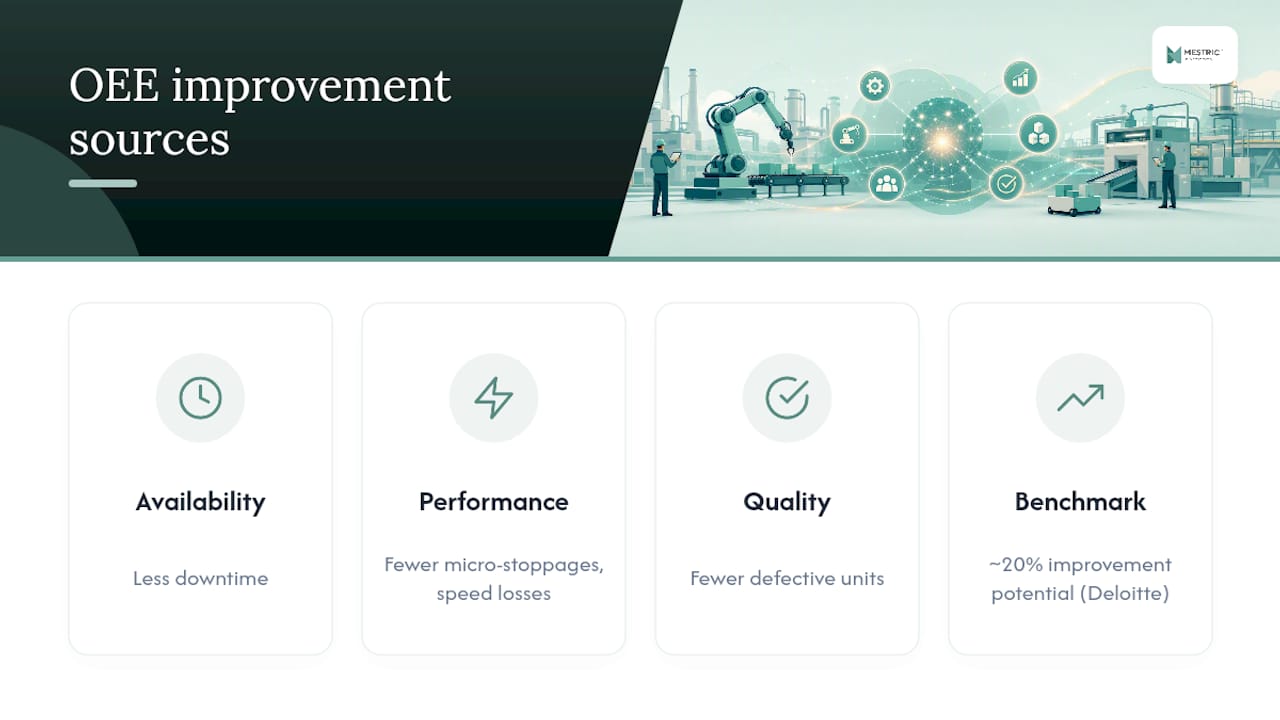
Overall Equipment Effectiveness (OEE) improvements come from three directions simultaneously: better availability (less downtime), better performance (fewer micro-stoppages and speed losses), and better quality (fewer defective units). AI process-optimisation models adjust setpoints in real time to keep each component at its peak. The Deloitte benchmark of ~20% improvement potential across core KPIs applies directly here.
Condition-based maintenance, driven by AI, replaces both reactive repair and unnecessary scheduled maintenance. Assets run longer between interventions, spare-parts consumption falls, and maintenance labour is directed where it is genuinely needed rather than spread across fixed calendar intervals.
AI planning models that consume real production data, supplier lead times, and demand signals can reduce work-in-progress and finished-goods inventory meaningfully. Leaner inventory frees working capital and reduces the risk of obsolescence on short-lifecycle SKUs.
Process optimisation models identify the operating conditions that minimise energy per unit produced. In energy-intensive processes such as casting, moulding, or heat treatment, this can represent a material cost reduction and a measurable contribution to sustainability targets.
Real-time sensor data and computer vision can flag unsafe conditions, near-misses, and ergonomic risks before incidents occur. Simultaneously, AI-generated shift summaries and prescriptive alerts free operators from manual data collection, directing their attention to decisions that require human judgement.
Pro Tip: Start with predictive maintenance on your highest-criticality asset. The combination of clear sensor data, a well-understood failure mode, and a quantifiable cost of downtime gives you the fastest, most board-reportable ROI, typically within 12–18 months.
Understanding where value concentrates helps you prioritise pilots and avoid spreading resources too thin. The use cases below split into rapid wins (12–18 months to measurable ROI) and strategic investments (18–36 months, higher complexity, higher ceiling).
Predictive maintenance — Vibration, temperature, and current sensors feed anomaly-detection models that flag impending failures days or weeks in advance. Data needed: time-series sensor feeds from critical assets, historical failure records. Success indicator: reduction in unplanned stoppages and maintenance cost per asset.
Computer vision quality inspection — Cameras replace or augment manual visual inspection on high-speed lines. Data needed: labelled image datasets of good and defective parts. Success indicator: defect escape rate, rework volume, and inspection throughput. Automate production tracking on automotive lines is a well-documented application of this approach.
Process and setpoint optimisation — ML models recommend or automatically adjust process parameters (temperature, pressure, speed) to maximise yield within specification. Data needed: process historian data, quality outcomes. Success indicator: yield rate, scrap rate, energy per unit.
Digital twins and virtual commissioning — A virtual replica of a production line or machine allows engineers to test process changes, new product introductions, or layout modifications without touching the physical line. Data needed: CAD models, real-time process data, physics-based simulation. Success indicator: time-to-market for new SKUs, commissioning time for new equipment.
Advanced planning and scheduling (APS) — AI scheduling engines consume real-time machine availability, order priorities, and material status to generate feasible, optimised production plans. Data needed: MES/ERP integration, real-time machine states. Success indicator: schedule adherence, changeover time, on-time delivery.
Intralogistics and AGV/AMR coordination — AI-driven fleet management for automated guided vehicles and autonomous mobile robots optimises routing, load balancing, and traffic management in real time. Data needed: warehouse management system data, real-time location feeds. Success indicator: pick cycle time, vehicle utilisation, congestion incidents.
Rapid-win pilots to prioritise: predictive maintenance, vision-based QC, setpoint optimisation.
Strategic investments to plan in parallel: digital twins, APS, AGV/AMR coordination.
Flexible drive solutions on physical assets directly affect the quality of sensor signals that feed these models, making physical-system performance a prerequisite for reliable AI outputs.
AI models are only as reliable as the data they consume. Before committing to a use case, audit your readiness against this checklist:
For brownfield shops with legacy PLCs, OPC-UA adapters and protocol converters can bridge older equipment to modern data infrastructure without replacing the machines themselves. Intelligent manufacturing systems explains the IT/OT alignment considerations in practical terms.
Pro Tip: Before selecting a model, invest two to four weeks in a focused data ingestion and labelling exercise on your pilot asset. Clean, labelled data shortens time to a working model by more than any algorithm choice.
Measure each KPI for a minimum of four to eight weeks before the pilot begins. Without a credible baseline, you cannot demonstrate improvement to a board or finance committee. Use the same data source for baseline and post-implementation measurement; switching from manual records to automated MES data mid-pilot invalidates the comparison.
Real-time production monitoring platforms that log machine states automatically give you the cleanest baseline data and the most defensible post-pilot comparison. Factory analytics with AI can then layer predictive and prescriptive outputs on top of that operational foundation.
Most AI programmes in manufacturing fail at execution, not at the model level. The barriers are operational, not algorithmic.
Pro Tip: Structure escalation rules at shift level from the start. Define which AI alerts require operator acknowledgement, which trigger automatic work orders, and which escalate to the engineering team. A clear human-in-the-loop protocol builds trust faster than any accuracy statistic.
Slovenia’s manufacturing sector, concentrated in automotive supply, electronics, and precision engineering, is well positioned to adopt AI-driven insights. The country’s membership of the EU means access to Horizon Europe funding, Digital Europe Programme grants, and SRIP (Strategic Research and Innovation Partnership) initiatives that can co-fund pilot projects. The Slovenian Enterprise Fund (SPS) and SPIRIT Slovenia also offer digitalisation vouchers and co-financing for SME technology adoption.
A practical pilot roadmap:
Pilot prerequisites checklist:
For procurement, use a time-boxed proof-of-value contract (typically 8–12 weeks) with clear exit criteria. This protects operations while allowing iteration. Top manufacturing trends in 2026 provides useful context for aligning your pilot roadmap with broader sector direction.
Mestric™ is a Manufacturing Execution System built specifically to connect factory floor data to the KPI dashboards and AI-driven alerts that operations leaders need. Rather than requiring a separate analytics platform, Mestric integrates data collection, quality monitoring, downtime analysis, and productivity analytics into a single environment that production managers can use without specialist data-science support.
In a typical implementation, Mestric connects directly to production equipment via standard machine interfaces, begins logging real-time performance data immediately, and surfaces KPI dashboards within the first days of deployment. AI-powered optimisation tools then identify process bottlenecks, flag anomalies, and generate prescriptive recommendations that operators can act on during the shift.
Key capabilities relevant to AI-powered insights:
Pro Tip: When evaluating an MES for AI readiness, ask whether the system writes AI recommendations back into the operator’s existing workflow or requires a separate login. The platforms that close the loop inside the operator’s daily routine are the ones that change behaviour.
The most common mistake is treating AI as a technology project rather than an operational capability. Teams spend months selecting algorithms and building models, then discover that the data pipeline is unreliable, the operators don’t trust the outputs, and the IT and OT teams have never agreed on who owns the infrastructure.
BCG’s finding that people foundations account for roughly 70% of transformation success is consistently underweighted in project plans. Cross-functional ownership, where a named operations leader is accountable for the AI use case alongside the IT team, is the single governance decision that most reliably predicts whether a pilot scales. Without it, pilots succeed technically and then stall because no one has the authority or incentive to drive adoption across shifts.
The second blind spot is data operations. Most organisations underestimate the ongoing effort required to keep training data labelled, models retrained, and integration pipelines maintained. AI is not a one-time deployment; it is a running operational process that requires the same discipline as any other production system. Deloitte’s observation that only about 20% of AI use cases are scaled across sites reflects exactly this gap: the technology works, but the operating model to sustain and scale it is absent.
Short, measurable cycles matter more than ambitious roadmaps. A pilot that delivers a clear, audited KPI improvement in twelve weeks builds more organisational confidence than a two-year transformation programme that promises everything and measures nothing until the end.
Mestric delivers the MES foundation that makes AI-powered insights usable in daily production, not just visible in a quarterly report. You get real-time performance tracking, quality monitoring, and AI-driven process optimisation in one platform that connects directly to your machines. There is no separate analytics tool to manage and no specialist data team required to interpret the outputs.
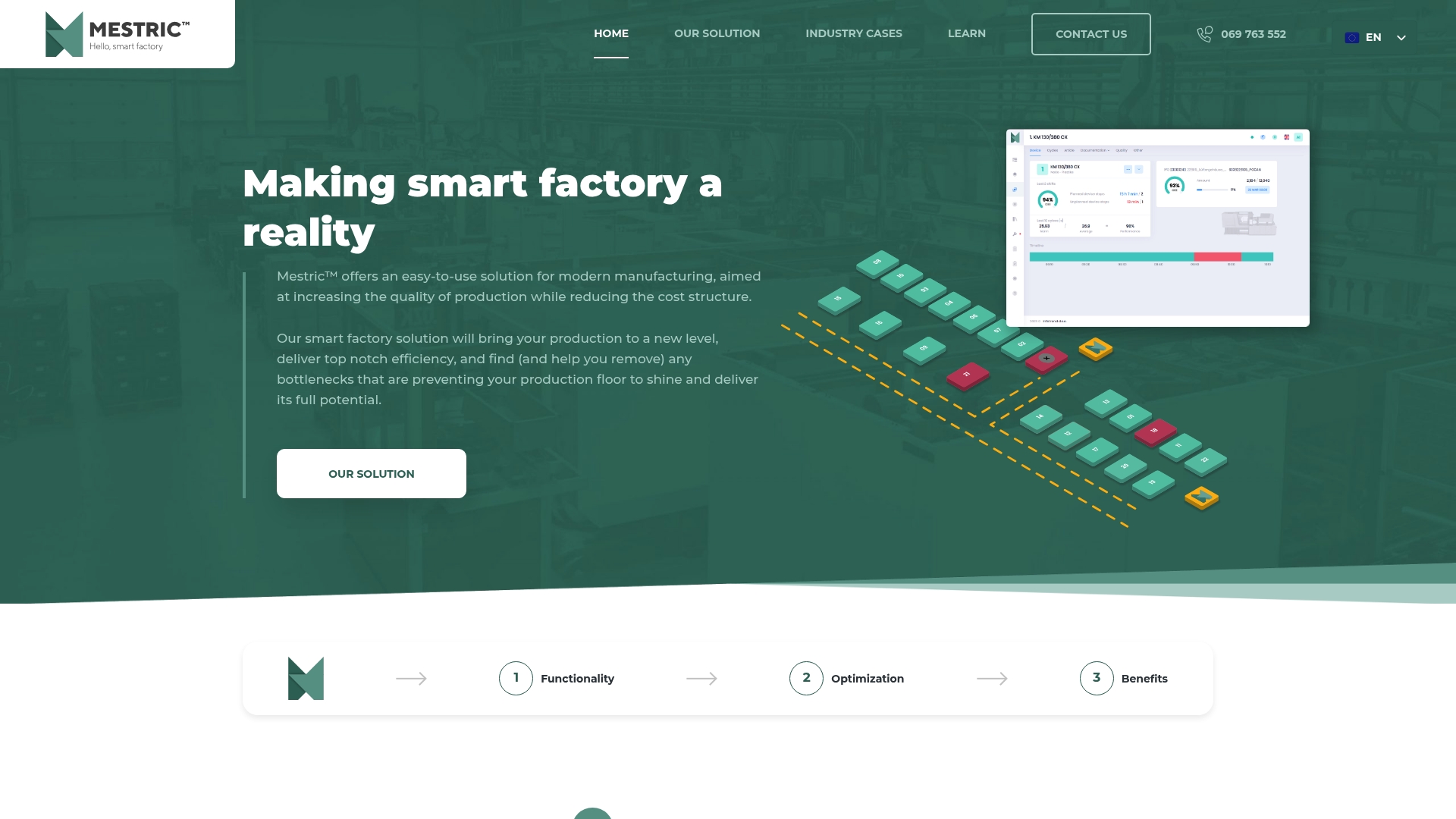
The practical next step is an onsite presentation where Mestric connects to your equipment and shows you live KPI data from your own production environment. Prepare a list of your three highest-cost downtime events from the past quarter and your current defect rate by line. Those two inputs are enough to scope a focused pilot and build an initial ROI estimate. Compare what an MES delivers versus traditional manufacturing processes and then contact the Mestric team to arrange your demonstration.
The following reports and articles were cited throughout this piece. Each covers a distinct aspect of AI in manufacturing and is worth reading in full for the evidence behind the figures used above.


 069 763 552