

TL;DR:
- Machine learning enhances manufacturing by providing early fault detection, process optimization, and real-time KPI tracking. Implementing AI requires robust data pipelines, seamless MES integration, and strict compliance with UK regulations. Mestric combines MES capabilities with AI to deliver immediate factory insights and continuous operational improvements.
Machine learning turns shop-floor data into early warnings, automated quality checks and continuous process optimisation. For UK manufacturers, the practical payoff is measurable: higher Overall Equipment Effectiveness (OEE), shorter Mean Time to Repair (MTTR), and lower defect rates, all driven by ML-based fault diagnosis that catches problems before output drops to zero.
Key entities to anchor your project: OEE as your headline metric, GDPR compliance for any telemetry involving personal data, NIST’s 2026 smart manufacturing roadmap as a technical reference, and Mestric™ as your MES integration hub.
Machine learning (ML) is data-driven software that finds patterns in historical and live data to predict outcomes, classify faults, and adjust controls, without requiring engineers to hard-code every decision rule. In an Industry 4.0 context, it sits inside a layered stack: physical sensors collect signals, IIoT gateways aggregate and transmit them, data pipelines clean and structure the feed, ML models run inference, and the results trigger actions inside your MES, SCADA, or ERP system.
The distinction between a prototype and a production-ready system matters enormously here. A research model that achieves 95% accuracy in a notebook is not a factory asset. A production system needs MLOps pipelines, safety interlocks, observability dashboards, and integration with your existing control architecture. The model itself often represents 5% or less of the total codebase; the rest is data engineering, orchestration, and monitoring. Understanding that ratio early saves months of rework.
For a broader view of how intelligent manufacturing systems fit together, the architecture concepts translate directly to ML deployment planning.
The use cases below consistently show measurable returns across UK factories in high-automation sectors such as electronics, metals, and automotive. Each one has a concrete detection or optimisation target.
A systematic literature review confirms that quality control and fault diagnosis dominate ML research in production lines, with PdM and remaining useful life (RUL) prediction close behind as high-value applications. Sectors with high sensor density and tight quality tolerances see the fastest adoption.
| KPI | How ML improves it | Measurement method |
|---|---|---|
| OEE | Reduces unplanned downtime and defect-driven losses | Compare OEE before and after pilot over matched production periods |
| MTTR | Faster fault diagnosis cuts repair time | Log fault-to-resolution timestamps; compare 90-day averages |
| Defect rate | Automated inspection catches more faults earlier | Track defects per thousand units; compare pre- and post-deployment |
| Yield | Process optimisation reduces scrap and rework | Measure good units out vs. raw material in |
| Throughput | Scheduling and cycle-time models increase output rate | Units per shift; compare against baseline period |
| Energy per unit | Load-shifting and demand prediction cut consumption | kWh per unit produced; compare against seasonal baseline |
For credible ROI calculations, run a 30–90 day baseline measurement before deployment, then match the pilot period to the same production mix and shift pattern. A control line or cell running without ML gives you a clean comparison. Without that discipline, confounding variables make the business case hard to defend to finance.
Real-time performance tracking is the practical mechanism for capturing these KPIs continuously rather than in periodic manual audits.
The production stack runs in one direction: physical sensors → IIoT gateway → data ingestion → feature store → model training → inference (edge or cloud) → MES/SCADA action. Each handoff is a potential failure point if timestamps, tag names, or data formats are inconsistent.
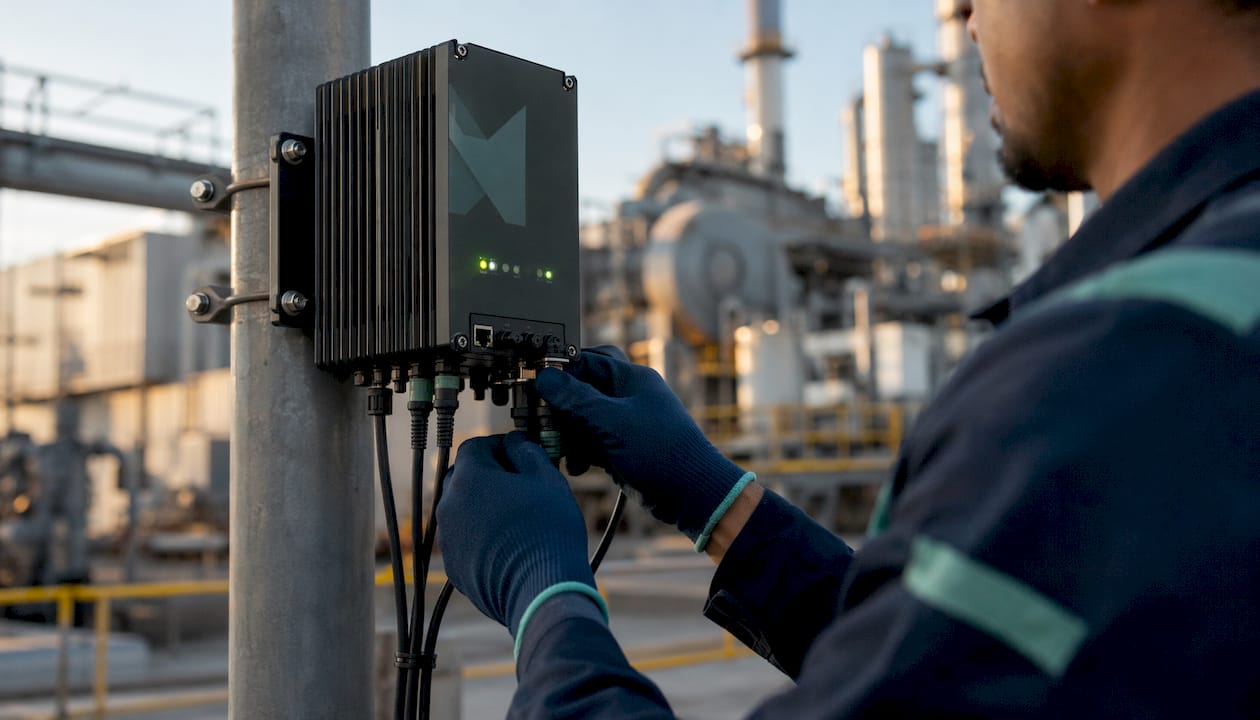
The edge versus cloud decision comes down to four factors: latency requirements (sub-100ms decisions need edge), connectivity reliability on the shop floor, data volume (high-frequency vibration data is expensive to stream continuously), and safety or regulatory constraints on where data can reside. Many UK factories run a hybrid: edge inference for real-time control, cloud training for model updates.
IoT and ML together enable remote monitoring, energy management, and process control across the full production environment. The role of IIoT in manufacturing covers sensor architectures in more detail.
Integration checklist:
The NIST roadmap identifies heterogeneous sensing and reliable control-system integration as the primary technical barriers to ML adoption in factories. Solving those two problems before building models is the correct order of operations.
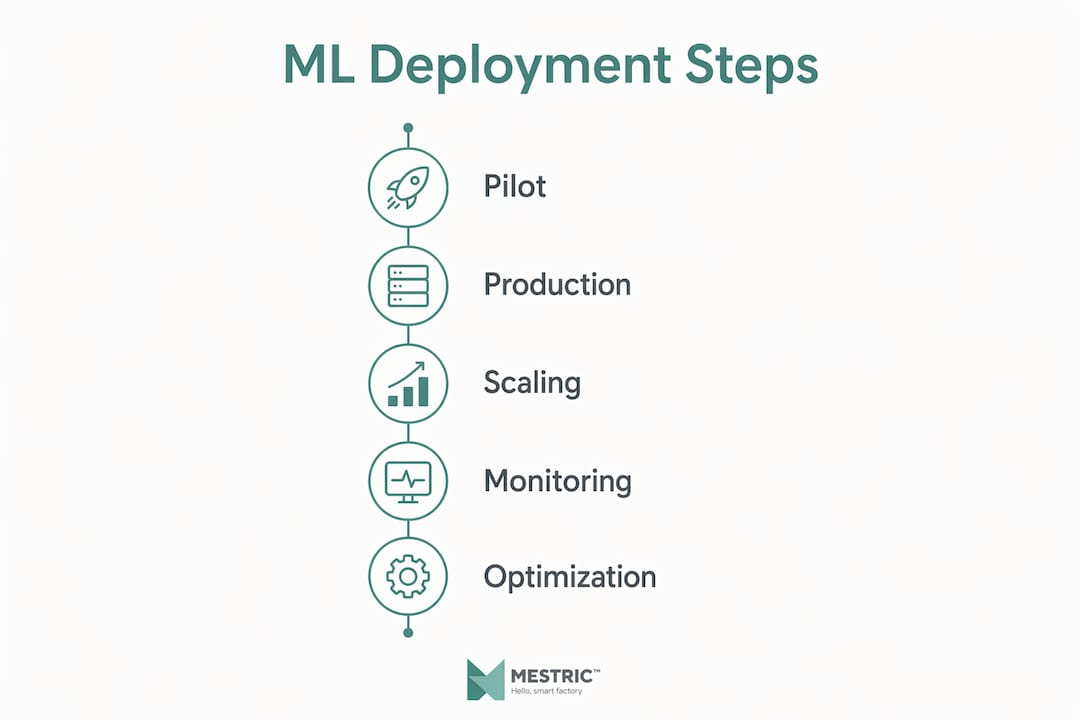
Typical timelines: a focused pilot runs 8–16 weeks; productionalisation adds 8–12 weeks; scaling to multiple lines takes 3–6 months depending on integration complexity. Main cost drivers are sensor installation, integration engineering, software licences, and internal engineering time, in roughly that order.
Profi tipp: Define your success criteria in writing before the pilot starts. “The model should reduce unplanned downtime by 20% over 90 days on Line 3” is a testable claim. “Improve maintenance” is not.
UK-specific considerations: Under GDPR, telemetry data that could identify individual operators (shift patterns, error logs tied to login IDs) requires a lawful basis and appropriate retention limits. The Health and Safety Executive (HSE) expects that automated control systems affecting operator safety are subject to formal risk assessment under the Machinery Directive and relevant PUWER regulations. Any ML model that can trigger a physical action on the line needs documented safety interlocks and human-override capability.
A production ML project requires six roles working in parallel, not in sequence.
| Role | Responsibility |
|---|---|
| Production sponsor | Business case ownership, KPI sign-off, stakeholder alignment |
| Data engineer | Pipeline build, data quality, feature store |
| ML/MLOps engineer | Model development, CI/CD, monitoring |
| Automation/controls engineer | MES/SCADA integration, safety interlocks |
| Domain SME (e.g. maintenance lead) | Label data, validate model outputs, define thresholds |
| IT/security | Network architecture, GDPR compliance, cybersecurity |
Change management is where most projects underestimate effort. Floor-level operators need to understand what the system does, why it flags alerts, and how to override it. Without that, adoption stalls regardless of model accuracy. AI adoption in practice shows that small, visible wins on the shop floor build the trust needed for broader rollout.
When assessing any MES or ML platform, score each candidate against these criteria:
Red flags: a vendor who demos model accuracy without showing integration architecture; unclear data ownership terms; no observability features; accuracy claims without reference to a deployed factory environment.
Key questions to ask: “Can you show a deployed production system, not a prototype?” “What is your uptime SLA for inference services?” “How does the platform handle concept drift?”
Mestric connects directly to your production equipment, collects real-time KPI data across OEE, downtime, quality, and cost, and applies AI-powered optimisation to surface bottlenecks and recommend adjustments. The workflow is straightforward: machines feed live data into the platform, Mestric’s analytics layer identifies deviations from production norms, and production managers receive alerts and recommendations through a single dashboard.
In a typical deployment, a plant running Mestric sees downtime visibility improve immediately as the system begins logging machine states automatically. Over the first pilot period, the AI layer starts correlating downtime patterns with upstream process variables, enabling maintenance teams to act before failures occur rather than after. Quality monitoring tracks defect rates in real time, and the platform’s quality monitoring workflow guides teams through structured response processes.
For UK manufacturers ready to move from pilot to production, Mestric offers an onsite presentation and proof-of-concept scoping session. Contact the team to arrange a demonstration at your facility.
Machine learning in factories delivers measurable OEE, MTTR, and defect-rate improvements when production readiness, data quality, and MES integration are prioritised over model accuracy alone.
| Pont | Részletek |
|---|---|
| Start with data, not models | Audit sensor coverage and data quality before selecting or building any ML model. |
| Production readiness beats accuracy | The model is 5% of the system; pipelines, integration, and monitoring are the rest. |
| Pick one use case first | PdM on a critical asset gives the clearest ROI and the fastest path to a credible business case. |
| UK compliance is non-negotiable | Address GDPR for telemetry data and HSE requirements for automated control systems from day one. |
| Mestric as your MES hub | Mestric connects machines, tracks KPIs in real time, and embeds AI optimisation into a single production platform. |
The conversation in manufacturing circles tends to fixate on which algorithm is most accurate. That framing misses the point almost entirely. The factories that extract real value from ML are the ones that invested in clean data pipelines, robust integration with their MES, and a clear observability plan before they trained a single model.
The 87% project failure rate is not a story about bad algorithms. It is a story about missing data, weak integration, and no plan for keeping a model reliable after deployment. Concept drift is inevitable; factory conditions change with every new material batch, seasonal temperature shift, or line reconfiguration. Build monitoring and retraining into the project from week one, not as an afterthought.
For production managers, the governance question is equally important. Who owns the model after the data scientist leaves? Who approves a retrain? Who decides when a model’s output is overridden? These are engineering and operational questions, not technical ones, and they determine whether an ML deployment lasts two years or two months.
Most manufacturers evaluating ML face the same gap: powerful models that sit outside their production workflow and require constant manual intervention to act on. Mestric closes that gap by combining MES capabilities with AI-powered optimisation in a single connected platform, so insights from your data translate directly into production decisions.
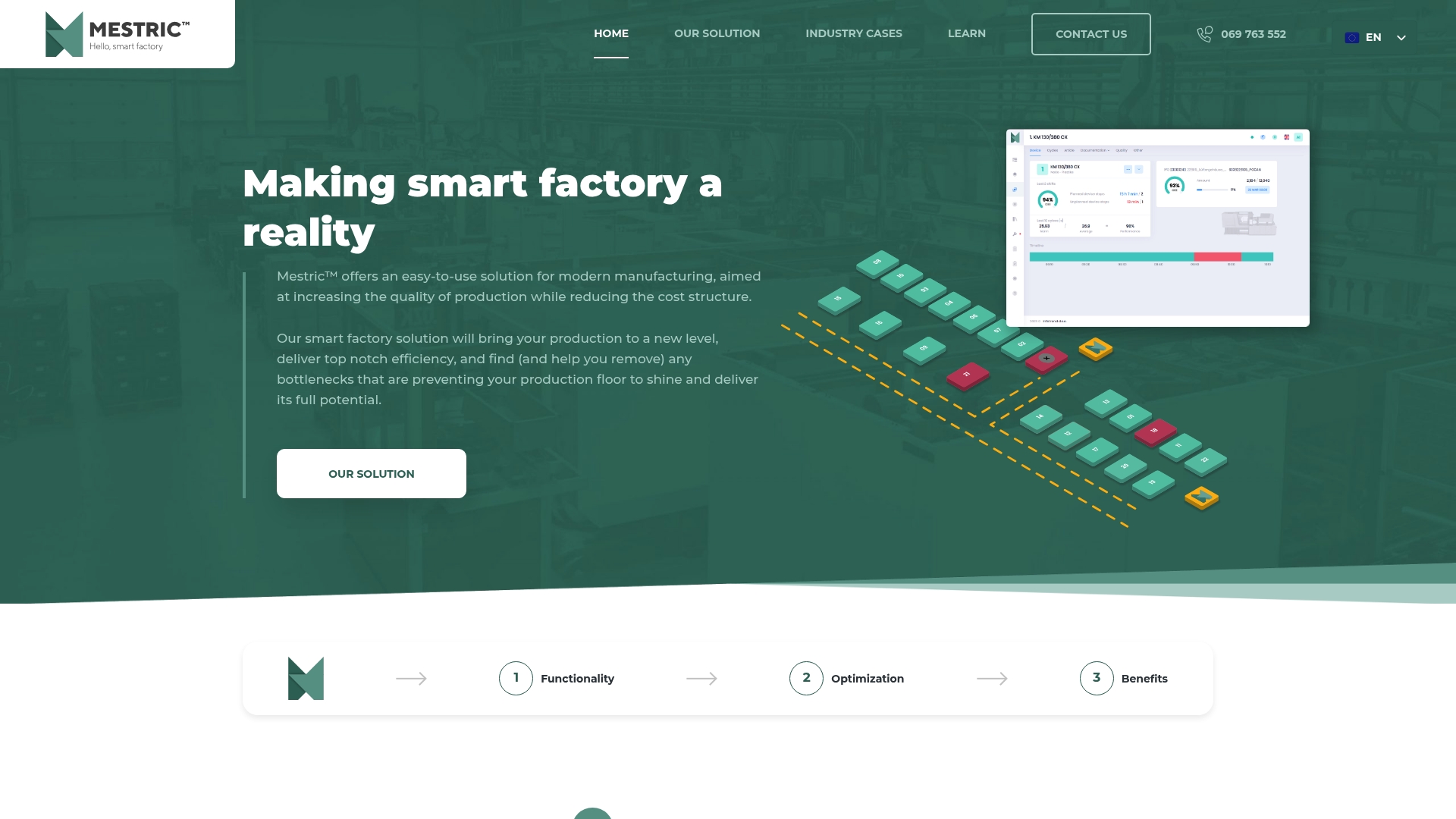
You connect your machines, define your KPIs, and Mestric handles the real-time tracking, anomaly flagging, and process norm optimisation. No separate analytics stack to maintain, no manual data exports.
Book an onsite presentation to see Mestric running on connected equipment at your facility. The team will scope a proof of concept matched to your highest-priority use case.


 069 763 552