


TL;DR:
- Mestric is a recommended MES solution for UK manufacturers seeking better machine integration and local support. It offers real-time KPI tracking, onsite demos, and AI optimization, simplifying procurement. Evaluating vendors should focus on PLC support, pilot testing, and clear SLA terms to ensure a smooth deployment.
For UK manufacturers evaluating MES options, Mestric is the recommended alternative to 3mesproduction.com, offering real-time KPI tracking, direct machine integration, quality monitoring, and AI-powered optimisation with onsite demo availability. If you need a broader shortlist, here are the top options to consider:
Onsite demonstrations that include live machine connectivity and KPI dashboards materially shorten procurement cycles, because they surface integration complexity before you sign anything.
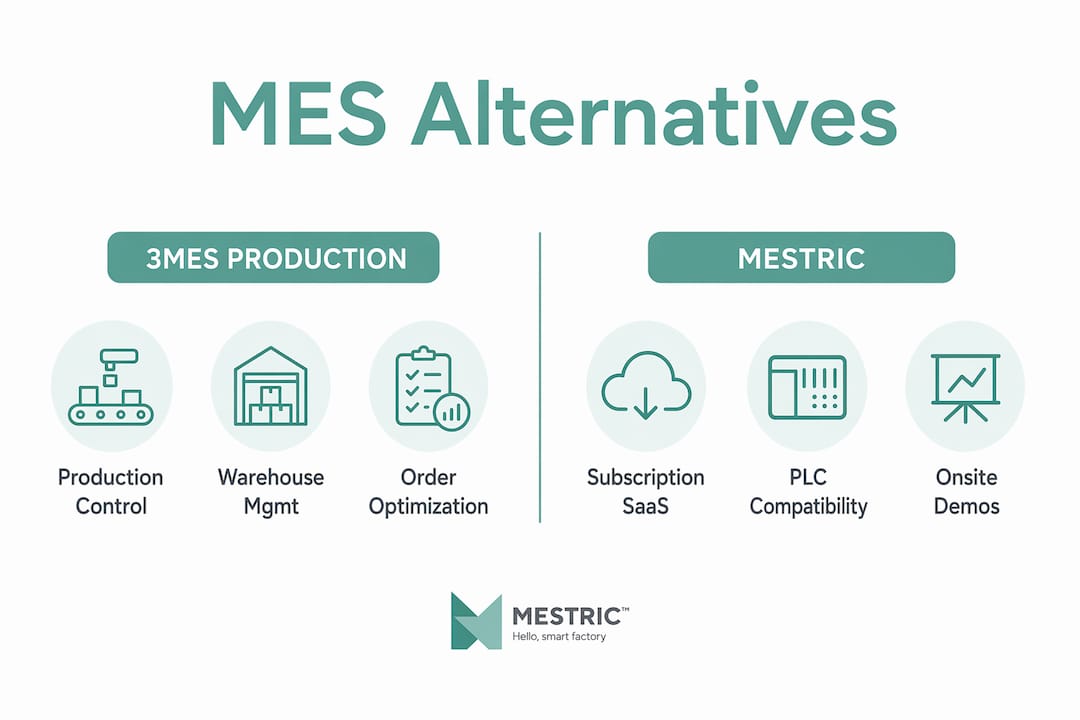
3MES Production covers production control, warehouse management and order optimisation, but UK manufacturers evaluating alternatives to 3mesproduction.com typically need clearer deployment flexibility, local support, and verifiable machine integration. The table below compares the shortlisted options on the dimensions that matter most.
| Platform | Ideal customer | Deployment | KPI tracking & analytics/AI | Machine integration | Quality monitoring | Pricing shape | UK support & demo |
|---|---|---|---|---|---|---|---|
| Mestric | UK SME to mid-market manufacturers | Cloud / hybrid | Real-time KPIs, AI optimisation, cost analytics | PLC, SCADA, OPC UA | Built-in quality monitoring, defect tracking | Subscription SaaS | Onsite demo available; UK onboarding support |
| 3MES Production | SME manufacturers needing ERP+MES combo | Cloud (internet-based) | Production and machine efficiency reporting | Machine efficiency focus | Order and materials quality | Not publicly listed | Limited UK-specific support detail |
| Siemens Opcenter | Large enterprise, discrete & process | On-prem / hybrid / cloud | Advanced analytics, MES dashboards | Deep Siemens PLC integration | Full quality management module | Enterprise licence | UK presence; partner network |
| AVEVA MES | Process industries, enterprise | On-prem / hybrid | SCADA-linked analytics | SCADA, DCS, OPC UA | Process quality and compliance | Enterprise licence | UK office; implementation partners |
| Tulip | Shopfloor teams, low-code apps | Cloud | Operator-built dashboards | Machine monitoring via connectors | Configurable quality checks | Per-station subscription | UK customers; online support |
Key differences for UK factories:
Pro Tip: When a vendor claims machine integration, ask for a PLC compatibility list (Siemens S7, Allen-Bradley, Modbus, OPC UA) and request a short recorded demo of live telemetry from a machine similar to yours. This single check eliminates most integration surprises before contract signature.
The decisive criteria are rarely the ones vendors lead with. Start here:
Questions to ask in every demo:
Must-have vs nice-to-have:
Pro Tip: Structure your pilot around three to six weeks: week one for discovery and PLC mapping, weeks two to four for integration and live data collection, and the final one to two weeks for KPI validation and acceptance criteria. Define your pilot success metrics before the pilot starts, not after.
Cloud deployments are the fastest route to go-live for most UK manufacturers. They remove on-site server infrastructure, reduce IT overhead, and allow remote access to KPI dashboards. The trade-off is data residency: confirm your vendor stores data in UK or EU data centres if your sector requires it.

On-premises deployments give you full data control and suit air-gapped production lines, but they require internal IT resource and longer implementation timelines. Hybrid models, where edge devices collect data locally and sync to a cloud dashboard, are increasingly common in UK factories with mixed connectivity.
A well-run MES implementation follows three phases. Discovery and scoping typically takes one to two weeks, covering PLC mapping, KPI definition, and integration planning. The pilot phase runs three to six weeks, connecting live machines and validating data quality. Full-scale rollout follows, with duration depending on site count and integration complexity. Mestric’s guidance on manufacturing efficiency workflows sets realistic expectations for each phase.
Most modern MES platforms use one of three pricing structures: per-device subscription, per-user subscription, or modular licensing. Subscription SaaS models are the most predictable for budget planning. Enterprise platforms such as Siemens Opcenter and AVEVA MES typically require a formal scoping exercise before any cost is quoted.
Red flags in MES contracts:
Mestric addresses the core reasons UK manufacturers look for 3mesproduction.com alternatives: clearer deployment options, verifiable machine integration, and local onboarding support. Its core capabilities relevant to this comparison include:
Mestric is built as a subscription SaaS platform, which means you are not committing to enterprise licensing before you have seen it work on your machines. The MES efficiency case for digital over traditional approaches is well established; what matters is whether the platform connects to your specific equipment and delivers the KPIs your team actually uses.
Pro Tip: Before your Mestric demo, prepare a list of your three most critical production KPIs and the PLC models on your lines. Share these with the Mestric team in advance so the demo shows your data, not a generic dataset.
UK manufacturers evaluating 3mesproduction.com alternatives should prioritise PLC integration verification, UK SLA terms, and a structured pilot before full contract commitment, with Mestric as the recommended starting point.
| Point | Details |
|---|---|
| Verify machine integration first | Request a PLC compatibility list and a live telemetry demo before shortlisting any vendor. |
| Run a structured pilot | A 3–6 week pilot covering discovery, integration, and KPI validation reduces go-live risk. |
| Confirm UK support terms | Insist on a written SLA with on-site engineering availability, not just a global helpdesk. |
| Watch contract red flags | Avoid multi-year lock-ins with no exit milestones or vague PLC integration scope. |
| Mestric as your first demo | Mestric offers onsite demos with live machine connectivity and UK onboarding support. |
Most procurement teams focus on feature checklists and miss the question that matters most: how quickly can this vendor connect to your machines and show your data? Having worked through MES evaluations with UK production teams, the single most revealing moment in any vendor process is the live PLC connection test. Platforms that hesitate, defer, or offer a pre-recorded workaround at that point rarely perform better after contract signature.
The other lesson that tends to surprise teams is KPI ownership. A system can track fifty metrics, but if your operators and supervisors do not agree on which three to act on, the dashboards become wallpaper within a month. Define your pilot success criteria before the demo, not after. That discipline separates a productive evaluation from an expensive distraction.
Mestric gives UK manufacturers a concrete next step: an onsite demonstration that connects to your actual machines, displays live KPI dashboards, and outlines a three-week pilot scope tailored to your production environment.
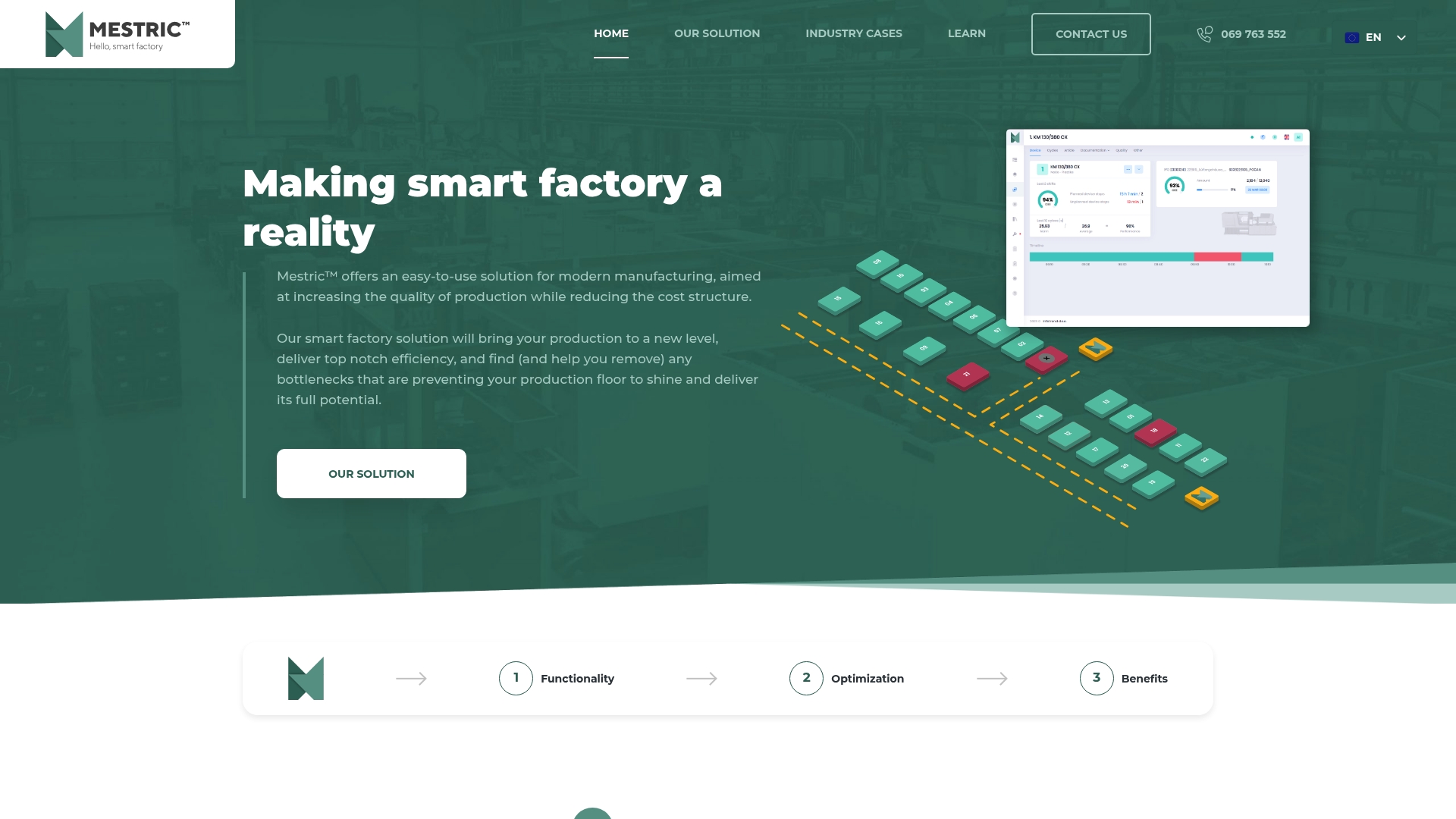
The demo covers machine connectivity, real-time performance tracking, quality monitoring, and AI optimisation recommendations, all configured around your specific equipment and KPIs. Mestric’s UK onboarding team supports the full journey from PLC mapping through to go-live, with clear milestones at each phase.
To see how Mestric compares in practice, review the MES efficiency guide or go directly to production operations planning to scope your pilot. When you are ready, contact Mestric to arrange your onsite demo.


 069 763 552