


Manufacturing inefficiencies silently erode profitability across production floors, with bottlenecks, defects, and waste costing companies thousands daily. This comprehensive guide equips manufacturing professionals and decision-makers with proven strategies to transform operations in 2026. You’ll discover how Lean manufacturing, Six Sigma, Theory of Constraints, process mining, and digital tools combine to eliminate waste, reduce defects, and optimise workflow. From preparation through execution to validation, these methodologies deliver measurable improvements in efficiency, quality, and cost control. Whether you’re addressing specific bottlenecks or pursuing comprehensive operational excellence, this guide provides the frameworks and practical steps to achieve sustainable manufacturing performance gains.
| Punkt | Details |
|---|---|
| Lean manufacturing eliminates waste | Targets eight waste types across process steps to boost efficiency and reduce costs. |
| Lean Six Sigma combines methodologies | Integrates waste reduction with defect control for speed and precision. |
| Process mining reveals bottlenecks | Uses event log data to identify inefficiencies and optimise production flow. |
| Digital transformation requires preparation | Workforce readiness and cultural alignment prevent common AI pilot failures. |
| Hybrid approaches maximise results | Tailoring methodologies to specific process issues delivers optimal operational outcomes. |
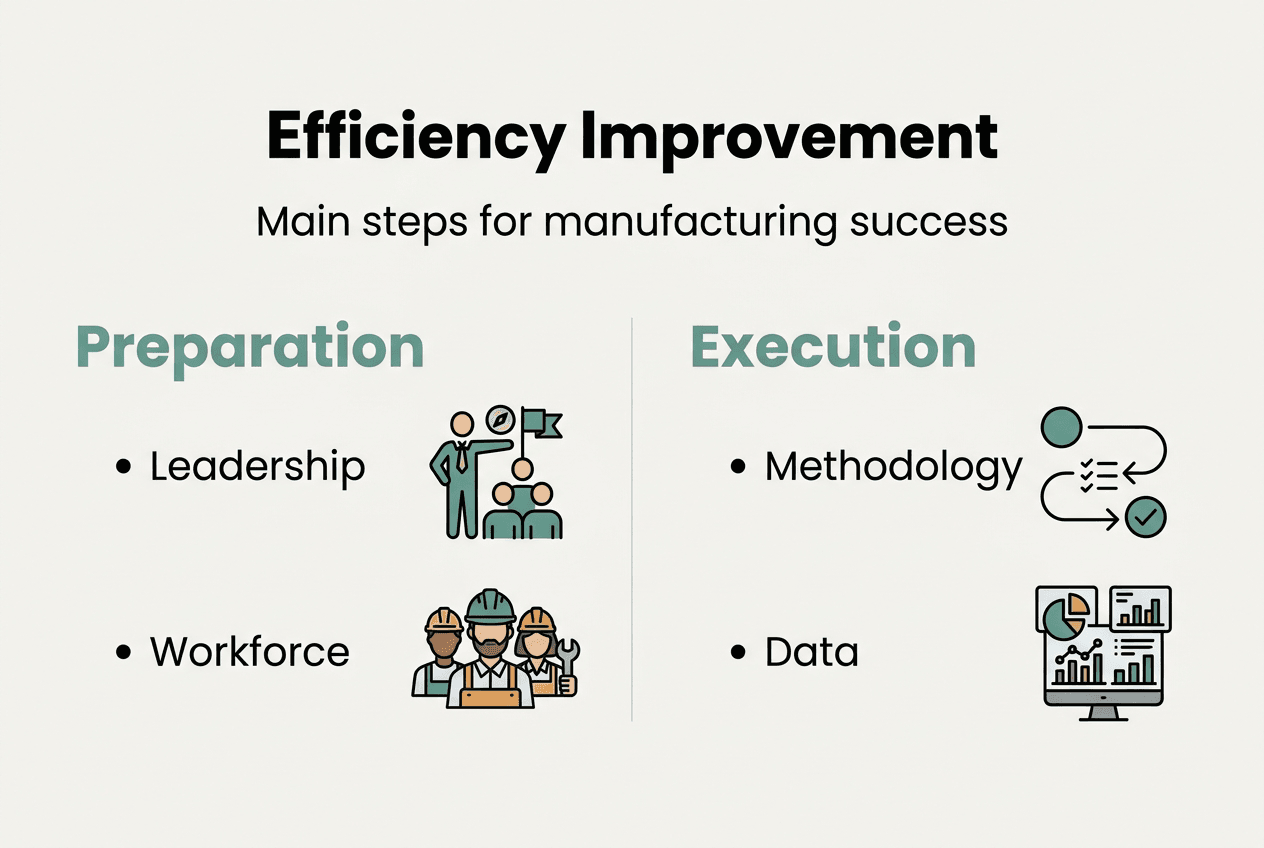
Successful process improvement begins long before implementing new methodologies or technologies. Leadership commitment establishes the foundation, ensuring resources, strategic alignment, and organisational support for change initiatives. Without executive sponsorship, improvement projects often stall when competing priorities emerge or initial resistance surfaces. Manufacturing leaders must articulate clear process improvement goals that connect directly to business outcomes, whether reducing cycle time, improving quality, or cutting operational costs.
Workforce readiness determines whether improvement initiatives succeed or fail. 70 to 95% of AI pilots fail due to noisy data, cultural resistance, and talent gaps, highlighting how people and culture issues derail even well-funded digital projects. Training programmes should address both technical skills and change management, helping teams understand why improvements matter and how their roles evolve. When operators, technicians, and supervisors participate in improvement planning, they become advocates rather than obstacles, sharing practical insights that consultants and managers might miss.
Data readiness forms the technical prerequisite for modern improvement approaches. Clean, accessible production data enables process mining, statistical analysis, and AI-driven optimisation. Many manufacturers discover their data exists in silos across disconnected systems, making comprehensive analysis impossible. Before launching improvement initiatives, audit your data infrastructure to ensure event logs, quality records, and performance metrics can support analytical requirements. You can optimise production workflow with AI once foundational data systems function reliably.
Cultural preparation addresses the human side of operational change. Manufacturing teams often resist new methods after experiencing failed improvement fads or poorly implemented systems. Building trust requires transparent communication about goals, realistic timelines, and honest acknowledgement of challenges. Understanding the role of AI in manufacturing helps teams see digital tools as enablers rather than threats. Set realistic expectations for digital transformation by acknowledging that meaningful change takes time and requires iterative refinement.
Pro Tip: Start with a pilot project in one production area rather than attempting factory-wide transformation. Quick wins build momentum and provide lessons that improve subsequent rollouts. Use the manufacturing optimisation checklist 2026 to ensure you’ve addressed critical preparation steps before launching improvement initiatives.
Lean manufacturing targets eight waste types that inflate costs and slow production: defects, overproduction, waiting, non-utilised talent, transportation, inventory, motion, and extra processing. By systematically identifying and eliminating these wastes, manufacturers streamline operations and improve flow. Over 70% of manufacturers adopting Lean saw efficiency increases exceeding 15%, demonstrating the methodology’s consistent impact across diverse production environments. Lean tools include 5S workplace organisation, Kanban pull systems, Value Stream Mapping, and Kaizen continuous improvement events.
Six Sigma focuses on reducing process variation and defects through rigorous statistical analysis. The DMAIC framework guides improvement projects through five phases: Define the problem and project scope, Measure current performance and collect data, Analyse root causes of defects, Improve the process by implementing solutions, and Control the improved process to sustain gains. Lean Six Sigma DMAIC reduces defects to 3.4 per million opportunities, delivering near-perfect quality levels. This precision makes Six Sigma particularly valuable for industries where defects carry high costs or safety risks.
Theory of Constraints prioritises bottleneck management, recognising that overall system throughput depends on the slowest process step. Rather than improving all processes simultaneously, TOC concentrates resources on eliminating constraints that limit production capacity. Once you resolve the primary bottleneck, the next constraint emerges, creating a continuous improvement cycle. This focused approach delivers faster results than spreading improvement efforts across multiple areas simultaneously.
Lean Six Sigma combines waste elimination with defect reduction, offering both speed and precision. This hybrid methodology suits manufacturers facing multiple operational challenges requiring different analytical approaches. You might apply Lean tools to reduce changeover time while using Six Sigma techniques to improve quality consistency. The integration creates synergies where waste reduction exposes quality issues and defect analysis reveals hidden waste.
| Methodik | Primary Focus | Best Application | Key Tools |
|---|---|---|---|
| Lean | Waste elimination | Flow and cycle time issues | 5S, Kanban, VSM, Kaizen |
| Six Sigma | Defect reduction | Quality and variation problems | DMAIC, SPC, DOE, Control charts |
| Theory of Constraints | Bottleneck management | Capacity and throughput limits | DBR, Buffer management |
| Lean Six Sigma | Waste and defects | Complex operational challenges | Combined Lean and Six Sigma tools |
Implementing these methodologies requires structured project management. Form cross-functional teams including operators, engineers, quality specialists, and managers to ensure diverse perspectives. Use data to establish baseline performance before implementing changes, creating objective measures for improvement validation. Document standard work procedures to capture improvements and prevent regression to old methods. The manufacturing efficiency workflow demonstrates how systematic approaches deliver measurable cost reductions.
Pro Tip: Match methodology to problem type for maximum impact. Use Lean for flow issues and waste, Six Sigma for quality and variation, TOC for capacity constraints. The step by step production optimisation guide helps you diagnose which approach fits your specific challenges. Many successful manufacturers develop internal expertise across multiple methodologies, selecting tools based on problem characteristics rather than rigid methodology adherence. This pragmatic approach accelerates results and builds organisational capability to streamline manufacturing processes across diverse operational scenarios.
Process mining analyses event logs from production systems to reconstruct actual process flows, revealing how work truly moves through your facility rather than how procedures claim it should. This data-driven approach exposes bottlenecks, rework loops, and variations that traditional observation methods miss. Process mining in automated factories validated in Korean manufacturing environments showed productivity gains by identifying previously invisible constraints and inefficiencies. Unlike manual process mapping that captures snapshots, process mining continuously monitors operations, detecting problems as they emerge.
Real-time data transforms reactive troubleshooting into proactive optimisation. When production systems generate event logs capturing every transaction, movement, and status change, you gain unprecedented visibility into operational performance. Flow time metrics reveal where products spend excessive time waiting between process steps. Throughput analysis identifies capacity constraints limiting production volume. Quality data pinpoints where defects originate rather than where inspection catches them. This granular insight enables targeted improvements addressing root causes rather than symptoms.
Key performance metrics provide the foundation for data-driven decision making. Track cycle time for each process step to identify improvement opportunities and measure progress. Monitor first-pass yield to quantify quality performance and detect degradation before defect rates spike. Measure overall equipment effectiveness combining availability, performance, and quality into a single metric revealing hidden losses. Calculate cost per unit to ensure efficiency improvements translate into financial benefits. These metrics create objective baselines against which you evaluate improvement initiatives.
| Metrik | Definition | Target Range | Improvement Focus |
|---|---|---|---|
| Cycle Time | Duration from process start to completion | Varies by process | Reduce waiting and non-value time |
| First-Pass Yield | Percentage of units passing without rework | >95% | Eliminate defect root causes |
| Overall Equipment Effectiveness | Availability × Performance × Quality | >85% | Reduce downtime and waste |
| Cost Per Unit | Total production cost divided by output | Industry-specific | Improve efficiency and utilisation |
Continuous improvement relies on feedback loops where data reveals opportunities, teams implement changes, and measurements validate results. This iterative approach prevents the common mistake of implementing improvements without confirming they deliver intended benefits. When you establish regular review cycles examining performance trends, you catch problems early and adjust strategies based on evidence rather than assumptions. The role of data in manufacturing extends beyond problem identification to include predictive analytics that anticipate issues before they impact production.
Integrating process mining with Lean and Six Sigma amplifies improvement impact. Process mining identifies where to focus Lean efforts by quantifying waste in actual operations. Six Sigma projects benefit from process mining data that reveals variation patterns and potential root causes. This combination of analytical power and proven methodologies creates synergies where technology enhances traditional approaches. Manufacturing quality monitoring becomes more effective when real-time data feeds directly into control systems, enabling immediate corrective action. The integration supports quality assurance and defect reduction through faster problem detection and more accurate root cause analysis, ultimately delivering sustainable operational excellence.
Verification confirms that improvement initiatives deliver promised results rather than creating new problems or simply shifting issues elsewhere. DMAIC’s Control phase establishes monitoring systems that track key metrics against targets, using control charts to detect when processes drift from acceptable ranges. Statistical process control provides early warning when variation increases, enabling corrective action before defects occur. Compare post-improvement performance against baseline measurements to quantify gains objectively. This validation builds confidence in improvement methods and justifies continued investment in operational excellence programmes.
Measuring improvements against operational KPIs ensures changes benefit overall business performance. Efficiency gains that increase defect rates or safety incidents represent false progress. Track multiple dimensions including quality, cost, delivery, safety, and employee engagement to ensure balanced improvement. Calculate return on investment for improvement projects, accounting for implementation costs and ongoing maintenance requirements. This financial discipline prevents pursuing improvements that consume more resources than they save.
Standard work documentation captures improvements, preventing regression to old methods when team members change or time passes. Document revised procedures including specific steps, quality checks, and timing expectations. Train all affected personnel on new standards, verifying competence through observation and assessment. Audit compliance regularly to ensure teams follow established procedures consistently. Standard work creates the foundation for further improvement by establishing stable processes that enable meaningful comparison when testing new methods.
Continuous improvement culture requires leadership commitment extending beyond initial project enthusiasm. Celebrate successes publicly, recognising teams and individuals who contribute to operational gains. Allocate time and resources for improvement activities rather than expecting teams to pursue excellence while meeting demanding production schedules. Encourage experimentation and learning from failures, creating psychological safety where people suggest improvements without fear of blame. When leadership consistently prioritises improvement and provides necessary support, operational excellence becomes embedded in organisational identity rather than remaining a temporary initiative.
Decision matrices recommend Lean for bottlenecks and Six Sigma for defects, suggesting hybrid approaches tailored to specific process issues deliver optimal results. This pragmatic methodology selection prevents rigid adherence to single approaches when problems require diverse solutions. Develop internal expertise across multiple improvement frameworks, empowering teams to select appropriate tools based on problem characteristics. Cross-train improvement specialists in Lean, Six Sigma, and TOC principles, building organisational capability to address varied operational challenges.
Sustaining gains requires ongoing vigilance and periodic refreshment of improvement initiatives. Schedule regular reviews examining performance trends and identifying emerging issues before they become serious problems. Update standard work as processes evolve, ensuring documentation reflects current best practices. Provide refresher training to reinforce key concepts and introduce new team members to improvement methods. Monitor manufacturing quality continuously rather than treating it as a one-time project. The systems and disciplines you establish to improve manufacturing efficiency with MES tools create infrastructure supporting long-term operational excellence beyond any single improvement initiative.
Manufacturing process improvement requires both proven methodologies and modern technology that transforms data into actionable insights. Mestric’s Manufacturing Execution System streamlines production workflow and quality monitoring, providing real-time visibility that supports Lean, Six Sigma, and data-driven approaches discussed throughout this guide.
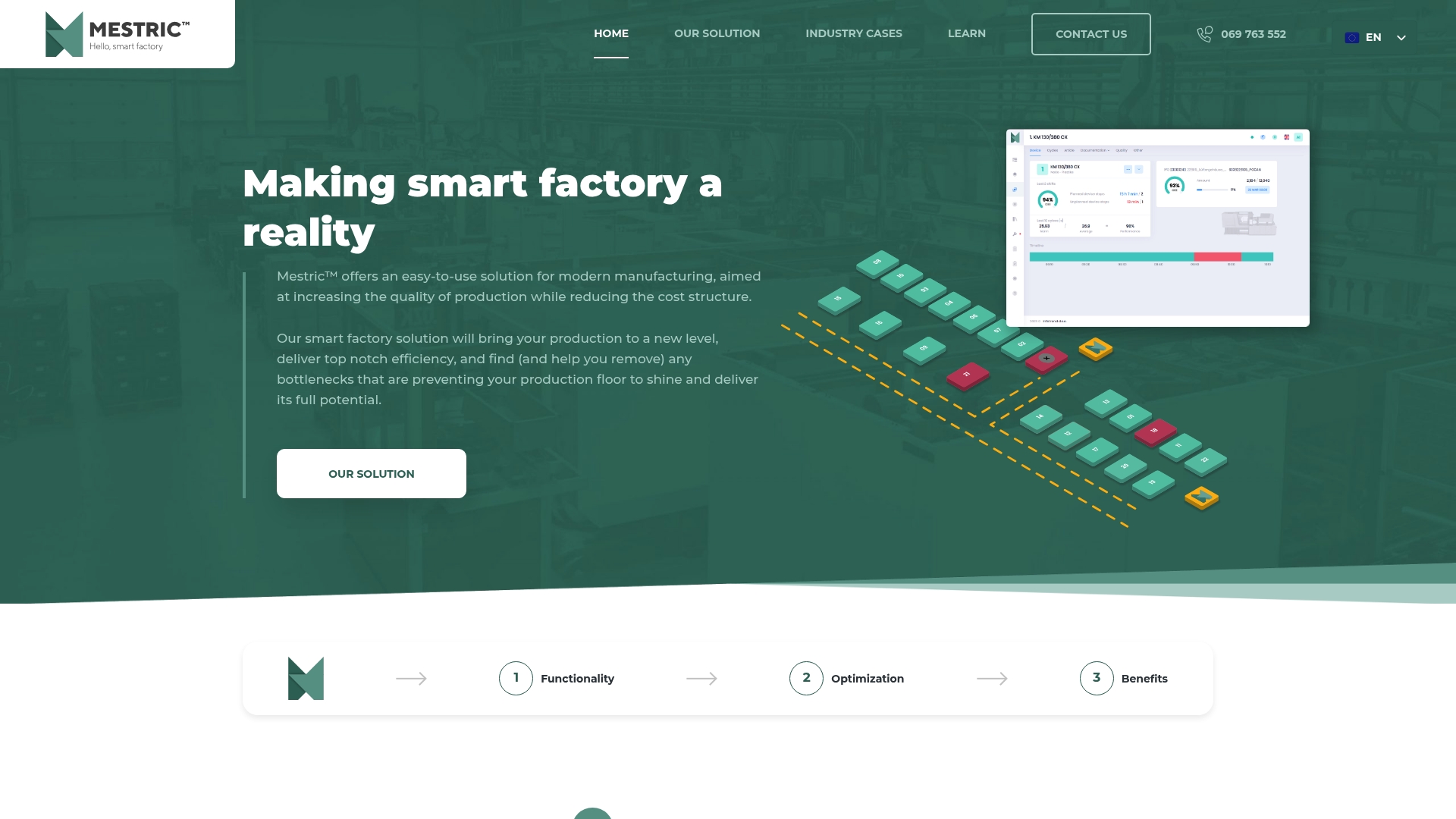
Our platform connects directly with manufacturing equipment, capturing performance metrics, downtime events, quality parameters, and cost data that fuel continuous improvement initiatives. You gain the operational transparency necessary to identify bottlenecks, validate improvements, and sustain gains over time. AI-powered optimisation tools analyse patterns across production data, recommending adjustments that enhance efficiency and reduce costs. This combination of real-time monitoring and intelligent analysis accelerates improvement cycles while reducing manual effort.
Mestric solutions align with the methodologies and strategies covered in this guide, providing the technological foundation for modern manufacturing excellence. Whether you’re implementing Lean waste reduction, Six Sigma quality improvement, or process mining analysis, our MES platform delivers the data infrastructure and analytical capabilities these approaches require. Discover how MES im Vergleich zur traditionellen Fertigung boosts efficiency in 2026, or explore the seven types of manufacturing software that support operational excellence. Ready to streamline production operations and achieve measurable efficiency gains? Contact Mestric today to schedule an onsite demonstration.
Lean manufacturing systematically eliminates eight types of waste: defects, overproduction, waiting, non-utilised talent, transportation, inventory, motion, and extra processing. By targeting these waste categories across all process steps, manufacturers reduce costs, improve flow, and increase productivity. The methodology focuses on creating value from the customer perspective whilst removing activities that consume resources without adding value. Tools like Value Stream Mapping visualise entire production flows, revealing opportunities to streamline operations and reduce cycle time.
Lean Six Sigma combines waste elimination with rigorous statistical analysis to reduce process variation and defects. The DMAIC framework guides teams through five phases: Define the problem scope, Measure current performance, Analyse root causes, Improve the process, and Control to sustain gains. This structured approach targets defects at their source rather than relying on inspection to catch problems. By reducing variation and eliminating root causes, manufacturers achieve near-perfect quality levels whilst simultaneously improving efficiency and reducing costs.
Data reveals actual process performance rather than assumptions about how operations function, exposing bottlenecks, inefficiencies, and variation that manual observation misses. Real-time production data enables proactive decision making, allowing teams to address problems before they escalate into serious issues. Process mining analyses event logs to reconstruct production flows, identifying improvement opportunities with precision. Continuous monitoring creates feedback loops where measurements validate improvement effectiveness, enabling iterative refinement based on evidence rather than intuition.
People and cultural factors determine whether digital initiatives succeed or fail, with 70 to 95% of AI pilots failing due to talent gaps and resistance. Technical capabilities mean nothing if teams lack skills to use new tools or resist changes to established workflows. Training programmes must address both technical competence and change management, helping teams understand how digital transformation benefits their work. Leadership support and transparent communication build trust, transforming potential obstacles into advocates who drive adoption. Cultural preparation ensures technology investments deliver promised returns rather than becoming expensive failures. Learn how to optimise production workflow with AI when your organisation has built necessary readiness.


 069 763 552