


The most common factory communication breakdowns are unclear work instructions, poor shift handovers, siloed departments, fragmented ERP/MES/SCADA systems, noisy environments, radio and device failures, missing escalation procedures, and gaps in supplier communication. Each one has a quick first action you can take today.
Here is the shortlist with immediate actions and likely impact:
The fastest path to fewer communication failures is fixing shift handovers first, then addressing system fragmentation, because the handover is where every other breakdown either gets caught or gets worse.
| Punkt | Details |
|---|---|
| Fix handovers in 24 hours | Introduce the five-field handover template today; measure completeness rate from the first shift. |
| Run a device and coverage check | Confirm all radios and devices are functional at shift start; log gaps and assign a spare policy. |
| Assign data ownership roles within 30 days | Name a data owner, steward, and product owner for each critical data domain before any system integration. |
| Pilot MES on one line within 3–6 months | Track OEE, downtime cause codes, and handover completeness automatically for a 60-day proof of value. |
| Mestric accelerates the systems layer | Mestric’s MES connects directly to production equipment and digitises handovers, KPI tracking, and quality monitoring on a single platform. |
Human and procedural breakdowns are responsible for the majority of recurring factory communication issues. They are also the fastest to address, because most fixes require a template or a role assignment rather than a capital budget.
When two operators read the same instruction and reach different conclusions, the SOP has failed. The signs are subtle at first: a small variation in output quality, a slightly different cycle time, a near-miss that gets logged as operator error. Over time, these variations compound. A practical fix is a structured SOP review cycle where two operators from different shifts read each instruction aloud and flag any ambiguity. Any instruction that produces two interpretations needs rewriting before the next shift.
A handover that takes less than two minutes is almost certainly incomplete. The most reliable handover template covers five fields:
This template fits on a single A4 sheet or a digital form. It should sit inside the SOP as a mandatory close-out step for every shift supervisor. Structured logbooks and handover templates are high-return, low-effort reliability tools that reduce information loss and create traceable records across shifts.
If operators are not certain who to call when something goes wrong, they wait. That wait is where small problems become large ones. A single-page escalation chart, posted at every workstation, should show three tiers: the immediate supervisor, the shift manager, and the emergency contact for safety-critical events. Review it quarterly and update names whenever roles change.
When operators fear that reporting a problem leads to blame rather than support, they stop reporting. The result is a floor where supervisors only learn about issues when they become visible failures. The fix is behavioural and takes longer than a template: supervisors must respond to reports with problem-solving language, not attribution. Tracking the ratio of reported near-misses to actual incidents gives you a measurable proxy for psychological safety on the floor.
When maintenance completes a repair and hands equipment back without a formal sign-off, the operations team often does not know what was done, what was not done, or what to watch for. A structured maintenance handback workflow should include the work completed, any outstanding items, and a short trial-run confirmation before the operator resumes production.
In factories with diverse workforces, language differences create real gaps in safety and quality communication. Visual work instructions, colour-coded status boards, and pictogram-based SOPs reduce dependence on language fluency for routine tasks. For safety-critical procedures, translated versions are not optional.
| Symptom | Likely consequence | First-line corrective action |
|---|---|---|
| Same fault recurs across three or more consecutive shifts | Unrecorded root cause; no fix carried forward | Mandate five-field handover template; audit last five logbook entries |
| Operators interpret SOP differently | Quality variation, rework | Two-operator SOP read-through; rewrite ambiguous steps |
| Maintenance faults reappear quickly | Incomplete repair or no handback sign-off | Introduce maintenance handback checklist with trial-run confirmation |
| Near-misses go unreported until an incident occurs | Safety risk; regulatory exposure | Separate reporting from blame; track near-miss ratio monthly |
| New procedure reaches floor after it is already live | Compliance failure, safety risk | Audit update communication path; assign a floor communication owner |
Pro-Tipp: Measure supervisor consistency by auditing five handover logs per week. If the five-field template is incomplete in more than one out of five logs, the supervisor needs a short coaching session, not a policy reminder. Behaviour changes when you measure it.
Physical conditions and tool failures do not create communication breakdowns on their own, but they reliably make every other failure worse. A noisy floor turns a vague verbal instruction into a dangerous one. A dead radio turns a slow escalation into no escalation at all.
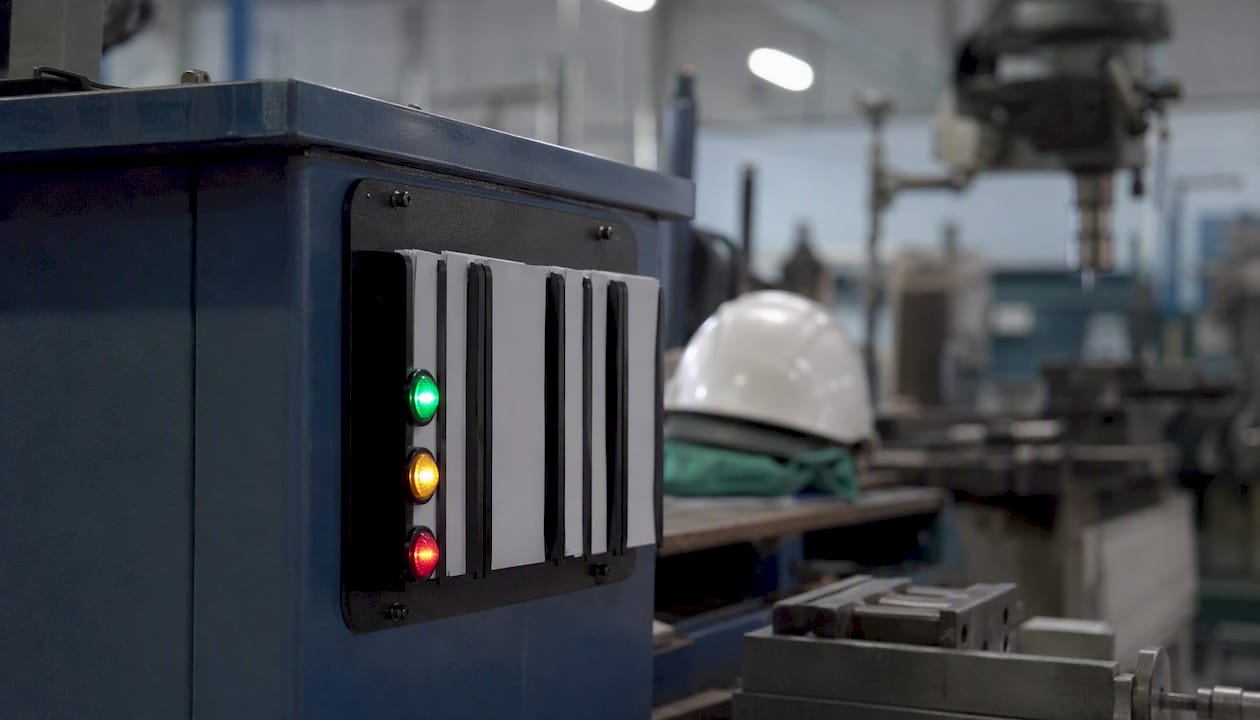
Sustained noise above 85 dB makes verbal communication unreliable and, above 90 dB, effectively impossible without hearing protection that itself blocks speech. The practical fix is not to eliminate noise but to stop relying on verbal communication in high-noise zones. Visual management tools, colour-coded status lights (andon systems), and written task boards replace verbal signals where they cannot be trusted.

A radio that does not reach the far end of a warehouse, or a tablet with a flat battery, is worse than no device at all because it creates a false sense of coverage. A shift-start device check should take no more than ten minutes:
Run this check at the start of every shift and log the result. Three consecutive failed coverage tests in the same zone justify a network infrastructure review.
When operators use personal phones or unapproved messaging apps to coordinate work, those conversations are invisible to the plant’s communication record. Instructions given via WhatsApp or a personal SMS are not logged, not traceable, and not subject to SOP controls. The fix is not to ban personal phones outright but to provide a plant-approved alternative that is fast and easy enough that operators prefer it. Shadow AI tools and informal applications create untraceable information flows that governance must address at the user behavior level, not just the system architecture level.
A floor where status is communicated only verbally or through a central screen nobody walks past is a floor where most operators are working from outdated information. Simple visual boards at each workstation, updated at the start of each shift, showing current target, actual output, quality status, and any active safety flags, reduce the number of verbal queries supervisors receive and keep the whole team aligned without a meeting.
When ERP, MES, and SCADA systems do not share data, operators and supervisors are working from different versions of reality. Fragmented data flows across manufacturing systems create multiple interception and intrusion exposure points, and the same fragmentation that creates cybersecurity risk also creates operational communication failures. A production order in the ERP that has not reached the MES means the floor team is working from a printout or a verbal instruction, both of which degrade over a shift.
Verizon reports that ransomware is the leading cybersecurity threat in manufacturing and is involved in a large share of breaches targeting industrial operations. Flat IT/OT networks, where office systems and production controllers share the same network segment, are a primary enabler of this risk. Network segmentation between IT and OT environments is the most impactful single architectural change you can make, and it does not require replacing any production equipment.
Bitsight documents rising threat actor activity against manufacturing, with ransomware, phishing, and supply-chain attacks among the top risks. Unapproved remote access to OT systems, often set up informally by maintenance contractors, is a common and underestimated exposure. Every remote access session to a production system should be logged, time-limited, and approved.
Pro-Tipp: Before approving any new digital tool for the floor, ask one question: “Where does this tool store its data, and who can see it?” If the answer is unclear, the tool is not ready for production use. Unapproved tools that store data outside your network create both governance gaps and cybersecurity exposure.
Knowing that communication failures exist is not the same as knowing which ones to fix first. A structured diagnostic takes less than one shift and gives you enough information to prioritise confidently.
Work through these six steps in order:
You cannot measure improvement without a baseline. Track these four metrics from day one:
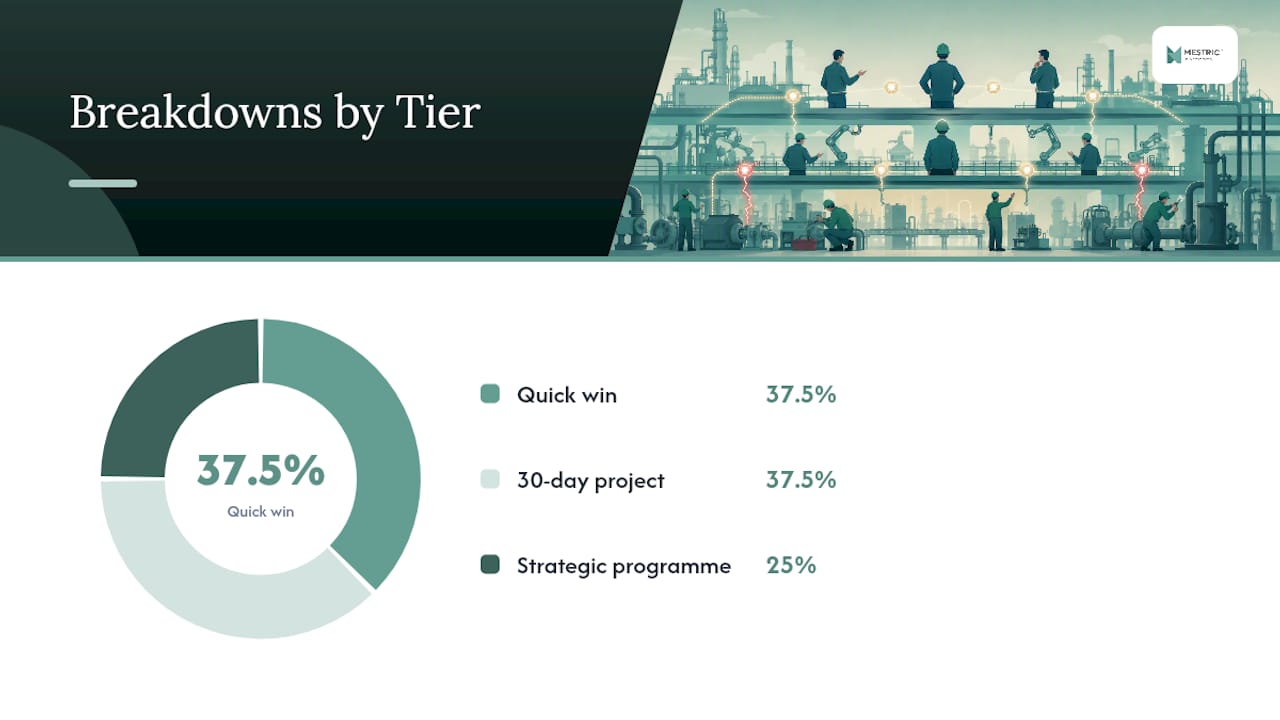
Place each identified breakdown into one of three tiers based on impact and ease of fix:
| Breakdown | Impact | Ease of fix | Tier |
|---|---|---|---|
| Missing handover template | Hoch | Easy | Quick win (this week) |
| No escalation chart posted | Hoch | Easy | Quick win (this week) |
| Inconsistent SOP interpretation | Hoch | Mittel | 30-day project |
| Radio coverage gaps | Mittel | Mittel | 30-day project |
| No visual management boards | Mittel | Easy | Quick win (this week) |
| Fragmented ERP/MES/SCADA | Hoch | Hard | Strategic programme (3–6 months) |
| Flat IT/OT network | Hoch | Hard | Strategic programme (3–6 months) |
| No data governance roles | Mittel | Mittel | 30-day project |
A pilot plan for any 30-day project should name an owner, define a success metric, and set a 30-day check-in date. For strategic programmes, plan in three phases: audit and design (months 1–2), pilot on one line (months 2–4), and rollout (months 4–6).
Process fixes work. A handover template reduces information loss. A posted escalation chart speeds up incident response. But if the underlying systems architecture remains fragmented, the same communication failures tend to reappear under different names.
The core architectural problem in most factories is the absence of a shared data model. ERP holds production orders. MES holds actual output. SCADA holds equipment state. When these systems do not share a common data layer, every handover, every schedule update, and every quality alert has to be manually translated from one system’s language to another. That translation is where information gets lost, delayed, or distorted.
A well-integrated architecture delivers three specific improvements to communication:
Bonfiglioli Consulting recommends mapping critical data domains, defining minimum quality standards, and assigning clear data ownership roles as the foundation for removing digital silos. The practical starting point is three named roles: a data owner (accountable for a data domain), a data steward (responsible for day-to-day quality), and a data product owner (responsible for the systems that produce and consume the data). Without these roles, governance discussions remain abstract and no one fixes a data anomaly when it appears.
Standardising factory data formats and building a minimal data catalogue is the prerequisite step before any MES integration. Attempting to build a shared data model before you have audited formats, sampling rates, and definitions across lines tends to perpetuate the silos you are trying to remove.
A phased MES adoption typically looks like this: a two-week data audit and integration scoping exercise, followed by a 30–60 day pilot on one production line with core KPIs (OEE, downtime cause codes, handover completeness), followed by a structured rollout to remaining lines. The realistic risks are data quality issues discovered during the audit, resistance from supervisors who see digitisation as surveillance, and integration complexity with legacy SCADA systems. Each of these is manageable with early stakeholder involvement and a clear communication plan for the floor team.
Pro-Tipp: Start the MES pilot on your most data-mature line, not your most problematic one. A line where operators already log consistently gives you a clean baseline and a faster proof of value. Once the pilot shows measurable results, the case for rolling out to harder lines makes itself.
A systems change without accompanying process and training work will automate broken processes rather than fix them. The architecture provides the infrastructure; the SOPs, templates, and supervisor behaviours provide the discipline that makes it work.
For each strategic initiative, report progress to senior leadership at 30, 90, and 180 days using the four KPIs from the diagnostic section: handover completeness rate, repeat anomaly shifts, downtime minutes from communication failures, and MTTR for communication-linked issues.
The conventional advice on factory communication tends to focus on technology: better radios, a new MES, network segmentation. Those investments matter, but they rarely produce lasting change on their own. The handover is where I would start every time, and here is why.
When a shift handover is incomplete, every other communication problem on the floor gets worse. The incoming supervisor starts the shift without a clear picture of developing conditions, so they spend the first hour asking questions that should have been answered in writing. Maintenance gets called for faults that were already known but not recorded. Quality issues that started in the previous shift are not caught until they have run for two hours. The five-field template does not solve all of that, but it creates a discipline that makes every other fix easier to implement.
The cultural shift that matters most is getting supervisors to treat the handover as a professional obligation, not an administrative burden. That shift happens when the plant manager reviews handover logs visibly and responds to good ones with specific positive feedback. Supervisors who see that their written records are read and valued start writing better ones. Within four to six weeks of consistent review, the quality of handover logs tends to improve measurably, and the number of repeat anomaly shifts tends to fall.
The technology layer should follow the process layer, not precede it. A digital handover tool built on top of a broken verbal handover habit will produce digital records of incomplete information. Fix the habit first, then digitise it.
The process fixes in this guide will reduce your most common factory communication breakdowns quickly. When you are ready to move beyond paper templates and manual logbooks, Mestric gives you the next layer: real-time performance tracking that connects directly to your production equipment and surfaces the KPIs your supervisors need at shift start, without manual compilation.
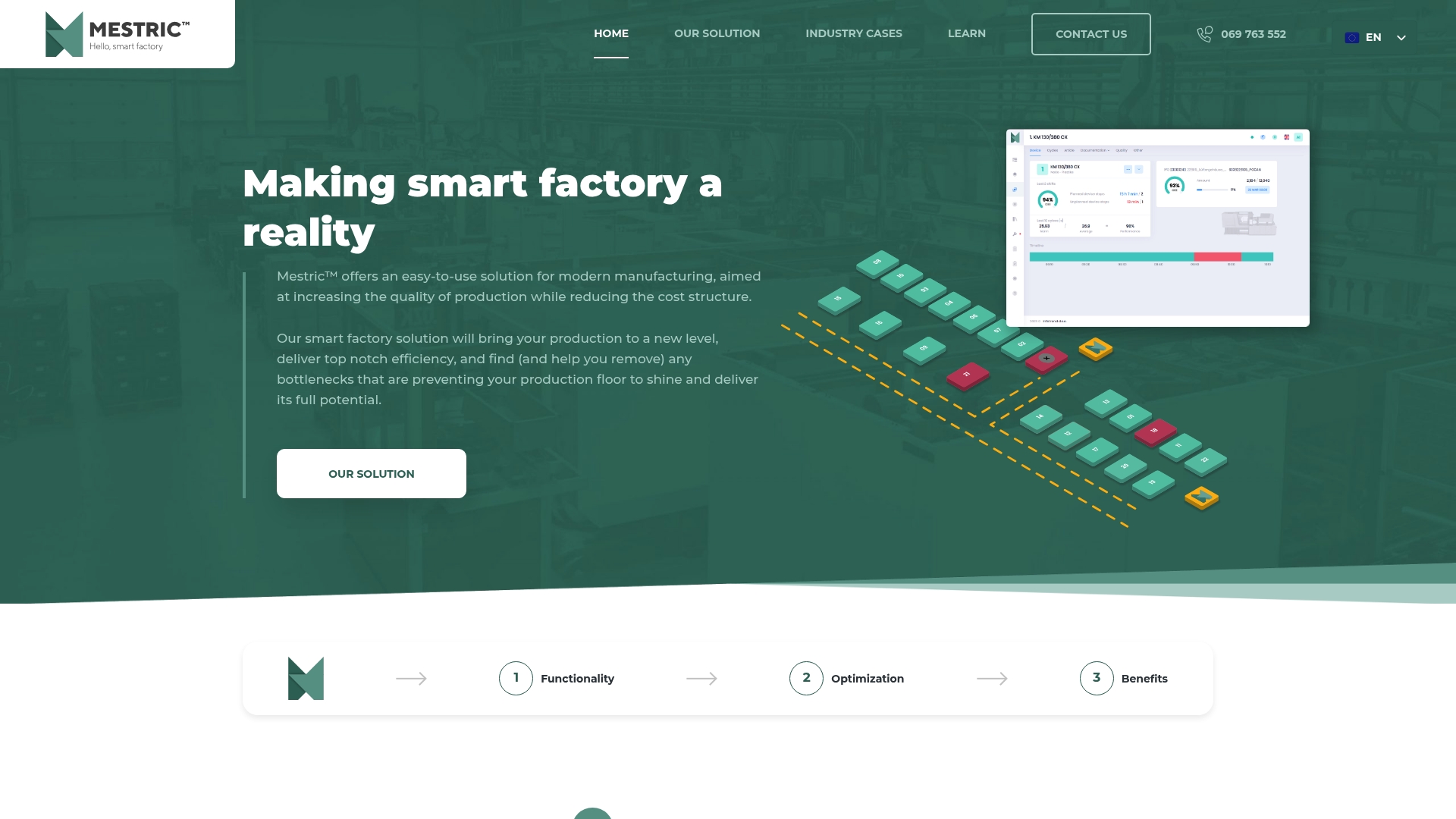
A Mestric pilot on one production line typically covers automated data capture, digital shift handovers, and a live dashboard for OEE, downtime cause codes, and quality parameters. The pilot runs for 30–60 days and is designed to run alongside your existing SOPs and training work, not replace them. Pairing the platform with the process changes you have already made is what produces measurable results quickly.
The pilot scope is deliberately small: one line, core KPIs, a defined proof-of-value window. See how an MES compares to traditional manufacturing management and whether a phased rollout fits your plant’s current readiness. Book a demonstration to see Mestric running on connected equipment in a real production environment.
The sources below support the claims in this guide and provide further detail for each topic area.


 069 763 552