


TL;DR:
- Effective factory scheduling maximizes throughput and reduces idle time by balancing work across all stations.
- Dynamic and AI-driven scheduling adapt to real-time data, outperforming static plans in volatile manufacturing environments.
- Implementing integrated digital infrastructure, continuous review, and change management unlocks measurable efficiency and margin gains.
Factory scheduling optimisation is the process of arranging production tasks, resources, and timelines to maximise throughput, reduce idle time, and align output with demand. The importance of scheduling in factories cannot be overstated: a 5% efficiency gain at a facility producing 1,000 units per shift yields 50 additional units without adding labour, machinery, or materials. That is pure margin. Modern tools such as ERP systems, Manufacturing Execution Systems (MES), and AI-driven scheduling platforms have made this level of precision achievable for operations of every scale. This guide explains the principles, pitfalls, and practical strategies you need to act on now.
The core purpose of factory scheduling is not simply to keep machines running. It is to balance the entire production line so that every workstation contributes to throughput without creating bottlenecks or excess idle time. Line balancing is the foundational discipline here, and well-balanced lines achieve efficiencies of 90 to 95%, which is considered excellent in practice. That figure matters because every percentage point below it represents wasted capacity you are already paying for.
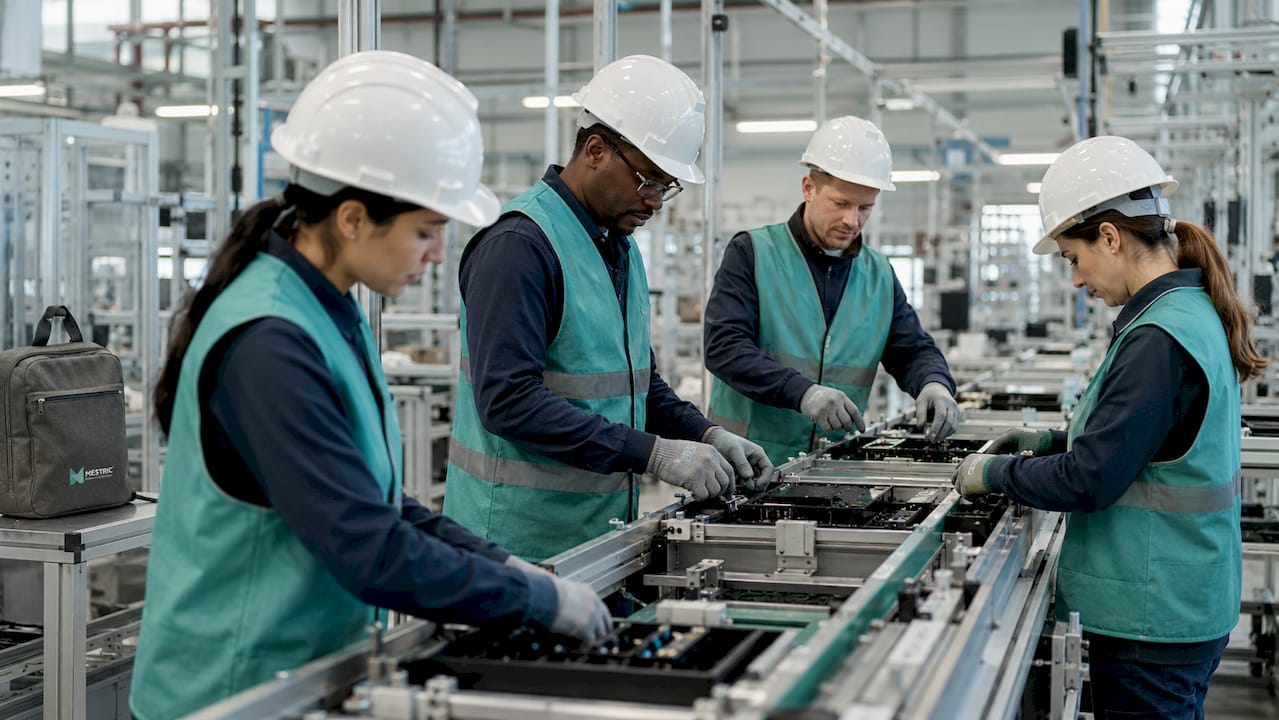
Two concepts underpin effective line balancing: takt time and cycle time. Takt time is the rate at which you must complete one unit to meet customer demand. Cycle time is how long a workstation actually takes to complete its assigned tasks. When cycle time exceeds takt time at any station, that station becomes a bottleneck and the entire line slows. When cycle time is far below takt time, that station sits idle and wastes resource. Scheduling exists to close that gap across every station simultaneously.
Task distribution is the practical mechanism for achieving this balance. Assigning work content unevenly across stations is one of the most common scheduling errors in manufacturing, and it compounds quickly. A station overloaded by even 10% forces downstream stations to wait, inflating work-in-progress inventory and extending lead times.
Pro Tip: Never run production lines at their theoretical maximum. Optimised scheduling always builds in buffer capacity to absorb daily variabilities such as minor stoppages, material delays, and quality checks. Lines pushed to 100% utilisation consistently produce more defects and more equipment failures.
The benefits of factory scheduling are most visible when these principles are applied together. Reduced idle time, lower work-in-progress, and consistent output rates are the direct results. The indirect benefits include better equipment maintenance windows, more predictable supplier call-offs, and a workforce that is not constantly reacting to disruptions.
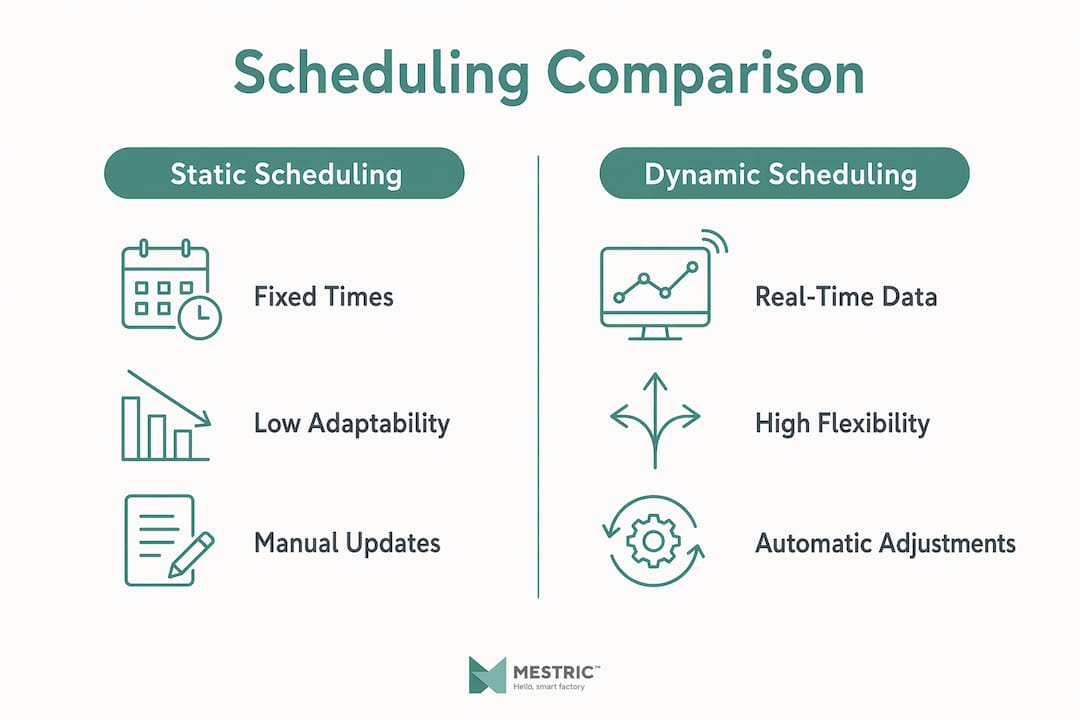
Static scheduling assigns fixed sequences and timings to production tasks and then holds them regardless of what happens on the shop floor. Static schedules assume stable inputs: reliable suppliers, equipment that does not break down, and demand that does not shift. In modern manufacturing, none of those assumptions hold consistently. The result is frequent manual corrections, reactive replanning, and unplanned downtime costing industrial sectors more than $50 billion annually.
Dynamic scheduling replaces fixed sequences with real-time decision-making. It draws on live data from shop floor sensors, MES platforms, and ERP systems to adjust task sequences, resource assignments, and priorities as conditions change. If a machine goes down, a dynamic schedule reroutes work automatically. If a priority order arrives, it inserts that job without collapsing the rest of the plan.
| Feature | Static scheduling | Dynamic scheduling |
|---|---|---|
| Adaptability | Fixed; requires manual correction | Adjusts automatically to real-time data |
| Downtime response | Reactive, often delayed | Proactive, triggered by sensor alerts |
| Planner workload | High; constant manual intervention | Reduced; system handles routine adjustments |
| Delivery reliability | Lower in volatile environments | Higher due to continuous reoptimisation |
| Data dependency | Minimal; relies on historical plans | High; requires MES and ERP integration |
AI-driven autonomous scheduling takes dynamic scheduling further. These systems continuously monitor shop floor data and make rescheduling decisions faster and more accurately than any human planner. AI adoption in manufacturing scheduling is expected to quadruple by 2026, with measurable ROI already demonstrated in automotive and pharmaceutical production. In automotive plants, AI scheduling handles high-mix, low-volume production where hundreds of variants run on the same line. In pharma, it manages strict batch sequencing and compliance windows that static systems cannot handle reliably.
Pro Tip: Before adopting an AI scheduling platform, audit your data infrastructure. ERP and MES integration is a prerequisite for autonomous scheduling. Without real-time connectivity between shop floor sensors and your planning layer, AI scheduling has no reliable data to act on.
Poor scheduling does not just slow production. It generates costs that accumulate across every function in the business, and most of them never appear as a single line item on a report.
“The true cost of poor scheduling is not the disruption itself. It is the compounding effect of every downstream decision made in response to that disruption.”
The production downtime analysis required to surface these costs is often the first step operations managers take when building the case for scheduling investment. Without it, the costs remain invisible and the urgency to act stays low.
Improving factory scheduling requires both the right practices and the right digital infrastructure. The two reinforce each other. Lean principles without data visibility produce limited gains. Data systems without sound scheduling logic generate reports that no one acts on.
The most effective approach combines four elements:
| Strategy | Primary benefit | Prerequisite |
|---|---|---|
| ERP and MES integration | Real-time scheduling data | Connected shop floor infrastructure |
| Heijunka (production levelling) | Reduced inventory and smoother flow | Stable demand signal and flexible line |
| AI scheduling platforms | Continuous reoptimisation | MES and ERP data connectivity |
| Pilot line rollout | Controlled improvement with measurable ROI | Defined KPIs and baseline data |
Factory scheduling best practices also include reviewing scheduling logic regularly. Demand patterns shift, product mixes change, and equipment ages. A schedule that was well-balanced six months ago may now be creating bottlenecks you have not yet identified. Building a quarterly scheduling review into your operations calendar is a low-cost discipline with a high return. You can find a structured approach to this in the manufacturing optimisation checklist published by Mestric.
I have worked with manufacturing teams that invested heavily in scheduling software and saw almost no improvement in the first year. The technology was sound. The problem was that the planners continued to override the system manually, reverting to the intuition-based habits they had built over years of managing disruptions with spreadsheets and phone calls.
This is the scheduling paradox. The teams that need dynamic scheduling most urgently are often the ones most resistant to trusting it. Their environment is volatile precisely because their current scheduling is reactive, but the volatility feels like evidence that no system could handle it. Breaking that cycle requires a deliberate change management effort, not just a software deployment.
The second observation I would offer is that most factories underestimate how much their scheduling problems are actually data problems. AI scheduling platforms are only as good as the data they receive. If your MES is not capturing accurate cycle times, if your ERP holds stale inventory figures, or if machine downtime is logged manually hours after the event, your scheduling system is making decisions on fiction. Fixing the data infrastructure before deploying advanced scheduling tools is not a delay. It is the work.
The competitive advantage in 2026 belongs to manufacturers who treat scheduling as a continuous discipline rather than a configuration task. The tools are available. The methods are proven. The gap between the leaders and the rest is now almost entirely a question of organisational commitment.
— Andraž
Scheduling improvements depend on real-time data, and that data has to come from somewhere reliable. Mestric connects directly with your manufacturing equipment to deliver live KPIs including machine performance, downtime events, quality parameters, and cost metrics, all in one place.
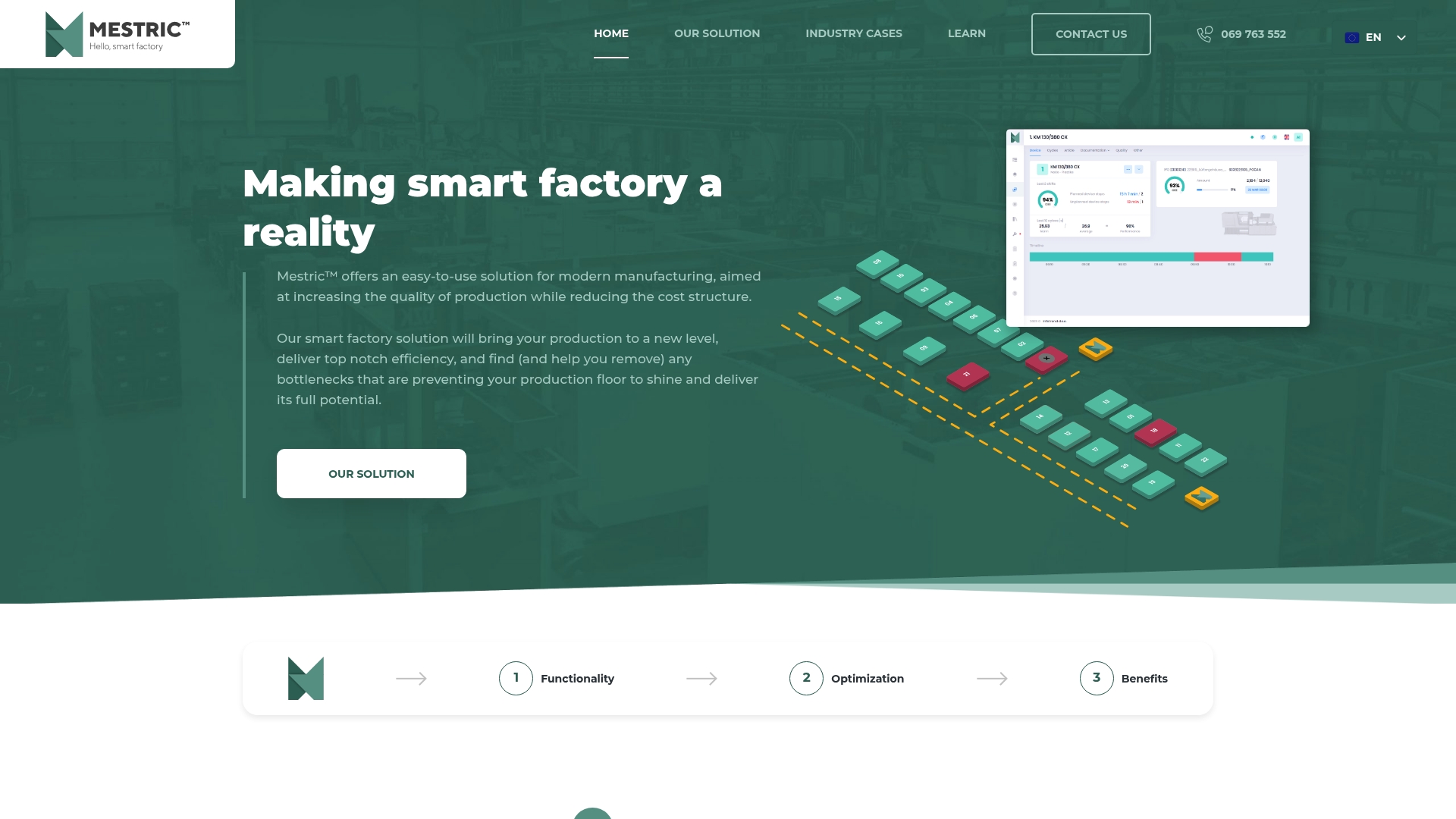
When your MES layer is feeding accurate, current data into your scheduling and ERP systems, the decisions your planners make are grounded in what is actually happening on the floor, not what happened yesterday. Mestric integrates with existing ERP infrastructure and provides the production operations visibility that autonomous and AI-assisted scheduling platforms require to function effectively. If you want to see how connected machinery changes scheduling outcomes in a real production environment, Mestric offers an onsite demonstration tailored to your facility. Explore how MES compares to traditional manufacturing approaches and what the difference means for your scheduling performance.
Optimising factory scheduling means arranging production tasks, resources, and timelines to maximise throughput and minimise idle time and waste. The goal is to balance every workstation so that output meets demand without excess cost or disruption.
A 5% improvement in line efficiency at a 1,000-unit-per-shift facility produces 50 additional units with no extra inputs, directly improving margins. Poor scheduling generates hidden costs through overtime, quality defects, maintenance escalation, and logistics inefficiency.
Static scheduling uses fixed sequences that require manual correction when conditions change. Dynamic scheduling adjusts in real time using live data from MES and ERP systems, reducing downtime and improving delivery reliability in volatile production environments.
AI scheduling platforms continuously monitor shop floor data and make rescheduling decisions faster than human planners. Manufacturers using automated scheduling report reductions in work-in-progress inventory, cycle times, and planner workload alongside improved customer responsiveness.
Heijunka is a lean production levelling technique that alternates product variants in a defined sequence rather than batching by type. It reduces inventory fluctuations, aligns output with demand, and makes factory scheduling more predictable across shifts.
Optimising factory scheduling requires integrating line balancing principles, real-time data infrastructure, and continuous review to convert scheduling discipline into measurable margin gains.
| Point | Details |
|---|---|
| Line balancing drives efficiency | Well-balanced lines achieve 90 to 95% efficiency; every point below that is paid-for capacity going to waste. |
| Static schedules create hidden costs | Fixed schedules cannot adapt to disruptions, generating overtime, defects, and supplier strain that compound over time. |
| Dynamic and AI scheduling outperform manual planning | Real-time MES and ERP data enable faster, more accurate rescheduling decisions than any human planner can sustain. |
| Data quality determines scheduling quality | AI and dynamic scheduling platforms require accurate, live data from connected equipment to deliver reliable results. |
| Start with a pilot line | Testing scheduling improvements on one line first limits risk and builds the evidence base for wider investment. |


 069 763 552