


TL;DR:
- Digital factories replace manual processes with AI and IIoT to boost efficiency and output quality. Most failures occur due to organizational issues, not technology, highlighting the importance of strong foundations. Starting with a lighthouse site and ensuring operational readiness lead to successful digital transformation in manufacturing.
A digital factory is defined as a manufacturing site where AI, Industrial Internet of Things (IIoT), and integrated data systems replace manual, paper-based processes to deliver measurable gains in output quality and operational efficiency. Understanding why invest in digital factories is now a board-level question, not a technology department one. Integrated digital frameworks can yield efficiency gains exceeding 30% in key performance areas such as first-pass yield and equipment uptime. The standard industry term for this shift is digital transformation in manufacturing, and the financial stakes are significant. Getting the investment right requires more than buying software. It requires an operations-first mindset backed by the right technology.
The benefits of digital factories are concrete and quantifiable. Manufacturers who deploy integrated digital frameworks report efficiency improvements exceeding 30% in metrics such as first-pass yield, defect rates, and equipment availability. That figure is not a ceiling. It represents what organisations achieve when technology, data, and operations align properly.
Real-time data access is a central driver of those gains. When production managers can view live KPIs, including downtime, quality parameters, and cost analysis, decision cycles shorten significantly. Faster decisions reduce the time between a problem appearing on the line and a corrective action being taken.
The advantages of investing in digital factories also show up in AI adoption trends. 49% of industrial manufacturing executives already have active AI use cases delivering measurable value, with 68% expecting to scale AI within the next 12 months. That pace of adoption signals a competitive shift. Manufacturers who delay risk falling behind peers who are already extracting value from AI-driven quality monitoring and predictive maintenance.
Key operational improvements you can expect from a well-executed digital factory investment include:
Each of these improvements compounds over time. A 5% reduction in defect rates in month one becomes a structural cost advantage by month twelve.
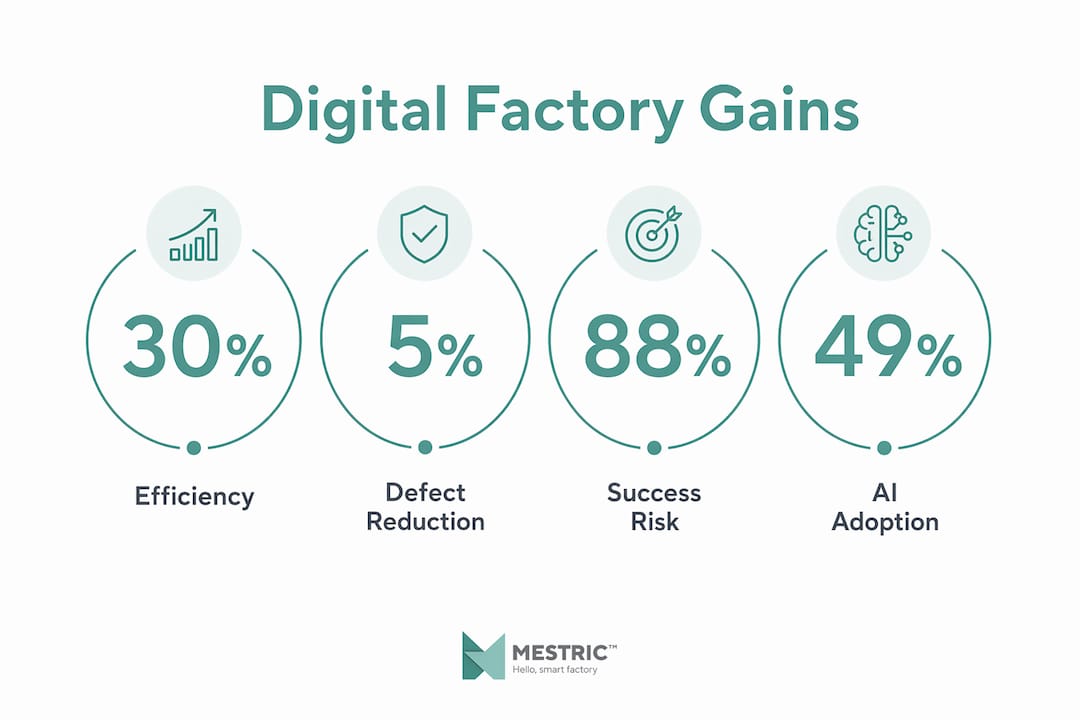
The most important fact about digital factory investment is also the most uncomfortable one. 88% of manufacturing digital transformations fail, costing an estimated $2.3 trillion annually in lost capital and momentum. That failure rate is not caused by bad technology. It is caused by poor organisational foundations.
Most digital transformation failures stem from organisational barriers: lack of trust between functions, weak change management discipline, and misaligned operational priorities. Technology is rarely the problem. The operating model beneath it usually is.
Two resource gaps consistently block progress. 87% of manufacturing leaders cite access to specialised talent as a critical bottleneck, and 69% point to inadequate digital infrastructure. Both gaps must be addressed before technology deployment begins, not after.
Pro Tip: Before committing capital to a digital factory rollout, audit your current MES and data architecture. Legacy systems that cannot support real-time data flows will undermine even the best technology investments.
The factors that separate successful transformations from failed ones include:
Ignoring any one of these factors is enough to stall a programme that looked strong on paper.
AI and IIoT are the two technologies that convert raw production data into competitive advantage. Understanding their specific roles helps you allocate investment where it generates the most return.
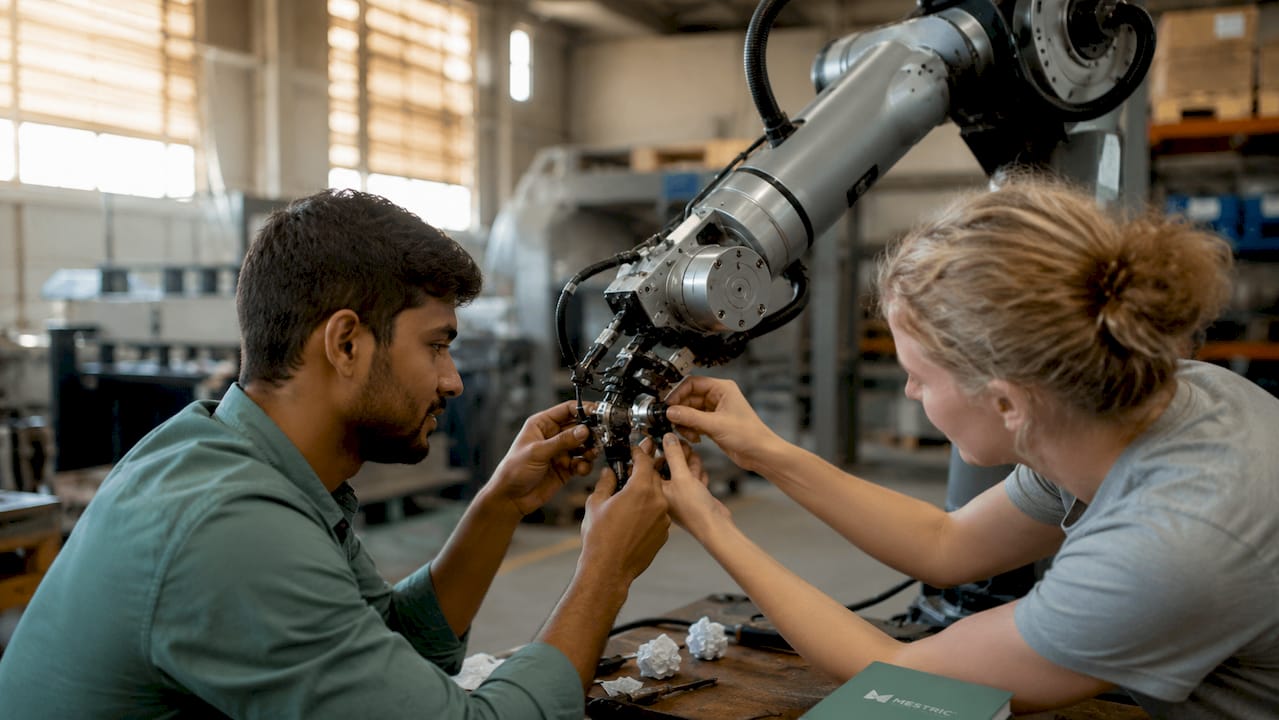
IIoT connects physical equipment to digital systems, enabling paperless operations and real-time data connectivity across the factory floor. When every machine reports its status continuously, production managers gain visibility that paper-based systems cannot provide. Shift handovers become data transfers. Quality deviations trigger alerts in seconds rather than hours.
AI builds on that data layer to deliver three specific capabilities:
The Unified Namespace architecture and integrated Manufacturing Execution Systems (MES) form the data backbone that makes these capabilities work at scale. Without a unified data layer, AI tools operate on incomplete information and produce unreliable outputs. Legacy MES platforms require modernisation to support AI-driven quality systems and digital twins. Updating the MES is not optional. It is the prerequisite.
The role of AI in manufacturing is shifting from experimentation to execution. Manufacturers moving past pilots to enterprise-wide platforms achieve genuine resilience through AI-driven analytics integrated across every production workflow.
| Technology | Primary function | Key output |
|---|---|---|
| IIoT sensors | Equipment connectivity | Real-time machine status data |
| AI quality systems | Defect detection | Reduced first-pass failures |
| Unified Namespace | Data architecture | Single source of production truth |
| Integrated MES | Workflow management | Connected scheduling and reporting |
Investment sequencing is where most digital factory programmes either build momentum or collapse. The order of decisions matters as much as the decisions themselves.
Starting with a lighthouse site is the most reliable predictor of enterprise-wide success. A lighthouse site is a single factory or production line where the full digital operating model is proven before it is replicated elsewhere. It removes the risk of scaling a flawed approach across multiple sites simultaneously. It also creates internal proof of concept that builds confidence across the organisation.
Combining footprint strategy and technology investment as one integrated decision maximises competitive advantage and reduces total conversion costs. Treating them as separate workstreams leads to misaligned timelines and wasted capital.
Pro Tip: Assign a joint leadership team that includes both your operations director and your digital lead from day one. Programmes run by technology teams alone consistently underestimate the operational change required.
A practical sequencing approach for manufacturing executives looks like this:
Intelligent manufacturing systems work best when they are deployed into processes that have already been clarified and documented. Technology does not fix a broken process. It accelerates it, for better or worse.
The future of manufacturing technology belongs to organisations that treat digital investment as an operational programme, not a technology project. The distinction changes everything about how you staff, sequence, and measure the work.
Investing in digital factories delivers measurable competitive advantage when technology deployment is grounded in operational readiness, skilled talent, and a sequenced rollout starting with a proven lighthouse site.
| Point | Details |
|---|---|
| Efficiency gains are real | Integrated digital frameworks deliver efficiency improvements exceeding 30% in key production metrics. |
| Failure is organisational, not technical | 88% of transformations fail due to poor change management and misaligned operations, not bad software. |
| Talent and infrastructure come first | 87% of leaders cite talent as the top bottleneck; address it before deploying technology. |
| Start with a lighthouse site | Proving the model at one site before scaling is the most reliable predictor of enterprise success. |
| AI and IIoT require a unified data layer | Legacy MES platforms must be modernised before AI-driven quality and maintenance tools can perform reliably. |
My honest view, after working through multiple manufacturing digital transformations, is that the technology conversation happens far too early in most boardrooms. Executives see AI adoption rates and efficiency benchmarks, and they want to move fast. That instinct is understandable. The data is genuinely compelling.
The problem is that speed without foundation is the single most common reason programmes stall at the pilot stage. I have seen well-funded initiatives grind to a halt because the underlying process was never documented, the frontline team was never consulted, and the MES feeding data to the new AI system was running on architecture from a decade ago.
The digital transformation in manufacturing literature is full of case studies where the hard part was not the technology. It was the culture. Getting a production supervisor to trust a system that flags their line for a problem they cannot yet see requires months of demonstrated accuracy, not a training session.
My practical advice is this: invest in your people and your data infrastructure before you invest in the headline technology. A well-connected, well-staffed factory running a modern MES will extract more value from AI tools than a poorly prepared site running the most advanced platform on the market. The technology is only as good as the foundation beneath it.
— Andraž
Mestric is built for manufacturing executives who want measurable results, not a lengthy implementation project. The Mestric MES connects directly with your production equipment and delivers real-time KPIs including performance metrics, downtime, quality parameters, and cost analysis, all in one place.
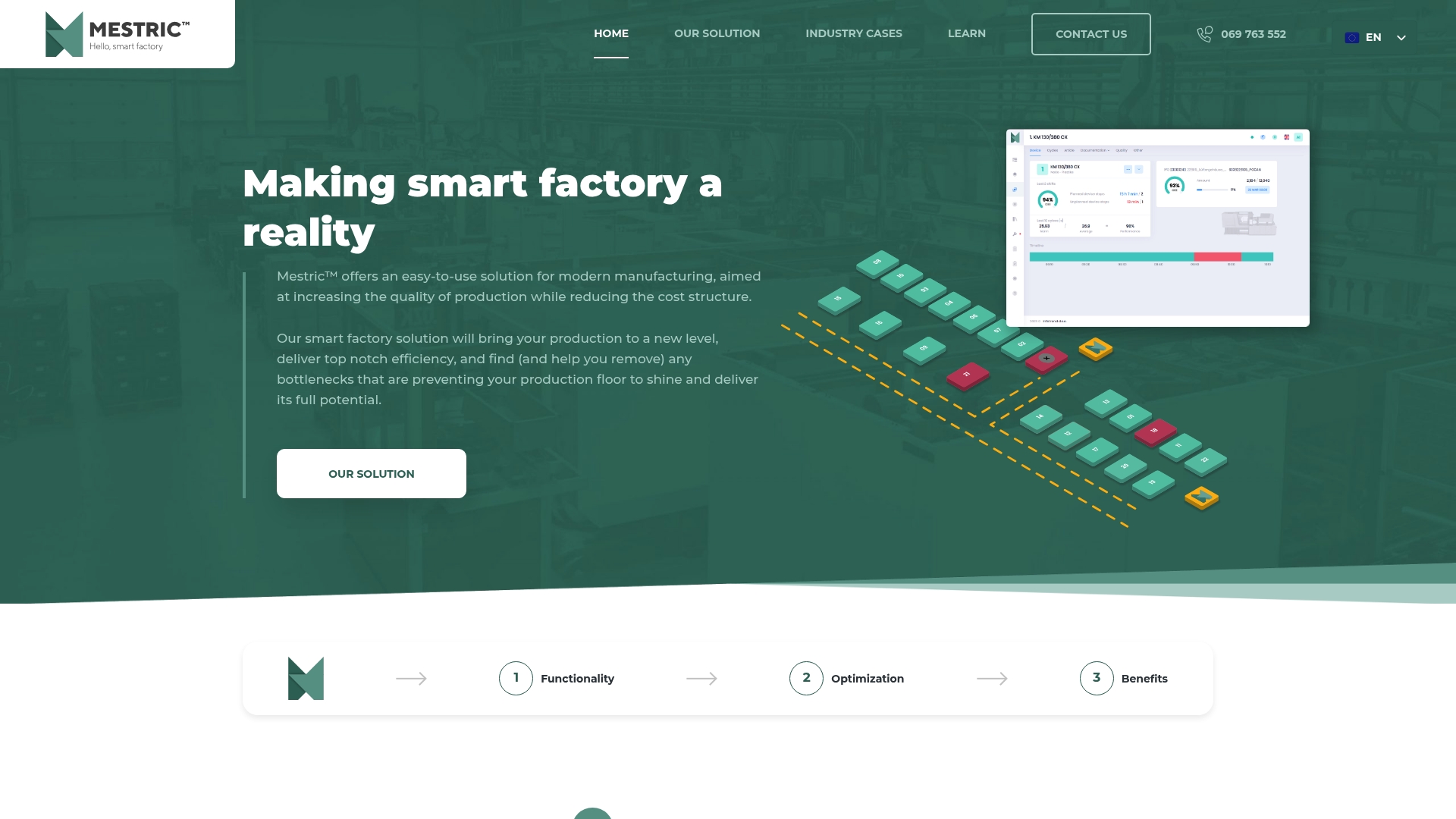
Clients use Mestric to move from paper-based reporting to live production visibility, with AI-powered tools that identify bottlenecks and support faster decisions. If you are evaluating how a modern MES compares to your current setup, the MES vs traditional manufacturing guide covers the operational and financial differences in detail. You can also request an onsite demonstration to see how Mestric performs in a connected production environment.
A digital factory is a manufacturing site where AI, IIoT, and integrated data systems replace manual processes to improve output quality, reduce downtime, and increase operational efficiency. The term is used interchangeably with smart factory in most industry contexts.
88% of manufacturing digital transformations fail due to organisational barriers such as poor change management, lack of internal alignment, and inadequate operational foundations, not technology failures.
Manufacturers using integrated digital frameworks report efficiency gains exceeding 30% in key metrics such as first-pass yield, defect rates, and equipment availability when technology and operations are properly aligned.
49% of industrial manufacturing executives already have active AI use cases delivering measurable value, and 68% plan to scale AI deployment within the next 12 months.
Begin with a lighthouse site: a single factory or production line where the full digital operating model is tested and proven before being scaled across the wider organisation. This approach is the most reliable predictor of enterprise-wide success.


 069 763 552