

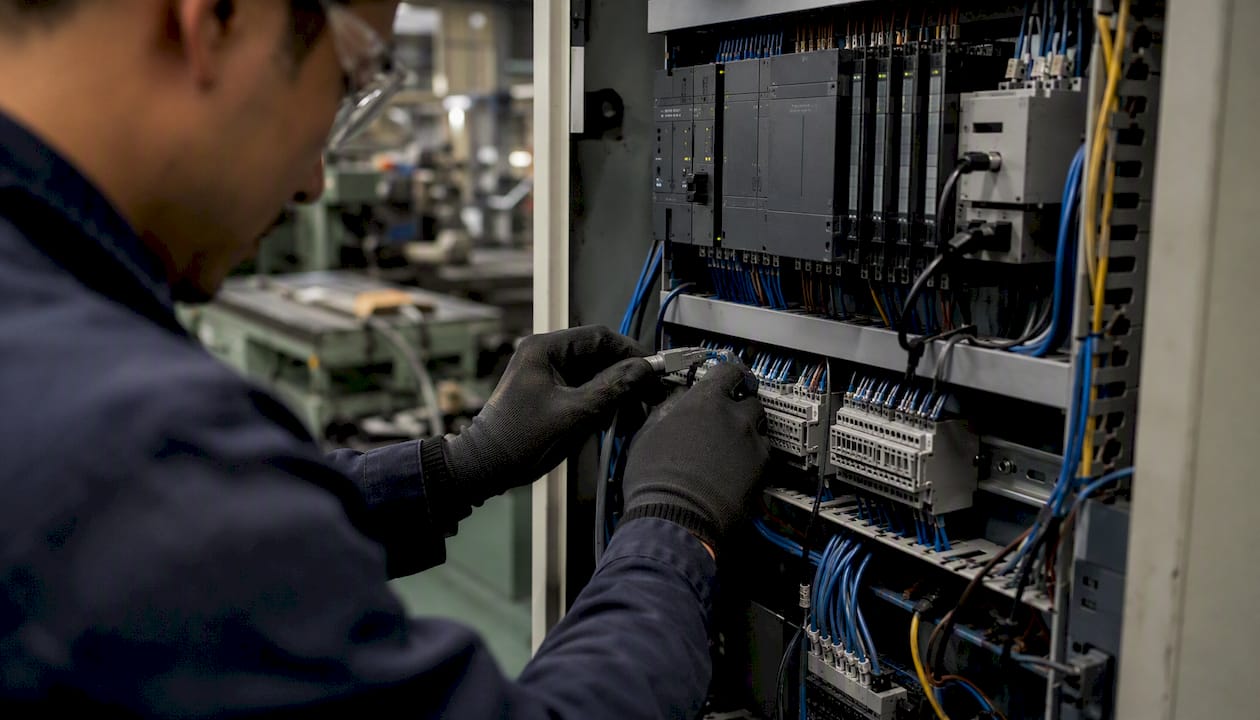
Automation system architectures fall into three classification axes, and knowing which axis to apply first determines every downstream decision. The production-model axis groups architectures as fixed, programmable, flexible, or integrated, based on volume and product-mix requirements. The hierarchical axis maps functions across five layers (Levels 0–4 of the automation pyramid), from field sensors up to ERP. The control-theory axis distinguishes open from closed loop, continuous from discrete, linear from non-linear, and single-input single-output (SISO) from multi-input multi-output (MIMO). Together, these three axes give you a structured way to assess any plant or project.
When comparing architectures across the article, the key dimensions are:
Matching your production model to the right architecture family, then validating against control-loop requirements and MES integration needs, is the decision sequence that prevents the most costly rework.
| Point | Details |
|---|---|
| Map production model first | Fixed, programmable, flexible, or integrated: your volume and product-mix profile determines the architecture family before any other criterion. |
| Control-loop requirements drive controller placement | Update rate and SISO/MIMO classification determine whether a standard PLC, motion controller, or DCS is technically eligible for each loop. |
| MES belongs at Level 3 | ISA-95 places MES between SCADA and ERP; define the data contract before hardware is ordered to avoid the most common integration overruns. |
| Prefer open standards | OPC UA and IEC 61131-3 compliance protect long-term flexibility and reduce vendor lock-in across all architecture classes. |
| Mestric as the MES layer | Mestric connects to existing PLCs and SCADA systems via OPC UA, delivering real-time OEE, quality, and downtime data at Level 3 without replacing your control infrastructure. |
Industrial automation literature consistently groups architectures into four production-model categories. Each class reflects a different answer to the same question: how much does your product mix change, and how often?
Fixed automation is built for a single product at very high volume. The control sequence is embedded in the mechanical or electrical design itself, so changeover is either impossible or prohibitively expensive. Automotive body stamping lines and beverage filling lines are the canonical examples. Capital cost is high, but unit cost at volume is the lowest of any class.
Programmable automation uses a stored programme, typically on a PLC or CNC controller, to define the sequence. Changing the programme changes the product, though physical tooling changes are still needed. Batch chemical plants, injection-moulding shops, and medium-volume machining cells all fit here. The architecture is more flexible than fixed automation, but changeover still takes hours rather than minutes.
Flexible automation adds rapid, software-driven reconfiguration. Robotic assembly cells with vision guidance, flexible manufacturing systems (FMS), and CNC machining centres with automatic tool changers are typical examples. South Shore Controls describe this class as suited to high-mix, medium-volume production where changeover time must be measured in minutes. The trade-off is higher per-unit cost and more complex control software.

Integrated automation connects every production function, from order management through to dispatch, in a single digital architecture. MES, ERP, SCADA, and field controllers share a common data model. Semiconductor fabs, pharmaceutical packaging lines, and advanced food-processing plants increasingly operate this way. The architecture demands the most engineering investment upfront, but it is the only class that supports closed-loop feedback from enterprise data back to machine parameters.
| Class | Best for (volume/mix) | Cost and complexity | Scalability and maintainability | Real-time/latency | MES/ERP integration |
|---|---|---|---|---|---|
| Fixed | Very high volume, single product | High CAPEX, low OPEX | Low: changes require physical rework | Excellent: hardwired determinism | Minimal: limited data extraction |
| Programmable | Medium volume, limited variants | Moderate CAPEX, moderate OPEX | Moderate: programme changes feasible | Good: PLC scan times typically fall within the low millisecond range. | Moderate: standard PLC data interfaces |
| Flexible | High mix, medium volume | Higher CAPEX, higher OPEX | High: software-driven reconfiguration | Good to moderate: depends on motion needs | Good: open fieldbus and OPC UA support |
| Integrated | Any volume, full digital integration | Highest CAPEX and engineering effort | Highest: modular and data-driven | Varies by layer: edge handles real-time | Native: MES/ERP integration by design |
Key procurement considerations:
The automation pyramid, formalised in the ISA-95 enterprise-to-control hierarchy, assigns every function and component to one of five layers. Understanding which layer owns which function prevents the most common architectural mistake: placing control logic at the wrong level and then fighting data-latency or ownership problems later.
Level 0 — Field devices: Sensors, actuators, drives, and instruments. These devices measure and affect the physical process directly. Temperature transmitters, flow meters, servo drives, and pneumatic valves all live here.
Level 1 — Control: PLCs, safety controllers, and motion controllers execute control loops and sequence logic. Scan times at this level are typically in the low millisecond range for standard PLC tasks; motion control often requires sub-millisecond update rates.
Level 2 — Supervisory: SCADA systems and HMI panels aggregate data from Level 1 controllers, display process state, and allow operators to adjust setpoints. This layer does not close control loops directly; it supervises them.
Level 3 — MES/production management: The Manufacturing Execution System sits here. It receives production orders from Level 4, dispatches work to Level 2, and collects real-time OEE, quality events, and downtime logs. ISA-95 defines the data models and interface contracts for this layer.
Level 4 — Enterprise/ERP: Business planning systems (SAP, Oracle, Microsoft Dynamics) manage orders, inventory, and financials. Data flows upward from Level 3 in near-real-time; planning data flows downward as production schedules.
Component-to-layer mapping:
One practical complication: modern edge devices increasingly bridge Levels 1–3 by running lightweight analytics and pre-processing data before it reaches SCADA. This is useful for bandwidth reduction, but it creates data-ownership ambiguity. Define clearly which system is the system of record for each data class before you deploy edge analytics.
Control systems are classified along four axes, and each axis has direct consequences for controller selection, network design, and where in the pyramid a function must run.
An open-loop system applies a fixed output without measuring the result. A conveyor running at a fixed speed regardless of load is open-loop. A closed-loop system measures the process variable, compares it to a setpoint, and adjusts the output accordingly. A PID temperature controller is the standard example: the controller reads the thermocouple (measurement), subtracts the setpoint (error), and drives a heater or valve (output) to minimise that error.
Closed-loop architecture is almost always necessary wherever disturbances affect product quality. NPTEL control-engineering material cautions that failing to recognise when a process needs feedback can produce unstable or uncontrollable behaviour, particularly when process gain or dead time changes with operating conditions.
Engineering warning: Using open-loop control where load disturbances are significant risks product quality drift and, in some processes, safety incidents. Mitigation requires adding measurement (sensors), designing a feedback path, or using feedforward compensation when disturbances are measurable but not correctable in real time.
Continuous-time systems process analogue signals without interruption; discrete-time systems sample signals at a fixed rate. PLCs are inherently discrete: they execute a scan cycle and update outputs once per cycle. The sampling rate must be at least twice the highest frequency of interest (Nyquist criterion), so fast processes require faster scan times and more capable hardware.
Linear systems obey superposition and are amenable to classical PID tuning. Non-linear systems, such as pH control, exothermic reactors, or hydraulic actuators, require gain-scheduling, model-predictive control (MPC), or other advanced strategies. Specifying a standard PLC with a PID block for a strongly non-linear process is a common design error.
A single-input single-output loop controls one variable with one actuator. Most PLC-based architectures are built from many independent SISO loops. MIMO control handles interactions between variables simultaneously, as in distillation column control or coordinated multi-axis motion. MIMO typically requires a DCS or dedicated motion controller with the computational headroom to solve the control problem in real time.
Determinism and real-time requirements:
Pro Tip: Before selecting a controller platform, list every control loop with its required update rate and classify it as SISO or MIMO. Loops requiring sub-millisecond updates must run on dedicated motion hardware, not a standard PLC. This single step prevents the most expensive late-stage redesigns.
Real plants rarely implement a single pure architecture. The Industrial Automation Authority identifies several primary system types, each suited to different plant scales and process characteristics.
A Distributed Control System uses a single, integrated engineering database shared across all controllers, operator stations, and historians. Plants with many PID loops, such as oil refineries, chemical plants, and power stations, favour DCS because the integrated environment reduces configuration errors and simplifies loop tuning. The trade-off is higher initial cost and a single-vendor dependency that can be difficult to exit.
Discrete manufacturing plants typically deploy PLC islands, each controlling a cell or line, with a SCADA system providing supervisory visibility across all islands. This architecture is modular: adding a new cell means adding a new PLC without touching the rest of the plant. The challenge is data consistency. Each PLC island may use a different data model, so the SCADA layer must normalise data before passing it to MES.
Water utilities, gas pipelines, and electricity distribution networks use RTUs at geographically dispersed sites, with SCADA providing centralised monitoring and control over wide-area networks. Latency is higher than in a local plant network, so this architecture is unsuitable for fast control loops. Safety-critical functions must run locally at the RTU, not in the central SCADA.
PACs combine PLC-style discrete logic with PC-based processing power, supporting mixed logic, motion, and process control in a single platform. They suit mid-size plants that need more computational flexibility than a standard PLC but do not require a full DCS. National Instruments CompactRIO is a well-known example.
Modern plants increasingly deploy edge computing nodes that pre-process data from Level 0–1 devices before sending aggregated results to cloud analytics platforms. Red Hat’s automation portfolio architecture describes patterns such as self-healing infrastructure and automated deployment factories that are directly applicable when designing the orchestration and analytics layers above the plant floor. For higher-level orchestration involving AI services and cross-domain workflows, multi-agent patterns are becoming relevant as plants integrate predictive quality and scheduling agents.
Integration challenges when mixing architectures:
Typical latency expectations by architecture:
Industrial communication protocols fall into three families: legacy fieldbuses, Industrial Ethernet variants, and higher-level interoperability standards. Choosing the wrong protocol for a layer is one of the most common causes of integration rework.
| Protocol | Family | Typical latency | Topology | Common industries | MES/SCADA compatibility |
|---|---|---|---|---|---|
| Modbus RTU/TCP | Legacy fieldbus / Ethernet | 10–100 ms | Point-to-point, star | Process, utilities, HVAC | Wide: most SCADA systems |
| Profibus DP | Legacy fieldbus | 1–10 ms | Bus | Process, discrete manufacturing | Good: via Profibus master cards |
| EtherNet/IP | Industrial Ethernet | 1–10 ms | Star, ring | Discrete, automotive, food | Very good: native SCADA/MES drivers |
| Profinet RT/IRT | Industrial Ethernet | < 1 ms (IRT) | Star, ring | Automotive, machinery | Very good: Siemens-ecosystem native |
| EtherCAT | Industrial Ethernet | < 1 ms | Ring | Motion, robotics, packaging | Moderate: gateway to OPC UA needed |
| OPC UA | Interoperability standard | 10–100 ms | Any (transport-agnostic) | All industries | Native: designed for MES/ERP |
| MQTT (over IT network) | IIoT messaging | Variable | Broker-based | IIoT, cloud analytics | Good: broker bridges to MES |
| WirelessHART / ISA100 | Wireless fieldbus | 10 ms | Mesh | Process, oil and gas | Moderate: via gateway |
Pro Tip: Segment your network into at least three zones: field/control (Levels 0–2), supervisory/MES (Levels 2–3), and enterprise/IT (Level 4). Use a hardened gateway or data diode at each boundary. Never expose PLC programming ports to the corporate IT network. This is the single most impactful security measure you can take before an IIoT deployment.
On wireless and time-sensitive networking (TSN): WirelessHART and ISA100.11a are appropriate for monitoring loops where latency of tens to hundreds of milliseconds is acceptable, such as tank level or temperature trending. They are not suitable for closing fast control loops. IEEE 802.1 TSN extensions to standard Ethernet are beginning to appear in industrial switches and promise deterministic latency over standard IT infrastructure, but adoption in UK plants is still early.
The right architecture matches your production model to a control topology, then validates the choice against integration and lifecycle criteria. Factory automation guidance for plant managers consistently shows that skipping the validation step is where projects overrun.
Step 1: Define your production model. Is your plant fixed, programmable, flexible, or integrated? If you cannot answer this, map your product SKU count against annual volume per SKU. High volume, few SKUs points to fixed or programmable. High mix, moderate volume points to flexible or integrated.
Step 2: List every control loop and classify it. For each loop, record the required update rate, whether it is SISO or MIMO, and whether it is safety-related (SIL-rated). This list determines which controller platforms are technically eligible.
Step 3: Map geographic dispersion. A single-site plant with all equipment within 500 metres can use Industrial Ethernet throughout. A multi-site or geographically distributed operation needs WAN-tolerant architectures (SCADA + RTU, cloud-edge patterns).
Step 4: Assess existing equipment and vendor lock-in tolerance. If 80% of your field devices speak Profibus, a full migration to EtherNet/IP is a multi-year programme. Identify which legacy protocols must be supported via gateways and which can be replaced in the current project scope.
Step 5: Define MES and ERP data requirements. Specify what data the MES needs, at what frequency, and in what format. This becomes the integration contract that every controller and SCADA system must satisfy.
Step 6: Evaluate OPEX vs CAPEX trade-offs. DCS and integrated architectures carry higher upfront cost but lower long-term engineering cost. PLC islands are cheaper to install but more expensive to integrate and maintain at scale.
Checklist for vendor and contractor evaluation:
Running a rapid architecture-selection workshop:
MES belongs at Level 3 of the automation pyramid and is the operational bridge between real-time control and enterprise planning. It receives production orders from ERP, dispatches work instructions to SCADA and PLCs, and collects the data that makes real-time performance tracking possible.
Key integration points for MES:
Practical benefits of a well-integrated MES:
Integration architecture notes:
MES at Level 3 is not optional in an integrated architecture. Without it, production orders, quality data, and downtime events remain siloed in individual PLC historians and spreadsheets, and the enterprise never gets the feedback loop it needs to improve scheduling, quality, and cost. Automotive production tracking is one of the clearest examples: plants that connect MES to their line controllers gain the ability to correlate machine parameters with quality outcomes in real time, something no manual system can replicate.
The highest-impact early moves on any automation architecture project are fixing measurement fidelity, establishing loop ownership, and defining the MES data contract. Everything else is secondary.
Most projects that overrun do so for one of three reasons. First, scope creep at the control layer: engineers add loops, interlocks, and reporting requirements after the architecture is frozen, and the network and controller capacity was never sized for the final load. Second, insufficient network segmentation: IT and OT networks are bridged without a hardened gateway, and the first security incident forces an unplanned redesign. Third, over-reliance on vendor-specific tools without verifiable data export: a proprietary historian or SCADA system that cannot deliver OPC UA or a standard database export creates a lock-in that is expensive to escape.
Common project mistakes to avoid:
Quick wins in the first 60–90 days of an architecture project:
Choosing the right architecture is only half the work. The other half is ensuring that the data your plant generates actually reaches the people and systems that can act on it. That is where Mestric fits.
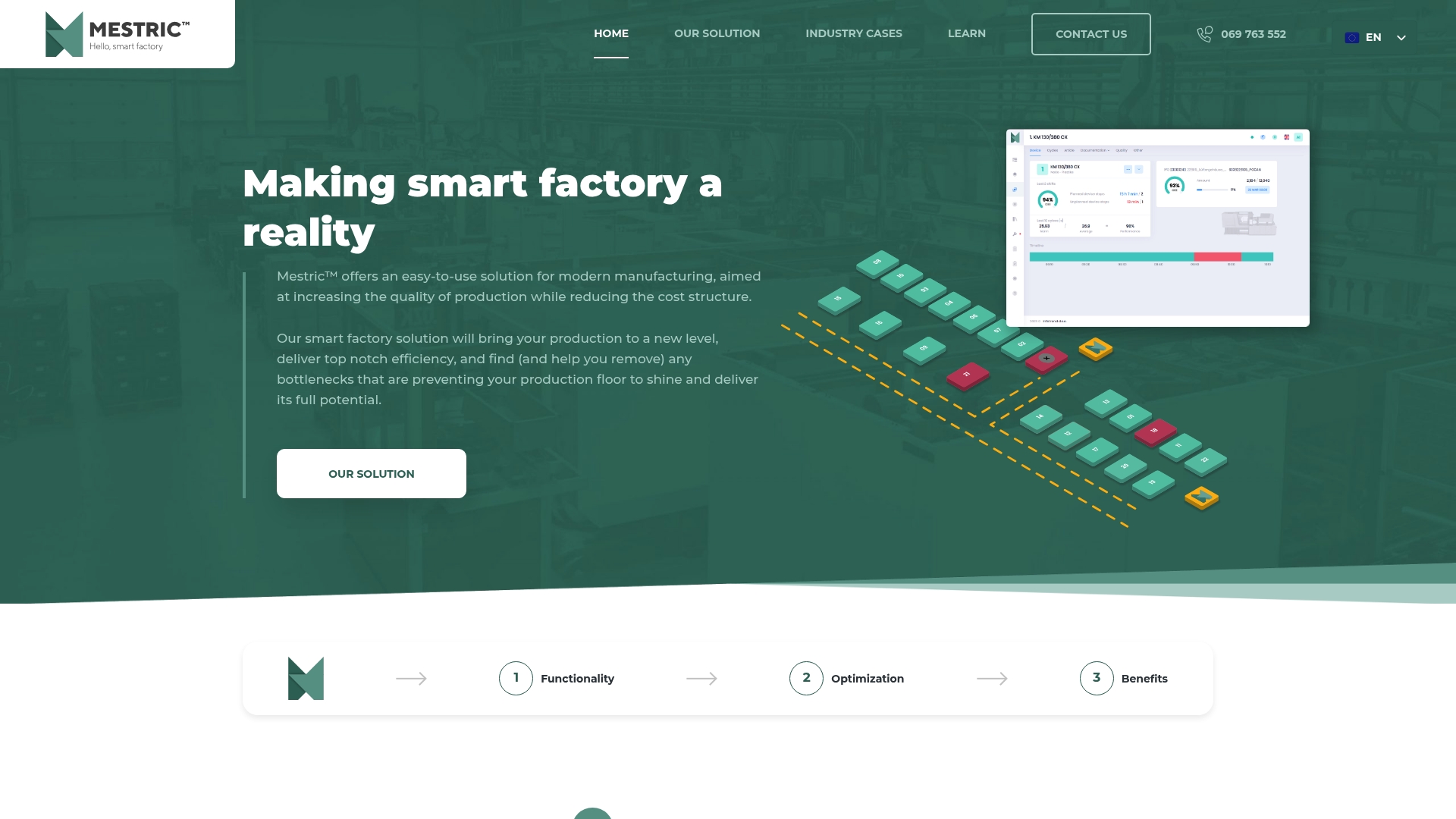
Mestric is a purpose-built MES platform designed to sit at Level 3 of your automation pyramid and connect directly with your existing PLCs, SCADA systems, and field devices. You get real-time OEE, downtime analysis, quality monitoring, and cost analytics in a single interface, without replacing your control infrastructure. For plants moving from PLC islands to an integrated architecture, Mestric provides the MES layer that makes integration worthwhile, turning raw machine data into production KPIs your management team can act on. The platform supports OPC UA and standard industrial protocols, so it works with the hardware you already have. Book a demonstration to see how Mestric connects to your plant floor and what your production data looks like when it is properly organised.
The following standards and resources are the authoritative references for specifying and verifying automation architectures in the UK and internationally.
Standards to cite in specifications:
Practical reading and reference material:
How to use standards in specifications:
Cite exact clauses rather than standard titles alone. For safety loops, specify the target SIL level, the required proof-test interval, and the diagnostic coverage class. For integration, require OPC UA server certification to a named companion specification (e.g., OPC UA for Machinery). For PLC programming, require IEC 61131-3 compliance and specify which languages are permitted. Mandating testable, measurable requirements in contracts is the only way to hold vendors accountable at factory acceptance testing.


 069 763 552