

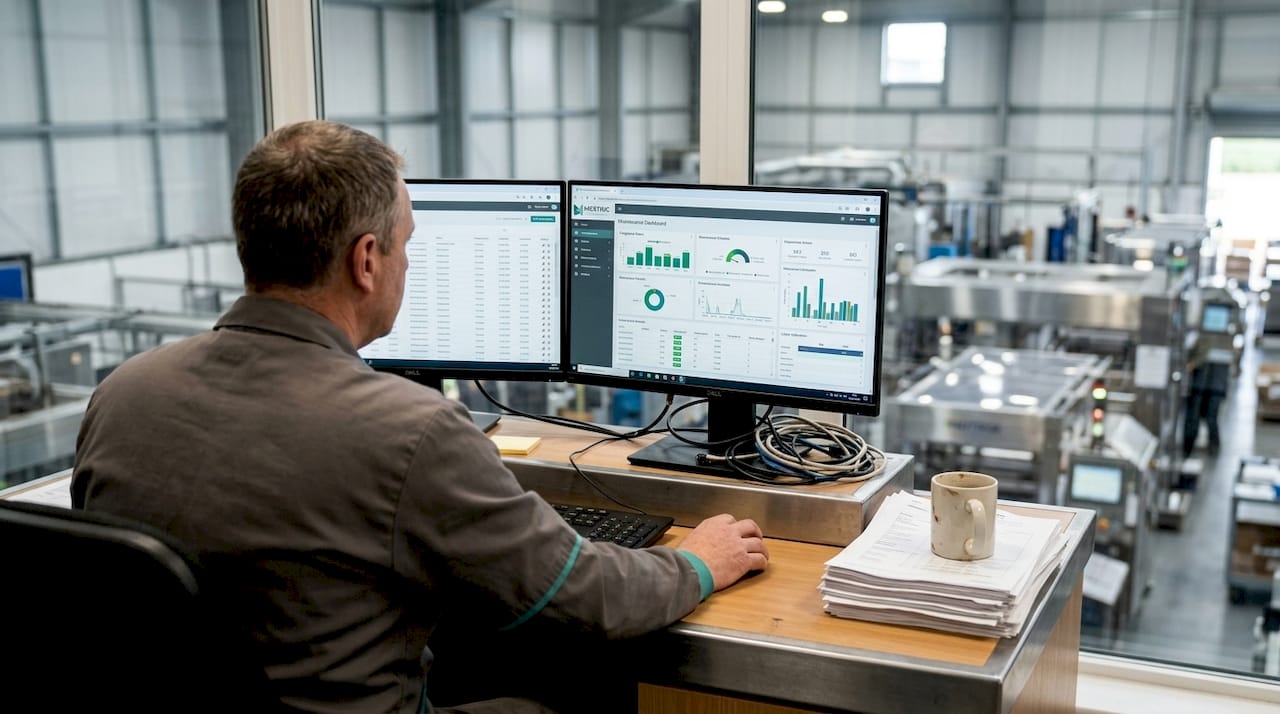
Self-optimising factories are no longer science fiction. Across Europe and Asia, manufacturers are integrating IoT sensors, AI-driven analytics, and digital twins to achieve productivity gains of 30% or more. Yet many executives hesitate, assuming smart factory transformation demands massive capital outlays or complete facility overhauls. In reality, phased retrofits focusing on high-value equipment deliver measurable returns within months. This guide clarifies the technologies, strategies, and empirical benefits shaping smart factories in 2026, helping you navigate implementation with confidence and maximise operational efficiency.
| Point | Details |
|---|---|
| Phased retrofits | Implement retrofits in stages focusing on high value equipment to deliver measurable returns within months. |
| Target high value assets | Prioritising assets with the highest maintenance costs or quality issues accelerates ROI and builds confidence. |
| Core technologies | IoT sensors, AI and ML, edge computing, digital twins, robotics and cobots underpin self optimising production. |
| Data enablement priority | Focusing on data readiness helps avoid pilot failures and maximise the benefits of AI. |
| Productivity gains | Real world deployments report productivity gains of around thirty percent with reduced downtime and energy savings. |
Understanding the building blocks of smart factories helps you prioritise investments and align technology choices with your operational goals. Smart factories in 2026 integrate IoT sensors, AI and machine learning for predictive maintenance, edge computing, digital twins, robotics, and cobots into self-optimising systems that respond dynamically to production conditions.
IoT sensors form the nervous system of smart factories. They capture real-time data from equipment, environmental conditions, and production lines, transmitting it to centralised or edge-based analytics platforms. This continuous data stream enables visibility into machine health, throughput, and quality parameters. The role of IoT in manufacturing extends beyond monitoring, it creates the foundation for predictive maintenance and process optimisation.
AI and machine learning algorithms analyse sensor data to predict equipment failures before they occur, optimise production schedules, and detect quality defects in real time. Predictive maintenance reduces unplanned downtime by identifying wear patterns and scheduling interventions during planned stoppages. Quality control systems use computer vision and pattern recognition to flag defects faster and more consistently than manual inspection.
Edge computing processes data locally at the factory floor, reducing latency and enabling immediate responses to production events. Digital twins, virtual replicas of physical assets or entire production lines, simulate changes before implementation. They allow manufacturers to test new processes, predict outcomes, and optimise configurations without disrupting live operations. A bakery in Europe used a digital twin to reduce cycle times by 15% and cut energy consumption by 20%.
Robotics and collaborative robots enhance flexibility and safety. Traditional industrial robots handle repetitive, high-speed tasks, while cobots work alongside human operators, adapting to variable tasks and supporting ergonomic improvements. Industry 5.0 concepts emphasise human-AI symbiosis, where AI handles data-intensive optimisation and humans apply judgement, creativity, and problem-solving skills.
Key technologies to prioritise:
Pro Tip: Start with equipment that generates the highest maintenance costs or quality issues. Instrumenting these assets first delivers visible ROI and builds organisational confidence in smart factory initiatives.
Now that you understand the technologies involved, let’s examine how to implement them systematically to maximise impact and minimise risk.
Rushing into full-scale smart factory deployment often leads to cost overruns and integration failures. A structured, phased approach reduces risk, aligns with budget cycles, and allows your team to build expertise incrementally. Phased implementation methodologies start with IoT connectivity and CMMS digitisation, add sensors and predictive analytics, then full AI integration over six months or more, focusing on high-value assets first.
Month one to two: Establish foundational connectivity. Install IoT gateways and connect critical equipment to a centralised data platform. Digitise maintenance records and production logs in a computerised maintenance management system. This phase creates the data infrastructure necessary for advanced analytics.
Month three to four: Deploy advanced sensors on high-value or failure-prone equipment. Integrate real-time monitoring dashboards for production managers. Begin collecting baseline performance data to identify patterns and establish benchmarks. Train operators and maintenance teams on new tools and workflows.
Month five to six: Introduce predictive analytics and machine learning models. Use historical and real-time data to forecast equipment failures and optimise maintenance schedules. Pilot digital twin simulations on a single production line to test process changes. Refine data quality and model accuracy based on early results.
Month seven and beyond: Scale AI-driven optimisation across additional assets and production lines. Integrate quality control systems with automated feedback loops. Expand digital twin applications to entire facilities. Continuously iterate based on performance data and operator feedback.
Prioritising critical and high-value equipment accelerates payback. Focus on assets with frequent downtime, high repair costs, or significant quality impact. This targeted approach demonstrates ROI quickly and secures stakeholder buy-in for broader deployment. The production optimisation guide offers detailed steps for identifying and addressing bottlenecks.
Common pitfalls to avoid:
Pro Tip: Establish a cross-functional steering committee with representatives from operations, IT, finance, and maintenance. Regular reviews ensure alignment, address roadblocks quickly, and maintain momentum.
With a clear implementation strategy in place, let’s examine the empirical benefits and industry benchmarks that validate smart factory investments.
Decision-makers need concrete evidence that smart factory investments deliver measurable returns. Empirical benchmarks show 30-50% productivity gains, 45-70% less downtime, 20-50% defect reduction, and 23-70% energy savings, with Korean SMEs reporting significant sales growth following government subsidies for smart manufacturing adoption.
Productivity improvements stem from optimised scheduling, reduced changeover times, and better resource allocation. Real-time visibility into production status allows managers to respond immediately to delays or quality issues. Predictive maintenance eliminates unplanned downtime, which accounts for the majority of production losses in traditional factories.
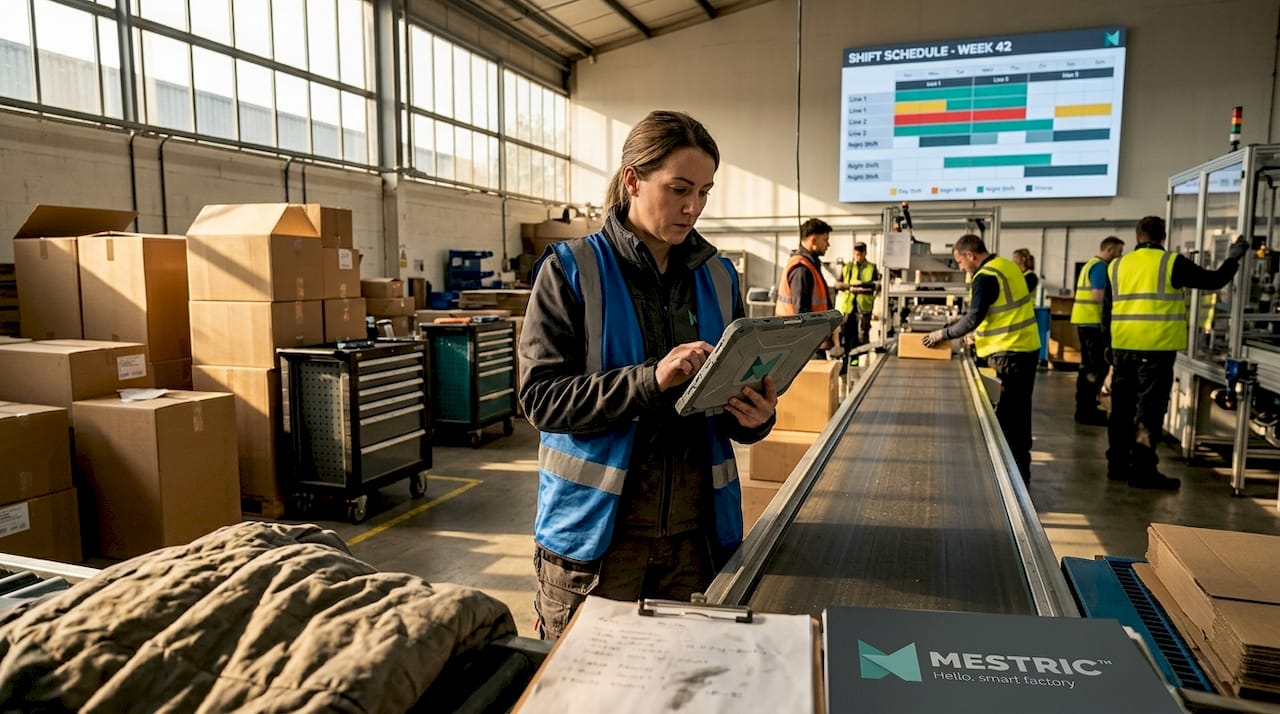
Energy savings result from precise control of heating, cooling, and equipment operation. Smart systems adjust energy consumption based on production demand, equipment status, and utility pricing. A European bakery reduced energy use by 20% through digital twin optimisation, cutting costs and supporting sustainability goals.
Quality improvements come from automated inspection, closed-loop feedback, and process consistency. AI-driven quality control detects defects earlier and more reliably than manual methods, reducing scrap rates and rework. Manufacturers in automotive and electronics sectors report defect reductions of 30% or more.
Government subsidies and incentives enhance returns for SMEs. Korean manufacturers participating in smart factory programmes reported sales increases and improved competitiveness. Similar schemes exist across Europe, offering grants, tax credits, and technical support for digital transformation projects.
| Metric | Improvement Range | Industry Examples |
|---|---|---|
| Productivity | 30-50% increase | Automotive, electronics, food processing |
| Downtime | 45-70% reduction | Heavy machinery, pharmaceuticals, metals |
| Defect rate | 20-50% decrease | Automotive, aerospace, consumer goods |
| Energy use | 23-70% savings | Bakeries, chemicals, textiles |
| Maintenance costs | 20-40% reduction | Manufacturing plants, utilities, transport |
Key performance improvements documented across sectors:
The manufacturing productivity checklist and manufacturing optimisation checklist provide actionable steps to achieve these benchmarks in your facility.
Understanding these benefits helps you build a compelling business case. Next, we’ll compare retrofit and greenfield approaches to clarify cost and implementation trade-offs.
Choosing between retrofitting existing facilities and building new greenfield smart factories depends on budget, timeline, operational constraints, and strategic goals. Greenfield smart factories offer 30-50% savings but cost $500M to $2B and take three to five years, while retrofits cost $5M to $150M and take six to 24 months with 15-30% savings. Sixty-two per cent of manufacturers choose retrofit for speed and affordability.
Greenfield factories are purpose-built facilities designed from the ground up with integrated smart technologies. They offer optimal layouts, advanced automation, and energy-efficient systems. Greenfield projects eliminate legacy constraints, enabling maximum efficiency and sustainability. However, they require massive capital investment, lengthy construction timelines, and significant operational disruption during transition.
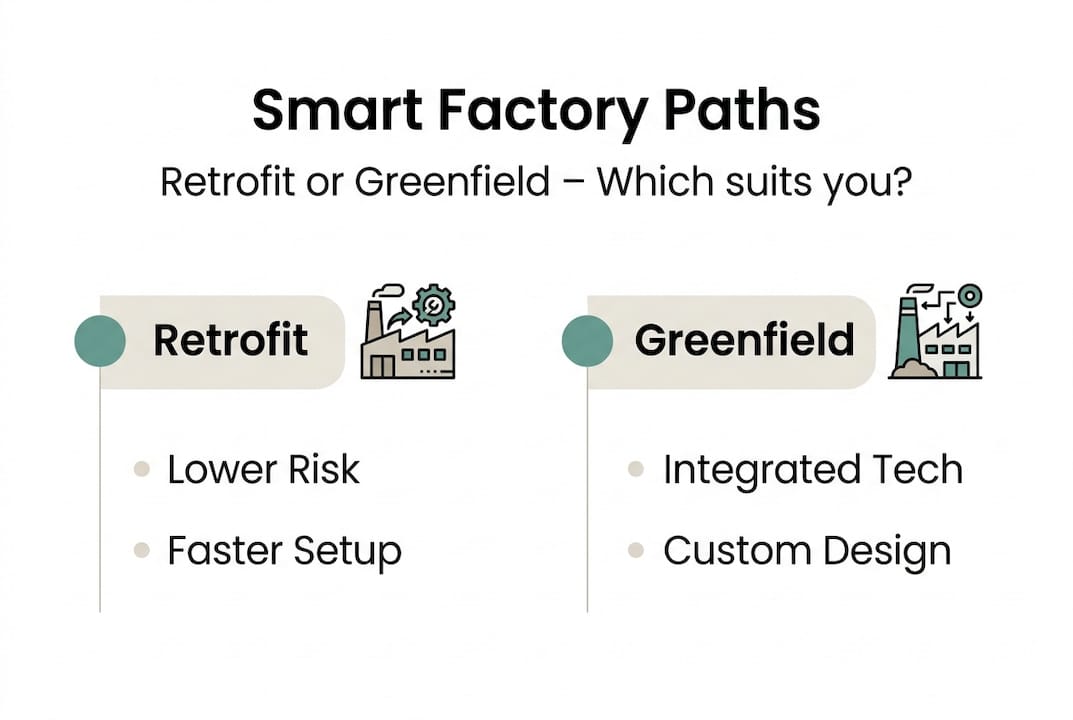
Retrofitting existing facilities involves upgrading equipment, adding sensors and connectivity, and integrating new software platforms without major structural changes. Retrofits preserve existing assets, reduce capital expenditure, and deliver faster ROI. They suit manufacturers with functional infrastructure seeking incremental improvements. Retrofits also minimise production disruption, as upgrades can occur in phases during scheduled downtime.
Comparative costs and timeframes:
| Factor | Greenfield | Retrofit |
|---|---|---|
| Capital cost | $500M to $2B | $5M to $150M |
| Timeline | 3 to 5 years | 6 to 24 months |
| Energy savings | 30-50% | 15-30% |
| Operational disruption | High during transition | Low with phased approach |
| ROI timeline | 5 to 10 years | 1 to 3 years |
Factors influencing the decision:
Most manufacturers prefer retrofit due to lower risk, faster deployment, and acceptable efficiency gains. Greenfield makes sense for major expansions, relocations, or when existing facilities cannot support modern production demands. The smart manufacturing digital transformation guide explores both pathways in detail.
With cost and implementation options clarified, let’s turn to expert insights on data enablement and overcoming common challenges.
Successful smart factory projects depend on strong data foundations and realistic expectations. For executives, prioritise foundational data enablement before AI use cases; Lean 4.0 integration and emerging agentic AI help achieve zero-defect operations. Jumping prematurely to AI without robust data infrastructure leads to pilot failures and wasted investment.
Real-time data streaming and unified data models are essential. Disparate systems, inconsistent data formats, and siloed information prevent effective analytics. Invest in data integration platforms that normalise data from equipment, ERP systems, and quality management tools. Establish governance policies for data accuracy, security, and access.
Risks of premature AI adoption include inaccurate predictions, operator mistrust, and project abandonment. AI models require clean, comprehensive data to train effectively. Without it, predictions are unreliable and ROI remains elusive. Focus first on connectivity, data quality, and basic analytics before deploying machine learning.
Lean 4.0 integrates traditional Lean manufacturing principles with digital twins and Industrial IoT. This approach suits SMEs seeking efficiency without massive technology investments. Digital twins simulate Lean improvements, such as value stream mapping and waste reduction, before physical implementation. IIoT sensors validate results and enable continuous improvement.
Emerging trends shaping smart factories:
“The biggest roadblock is no longer technology, it’s organisational readiness and data quality. Manufacturers who invest in foundational data infrastructure see three times higher ROI from AI projects than those who skip this step.” — Survey respondent, Execution Era Survey
Survey data reveals shifting priorities. Budget allocations for smart factory projects increased 40% in 2025, with predictive maintenance and quality control leading investment categories. Proven ROI cases, such as Siemens Nanjing reducing defects by 35% and cutting time to market by 50%, validate the business case and accelerate adoption.
Pro Tip: Appoint a data steward responsible for data quality, integration, and governance. This role bridges IT and operations, ensuring data initiatives align with production goals and deliver actionable insights. The role of AI in manufacturing explores how to build AI capabilities on solid data foundations.
With expert guidance in mind, let’s explore how Mestric’s solutions support your smart factory journey.
Transforming insights into action requires the right tools. Mestric’s Manufacturing Execution System connects directly with your equipment, providing real-time performance tracking, quality monitoring, and productivity analytics. Our platform integrates IoT data, AI-driven optimisation, and intuitive dashboards to help you identify bottlenecks, reduce downtime, and improve quality.
Whether you’re implementing a phased retrofit or scaling existing smart factory initiatives, Mestric supports every stage of your digital transformation. Explore how MES vs traditional manufacturing systems deliver measurable efficiency gains, or review the 7 types of manufacturing software every plant manager should know. Our smart manufacturing digital transformation resources provide practical guidance to align technology investments with operational goals. Book an onsite demonstration to see how connected machinery benefits your production environment.
Now let’s address common questions decision-makers ask about smart factory adoption.
Retrofit projects upgrade existing facilities with sensors, connectivity, and software, costing $5M to $150M and taking six to 24 months. Greenfield builds create purpose-designed facilities from scratch, costing $500M to $2B and taking three to five years. Retrofits deliver faster ROI and lower risk, making them the preferred choice for 62% of manufacturers.
Start by assessing current equipment and identifying high-value assets with frequent downtime or quality issues. Establish IoT connectivity and digitise maintenance records. Deploy sensors on critical equipment and integrate real-time monitoring dashboards. The improving efficiency with MES guide outlines practical first steps.
IoT sensors capture real-time data on equipment performance, environmental conditions, and production status. AI analyses this data to predict failures, optimise schedules, and detect quality defects. This combination reduces downtime by 45-70%, cuts defects by 20-50%, and increases productivity by 30-50%.
Manufacturers typically achieve 30-50% productivity gains, 45-70% downtime reduction, 20-50% defect rate improvement, and 23-70% energy savings. Additional benefits include faster time to market, lower maintenance costs, improved worker safety, and better regulatory compliance. The manufacturing optimisation checklist helps you track these improvements.


 069 763 552