


TL;DR:
- Starting a small manufacturing business involves choosing a niche with proven demand and validating demand with small batches before scaling. Focusing on B2B markets and targeting niche products with high margins improves chances of success; testing and feedback are essential to refine products early. Investment should follow the 60/40 rule, and success relies more on business fundamentals and direct customer conversations than on technical skills.
Small manufacturing, also called micro-manufacturing, is the practice of producing physical goods at a small scale, typically with startup capital ranging from £400 to £9,500, to serve niche markets with high-margin products. The best small manufacturing business ideas combine low entry costs with proven demand, making them accessible to first-time founders without factory space or large teams. Focusing on a tight niche, whether handmade cosmetics, custom 3D-printed parts, or specialty food products, gives you a genuine competitive edge over mass producers. This guide covers the most viable ideas, realistic investment levels, and the sales strategies that actually work in 2026.
The strongest low-investment manufacturing ideas share three traits: readily available raw materials, a clear customer problem, and a product that commands a premium over its input costs. Home-based ventures such as candle making, handmade soap, and artisan jewellery typically require £400–£1,600 in startup capital. That low barrier means you can test demand before committing serious money.
Here are the most viable categories to consider:
Pro Tip: Start with one product, not a range. Founders who launch with a single well-defined product reach their first profitable sale faster than those who spread effort across five variations.
Beginners consistently err by overcomplicating their initial product. The most successful early-stage manufacturers focus on daily essentials with documented demand, then iterate once revenue is flowing.

Validation is the step most aspiring founders skip, and it is the reason most early manufacturing ventures fail. The goal is to confirm that real customers will pay your target price before you invest in volume production.
Follow these steps to validate effectively:
Pro Tip: Attach a short feedback card to every sample you distribute. A single written comment from a buyer is worth more than 100 social media impressions.
The mindset shift here is significant. Production perfection is not the goal at this stage. Iterative improvement based on real customer data is what builds a durable manufacturing business.
Startup costs vary considerably depending on the manufacturing path you choose. The table below outlines realistic investment ranges for the most common small-scale models.
| Manufacturing type | Equipment cost | Raw material budget | Total startup range |
|---|---|---|---|
| Home-based artisan (candles, soap, jewellery) | £300–£800 | £100–£800 | £400–£1,600 |
| Specialty food production | £500–£1,500 | £200–£600 | £700–£2,100 |
| 3D printing micro-manufacturing | £2,400–£3,800 | £400–£1,000 | £2,800–£4,800 |
| CNC milling | £3,200–£5,000 | £600–£1,200 | £3,800–£6,200 |
| Specialty chemical formulation | £1,000–£2,500 | £500–£1,500 | £1,500–£4,000 |
The 60/40 capital allocation rule is the most practical budgeting framework for early-stage manufacturers. Spend no more than 60% of your total capital on hardware and equipment. Reserve the remaining 40% for raw materials, tooling, and customer acquisition. Founders who ignore this rule frequently exhaust their cash before making their first sale.
Key budgeting principles to apply from day one:
Small-scale manufacturing units operating under approximately £9,500 in total investment are viable and can support local job creation as they grow. The key is matching your investment level to your validated demand, not to your ambition.
Sales is where most manufacturing founders lose confidence. Production feels controllable; selling feels uncertain. The solution is to treat sales as a system, not a personality contest.
The most effective approach for small manufacturers is to target niche B2B markets rather than competing in retail. Selling custom components or specialty products to businesses yields higher prices and faster deal closure than fighting for shelf space in consumer retail. A local restaurant buying your specialty spice blend every fortnight is worth more than 50 one-off retail customers.
Practical steps to build your sales pipeline:
Manufacturing is fundamentally an arbitrage exercise: you source raw materials at low cost, add value through a defined process, and sell to customers with a documented problem. Every element of your sales strategy should reinforce that value-add story.
Choosing the right manufacturing model shapes your startup cost, your customer base, and your long-term margin potential. 3D printing has a lower startup cost and learning curve than CNC milling, making it suitable for immediate market entry. CNC milling is more complex and expensive, but it produces stronger, more precise parts that industrial buyers require.
| Feature category | 3D printing | CNC milling | Chemical formulation |
|---|---|---|---|
| Startup equipment cost | £2,400–£3,800 | £3,200–£5,000 | £1,000–£2,500 |
| Learning complexity | Low to moderate | Moderate to high | Moderate |
| Primary materials | Plastics, resins | Metals, wood, plastics | Chemicals, botanicals |
| Margin potential | 70%–90% | 60%–80% | 65%–85% |
| Best market fit | Prototypes, custom parts, consumer goods | Industrial components, precision parts | Personal care, cleaning, agriculture |
| Scalability | High with minimal added cost | Moderate, limited by machine time | High with batch production |
3D printing suits founders who want fast market entry and a wide product range. CNC milling suits those with technical backgrounds who want to serve industrial clients. Chemical formulation suits founders with a science background who can navigate regulatory requirements, such as REACH compliance in the UK, and who want to build proprietary product formulations.
Each model rewards a different skill set. The right choice is the one that matches your existing knowledge, your target customer, and your available capital. Starting a small factory of any kind requires a clear business plan before the first piece of equipment is purchased.
The most reliable path to a profitable small manufacturing business is to choose a niche with proven demand, validate with small batches, and scale only after confirming repeat customers.
| Point | Details |
|---|---|
| Match investment to validated demand | Start with £400–£1,600 for home-based ideas; scale capital only after confirming repeat buyers. |
| Apply the 60/40 rule | Spend no more than 60% of startup capital on equipment; reserve 40% for materials and sales. |
| Use the feedback loop | Test small batches, collect customer input, and refine before increasing production volume. |
| Target niche B2B markets | Selling to businesses yields higher prices and more consistent orders than retail competition. |
| Track production metrics | Knowing your cost per unit and defect rate lets you price accurately and spot inefficiencies early. |
Most people who ask me about starting a manufacturing business are thinking about the product. They have a recipe, a design, or a process they are excited about. That enthusiasm is real and worth something. But it is not what determines success.
The founders I have seen build durable small manufacturing businesses share one habit: they talk to potential customers before they buy a single piece of equipment. Not surveys. Not focus groups. Actual conversations with the people who would write a cheque for the product. That habit alone separates the ventures that generate revenue in month three from those still tweaking their formula in month twelve.
The second thing I have noticed is that business fundamentals matter far more than production technique. A founder who understands their cost per unit, knows their three best potential customers by name, and has a clear pricing rationale will outperform a technically brilliant manufacturer who has not thought about sales. Manufacturing skill gets you a good product. Business acumen gets you a business.
My honest advice: resist the urge to build a full product range before you have sold your first hundred units of a single product. The complexity of managing multiple SKUs, multiple raw material suppliers, and multiple customer segments will overwhelm you before you have the systems to handle it. Start narrow, sell hard, and expand only when customers are asking for more.
— Andraž
When your manufacturing operation moves beyond a single workbench, tracking quality and output by hand becomes a liability. Mestric is a Manufacturing Execution System (MES) built to give production managers real-time visibility into performance, downtime, and quality parameters, without the complexity of enterprise software.
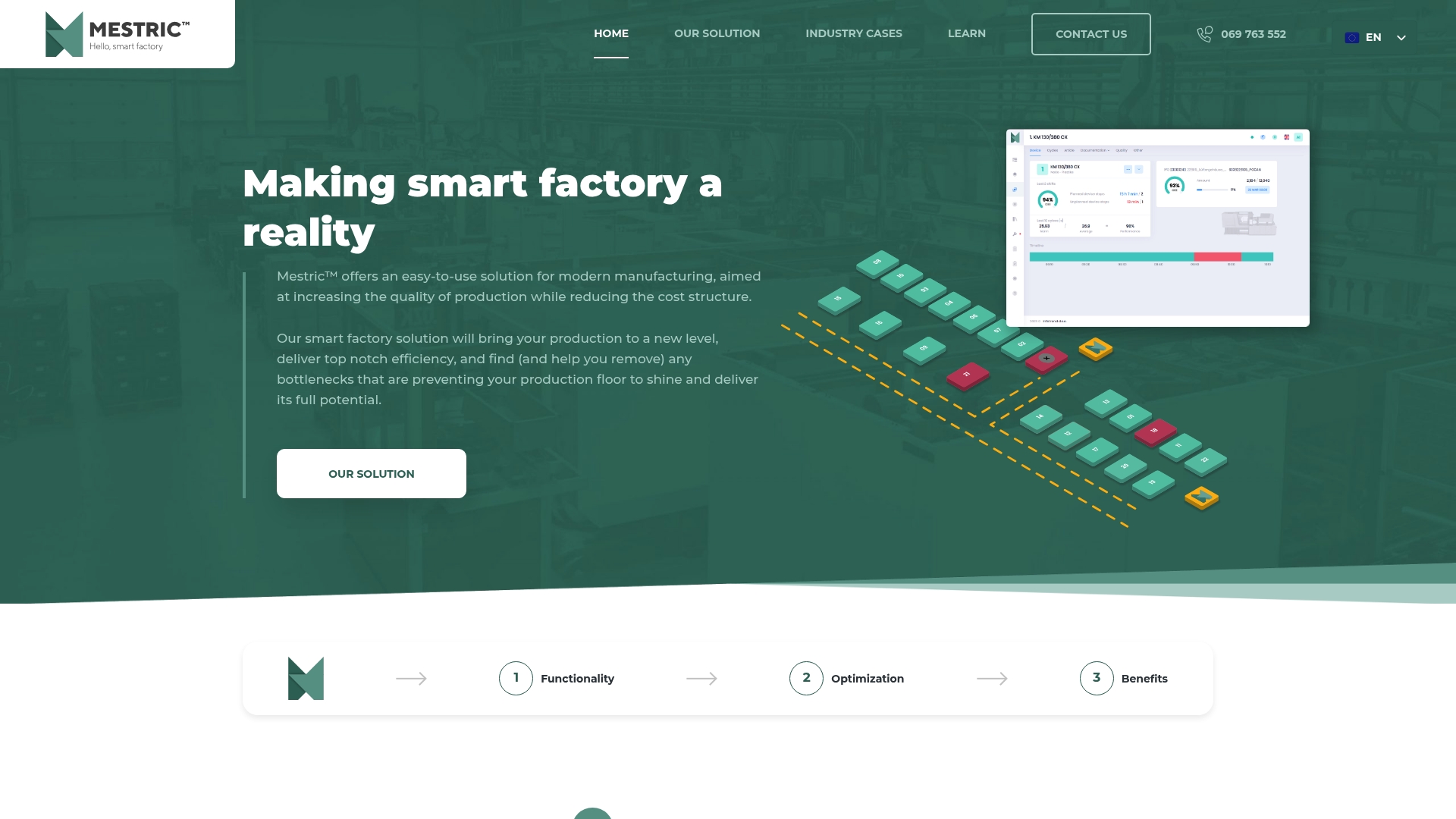
For small manufacturers scaling from manual processes, Mestric connects directly with production equipment and surfaces the KPIs that matter: output per shift, defect rates, and cost per unit. Understanding MES versus traditional manufacturing approaches shows clearly where digital tracking creates measurable cost savings. Mestric also supports step-by-step production optimisation for manufacturers who want a structured path from small-batch production to a process-driven operation. If you are ready to move from spreadsheets to real-time data, Mestric is worth exploring.
Home-based manufacturing ventures such as candle making, soap production, and handmade jewellery typically require £400–£1,600 in startup capital. These ideas use widely available raw materials and require no specialist premises.
Micro-manufacturing startups using desktop-grade 3D printers or CNC mills typically require £3,200–£4,800 in equipment investment. Profit margins in this segment commonly reach 70%–90% on finished goods.
The 60/40 rule means allocating no more than 60% of your startup capital to equipment and reserving 40% for raw materials, tooling, and customer acquisition. Founders who ignore this ratio frequently run out of cash before making their first sale.
3D printing suits beginners because it has a lower startup cost and a shorter learning curve than CNC milling or chemical formulation. It also allows rapid product iteration, which supports the feedback loop essential to early-stage validation.
The most effective approach is direct outreach to local businesses combined with a sample-first strategy. Sending a physical product sample to five targeted buyers each week builds trust faster than digital advertising and generates the honest feedback needed to refine your product.


 069 763 552