


Comparing manufacturing execution systems is slow when vendors hide pricing or limit access to real use cases. Many MES products demand direct sales contact for budget details and delay hands-on testing until late in the process. This guide covers features, integration, and deployment routes across five alternatives so you can select an MES that matches your production site needs without relying on vendor promises alone.
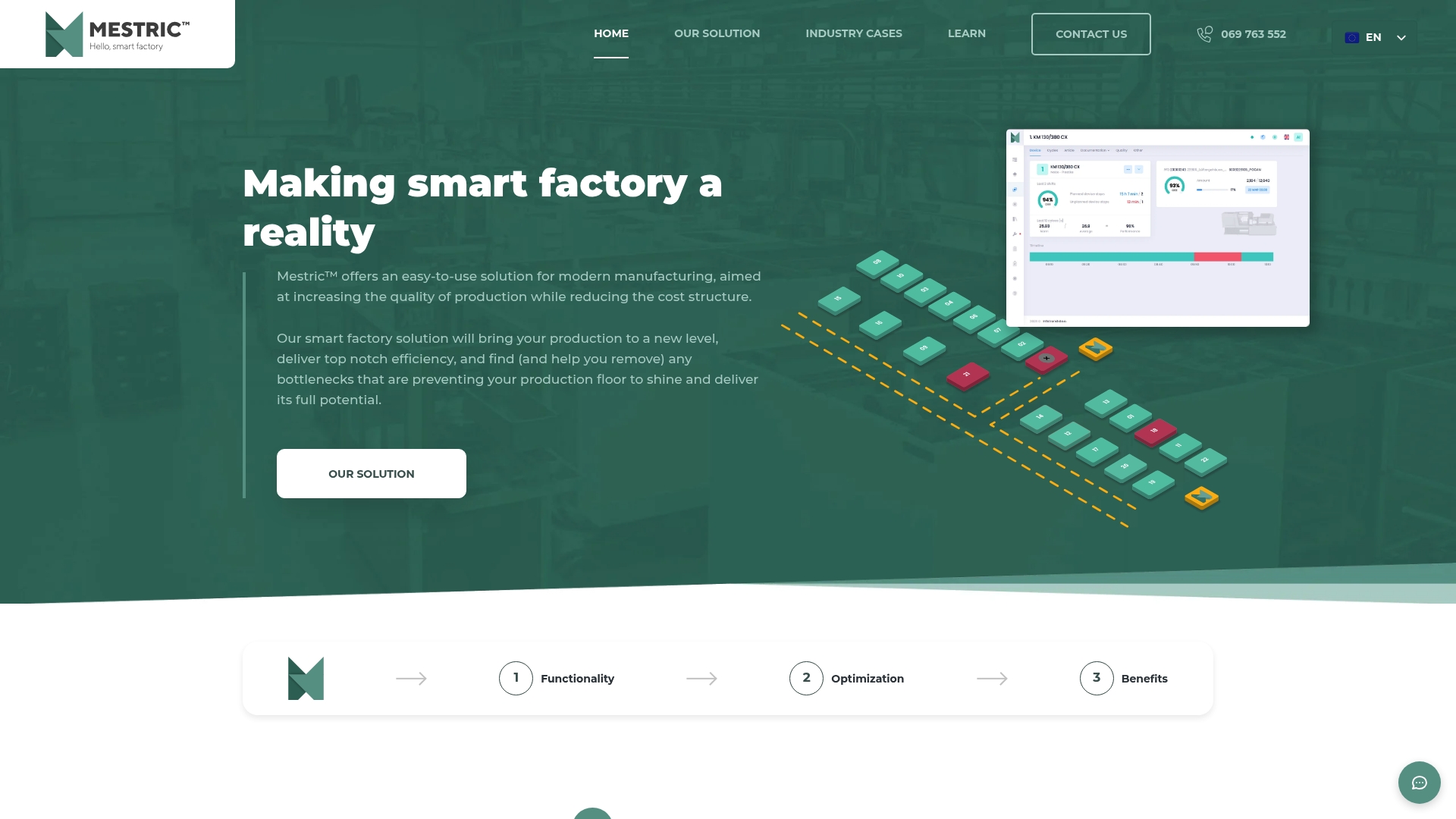
Mestric reports a 20% increase in efficiency after an injection moulding rollout. That claim appears in a vendor case example and points to measurable gains from connected machine data. The platform also highlights real-time KPI visibility and onsite demonstrations that show production benefits in live settings.
Mestric collects performance metrics by shift, product, or time period and presents them as KPIs for quality, utilisation, and downtime. The system monitors QA parameters and production costs while offering tools to adjust norms, processes, and responses. It connects directly to machine data and uses AI to suggest efficiency improvements and to support data-driven decisions on the shop floor.
The single thing that sets Mestric apart is its emphasis on practical deployment in manufacturing plants. The product is built around quick, hands-on adoption for production teams rather than lengthy IT projects. That focus on ease of use reduces the time from installation to actionable results for line managers and engineers.
Mestric combines shop-floor visibility and analytics in a format manufacturing staff can use without a technical degree. The interface presents KPIs such as quality, downtime, and utilisation in a way that production managers can act on during a shift. Its monitoring of QA parameters and production cost data helps teams prioritise fixes that lower scrap and reduce waste. The vendor also advertises onsite demonstrations, which help show how connected machinery and dashboards change daily operations.
Mestric fits production managers and plant leaders who want to digitise control-room signals and use machine data for immediate process changes. It suits teams focused on quality improvement, cost control, and faster reaction to downtime. The product is aimed at plants willing to connect equipment and adopt data reporting across shifts.
Onsite presentations that link live machines to dashboards give Mestric a practical sales and deployment route. Showing real equipment and KPIs in the plant lets engineering teams validate changes before committing to rollouts. That approach shortens the feedback loop between measurement and process change and helps operations accept new monitoring without prolonged pilot phases.
An injection moulding site used Mestric to monitor machine performance and to flag quality deviations automatically. The vendor reports the site saw reduced rejects and faster fault diagnosis. Using that figure as a reference, the company reported improved line throughput once process responses were standardised.
Pricing is listed as Not applicable — informational only. No public tiers or starting fees appear in the product summary, so procurement will need to request commercial terms directly from the vendor or via an onsite demonstration.
Website: https://mestric.com
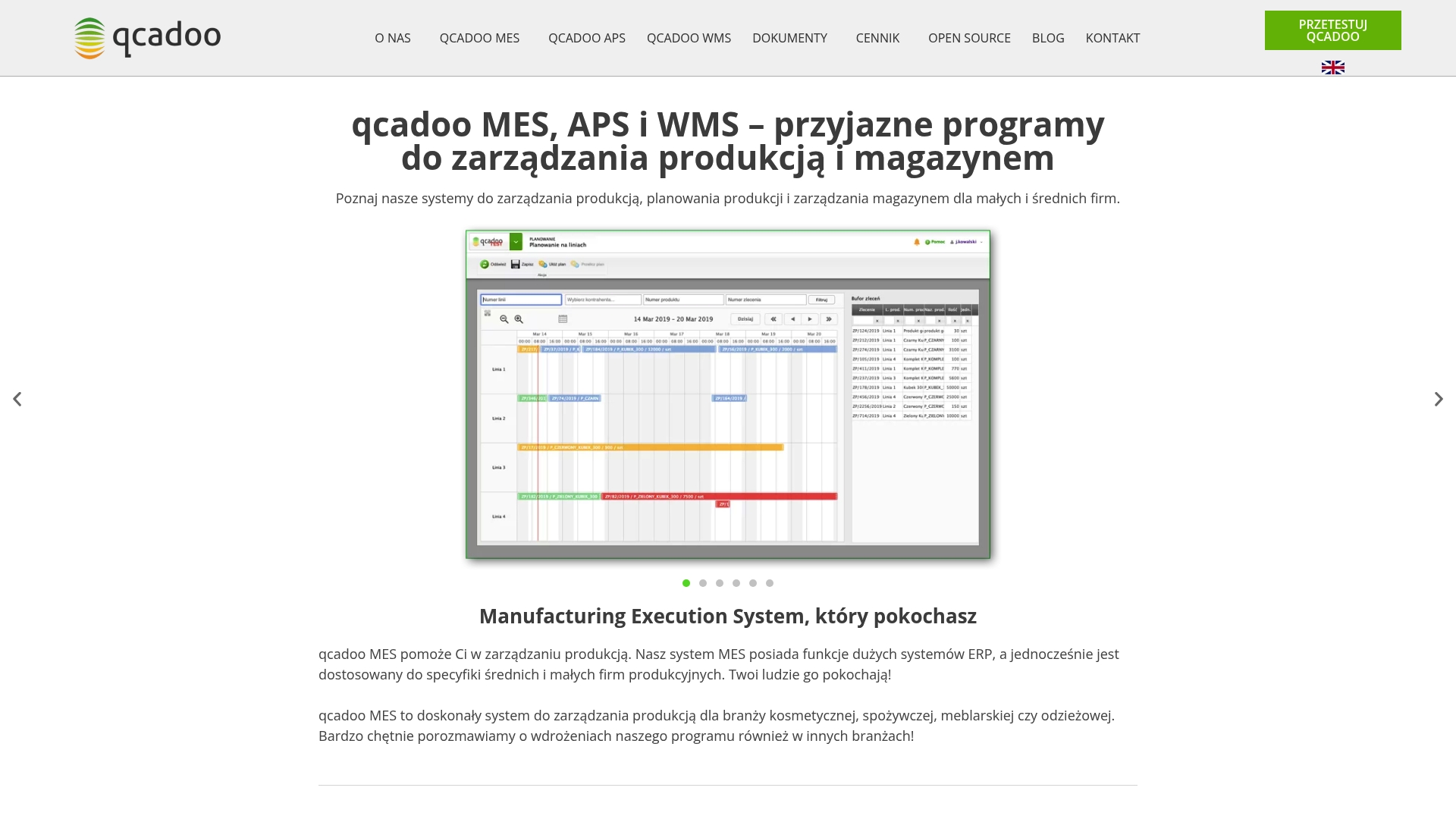
A Community Edition is available as open source, allowing code access and local modification for smaller teams. The system applies automatic updates every two weeks for hosted instances. That mix of open source and regular updates makes it easy to test features before committing to a commercial licence.
qcadoo combines production execution, advanced planning, and warehouse management under one roof while keeping the interface simple and online. The suite supports order planning, document control, quality checks, product genealogy, batch traceability, and stock handling, and it integrates with common accounting and warehouse systems. The vendor names specific connectors such as Enova, Subiekt GT, and Comarch ERP Optima.
The main differentiator is the availability of an open source Community Edition paired with flexible connectors to ERP and warehouse platforms. That configuration suits teams that want to customise workflows or inspect the code. It therefore serves a narrower audience than heavyweight proprietary MES vendors, focusing on small and medium manufacturers who value control and integration options.
The interface is friendly and intuitive, which lowers the barrier for operators who lack deep IT skills. Cloud hosting removes the need for a local server and routine infrastructure maintenance, while the open source edition offers a cost free entry point for testing. Regular fortnightly updates keep the hosted product current, and the stated integration options reduce manual data entry between finance, warehouse, and production systems.
If your shop floor regularly operates offline or you need a native, device level client, this web based approach may be a poor match. Organisations without time or budget for user training will struggle to unlock advanced planning and quality modules. If you require a turnkey enterprise service with vendor led customisation, bespoke procurement may make more sense than adopting an open source base.
qcadoo connects with several Polish finance and warehouse systems. Integrations listed by the vendor include:
Small and medium manufacturers that need an integrated system for production, planning, and stock control will find qcadoo relevant. It fits teams that want the option to modify source code or run a community edition before buying. Companies that already use Enova, Subiekt, or Optima gain a clearer integration path.
A clothing manufacturer uses qcadoo to plan seasonal production, trace fabric batches, and manage finished goods in the warehouse. The team reports shorter production lead times after centralising orders and batch tracking. Integration with their accounting package reduced duplicate data entry between production and finance.
Prices start at 365 zł monthly for five licences, with the final cost depending on chosen modules and configuration. The vendor offers bespoke pricing for the PRO edition and enterprise needs. Licence and implementation fees will vary with the level of support requested.
Website: https://qcadoo.com
According to the company, deploying LynqMES raised on-time delivery from 87% to 98% for a construction equipment manufacturer. The vendor positions the product for both cloud and on-premise rollouts, with quick configuration for different sectors. It targets operations that need tight ERP connectivity and machine-level visibility.
LynqMES centralises production planning with online plans and interactive job lists that let planners reorder work and assign resources. It captures real-time data from machines and personnel, and it supports automatic machine data capture for employee and equipment tracking. Factory performance visualisation highlights losses, while downtime alerts and on-floor messaging support paperless shop floor control.
LynqMES combines configurable, industry-specific templates with a broad set of native ERP connectors to shorten implementation time. The product offers prebuilt mappings for sectors such as metal fabrication, plastics, and industrial equipment, which reduces the amount of bespoke development. That combination suits manufacturers who need fast rollout without rebuilding core integrations.
Customisable templates reduce bespoke coding and let teams adapt workflows to particular production patterns quickly. Its wide ERP connectivity, including SAP Business One and Microsoft Dynamics, keeps procurement, scheduling, and execution data aligned without repeated manual entry. Offering cloud or on-premise hosting gives you a choice for data control, and real-time dashboards give supervisors timely visibility into performance and downtime.
If your plant uses highly bespoke PLCs or proprietary shop floor protocols, integration work may require dedicated technical support and additional time. Organisations that need a fixed-price, plug-and-play appliance with minimal configuration will likely find this product a poor match.
Native connectors include Acumatica, IFS, MYOB, Macola, Microsoft Dynamics, Sage X3, SAP Business One, and SYSPRO. These integrations cover common ERP systems used in discrete and process manufacturing and reduce the need for custom middleware.
Manufacturers across sectors that require a configurable MES with strong ERP connectivity and machine-level data capture. Best for operations teams with in-house IT or access to implementation partners who can handle custom integrations. Not ideal for buyers seeking a locked-down, zero-configuration appliance.
A construction equipment manufacturer deployed LynqMES to add machine-level visibility and worker task tracking. That improvement above helped map production variance to specific shifts and improved planners’ ability to meet delivery windows.
Pricing is not published publicly. The vendor treats pricing as project-scoped and typically provides quotes after assessing integration complexity, deployment model, and industry templates required.
Website: https://lynqmes.com
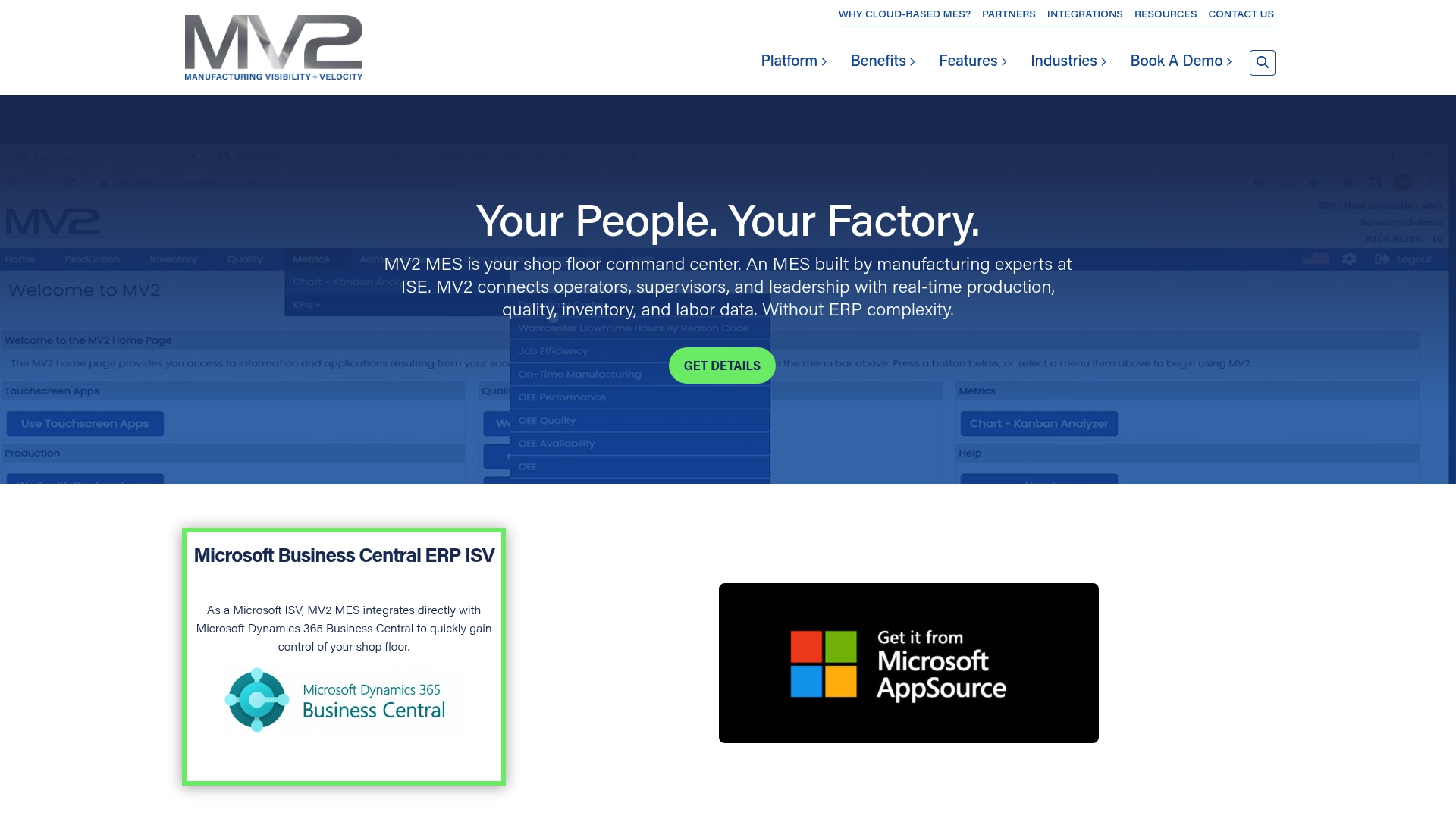
Deep integration with Microsoft Dynamics 365 Business Central lets MV2 MES push shop floor events into the ERP and pull order data back into production in near real time. The product targets manufacturers that want ERP connected shop floor visibility without replacing their existing systems. It uses a cloud hosted architecture and supports production, quality, inventory, machine data, and digital Kanban management.
MV2 MES provides real time production tracking and monitoring across multiple devices, alongside quality management and testing tools. Inventory management includes serial number tracking and links to production orders, while machine integration captures process data for downtime and throughput analysis. The platform also offers digital Kanban boards to manage supply flow and reduce paper based signals on the shop floor.
The single distinguishing claim is the depth of the ERP connection. MV2 MES connects directly to Microsoft Dynamics 365 Business Central, which speeds up deployment where that ERP is already in use. That tight coupling aims to reduce duplicate data entry and keep inventory, labour, and production status aligned between systems.
Integration with a mainstream ERP stands out for manufacturers that already run Business Central. The cloud hosted design allows scaled deployment across several sites without large on prem servers. Feature coverage spans production tracking, quality control, inventory serialisation, and machine data, which reduces the need for multiple point solutions on the shop floor.
If your plant operates standalone without an ERP or Business Central, MV2 MES may add integration overhead rather than remove it. Buyers needing clear, standardised list pricing for budget sign off will find the contact based model inconvenient. Shop floors that rely on very small production runs and minimal automation may not recover implementation effort quickly.
Manufacturers that already use Business Central and need a shop floor system that writes back to the ERP. Operations teams seeking real time production, quality, and inventory visibility across multiple lines will find the feature set relevant. IT teams that prefer cloud hosted deployments and centralised data models will find the architecture familiar.
A mid sized automotive parts manufacturer uses MV2 MES to monitor production lines, run quality checks at inspection points, and track serialized inventory. The system updates Business Central with completed quantities and non conformances as they occur. The manufacturer reports lower scrap rates and clearer traceability across assemblies after deployment.
Specific pricing is not published. The vendor appears to offer customised quotes and implementation pricing based on scope and ERP coupling. Contact MV2 for a tailored proposal and licensing details.
Website: https://mv2software.com
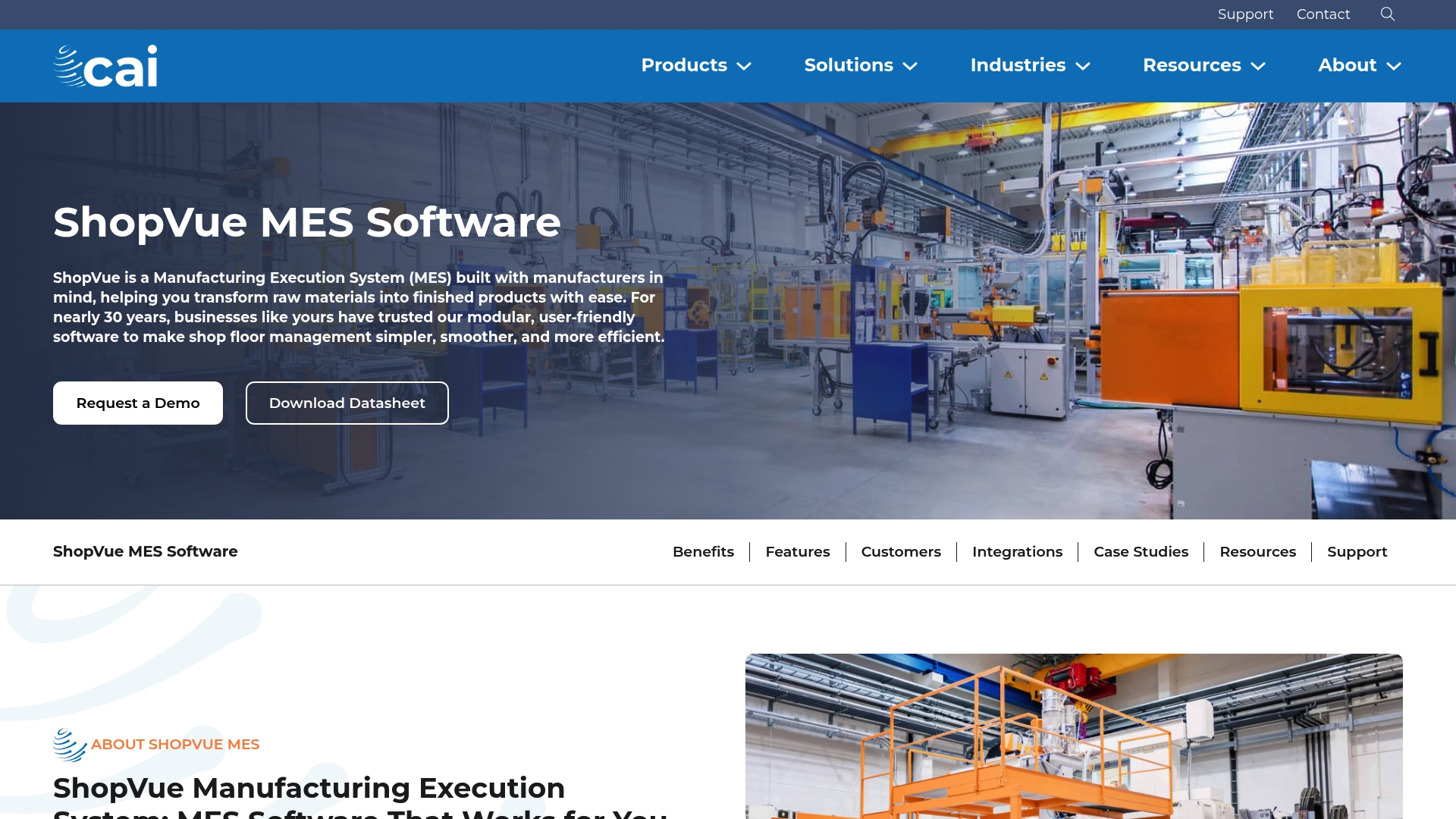
According to the company, ShopVue has been used for nearly 30 years across multiple manufacturing sectors. The platform captures shop floor events and links them to back office systems so you can trace product lots and serial numbers. That long product history shows up in mature shop floor workflows and industry configurations.
ShopVue delivers real time production tracking and reporting, labour and workforce management, and a machine data interface (DMI) for automated data collection. It also offers production traceability with lot and serial number tracking plus digital work instructions and process automation tools for inspection, rework, and quality checks. Data flows to ERP systems so supervisors and planners see the same production picture.
ShopVue focuses on live integration with ERP systems to make shop floor events visible in the back office. That integration lets production data and order status update simultaneously in systems such as SAP and Microsoft Dynamics 365, reducing double entry between shop and planning systems.
The product has strong ERP connectivity, which helps link quantities, work orders, and cost information directly to the shop floor. Digital instructions and automated data capture reduce paper handling and cut the need for manual reporting. Detailed lot and serial tracking improves accountability and supports recall workflows for regulated sectors.
If you run a very small or highly repetitive shop with minimal IT support, ShopVue may be heavier than required. The system can need significant setup and integration for complex lines. Sites seeking a plug and play, low-configuration option will probably find the implementation overhead unsuitable.
Mid sized to large manufacturers that need an MES tied to ERP planning and finance systems. Production managers looking for lot level traceability, supervisors who want digital work instructions, and IT teams ready to manage integrations will get the most value.
A seafood processing plant implemented ShopVue to capture processing steps and lot genealogy. The site gained faster traceability for regulatory audits, reduced waste from mislabelled batches, and reduced time spent on manual reporting during shift handovers.
ShopVue’s pricing is listed as informational only and is not publicly specified. Prospective buyers must contact the vendor for licensing, deployment, and support cost estimates.
Website: https://caisoft.com/products/shopvue-mes
Selecting the manufacturing execution system involves aligning key features with production and operational goals. This analysis compares Mestric with other notable solutions to highlight their specific advantages and suitable applications.
Mestric prioritises swift, hands-on deployment, empowering manufacturing teams to quickly interpret and utilise data via live demonstrations. This facilitates adoption without lengthy IT integration projects. Conversely, qcadoo MES provides customisation flexibility through its open source model, suitable for manufacturers seeking unique configurations and willing to undertake code modifications. LynqMES’s reliance on pre-configured templates offers expedited setup but necessitates proper alignment with industry-focused workflows.
LynqMES and MV2 MES stand out through their integration depth, particularly for established ERP users. While LynqMES facilitates a transparent interface with leading platforms such as SAP Business One, MV2 MES excels with its deep compatibility with Microsoft Dynamics 365 Business Central, fostering real-time data exchange. ShopVue MES offers data linkage capabilities to connect shop floor activities with ERP, though it requires significant IT involvement for smaller enterprises. Mestric’s generalised approach ensures streamlined KPI accessibility but lacks specific configurations for vast system integration.
Mestric emerges as the recommended choice for production managers aiming to employ a hands-on approach to improving operational quality efficiency. Its focus on realistic and clear deployment through live demonstrations showcases its alignment with data-driven shop-floor operations. However, for teams needing extensive ERP integration or open-source flexibility, other options might fit better.
Choosing the most suitable manufacturing execution system (MES) hinges on factors such as deployment focus, feature set, and team usability.
| Product | Key differentiator | Best for | Pricing | Notable limitation |
|---|---|---|---|---|
| Mestric | Practical deployment readiness with onsite demos | Production managers seeking immediate actionable insights | Price not published | Budget planning requires vendor quotes |
| qcadoo MES | Open source Community Edition with ERP connectors | Small-to-medium manufacturers valuing flexibility | 365 zł/month (starting) | Relies on stable internet connectivity and includes a learning curve |
| LynqMES | Configurable templates for diverse manufacturing | Operations needing fast ERP integration | Price not published | Requires technical support for bespoke machine integrations |
| MV2 MES | Deep integration with Microsoft Dynamics ERP | Teams needing ERP-linked machine data visualisation | Price not published | Limited reliability reviews, ideal for organisations already using Microsoft ERP |
| ShopVue MES | Extensive ERP connectivity and digital instructions | Mid-to-large manufacturers in regulated sectors | Price not published | High complexity may hinder adoption for small-scale operations lacking in IT support |
Manufacturers looking beyond trace.si alternatives seek clear improvements in production quality and operational efficiency. Mestric addresses these needs by connecting directly to machinery to provide real-time data on key performance indicators such as downtime, utilisation, and quality metrics. This approach helps production managers react quickly to bottlenecks and cutting costs through informed process adjustments.
Key benefits of Mestric include:
Dobrodošli v Mestric, a digital platform built to modernise manufacturing processes with fast deployment and practical machine connectivity. Learn how you can reduce waste and improve resource use by viewing performance insights during each shift. Visit Mestric today to arrange a demonstration and see how you can enhance production control and reduce scrap rates in your plant.
Mestric enhances efficiency by providing real-time KPI visibility, including quality, utilisation, and downtime metrics. The system collects performance metrics by shift, product, or time period to help manufacturers make informed decisions. Engage with Mestric to optimise your manufacturing operations effectively.
Qcadoo features a friendly and intuitive interface that lowers the barrier for users without deep IT skills, making it a strong choice for teams looking for ease of use. Mestric, while also providing access to shop-floor analytics, is particularly aimed at production teams seeking quick adoption and immediate process changes. Consider Mestric for its emphasis on direct implementation in manufacturing plants.
Mestric connects directly to machine data using automation and AI to suggest efficiency improvements. This integration supports data-driven decisions on the shop floor, allowing you to optimise production processes directly linked to your machinery. This can be beneficial for aligning operational practices with technological advances.
Mestric helps teams focus on quality control by monitoring QA parameters and production costs effectively. This feature enables manufacturing staff to prioritise fixes that lower scrap rates and reduce waste in production. Use Mestric to enhance your plant’s quality assurance strategies efficiently.
Mestric’s public pricing is not listed and is described as informational only, making it hard for procurement teams to budget without direct contact with the vendor. LynqMES follows a similar approach, offering project-scoped pricing after assessing integration complexity. Reach out to Mestric for a tailored quote that suits your operational needs.


 069 763 552