


Choosing the right digital tool can often feel like searching for a hidden gem in a crowded marketplace. Many platforms claim to offer all the features and support you need but not every option lives up to expectations. With technology advancing quickly and user needs constantly changing the search for alternatives becomes even more exciting. If you are curious about which solutions stand out and what makes each one different you will find surprises waiting just around the corner.
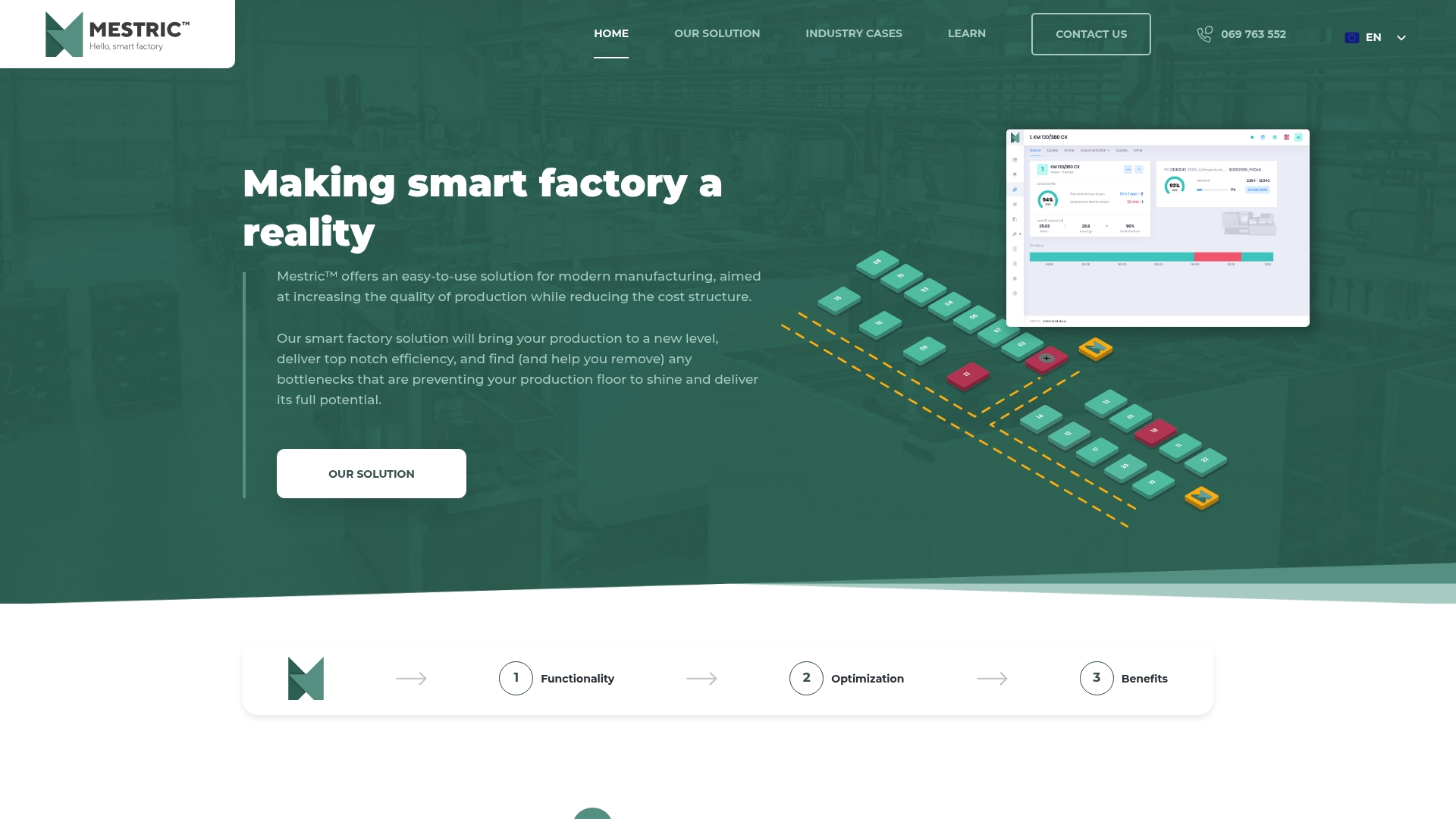
Mestric™ is a leading Manufacturing Execution System (MES) that modernises production floors with a clear focus on quality and cost reduction. The platform delivers actionable insights so production managers make faster, data driven decisions.
This is our top recommendation because it pairs real time performance tracking with AI powered optimisation, giving you measurable efficiency gains and tighter quality control across shifts and product lines.
Mestric provides performance metrics by shift and product, visibility into quality, utilisation and downtime, and monitoring of QA parameters. It also analyses production costs and applies optimised norms to accelerate processes and reduce manual errors.
The system connects machine data with AI to expose bottlenecks, suggest improvements, and present productivity analytics that support informed decision making on the shop floor.
Comprehensive process assessment: Mestric evaluates manufacturing flows end to end and identifies optimisation opportunities in a single view.
Efficiency and cost reduction: The platform drives measurable reductions in operating costs through targeted analytics and process adjustments.
Machine level intelligence: Mestric connects machine data with AI so you gain clearer root cause analysis and faster corrective actions.
Practical demonstrations: The service offers demos and an onsite presentation centre to show real operational impact before you commit.
Industry trust: Several established companies use Mestric which validates its reliability and readiness for production environments.
Mestric is aimed at manufacturing companies that need to raise production quality and lower costs using digital tools and AI. Production supervisors, plant managers and operations leads who require clear KPIs and machine connectivity will get the most value.
Mestric stands out because it combines machine connectivity, quality monitoring, and cost analysis into a single, easy to use platform tailored for factory floors. Competitors often split these capabilities across modules whereas Mestric delivers an integrated view that shortens time to insight and action.
Smart buyers choose Mestric for its practical demos, AI backed decision support and its focus on production outcomes rather than theory. The result is faster identification of bottlenecks and clearer ROI justification.
A plastics moulding plant connects 20 machines to Mestric to monitor cycle times, downtime and defect rates. The team uses real time analytics to reduce operating costs, improve part quality and adjust norms so throughput rises while scrap falls.
Pricing is not specified on the site and is provided on request. Contact Mestric for customised quotations that reflect machine count, integration scope and onsite presentation options.
Website: https://mestric.com
Matics is a connected worker platform that aggregates shop floor data to deliver actionable insights for manufacturing teams. It is designed to improve productivity, operational efficiency and profitability by turning multiple data streams into decision ready information.
Matics delivers rapid visibility for plant managers and supervisors who need to act on production issues without delay.
Matics collects multi source data aggregation from machines, information systems, peripheral systems and personnel to provide a single view of operations. The platform pairs this with real time analysis and predictions that present decision ready insights rather than raw data.
Matics also offers advanced visualisation for knowledge capture, work management tools including task and rule management, alerts and automation, plus structured communication to support inter factory notifications in real time.
Improves OEE: Matics enhances production efficiency and Overall Equipment Effectiveness through timely insights that help reduce downtime and improve throughput.
Supports Industry 4.0 adoption: The platform aligns with digital transformation efforts by integrating multiple data sources and operational workflows for modern manufacturing practices.
Flexible access across devices: Matics is available via web, mobile and tablet interfaces, which helps supervisors and technicians stay connected across shifts and locations.
Sector and role tailoring: The solution provides tailored features for different industry sectors and shop floor roles, helping teams focus on relevant KPIs and tasks.
No public pricing: Details on pricing are not specified on the website, which makes budget planning and quick vendor comparison harder for procurement teams.
Integration complexity: Implementation and integration complexity may vary with existing systems, so projects could require significant engineering effort or consulting time.
Matics is suited to manufacturing companies seeking to optimise shop floor operations through digital transformation and real time analytics. It appeals to plant managers, production supervisors and operations engineers responsible for improving utilisation and reducing waste.
Matics differentiates itself by combining broad data ingestion with actionable visualisation and embedded work management. The platform aims to move teams from monitoring to acting, centralising alerts and tasks with analytical context so decisions happen at pace on the floor.
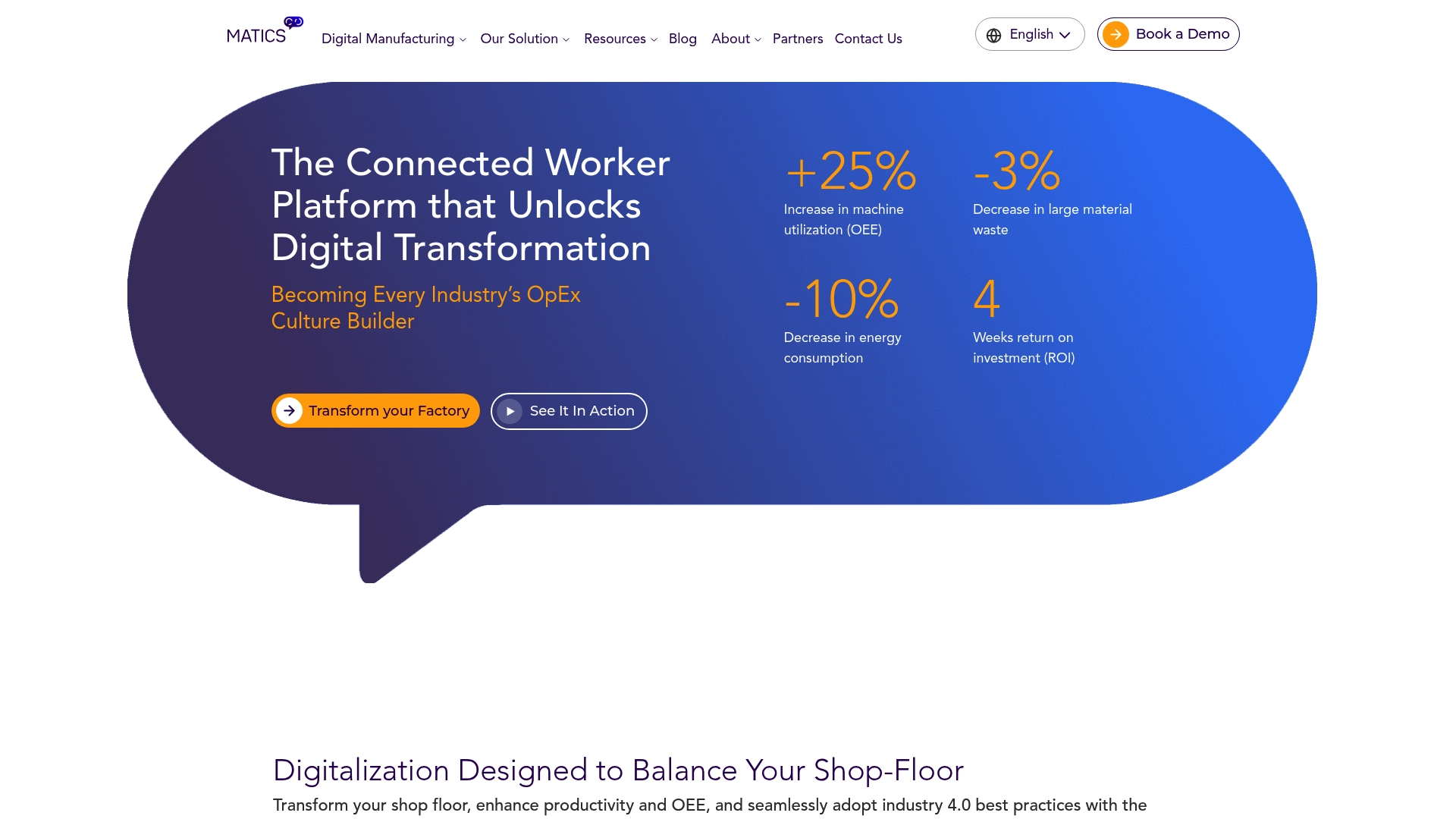
A plant using Matics increased machine utilisation by 25 percent, reduced material waste by 3 percent and lowered energy consumption by 10 percent, achieving ROI in four weeks. Those precise outcomes illustrate how focused analytics plus task automation translate to measurable gains.
Pricing is not specified on the website. Prospective buyers should contact Matics directly for licensing, implementation and support estimates.
Website: https://matics.live/

Tulip is a platform for creating frontline manufacturing apps without programming and for capturing real time analytics across machines and operators. It suits regulated plants that want to replace paper procedures and speed up decision making with data.
Tulip combines a visual app builder with integrated device connectivity and AI tools to drive shop floor improvements. Key capabilities include No code app building, Device connectivity, AI driven inspection, and built in quality and traceability tools.
Broad integration capabilities give you direct links to PLCs, MES and cloud systems so data flows where you need it.
Accessible app development lets technicians and engineers build shop floor apps without software teams which shortens deployment time.
Regulated industry support includes features aimed at GxP workflows and audit readiness which reduces compliance risk.
Flexible deployment choices permit cloud or on premise installations to match security and IT requirements.
Established industry recognition provides confidence when presenting digital projects to senior stakeholders.
The platform’s breadth of features creates potential complexity for teams new to manufacturing software which lengthens initial rollout.
Published pricing is limited and enterprise level plans typically require direct contact which complicates procurement timelines.
Users unfamiliar with modern shop floor data practices face a learning curve to get full value from analytics and AI tools.
Tulip targets manufacturers and industrial operations that want to digitise frontline work, particularly in pharmaceutical, medical device, aerospace and defence sectors. Production managers and quality leads running regulated lines will find the compliance and traceability features particularly relevant.
Tulip combines visual app creation with device level connectivity and AI capabilities so you can build bespoke frontline solutions without writing code. The mix of quality controls and genealogy tools makes it a pragmatic choice for plants that must deliver repeatable, auditable production.
A pharmaceutical manufacturer moved from paper batch records to Tulip driven electronic batch records and automated quality checks. Errors fell and batch release times shortened as manual handoffs were removed and inspection data became immediately available to quality teams.
Pricing varies by plan and scale. Public tiers start at $100 per month for Essentials and $250 per month for Professional with Enterprise plans available by custom quote. Expect discussions with sales for enterprise licensing and deployment specifics.
Website: https://tulip.co
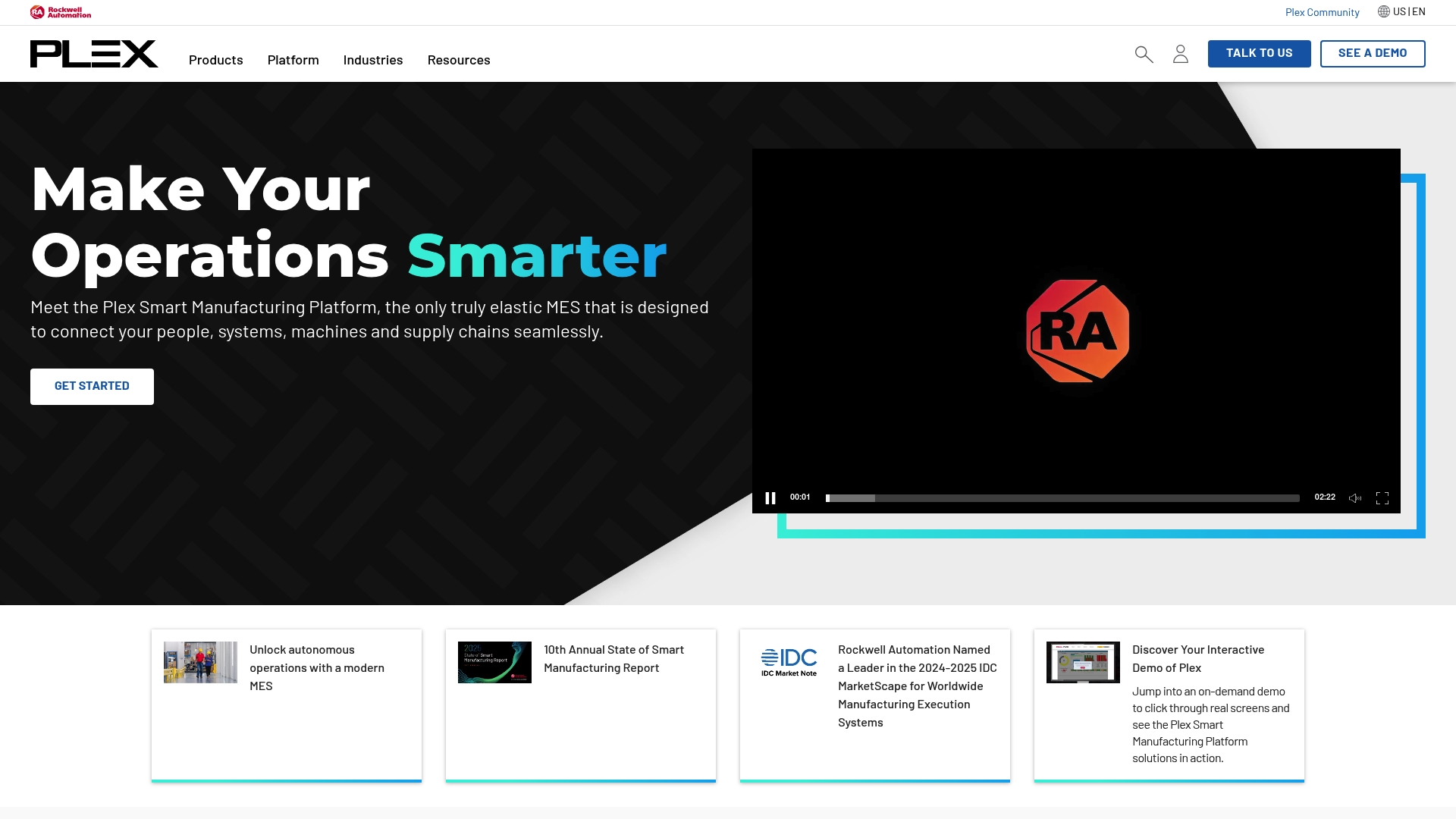
Plex is a comprehensive manufacturing platform that combines MES, QMS, and ERP functionality to connect and automate production processes. Backed by Rockwell Automation, it targets manufacturers keen to modernise operations and adopt Industry 4.0 practices.
Plex offers a wide feature set including Manufacturing Execution System for paperless production control, Quality Management System for digital quality records and workflows, and Enterprise Resource Planning for front and back office automation. Additional capabilities include Supply Chain Planning, connected worker tools, production monitoring, asset performance management, MES automation and a finite scheduler for resource optimisation.
Plex suits Manufacturers and production companies that require an integrated, scalable platform to manage production, quality and enterprise processes. Production Managers and Plant Leaders planning multi site rollouts and seeking close integration with automation systems will find Plex aligned to their needs.
Plex brings multiple enterprise grade capabilities under one roof while leveraging Rockwell Automation expertise. Its value lies in combining MES, QMS, ERP and asset monitoring in a single offering so organisations can reduce system fragmentation and centralise manufacturing data.
A manufacturer implements Plex MES and QMS to replace paper procedures and digitise quality documentation. The deployment reduces manual record handling, speeds up corrective actions and improves compliance reporting across production lines.
Pricing is not specified on the website and is typically custom based on deployment and chosen modules. Expect vendor discussions and a tailored quote during procurement and scoping phases.
Website: https://plex.com
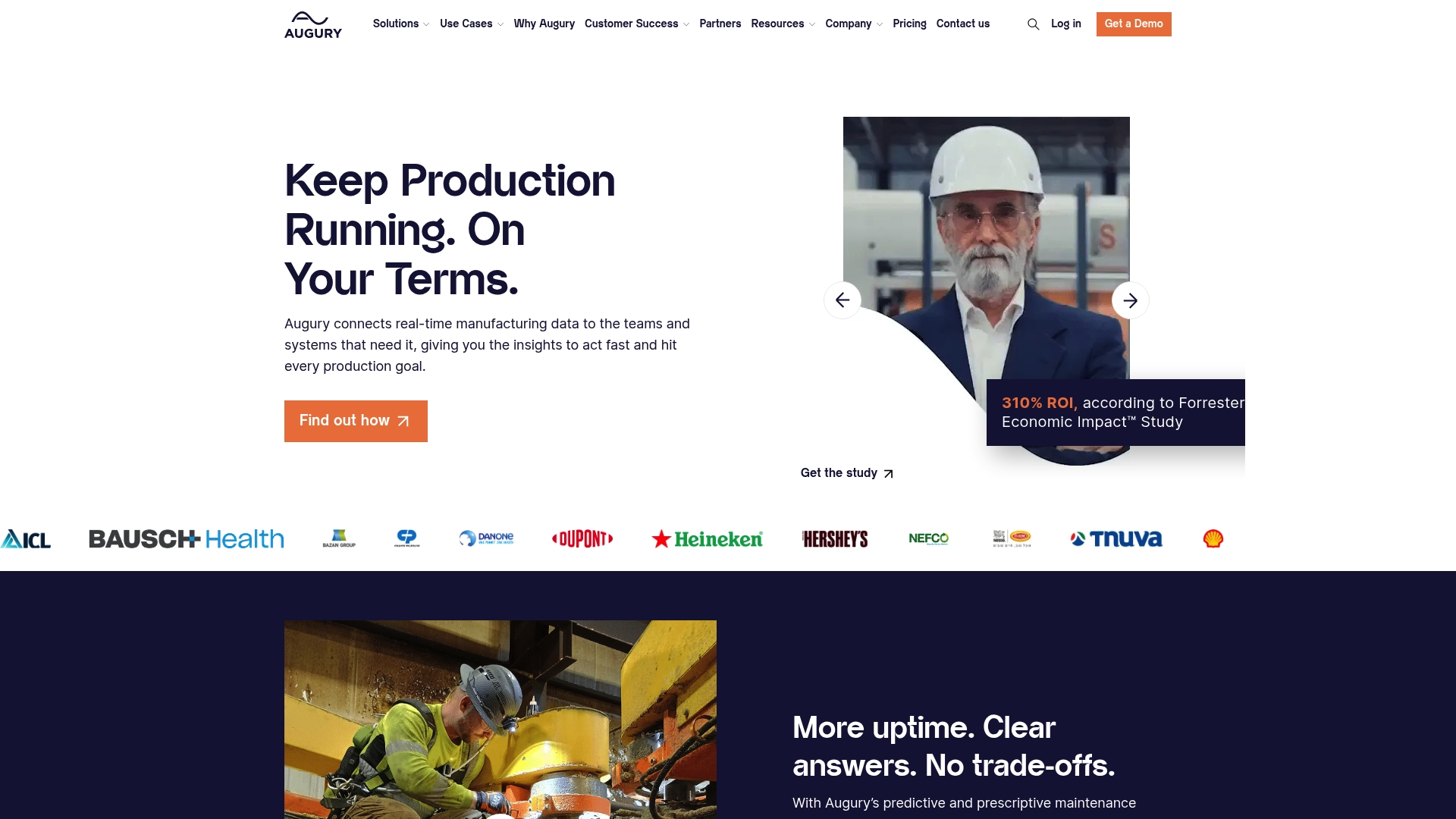
Augury connects real time manufacturing data to teams and systems, delivering AI powered diagnostics that help reduce machine failures and downtime. The platform focuses on actionable insights for maintenance and production optimisation across discrete and process industries.
Augury is strong at translating sensed vibration and operational signals into prescriptive alerts and recommendations, backed by a team of reliability experts for interpretation and follow through.
Augury offers AI driven machine diagnostics and predictive maintenance alongside continuous sensing and vibration analysis to detect early signs of failure. The platform delivers real time production insights and analytics that inform maintenance schedules and production decisions.
Integrations with manufacturing systems and IoT devices let data flow to existing MES and maintenance management tools, while prescriptive alerts point technicians to specific actions and likely causes.
Augury suits manufacturing companies focused on raising equipment reliability, cutting unplanned downtime and refining maintenance strategies with data driven tools. Production managers and reliability engineers who prioritise condition based maintenance and factual decision making will gain the most value.
Augury combines continuous sensing, vibration analysis and AI diagnostics with prescriptive alerts to move plants from reactive to planned maintenance. The added human expertise accelerates root cause analysis and shortens the path from insight to corrective action.
Circulus raised uptime from roughly 65 to 70 percent up to between 85 and 90 percent after deploying Augury machine health solutions, reducing unplanned downtime and reshaping maintenance routines to be more predictive and cost effective.
Pricing is not publicly disclosed and is typically customised for enterprise needs, which means quotes depend on asset scope, sensing hardware and integration complexity.
Website: https://augury.com
This table provides a detailed comparison of MES tools to help manufacturers select the best option for their operational needs.
| Tool Name | Core Features | Pros | Cons | Pricing |
|---|---|---|---|---|
| Mestric | Performance tracking, AI-powered insights | Comprehensive process assessment, cost reduction | No publicly listed pricing | Custom, contact vendor |
| Matics | Real-time analysis, tailored visualizations | Accelerates OEE, supports Industry 4.0 | Zapletenost integracije | Custom, contact vendor |
| Tulip | No-code app creation, AI-driven insights | Broad device compatibility, compliance features | Complexity for new software users | Starts at $100/month |
| Plex | Integrated MES-QMS-ERP solution | Comprehensive platform, cloud scalability | Limited public documentation | Custom, contact vendor |
| Augury | Predictive diagnostics, continuous monitoring | Reduces downtime, expert support | Specialized integration efforts needed | Custom, contact vendor |
If you are exploring alternatives to Matics to enhance shop floor productivity and gain deeper operational insights, consider how Mestric™ addresses your challenges head-on. With a specific focus on real time performance tracking, AI powered optimisation, and integrated quality monitoring, Mestric™ empowers manufacturing leaders to identify bottlenecks rapidly and reduce costs while improving product quality. This easy to use Manufacturing Execution System connects directly to your machines providing clear KPIs on utilisation, downtime and cost analysis all within one platform.
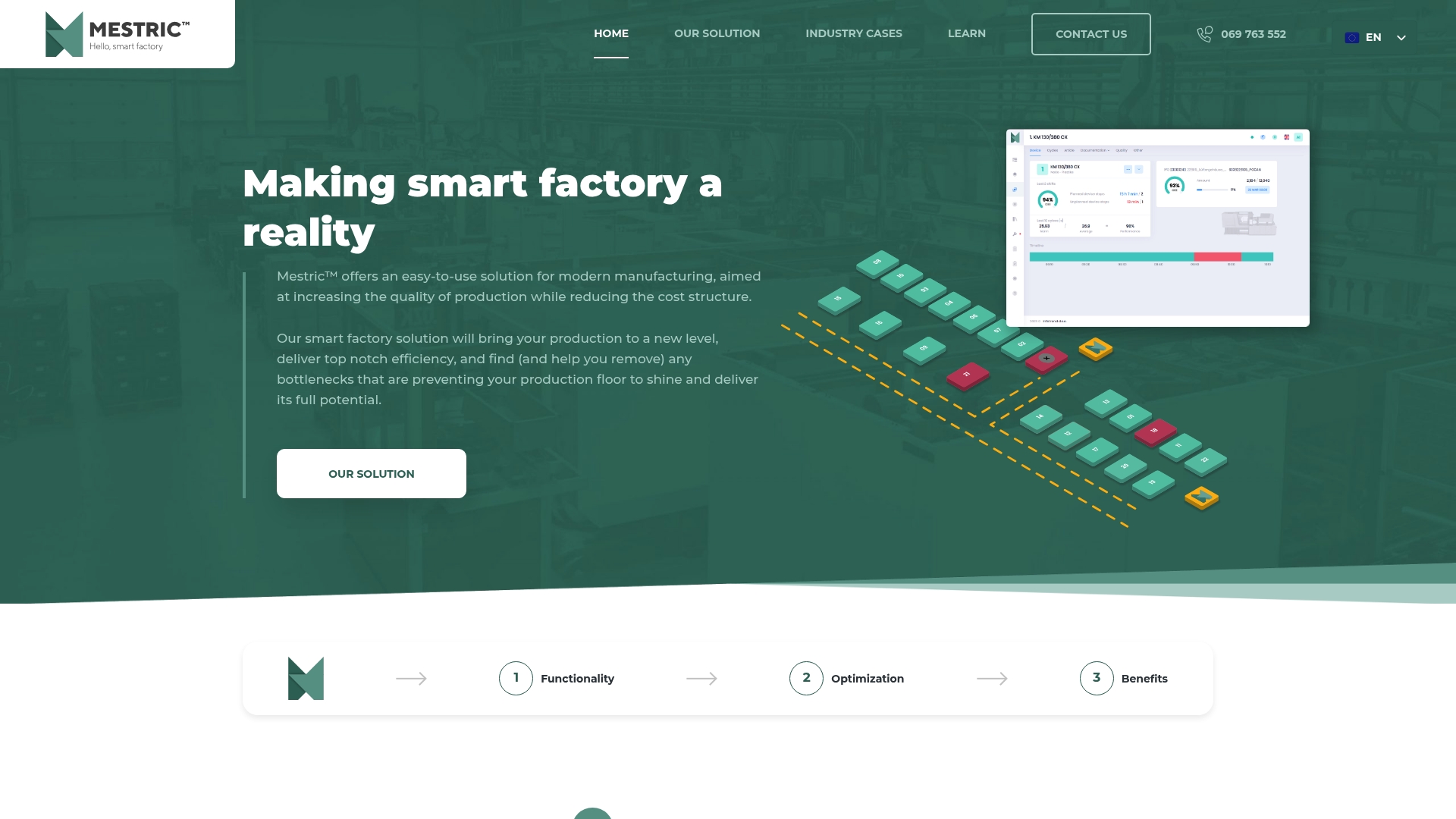
Take the next step towards operational excellence by experiencing how Mestric™ can modernise your production floor. Don’t wait to accelerate decision making and cut manual errors. Visit Mestric now to request a demonstration and see first hand how intelligent data and AI driven insights translate into measurable efficiency gains.
A strong alternative should offer real-time data analysis, seamless integration with existing systems, and user-friendly dashboards. Evaluate how each option enhances operational efficiency and what specific tools support data-driven decision-making.
Calculate the potential return on investment by comparing initial costs with expected efficiency gains. Look for platforms that can demonstrate measurable improvements in productivity or reductions in downtime, ideally within the first few months of implementation.
Manufacturing companies, particularly those with complex production needs, experience the most benefit. Focus on platforms that can optimise workflows, reduce wastage, and enhance quality control tailored to specific industry requirements.
Develop a comprehensive transition plan that includes training for staff and a clear timeline for implementation. Set measurable goals for the first few months to evaluate effectiveness and make adjustments as needed.
Look for solutions that can connect to your current machinery, ERP systems, and other critical software. Select a platform that offers robust APIs or pre-built connectors to ensure seamless data flow and operational continuity.


 069 763 552