


Sledljivost serij, or batch traceability, is the ability to trace materials, processing steps and timestamps for every unit produced, forward to the customer and backward to the supplier. For quality managers, it means faster root-cause analysis when a defect appears and a narrower, better-targeted recall instead of a plant-wide one. The standards and steps below show how to build a system that delivers both.
TL;DR:
- Establish the appropriate level of traceability (batch, sub-batch, or serial) based on risk and regulation, not habit or convenience.
- Automate data capture at critical process points to prevent missing timestamps and reduce reliance on manual entry or siloed records.
- Ensure traceability systems align with standards like GS1, ISA-95, and EU pharmaceutical regulations, especially retention rules, to avoid compliance issues.
- Use a focused pilot project on a single line with clear metrics to validate the system’s effectiveness before a full rollout.
- Choose a MES partner that offers real-time data integration, automatic equipment connections, and live data flow for reliable genealogy and KPI monitoring.
Traceability works on three levels of identification. The trade item level (GTIN) identifies what a product is; the batch or lot level (GTIN plus a lot number) identifies which production run it came from; the serial or instance level adds a unique identifier to a single unit. Which level you need depends on risk and regulation, not habit.
The GS1 Global Traceability Standard describes this through the one-step-up, one-step-down principle: every party in the chain only needs to know who supplied them and who they supplied next, and the full chain can still be reconstructed. For that to work, each trace record needs five things at minimum: who handled it, where it happened, when it happened, what the item was, and what process or event occurred. Miss one of these fields and the trace breaks.

Good traceability changes how quickly you can act when something goes wrong, and how much of your production it forces you to touch.
These gains compound. A manufacturing process improvement guide built on traceable batch data gives you defensible KPIs rather than estimates.
Building sledljivost serij is a sequence, not a single project. Each step depends on the one before it.
Strokovni nasvet: Start capture at the point where the highest number of defects is currently detected, not at the start of the line. That is where traceability pays back fastest.
Automated capture removes much of the friction here. A streamlined MES-ERP integration means operators log data once, and it flows to every system that needs it.
Your identifier choices and retention rules are not really your decision. Four frameworks set the boundaries.
Retention under EudraLex Volume 4 requires pharmaceutical batch records to be kept for at least one year after expiry or five years after release, whichever is longer. That single rule shapes how much storage and archiving discipline a regulated traceability system needs from day one.
Two contrasting scenarios show how the required data changes with the product. In a food batch trace, the critical fields are ingredient lot numbers, mixing time and temperature, and hold times before packaging. In a discrete-component batch, the critical fields are supplier lot for raw material, machine ID, tooling change events and operator sign-off at final inspection. The data model is the same; the fields that matter shift with the risk.
Common pitfalls repeat across projects, as implementation reports on plant-level traceability systems (such as a Slovenian diploma thesis on plant traceability) tend to document:
MES connectivity closes most of these gaps by capturing timestamps and machine data automatically, rather than relying on someone to write them down.
A pilot works best when it is scoped tightly and measured from day one.
A few months is usually enough to prove the model works before committing to a plant-wide rollout.
Most vendor pitches focus on dashboards. The harder question is whether the system connects to your equipment without custom engineering, captures data at the point of work rather than after the fact, and exports in formats your ERP can actually consume. A good pilot engagement should let you see real production data flowing before you sign anything, not a slide deck of hypothetical KPIs. Ask any vendor to show genealogy data moving between MES and ERP live, not described in the abstract.
— Andraž
The system can connect directly to production equipment to capture batch and process data automatically at the point of work rather than typed in afterwards. This real-time capture can feed live KPI dashboards covering performance, downtime and quality parameters, providing quality teams with correlated data needed for root-cause investigations without chasing separate systems.
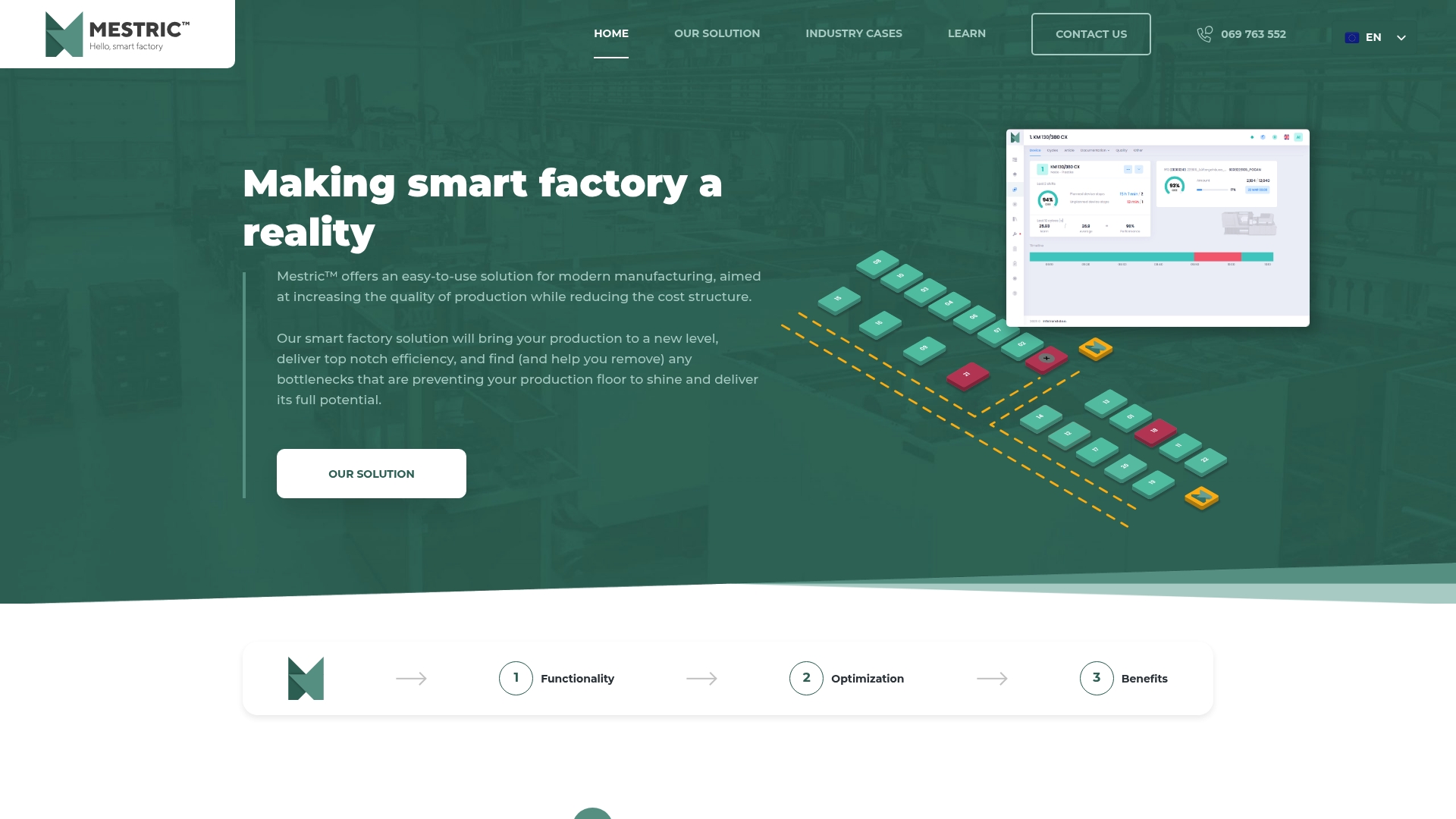
If you are scoping a pilot, you can see how connected machinery works in a live production setting through an onsite demonstration, and review the platform’s capabilities on the Mestric™ MES solution page.
For design and compliance checks, the primary references are worth keeping close at hand.
Batch traceability tracks a group of units produced together under one lot number, while serial traceability assigns a unique identifier to each individual unit. Most manufacturers use batch-level tracking for bulk materials and reserve serial-level tracking for high-risk or high-value components, as recommended in GS1 guidance.
Retention periods depend on the sector and regulation. For pharmaceutical products under EudraLex Volume 4, records must be kept for at least one year after expiry or five years after release, whichever is longer; other industries set their own retention rules based on shelf life and risk.
ISA-95 is the standard interface for exchanging manufacturing-event and genealogy data between MES and ERP systems, often implemented using the B2MML XML structure. Following it keeps data exchange consistent even when the two systems come from different vendors.
Mestric™ connects directly to manufacturing equipment and captures performance and quality data in real time, which supports the kind of automated data flow that ISA-95-aligned integration relies on. Specific integration details are best confirmed through a demonstration of the Mestric™ MES solution.
The most common mistake is over-granularity: serialising every component when batch-level tracking would have covered the risk at far lower cost. The second most common is leaving timestamp capture manual at shift handovers, which is exactly where trace records tend to break.


 069 763 552