


TL;DR:
- IoT gateways connect legacy shop-floor devices to digital systems by performing protocol translation and local processing. They improve manufacturing efficiency, reduce downtime, and enable legacy equipment modernization without hardware replacement. Edge computing ensures fast, reliable responses for safety and control, making gateways essential for smart factories.
An IoT gateway is defined as a programmable compute node that translates, processes, and secures data between shop-floor devices and enterprise IT systems. The role of IoT gateways in manufacturing is to serve as the critical link in OT/IT convergence, connecting legacy machines, PLCs, and sensors to modern digital infrastructure without requiring costly hardware replacement. Manufacturers implementing IoT for predictive maintenance reduce unplanned downtime by 30–50% and cut maintenance costs by 20–40%. Those figures are not theoretical. They reflect what happens when real-time data flows reliably from the factory floor to the systems that act on it.
An IoT gateway is a programmable compute node performing protocol conversion, local processing, and security management. This is fundamentally different from an industrial router, which only forwards IP traffic without any application-aware processing or protocol translation. Confusing the two is one of the most common and costly mistakes plant engineers make when planning an IoT integration project.
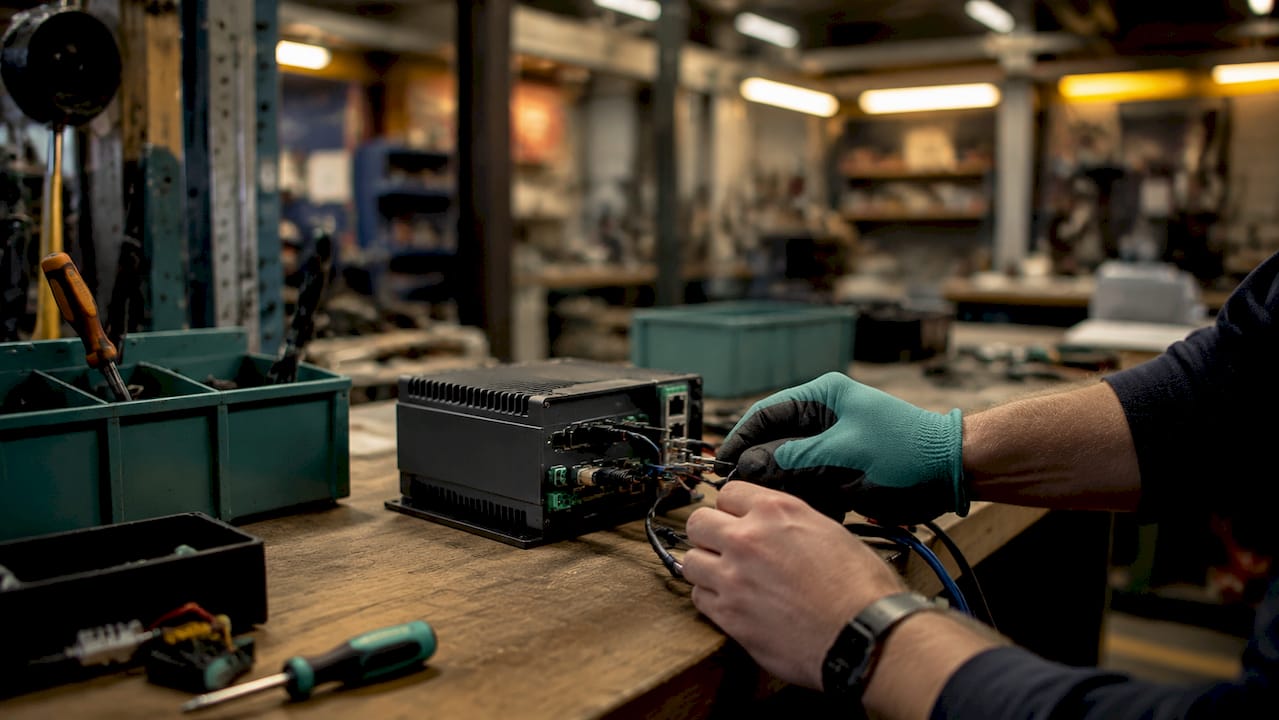
The factory floor runs on a mix of legacy and modern communication standards. Protocols such as Modbus, OPC UA, and PROFINET are common in operational technology environments, but cloud platforms and MES systems expect IT-friendly formats such as MQTT, JSON, and HTTP. An IoT gateway translates Modbus/TCP to JSON over MQTT in real time, making data from a 20-year-old CNC machine readable by a modern analytics platform. Without this translation layer, data from legacy equipment simply cannot reach the systems that need it.
Gateways do not just pass data through. They run local analytics, detect anomalies, and make decisions before any data leaves the plant. Filtering and preprocessing at the edge structures raw telemetry into manageable payloads before transmission, preventing cloud platforms from being overwhelmed and keeping bandwidth costs under control. A gateway monitoring a high-speed press, for example, can discard normal-range readings and only transmit events that fall outside defined thresholds.
IoT gateways isolate sensitive OT devices from direct internet exposure. They enforce authentication, access controls, and encrypted communication at the edge network boundary. This means a compromised cloud connection does not automatically give an attacker access to your PLCs or safety systems.
Key gateway functions at a glance:
Pro Tip: When specifying a gateway, confirm it can run containerised applications locally. This gives you the flexibility to deploy updated analytics logic without replacing hardware.
IoT gateways enhance manufacturing by delivering real-time data to the systems that control quality, maintenance schedules, and energy use. The financial case is direct. Unplanned downtime costs in manufacturing can reach £205,000 per hour. A gateway that flags a bearing temperature anomaly 48 hours before failure pays for itself on the first event it prevents.
Gateways enable predictive maintenance by streaming sensor data continuously to monitoring platforms. Vibration, temperature, and pressure readings from motors and pumps are compared against baseline profiles in real time. When a value drifts outside tolerance, the gateway triggers an alert before the fault becomes a failure. Manufacturers using this approach recover up to 20% of production time through automated quality checks and early intervention.
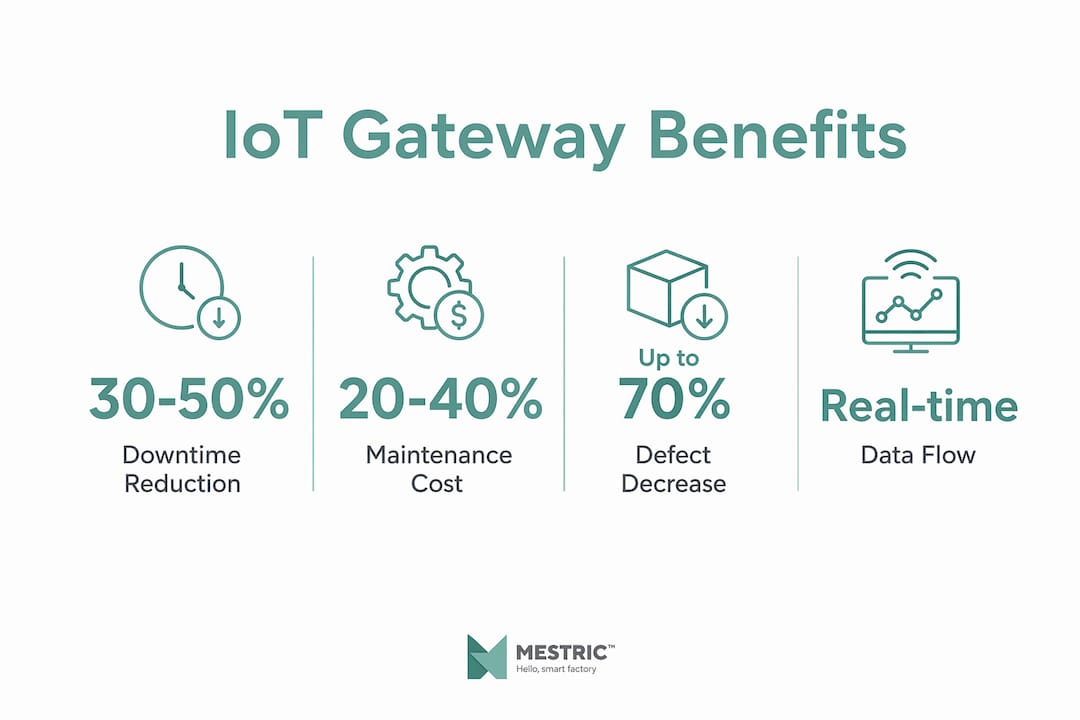
Integrating gateway data with a Manufacturing Execution System (MES) creates a closed loop between machine behaviour and quality outcomes. Industrial IoT connectivity has delivered up to a 70% reduction in production defects and production line efficiency improvements of 75–96%. These gains come from catching process drift early, not from inspecting finished parts after the fact.
| Operational area | Measured improvement |
|---|---|
| Unplanned downtime | Reduced by 30–50% with predictive maintenance |
| Maintenance costs | Cut by 20–40% through condition-based scheduling |
| Production defects | Reduced by up to 70% via real-time process monitoring |
| Energy consumption | Reduced by 26% through IoT-enabled load management |
| Production line efficiency | Improved by 75–96% across connected lines |
Gateways aggregate consumption data from motors, compressors, and HVAC systems across the plant. This data feeds energy management dashboards that identify waste patterns and enable automated load shedding during peak tariff periods. The 26% reduction in energy consumption reported across industrial IoT deployments reflects exactly this kind of gateway-enabled visibility. You cannot manage what you cannot measure, and gateways are what make measurement possible at scale.
Edge computing at an IoT gateway means processing data locally, at the point of collection, rather than sending everything to a remote cloud platform for analysis. For manufacturing, this distinction is not academic. It determines whether your safety systems respond in milliseconds or seconds.
Edge computing gateways process critical events locally within milliseconds, ensuring deterministic response times without relying on cloud round-trips. An emergency stop signal on a press line cannot wait for a cloud server to respond. The gateway handles it locally, immediately, and reliably.
The practical differences between edge and cloud-only architectures break down as follows:
For a detailed comparison of the two models, the edge vs cloud computing breakdown from IT-Magic covers the architectural trade-offs clearly.
Edge computing at IoT gateways is increasingly vital for deterministic control, making it indispensable for mission-critical manufacturing processes. Cloud analytics remain valuable for long-term trend analysis and cross-site benchmarking, but the gateway must handle anything that requires an immediate physical response.
Cloud and edge are not competing approaches. They are complementary layers. The gateway handles real-time control; the cloud handles historical analysis and strategic planning. You need both, and the gateway is what makes the combination work. For a deeper look at edge computing in manufacturing, the practical implications for plant engineers are significant.
The most effective way to modernise brownfield manufacturing sites is using gateways as protocol translators, connecting legacy machines to modern MES without costly hardware replacement. This approach avoids the risks and expense of replacing or reprogramming validated PLC code, which in regulated industries can trigger full revalidation processes.
Legacy equipment presents specific integration challenges:
A protocol gateway installed between the machine and the plant network solves all of these problems without touching the machine itself. It reads the existing communication bus, translates the data into a modern format, and forwards it to the MES or historian. The machine continues to operate exactly as before. The plant gains full visibility into its behaviour.
This approach also protects operational continuity during digital transformation. You do not need to take a production line offline to retrofit connectivity. Gateways can be installed during scheduled maintenance windows, with no impact on production schedules.
Pro Tip: Before selecting a gateway for legacy modernisation, map every communication protocol in use across the target machines. A single gateway model that handles Modbus RTU, PROFINET, and OPC UA will reduce your integration complexity significantly compared to deploying multiple specialist devices.
The modernisation of legacy assets through protocol translation gateways minimises operational risk and capital expenditure, accelerating smart manufacturing adoption without the disruption of a full equipment replacement programme. For plant managers weighing the cost of digital transformation, this is the most practical entry point available.
IoT gateways are the essential technical foundation for smart manufacturing, enabling real-time data flow, predictive maintenance, and legacy equipment integration without costly hardware replacement.
| Point | Details |
|---|---|
| Gateway vs router | IoT gateways translate protocols and run local logic; routers only forward IP traffic. |
| Edge processing value | Local processing delivers millisecond response times critical for safety and control. |
| Predictive maintenance gains | Gateway-enabled monitoring reduces unplanned downtime by 30–50% and maintenance costs by 20–40%. |
| Legacy modernisation | Protocol translation gateways connect old machines to modern MES without replacing validated PLC code. |
| Quality and efficiency | IoT connectivity has reduced production defects by up to 70% and improved line efficiency by 75–96%. |
Plant managers often treat IoT gateways as commodity networking hardware, the same category as switches and routers. That framing leads to underinvestment in gateway capability and, ultimately, to integration projects that stall or deliver far less than expected.
The gateway is not a passive conduit. It is the most computationally active device on your OT network. It decides what data gets transmitted, when, and in what format. It enforces your security perimeter. It keeps your systems running during network outages. Treating it as an afterthought is like specifying a high-performance CNC machine and then fitting it with a basic controller.
The second misconception I see regularly is the assumption that cloud connectivity solves the latency problem. It does not. If your safety interlock depends on a cloud response, you have a design flaw, not a connectivity solution. Edge processing at the gateway is the only architecture that meets the deterministic timing requirements of real manufacturing environments.
My practical recommendation is to start with a phased approach. Identify two or three machines where downtime is most costly. Deploy gateways on those assets first, connect them to your MES, and measure the impact over 90 days. The data from that pilot will make the business case for the wider rollout far more convincingly than any vendor presentation.
— Andraž
Collecting data through IoT gateways is only the first step. The value comes from what you do with that data once it reaches your production management layer.
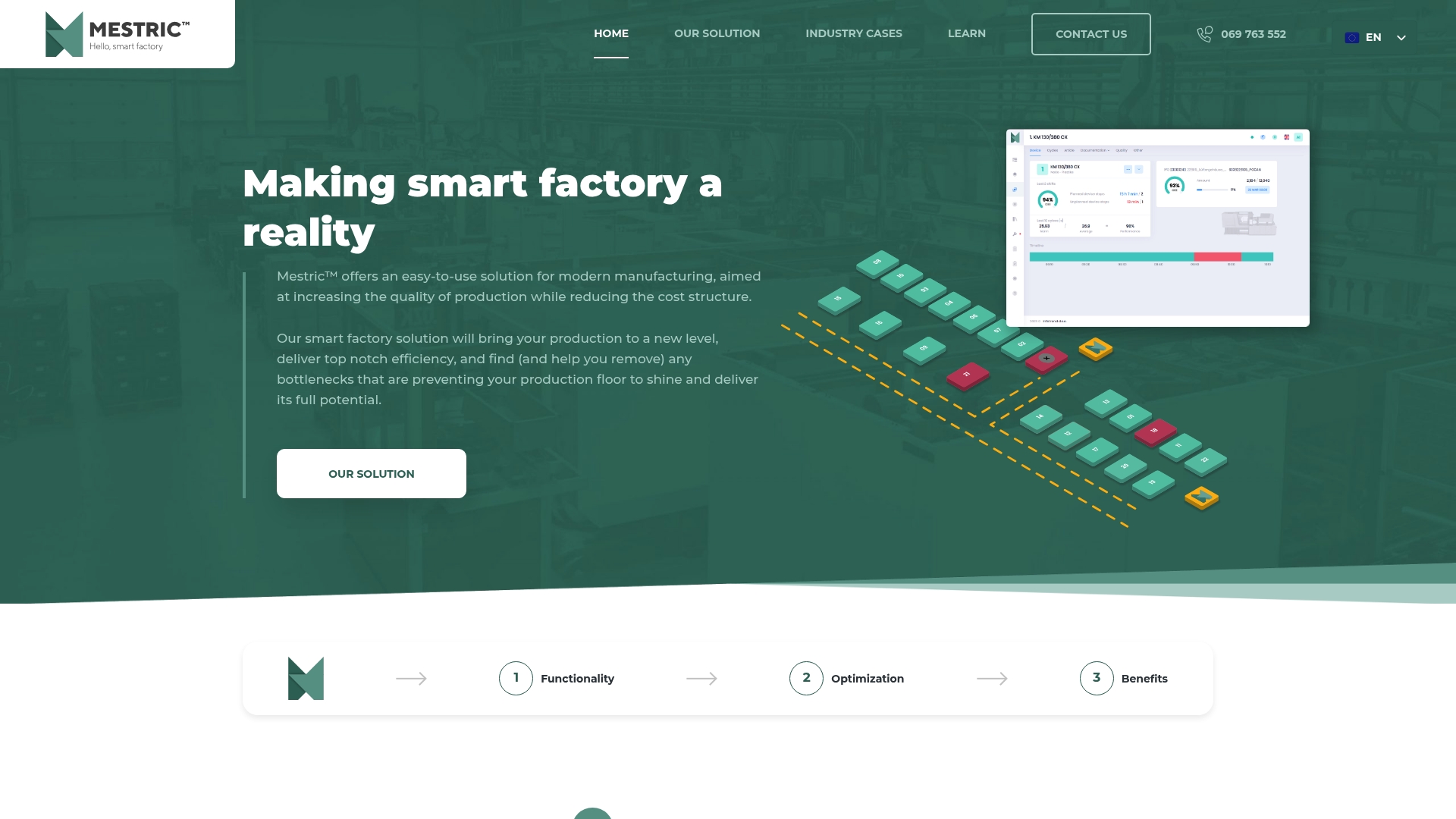
Mestric’s Manufacturing Execution System connects directly with manufacturing equipment to deliver real-time performance tracking, quality monitoring, and productivity analytics in a single platform. When IoT gateway data feeds into Mestric, plant managers gain live visibility into KPIs including downtime, defect rates, machine occupancy, and cost per unit. The AI-powered tools within Mestric identify bottlenecks and surface the specific process changes that reduce waste and improve output. For teams ready to move from raw gateway data to measurable production efficiency, Mestric provides the operational layer that makes it count.
An IoT gateway translates data between shop-floor devices and enterprise IT systems, enabling real-time monitoring, predictive maintenance, and quality control across connected production lines.
IoT gateways perform protocol translation, run local applications, and enforce security policies. Industrial routers only forward IP traffic and cannot process or translate OT protocols such as Modbus or OPC UA.
IoT connectivity reduces unplanned downtime by 30–50%, cuts maintenance costs by 20–40%, reduces production defects by up to 70%, and delivers a 26% reduction in energy consumption across connected facilities.
Gateways act as protocol translators, reading legacy communication buses and converting data to modern formats without modifying or replacing existing PLC hardware or validated machine code.
Edge computing allows gateways to process safety-critical events locally in milliseconds, ensuring deterministic response times that cloud-dependent architectures cannot reliably deliver.


 069 763 552