


TL;DR:
- Effective quality strategies dramatically reduce COPQ, with world-class firms lowering costs below 5% of sales. Selecting appropriate methodologies like PDCA or DMAIC depends on data maturity, defect specifics, and organizational scale, supported by strong leadership commitment. Digital tools such as MES platforms enhance ongoing improvement by providing real-time data, enabling sustainable, organization-wide quality excellence.
Poor quality costs manufacturing firms far more than most executives realise. COPQ typically ranges from 10 to 30% of annual sales for average operations, yet world-class manufacturers bring that figure below 5%. The gap between average and exceptional is not luck. It comes down to selecting the right quality improvement strategies, implementing them with discipline, and sustaining momentum through genuine leadership commitment. This article walks you through the leading approaches, helps you compare their strengths, and gives you a clear framework for choosing the methods that fit your operation.
| Point | Details |
|---|---|
| COPQ impacts profits | Unmanaged poor quality can consume 10-30 percent of annual sales, but proven strategies cut this below 5 percent. |
| Match method to needs | Use PDCA for broad improvements and regulatory compliance, DMAIC for targeted, data-driven gains. |
| Prevention pays off | Doubling prevention efforts can halve failure costs and reveal hidden savings. |
| Integrated frameworks excel | Combining core improvement models with enterprise frameworks boosts resilience to external disruptions. |
| Digital tools amplify results | MES and digital quality-monitoring systems accelerate improvements and sustain gains over time. |
Understanding why strong strategies are essential, let’s clarify what matters most when selecting an approach.
Before you invest resources in any quality improvement programme, you need to be clear on what you are measuring and why. The choice of methodology must connect directly to your business outcomes. Vague goals produce vague results. Define your targets with precision.
Here are the critical factors to assess before committing to a strategy:
Pro Tip: Investing early in prevention activities, even doubling your prevention budget from 2% to 4% of revenue, can halve your total failure costs. The manufacturing quality statistics consistently support this ratio, and it is one of the most reliable levers available to senior leaders.
Getting these criteria right at the outset saves considerable time and money later. Skipping this stage is one of the most common reasons quality improvement programmes stall after an initially promising start.
With criteria clear, let’s examine the foundational improvement methodology.
The Plan-Do-Check-Act cycle is the most widely used quality improvement structure in manufacturing worldwide. It is simple, repeatable, and directly embedded in ISO 9001:2015’s continual improvement requirements. For many operations, it is the natural starting point and the framework everything else builds upon.
The four steps work as follows:
PDCA is not a one-time project. It is a management rhythm. The most effective manufacturing operations treat each PDCA cycle as a building block, with each completed cycle feeding directly into the next.
This cycle sits at the heart of step-by-step quality improvement because it accommodates both well-documented processes and those where data is still being built up. You do not need perfect information to start. You need a structured habit of review and response.
ISO 9001:2015 Clause 10 mandates that organisations address nonconformities with corrective actions, review the effectiveness of those actions, and pursue continual improvement of the quality management system. PDCA satisfies all three requirements, which makes it a natural fit for operations working toward or maintaining ISO certification.
The role of quality monitoring becomes critical here. Without reliable, timely data feeding each “Check” phase, the cycle loses its power. Executives should treat real-time data availability as a prerequisite, not an afterthought.
Pro Tip: Use PDCA for process-wide initiatives where data may be incomplete. Its iterative nature means you build evidence and capability simultaneously, making it ideal for new production lines or recently acquired facilities.
PDCA sets the stage, but what if you need a deeper investigation into specific process defects? DMAIC delivers the quantitative edge.
Lean Six Sigma combines waste reduction principles with statistical rigour. The DMAIC methodology, which stands for Define, Measure, Analyse, Improve, and Control, is specifically designed for operations where defects can be tracked with precision and where process variation is the core problem.

| Stage | Core activity | Key output |
|---|---|---|
| Define | Clarify the problem, scope, and business impact | Project charter, COPQ baseline |
| Measure | Collect process data and establish current performance | Process capability index, defect rate |
| Analyse | Identify root causes using statistical tools | Cause and effect analysis, Pareto chart |
| Improve | Design and test solutions to eliminate root causes | Pilot results, waste reduction data |
| Control | Embed the solution and monitor ongoing performance | Control charts, updated SOPs |
The key distinction between DMAIC and PDCA lies in data dependency. DMAIC suits data-rich environments with measurable variation, while PDCA works across a broader range of situations including those with limited initial data. Neither replaces the other. In practice, the most effective manufacturers use both, applying PDCA at the system level and deploying DMAIC for targeted, defect-specific investigations.
The financial case for DMAIC is compelling:
For executives managing defect reduction on high-volume production lines, DMAIC is often the highest-impact choice available. It requires investment in data infrastructure and trained analysts, but the returns justify this in almost every measurable scenario.
After covering foundational and deep-dive strategies, what advanced models round out best-in-class improvement?
Once you have PDCA and DMAIC embedded, you may find that further gains require a different lens. The Malcolm Baldrige Performance Excellence Framework offers exactly that. It introduces structured benchmarking, leadership accountability, and enterprise-wide performance cycles that PDCA and DMAIC alone do not fully address.
Baldrige is particularly well-suited to operations that have already achieved a reasonable level of quality maturity and need to sustain and build on those gains across multiple functions, sites, or geographies.
| Framework | Primary focus | Best suited for |
|---|---|---|
| PDCA | Iterative process improvement | All operations, compliance baseline |
| DMAIC | Statistical defect and variation reduction | Data-rich, high-volume production |
| Baldrige | Enterprise excellence and benchmarking | Mature, multi-site, regulated operations |
Practical considerations for advanced models include:
The value of quality monitoring grows at every level of framework maturity. As your improvement strategy becomes more sophisticated, the data you need becomes more granular and more time-sensitive. This is where digital infrastructure starts to become decisive rather than merely helpful.
Multiple proven strategies exist, but applying them effectively requires matching the right tool to the context.
There is no universal answer to which strategy is best. The right choice depends on where your operation sits today, what problems you are solving, and how much data you have to work with. Here is a practical guide to matching strategy to context.
When to use PDCA:
When to use DMAIC:
When to adopt Baldrige or composite frameworks:
Follow these practical steps to move from strategy selection to execution:
For production lines with measurable defects, Lean Six Sigma DMAIC offers the clearest path to cutting COPQ from 15 to 20% of sales to below 5%, integrated with ISO 9001 PDCA for QMS-wide compliance. This combination gives you both the precision of statistical analysis and the breadth of system-level management.
Using a streamlined manufacturing workflow as the operational backbone for either methodology accelerates results significantly. When processes are well-defined and consistently followed, improvement cycles complete faster and deliver more reliable outcomes.
Pro Tip: When external disruptions such as material shortages or logistics failures affect your operation, switch to shorter PDCA cycles temporarily. Shorter loops give you faster feedback and prevent the disruption from compounding into a wider quality failure.
Here is the hard-won lesson that most guides leave out. Quality improvement is not a project with a completion date. It is an ongoing management responsibility, and the organisations that treat it as a one-time initiative consistently fail to sustain their gains.
The most common mistake we see among manufacturing executives is underestimating the scale of hidden failure costs. Visible defects, scrap, and rework are straightforward to quantify. But hidden costs are often four times larger than the visible ones. Lost customer confidence, engineering time spent on firefighting, delayed deliveries, and expedited freight all accumulate silently. Many operations are carrying a quality cost burden they have never fully measured.
The second hard truth is that framework choice matters far less than leadership engagement. We have seen PDCA deliver extraordinary results in operations where executives treated quality reviews as a genuine strategic priority. We have also seen sophisticated DMAIC programmes stall completely because senior leaders delegated ownership to middle management and moved on to the next initiative. The methodology is the tool. Leadership is the force that drives it.
What actually separates fleeting improvement from durable change is a combination of three things: a prevention-first mindset, flexible methodology that adapts to changing conditions, and executive accountability that does not waver when operational pressures increase. Doubling your prevention investment, even modestly, consistently outperforms reactive quality spending over a three to five year horizon. The COQ models make this clear, and the operational data supports it.
The organisations that achieve and sustain world-class quality performance are not the ones that found the perfect framework. They are the ones that built a management culture where quality control is non-negotiable, improvement is continuous, and visibility into real performance data is always available to the people who need it.
Many improvement journeys stall at scale. Here is how digital solutions help manufacturers keep breakthroughs going.
Even the best quality improvement strategy needs the right infrastructure to scale. When you are running PDCA cycles across multiple lines or executing DMAIC projects simultaneously, the volume and speed of data required quickly exceeds what manual systems can handle reliably.
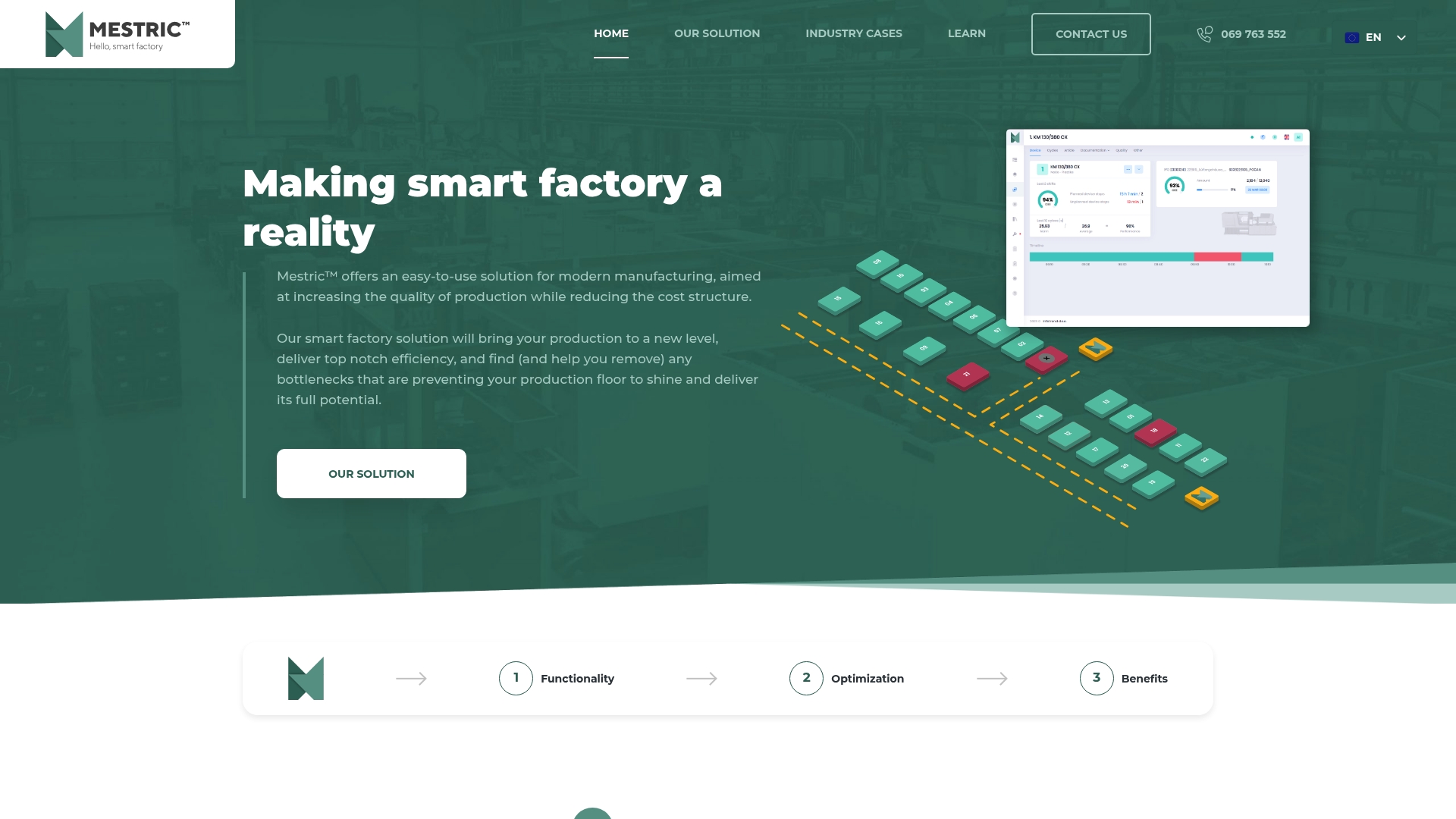
Mestric™ is designed to multiply the impact of your improvement efforts. By connecting directly with your manufacturing equipment, the platform gives you real-time visibility into the KPIs that matter most: defect rates, downtime, first-pass yield, and cost of poor quality, all in one place. You are not waiting for weekly reports. You are acting on live data, which is precisely what PDCA and DMAIC require to operate at their best.
When MES replaces traditional manufacturing data management, improvement cycles accelerate. Bottlenecks surface faster, corrective actions are tracked automatically, and you can demonstrate measurable ROI to your board with confidence. Explore how Mestric™ can support your quality strategy by visiting our guide on how to streamline manufacturing processes and see our production quality monitoring capabilities in action.
Hidden internal and external failure costs, often four times larger than visible defects, are the primary contributors to COPQ in most manufacturing operations.
Choose PDCA for general process improvements where data is limited, and DMAIC when you have data-rich, measurable defects requiring statistical root cause analysis.
Best-in-class strategies can reduce COPQ to below 5% of annual sales, compared to an industry average of 10 to 30%.
Yes. Supply disruptions and external stressors can override internal quality gains, which is why adaptability must be built into your improvement strategy from the start.
ISO 9001:2015 Clause 10 requires continual improvement and corrective action but does not prescribe a specific method, though PDCA is the most commonly endorsed approach.


 069 763 552