


TL;DR:
- A quality improvement checklist guides manufacturing teams through critical inspection points to ensure product quality and compliance. Designing it around ISO 9001 clauses, using digital formats, and integrating continuous PDCA cycles enhances its effectiveness and adaptability. Successful implementation relies on cultural commitment, regular updates, and linking findings to actionable corrective workflows.
A quality improvement checklist is a structured, measurable tool that guides manufacturing professionals through every critical quality control point, from raw material intake to final dispatch. In manufacturing, the industry-standard term for this practice is a Quality Management System (QMS) checklist, and it sits at the heart of frameworks like ISO 9001. Whether you call it a process enhancement checklist or a quality review checklist, its purpose is the same: prevent defects, maintain compliance, and drive continuous operational improvement. This article covers the essential components, design principles, format options, and implementation strategies you need to make your checklist genuinely effective in 2026.
A comprehensive quality control checklist covers visual inspection, functional testing, packaging, labelling, and compliance checks to meet established specifications. These five pillars form the non-negotiable foundation of any quality assessment tool in a manufacturing environment.
Each pillar addresses a distinct failure mode:
Pro Tip: Link each checklist item to a specific clause in your quality manual. When an auditor queries a finding, you can trace it directly to a documented requirement rather than relying on memory.
Covering all five areas in your quality review checklist means that no single failure mode goes undetected at the point of inspection. You can explore quality monitoring approaches that align with these pillars for further context on visual and functional checks.

A quality improvement checklist becomes a continuous improvement tool only when it is built around a cyclical methodology. Integrating checklists with the PDCA cycle (Plan, Do, Check, Act) allows ongoing checklist evolution and root cause remediation. This means your checklist is never a finished document. It is a living record that changes as your processes change.
Follow these steps when designing your checklist:
Pro Tip: When you update a checklist after a nonconformance event, add a brief note in the revision history explaining what changed and why. This creates an auditable trail that demonstrates your improvement process is genuine, not cosmetic.
A well-designed checklist also functions as a training document. New operators who work through a structured process enhancement checklist learn the quality standard at the same time as they learn the task.
The format of your checklist directly affects data quality, audit readiness, and the speed at which you can act on findings. The table below compares the two primary options.
| Feature | Paper-based checklists | Digital checklist tools |
|---|---|---|
| Data capture speed | Slow; manual transcription required | Immediate; data captured at point of entry |
| Audit trail | Relies on physical storage and legibility | Automatic, timestamped, and searchable |
| Real-time visibility | None until data is manually compiled | Live dashboards accessible to supervisors |
| Corrective action links | Manual follow-up required | Integrated workflows trigger actions automatically |
| Update and version control | Risk of outdated copies on the floor | Centralised updates pushed to all users instantly |
| Cost to implement | Low initial cost | Higher initial cost, lower long-term cost |
Digital checklist tools enable immediate identification of issues, real-time data capture, and support for corrective workflows. This matters because a defect identified on a paper form at the end of a shift is a defect that continued for hours. A digital alert stops the line within minutes.
Key capabilities to look for in a digital quality assessment tool include:
The production supervisor checklist framework from Mestric demonstrates how digital checklists integrate with live production data to give supervisors a complete picture in real time.
Designing a checklist is straightforward. Getting your team to use it consistently, and act on what it reveals, is where most improvement programmes stall. A structured improvement action plan turns checklist findings into verified operational changes.
Timing also matters when you launch a new checklist programme. Introduce it after informal feedback has been shared but while willingness to improve remains high. This avoids the perception that the checklist is a punitive measure rather than a support tool.
A quality improvement checklist delivers results only when every item is linked to a measurable criterion, a named owner, and a corrective action workflow.
| Point | Details |
|---|---|
| Cover all five quality pillars | Visual inspection, functional testing, packaging, labelling, and compliance must all feature in your checklist. |
| Align to ISO 9001 clauses | Map every checklist item to a specific clause for defensible audit findings and clear accountability. |
| Choose digital over paper | Digital tools provide real-time data capture, automatic audit trails, and integrated corrective action workflows. |
| Use PDCA to keep checklists live | Review and update your checklist quarterly using findings from root cause analysis to prevent it becoming static. |
| Set a 60-day action plan timeline | A structured 60-day improvement window balances accountability with sufficient time for genuine operational change. |
I have reviewed quality programmes across a range of manufacturing environments, and the same failure pattern appears repeatedly. The checklist is well designed, the criteria are clear, and the rollout is thorough. Then, six months later, it is being ticked off in two minutes at the end of a shift rather than completed in real time at each process stage.
The root cause is almost always cultural, not technical. Teams treat the checklist as an administrative obligation rather than a diagnostic tool. This happens when management uses checklist completion rates as a performance metric without also tracking what the checklist actually finds. When operators learn that a clean checklist is rewarded and a checklist full of findings triggers scrutiny, they stop recording findings honestly.
The fix is to separate completion discipline from finding frequency. Reward thorough, honest completion. Treat a high finding rate as a sign that the checklist is working, not that the team is underperforming. Shift-left validation checks quality at the point of machine entry to prevent defective products early, and this principle applies to checklist culture too. Catch the problem at the source, whether that source is a machine parameter or an operator habit.
The other mistake I see regularly is treating the initial checklist design as permanent. A checklist that was accurate for your process in 2024 may miss critical failure modes introduced by a new supplier, a retooled machine, or a revised customer specification. Build the review cycle into your quality calendar as a fixed event, not an optional task.
— Andraž
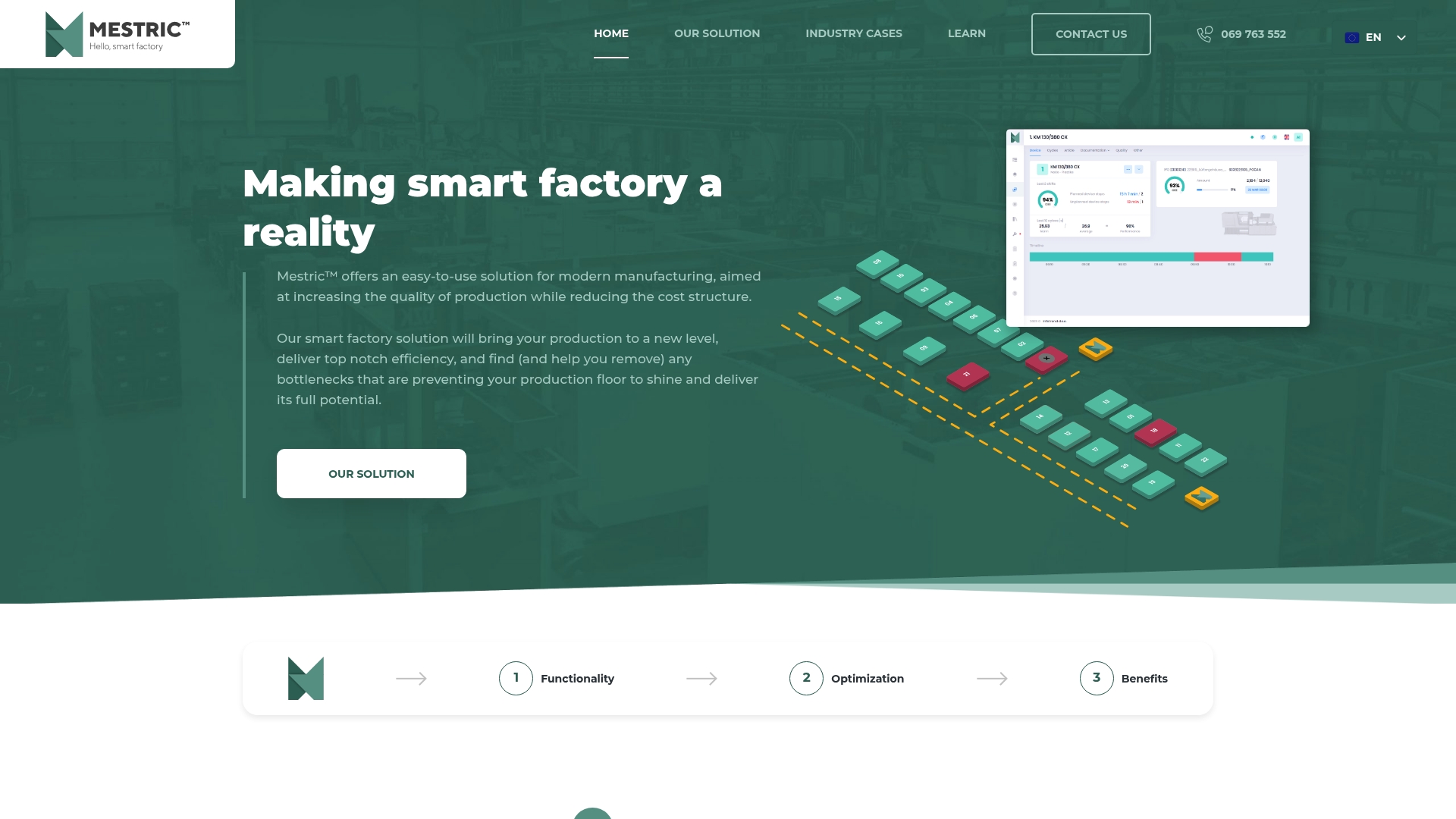
Mestric connects directly with your manufacturing equipment to give quality managers and production supervisors real-time visibility of the KPIs that matter most: defect rates, downtime, machine occupancy, and process deviations. Rather than compiling checklist data manually at the end of a shift, you see it live as production runs. The platform’s AI-powered analytics identify patterns in your quality data and surface the root causes that a manual review would miss. If you are evaluating whether a manufacturing execution system can replace your current paper-based quality process, Mestric offers an onsite demonstration that shows exactly how connected machinery changes the quality picture. You can also review the manufacturing optimisation checklist to see how structured checklist approaches align with cost reduction targets for 2026.
A quality improvement checklist is a structured document that guides manufacturing teams through defined inspection, testing, and compliance checks at each production stage. It functions as a quality assessment tool that ensures consistent product standards and supports continuous operational improvement.
ISO 9001 Clauses 4 through 10 provide the framework that every QMS audit checklist item should map to, creating defensible, auditable records. Aligning your checklist to these clauses means every finding can be traced to a documented quality requirement.
A quality checklist should be reviewed at least quarterly and updated immediately following any nonconformance event, process change, or new supplier introduction. Static checklists that do not evolve with production context lose their effectiveness quickly.
Digital checklist tools capture data in real time, generate automatic audit trails, and trigger corrective action workflows immediately. Paper checklists require manual transcription, carry a risk of loss or illegibility, and provide no live visibility to supervisors.
A 60-day timeline is the recognised standard for a quality improvement action plan, as it provides enough time to implement and measure changes while maintaining accountability. Shorter windows rarely allow sufficient time for process changes to stabilise and produce measurable results.


 069 763 552