


Optimizacija normativov means replacing static, table-based production norms with live, internally measured standards drawn from your own shop floor. Rather than trusting a national or industry normative that was compiled years ago under conditions nobody can verify, you measure what actually happens on your machines and use that data to set the standard.
The first practical move is small and deliberate: pick one or two product families and run a focused pilot that captures operation flow time and setup times, either with a manual time study or automated capture through a manufacturing execution system (MES). You are not trying to fix the whole plant in week one. You are trying to prove, on a limited scale, that a measured norm beats an assumed one.
Optimizacija normativov works because live, continuously measured shop-floor data replaces static assumptions, cutting flow time and improving delivery predictability.
| Point | Details |
|---|---|
| Measure before you change anything | Capture operation flow time and setup time on one or two product families before touching the norm. |
| Validate with parallel runs | Accept a new norm only when both median and variability meet your criteria against the old figure. |
| Use SMED for setups | Split changeovers into internal and external steps to cut setup time without new equipment. |
| Avoid stale reference norms | Locally used normative collections often lack documented methodology and consistent units. |
| Automate capture at scale | A platform like Mestric™ removes manual logging and keeps an audit trail for every normative update. |
Live, measured norms reduce flow time, cut work-in-progress, and make delivery dates far more predictable. That combination hits margin and customer trust at the same time, which is why plant managers who move first tend to stay ahead of competitors still running on inherited spreadsheets.
Lean manufacturing projects consistently show that when flow time drops, work-in-progress inventory falls with it. Less material sitting between operations means less capital tied up on the floor and fewer surprises when a rush order lands.
Statistic callout: Case-level analysis of production management processes found that overlapping operations and heuristic dispatch rules reduced flow time under constrained capacity, where fixed schedules had previously broken down.
The risk on the other side is real and often underestimated. Many locally used normative collections carry inconsistent units, undocumented methodology, and productivity entries that haven’t moved in decades. Building a production plan on numbers nobody can trace back to a measurement is a compliance and cost problem waiting to surface.
Track operation flow time, cycle time, work-in-progress (WIP), setup time, throughput, and yield. These six figures are the control knobs for any normative change, and none of them can be estimated reliably from memory or an old handbook.
Flow time and cycle time are often confused, and the difference matters. Cycle time is how long one operation takes to complete a single unit. Operation flow time is the total time an order spends moving through that operation, including queuing and waiting, and it changes continuously with real shop-floor conditions rather than sitting still as a fixed figure. That’s why it needs continuous measurement, not a one-off study filed away and forgotten.
| Metric | Definition | Measurement method | Sampling frequency | Validation check |
|---|---|---|---|---|
| Operation flow time | Total time an order spends at an operation, including waiting | Automated MES capture or manual log | Continuous | Compare distribution against historical median |
| Cycle time | Time to complete one unit at one operation | Stopwatch time study | Weekly per product family | Cross-check against three independent observers |
| WIP | Units in process between stations | Physical count or MES tracking | Daily | Reconcile against order release data |
| Setup time | Time from last good unit to next good unit at changeover | Stopwatch, video, or SMED audit | Per changeover event | Separate internal vs external setup steps |
| Throughput | Units completed per period | MES output log | Shift or daily | Match against scheduled capacity |
| Yield | Good units as a proportion of total produced | Quality inspection data | Batch or shift | Verify against scrap and rework logs |
Pro Tip: Sample across at least two full weeks, including a Monday and a post-holiday shift, so a single atypical run doesn’t skew your new normative. Small-batch measurement taken on an unusually quiet day will flatter your numbers and undermine trust later.
Use SMED for setup reduction, standardised time studies for cycle times, operation overlap where safety allows, and heuristic dispatch rules when capacity is under pressure. No single method covers every situation, so the skill is matching the right tool to the right constraint.
SMED, short for single-minute exchange of die, splits a changeover into internal steps (machine must be stopped) and external steps (can happen while the machine still runs). Moving as many steps as possible from internal to external is the entire method in one sentence. A documented case on a four-side planing machine showed measurable setup time reductions using exactly this approach, and it matters more than ever now that smaller batch sizes make long changeovers unprofitable.
“Operation flow time cannot be treated as a fixed number; it changes with conditions and must be measured continuously.” This is the single most important mindset shift behind any credible normative optimisation programme.
Heuristic sequencing rules earn their place when demand is volatile and capacity is tight. Rather than locking a fixed schedule that breaks the moment an urgent order arrives, a heuristic rule (such as shortest processing time first, or earliest due date) lets planners reprioritise on the fly while still respecting measured norms.
Pro Tip: Run your first SMED workshop on the changeover that happens most often, not the one that takes longest. Frequency beats duration when you’re proving the concept to sceptical operators.
Implement through a short pilot lasting four to eight weeks, validate against pre-defined KPI gates, then scale in controlled waves rather than plant-wide overnight. Rushing the rollout is the single most common reason a promising pilot never becomes a company-wide standard.
Cost considerations are modest compared with the payback. You’re mainly paying for data collection labour during the pilot, possibly a time-study tool or an MES subscription, and some operator training. Larger capital spend, such as sensor or PLC integration, only becomes necessary once you decide to scale automated capture across multiple lines.
A step-by-step production optimisation guide can help structure this roadmap if your team is running its first formal pilot.
The biggest mistakes are relying on outdated reference norms, mixing inconsistent process units, sampling too narrowly, and skipping validation altogether. Any one of these can quietly poison months of work before anyone notices.
Watch for these red flags during a pilot:
Real normative credibility comes from traceability. If an operator can’t ask “where did this number come from?” and get a straight answer, the norm won’t survive its first bad week on the floor.
The corrective path is straightforward, if not always comfortable: re-measure with a documented method, standardise your units and process descriptions across lines, run a parallel validated pilot before committing, and involve operators directly in building the new norm rather than imposing it from an office.
Run these checks now, before the next planning meeting, to get a pilot moving within days rather than months.
Pro Tip: To reduce observer bias during manual time studies, don’t tell operators exactly when you’re timing them. Log a wider observation window and extract the relevant intervals afterwards, so nobody unconsciously speeds up for the stopwatch.
A modern MES removes most of the manual effort from norm optimisation by automating KPI capture and keeping an audit trail that proves a new standard is valid across shifts and lines. That audit trail is exactly what’s missing from most legacy normative collections, and it’s the difference between a defensible standard and a guess dressed up as data.
The features that matter most for this specific job are automated time capture at the operation level, shop-floor dashboards that surface deviations in real time, versioned normative records so you can see what changed and when, batch tracing, and integration with PLCs and sensors for continuous data flow.
Replacing a static norm with a live one only works if the measurement keeps happening after the pilot ends. An MES is what keeps that discipline in place once the initial enthusiasm fades.
Real-time performance tracking turns the kind of manual time study described earlier into a continuous, automated stream, which is particularly valuable once you scale beyond one or two pilot lines. For teams evaluating where an MES fits alongside other software, Mestric™ is built specifically to capture flow time, setup time, and downtime without adding manual logging work to an already busy shift.
Operators need enough training to understand not just the new time figure, but why it changed and how to flag when conditions drift from the pilot’s assumptions. A norm that isn’t understood gets ignored the first time a shift is short-staffed or a batch runs unusually small.
Training should cover three layers: how to read the new norm on a job card or MES screen, how to record deviations honestly rather than rounding to the “expected” figure, and how to escalate when a process genuinely can’t hit the new standard. Supervisors and quality engineers need a slightly deeper layer, focused on interpreting the flow-time distributions and knowing when a gap signals a training issue rather than a bad norm.
Budgeting for this is often underestimated. A one-hour briefing rarely changes behaviour on its own. Plan for a short session at rollout, a follow-up after two to three weeks once operators have lived with the new norm, and a refresher whenever the norm is revised again through the next Deming cycle.
Involve operators in building the norm, not just receiving it, and resistance drops sharply. People trust a number more when they helped generate it, and they’ll point out edge cases a desk-based analysis would miss entirely.
Communicate the “why” before the “what”: explain that the change comes from measured data on their own line, not an arbitrary target handed down from finance. Run the new and old norm in parallel for a visible period so operators see the comparison rather than being told to simply trust it. Where a new norm makes a job measurably faster, share that improvement transparently, including what it means for workload balancing, rather than letting rumour fill the gap.
Where a norm proves impossible to hit consistently, treat that as valuable pilot data rather than a discipline problem. Sometimes the fix is retraining; sometimes it means the original measurement missed a real constraint.
The wood-processing case involving a four-side planing machine is a useful reference because it shows the whole cycle in miniature. Analysts separated the changeover into internal and external steps using SMED, moved several internal steps to external, and measured a clear reduction in setup time without any capital investment in new equipment.
The Maribor production management case follows a similar pattern at a larger scale. Researchers applied overlapping operations and heuristic priority rules instead of a fixed schedule, and flow time fell under constrained capacity conditions where the old schedule had previously stalled. Both cases share the same underlying discipline: measure first, change one variable at a time, validate before declaring victory.
What both examples have in common matters more than either result individually. Neither started with a plant-wide overhaul. Both proved the concept on a limited scope, validated the improvement against real data, and only then considered wider rollout.
Combine manual time studies with automated capture wherever the process allows, because automated data reduces observer bias and gives you a continuous stream for validation rather than a single snapshot. A stopwatch study tells you what happened on Tuesday afternoon; continuous capture tells you what happens across every shift, every week, including the bad ones.
Validation works best as a two-part test: check whether the central tendency (median) of your pilot data differs meaningfully from the existing norm, and separately check whether the variability (interquartile range) has also shifted. Some practitioners favour setting the new norm at the 85th percentile of the measured flow-time distribution rather than the average, which builds in a margin for realistic variation instead of assuming every run goes perfectly.
Approve a new norm only when both criteria hold up across a proper parallel run, not a single favourable week. That discipline is what separates a norm that survives an audit from one that quietly gets reverted three months later.
Integrating an MES turns normative optimisation from a periodic project into a permanent capability. Instead of scheduling a time study every few years, the system continuously feeds flow time, cycle time, and setup data into a dashboard that flags drift automatically.
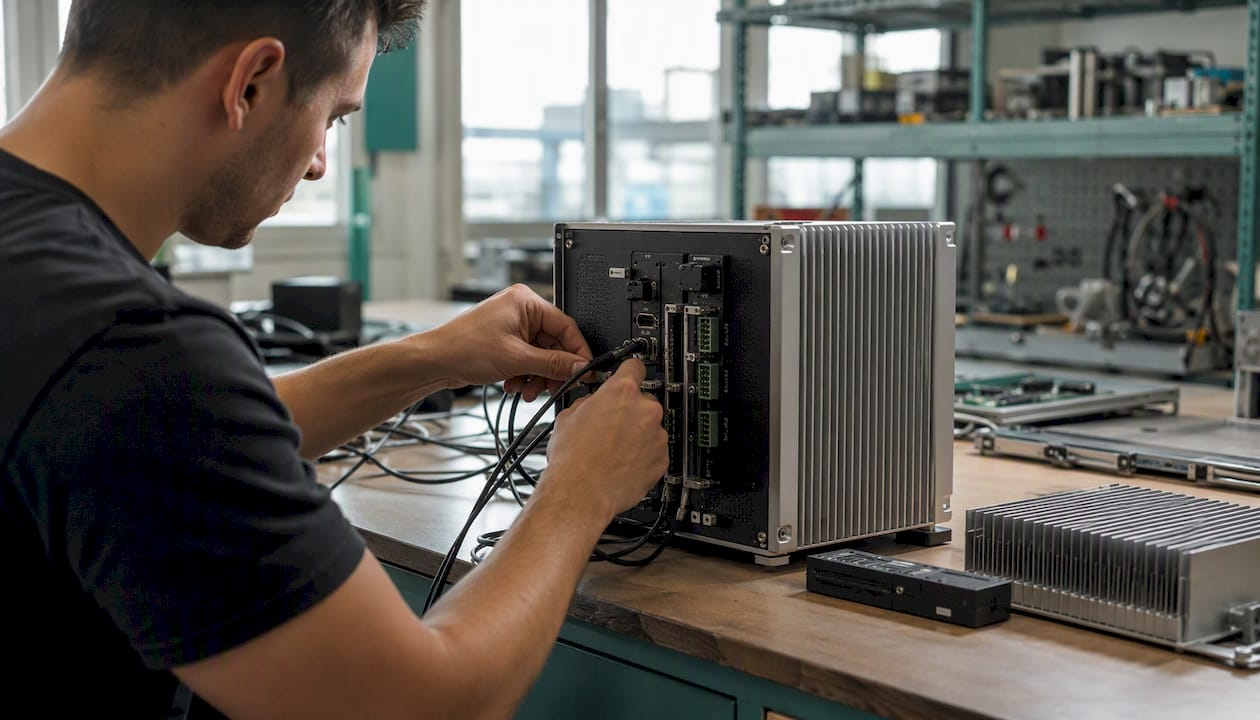
The practical benefit is governance as much as speed. A manufacturing efficiency workflow built around MES data keeps every normative change tied to a timestamped record, so when a customer or auditor asks why a standard changed, the answer is a data export rather than a shrug. Integration with PLCs and sensors also removes much of the manual logging burden from supervisors, freeing that time for the analysis and validation work that actually improves the norm. External examples outside heavy manufacturing follow the same logic. A DTF printing operation optimising its production process applies the same lean and setup-reduction thinking to a very different line, which shows the principles travel well beyond any single industry.
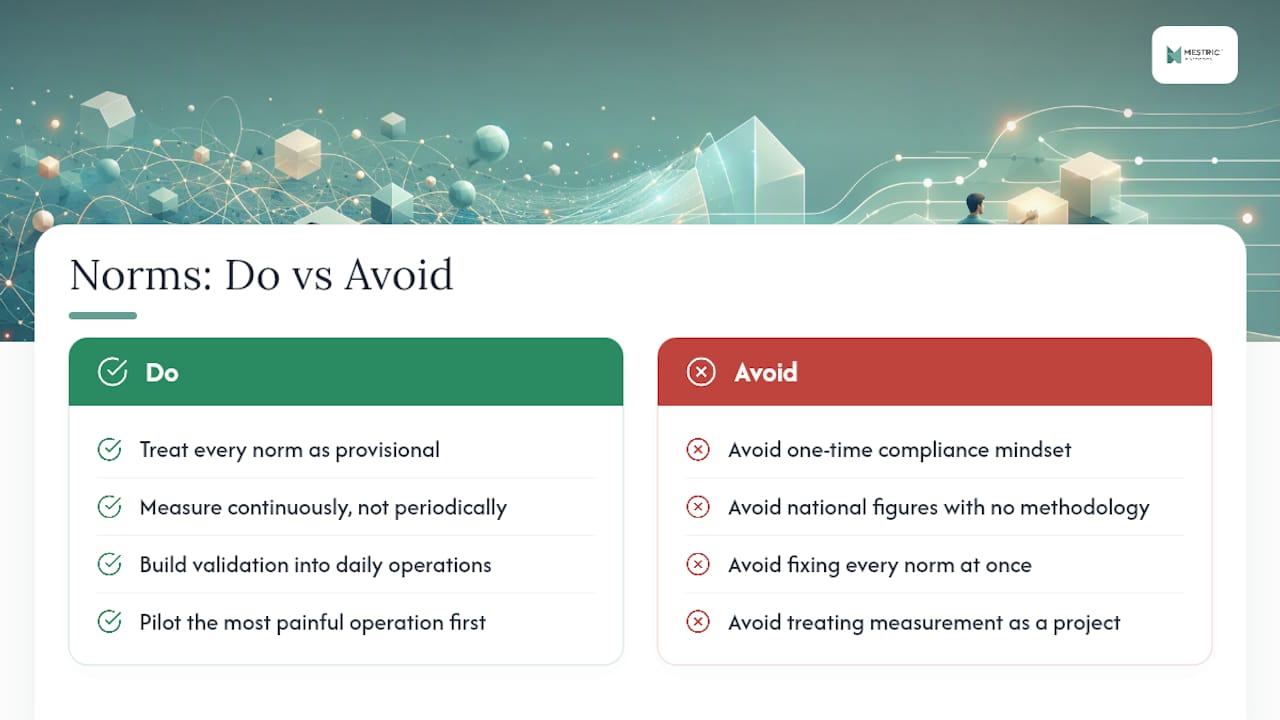
Most guidance on normativi treats them as a one-time compliance exercise: pull the official table, apply it, file it away. That approach misreads what a norm actually is. A norm is a claim about how long something takes under specific conditions, and conditions on your line are never identical to whoever compiled the original table.
The conventional advice to “update your norms periodically” undersells the problem. Periodic review still assumes the underlying number was sound to begin with. If the original figure came from a national collection with no documented methodology, reviewing it every two years just means repeating the same guess on a schedule.
What the evidence actually supports is smaller and more radical than most plants attempt: treat every norm as provisional, measure continuously rather than periodically, and build the validation habit into daily operations rather than an annual audit. The heuristic dispatch and overlap findings matter here too. Flexibility in sequencing often delivers more value than perfecting a single static number, because real shop floors rarely behave like the tidy schedule on the wall.
If there’s one priority for a team starting from scratch, it’s this: stop trying to fix every norm in the plant at once. Pick the operation causing the most pain, measure it properly for a few weeks, and let that pilot prove the method before you scale it. The plants that get this right treat measurement as infrastructure, not a project with an end date.
Everything covered here, from time studies to SMED audits to parallel validation runs, works better with a system that captures the data automatically instead of relying on someone with a stopwatch and a spreadsheet. That’s the specific gap Mestric fills: it connects directly to your machinery so flow time, cycle time, setup time, and downtime get logged continuously, without adding manual work to a shift that’s already stretched.
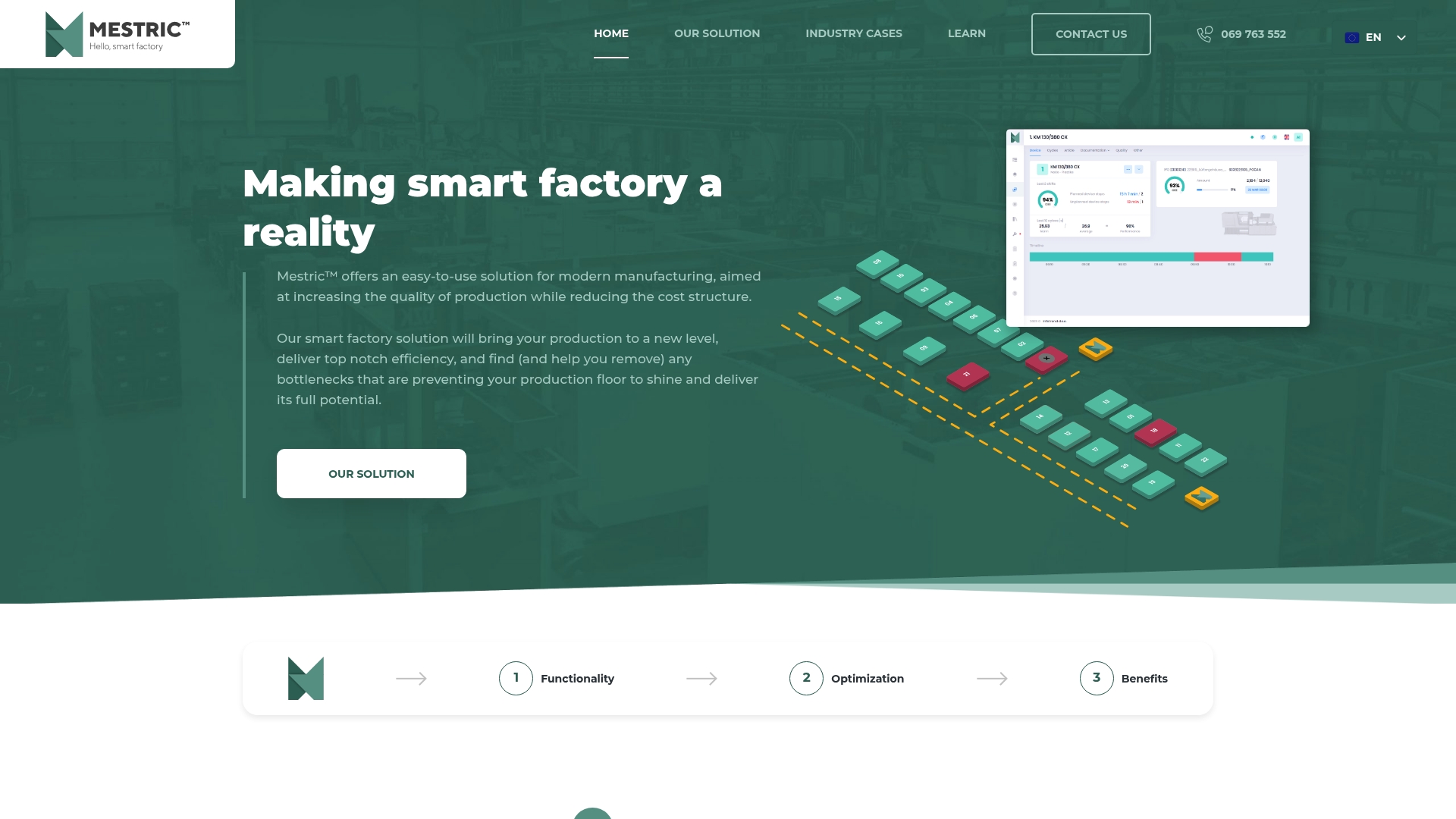
For plant managers ready to move beyond a manual pilot, Mestric™ turns the validation methodology described above into a standing dashboard rather than a one-off spreadsheet exercise. If you’re weighing an MES against other software categories on your shortlist, the manufacturing software overview is a useful starting point. When you’re ready to see how it applies to your own lines, book an onsite demonstration and bring your current normative data along for a direct comparison.
What does optimizacija normativov actually mean?
It means setting production time standards from measured, live shop-floor data instead of relying on static national or industry tables that may not reflect your actual equipment, materials, or workforce.
How long should a normative optimisation pilot run?
A normative optimisation pilot typically runs long enough to capture normal variation across shifts without delaying the wider rollout unnecessarily.
Which metric matters most when setting a new norm?
Operation flow time is the primary figure, since it captures real waiting and processing conditions rather than an idealised cycle time alone.
Can SMED help outside setup-heavy operations?
Yes. Any changeover with distinct internal and external steps benefits from the same separation, even in processes that aren’t traditionally seen as setup-intensive.
Do we need an MES to start optimising norms?
No, a manual time study can start the process, but an MES makes continuous measurement and validation far less labour-intensive once you move beyond the first pilot.


 069 763 552