


The right choice is an MES whose core execution model matches your manufacturing type, connects natively to your machines and ERP, and supports low-code configuration rather than lengthy custom builds. We recommend validating that fit with a staged pilot before any wider rollout, and treating ISA-95 alignment and EU cybersecurity obligations as non-negotiable checks, not afterthoughts.
TL;DR:
- Ensuring MES connectivity supports common protocols like OPC UA and SECS/GEM without bespoke drivers improves reliability and reduces integration issues.
- Validating ISA-95 compliance and cybersecurity measures, such as edge buffering and incident response, is essential for seamless and secure MES and ERP integration.
- Conducting a staged implementation starting with a pilot on one production line increases chances of success and enables measurable goal achievement before wider deployment.
- Budgeting for services and validation costs is crucial, as they often surpass licensing fees and significantly impact total ownership costs.
- Mestric™ MES emphasizes real-time KPI dashboards, low-code configuration, and direct shop-floor connectivity to support a controlled, pilot-first rollout.
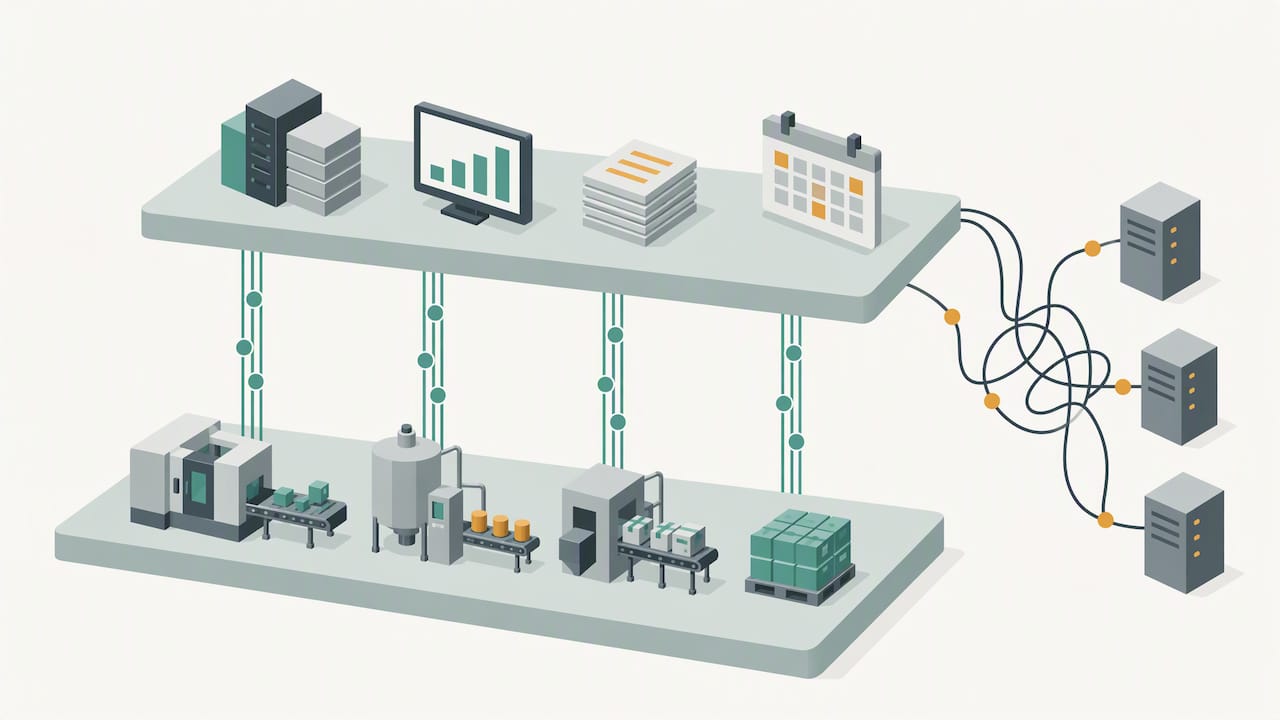
A Manufacturing Execution System sits at Level 3 of the ISA-95 model, between your ERP at Level 4 and the PLCs and SCADA systems running your equipment at Levels 0 to 2. It translates production orders from the business layer into instructions the shop floor can execute, then feeds real results back up.
The functions that matter most when you are comparing systems are:
An ERP plans and finances production across the whole business; an MES executes and verifies it on the floor; SCADA and PLCs control the machines themselves. Confusing these layers is a common cause of failed selections, since buyers sometimes ask an ERP add-on to do a job that only a proper MES can handle.
Before you look at demos or price lists, work through these criteria in order. Each one filters out options that will cause problems later, so sequence matters as much as the content.
Pro Tip: Ask any shortlisted vendor to demonstrate connectivity to one of your actual machines before you sign anything, not a generic simulation.
A staged rollout, audit first, then a contained pilot, then a wider scale-up, consistently proves more reliable than a single big-bang deployment. Each stage has its own goals and acceptance criteria.
Audit stage. Map your production lines, machine connectivity, existing data sources and who currently owns master data such as item codes, routings and bills of materials. This step, done properly, prevents the garbage-in, garbage-out problem that derails many projects before the pilot even starts.
Pilot stage. Choose one line or cell and define measurable goals: a target OEE uplift, a downtime reduction, or a specific traceability use case you want proven. Agree the data sources in advance, involve the operators who will use the system daily, and set clear acceptance criteria before you start, not after.
Practical steps for the pilot:
A lightweight SaaS pilot can typically show meaningful results in a matter of weeks, while a fully validated rollout in a regulated sector often takes several months once qualification and documentation requirements are factored in. The gap between those two figures reflects how much of the timeline is actually integration testing, validation paperwork and training rather than software configuration.
Scale stage. Once the pilot meets its criteria, review post-launch metrics such as sustained OEE, reduced manual data entry and operator usage rates before extending the configuration to additional lines or sites. For a wider view of how process changes compound across a plant, our guide to streamlining manufacturing processes covers the operational side of this transition in more depth.
Standards compliance is not bureaucratic box-ticking, it directly affects how smoothly your MES talks to your ERP and how exposed your production systems are to cyber risk.
The ISA-95 standard defines how Level 3 execution systems and Level 4 business systems should exchange data, and following it is widely recommended as the most reliable way to reduce integration complexity between MES and ERP. Projects that ignore this model tend to end up with brittle, custom point-to-point connections that break whenever either system is updated.
Cybersecurity is now a legal obligation, not a best practice. Under Directive (EU) 2022/2555, known as NIS2, medium and large entities across many manufacturing sub-sectors must implement proportionate risk-management measures, including incident handling and supply chain security checks, and these obligations extend to MES and the systems connected to it.
Practical measures worth checking with any vendor:
Partner insight: facility-level protection matters alongside software controls. Our partner Indelec covers networked protection systems for facilities, relevant context for manufacturers weighing physical and digital risk together. Where production is regulated, such as pharmaceuticals or medical devices, expect additional validation and electronic record requirements that extend implementation timelines well beyond a standard pilot.
In our experience, the most common failure mode is not technical at all: it is poor operator adoption after a technically sound go-live. A configuration-first, pilot-first approach, backed by a realistic integration budget, consistently outperforms ambitious big-bang rollouts. Services, not licences, are usually where the real cost sits, so budget accordingly from day one.
— Andraž
We built Mestric™ MES around the same criteria outlined above: real-time KPI dashboards that give you live visibility into OEE, downtime and quality without waiting on end-of-shift reports, direct connectivity to your existing machinery, and low-code configuration that your own team can adjust as processes change.
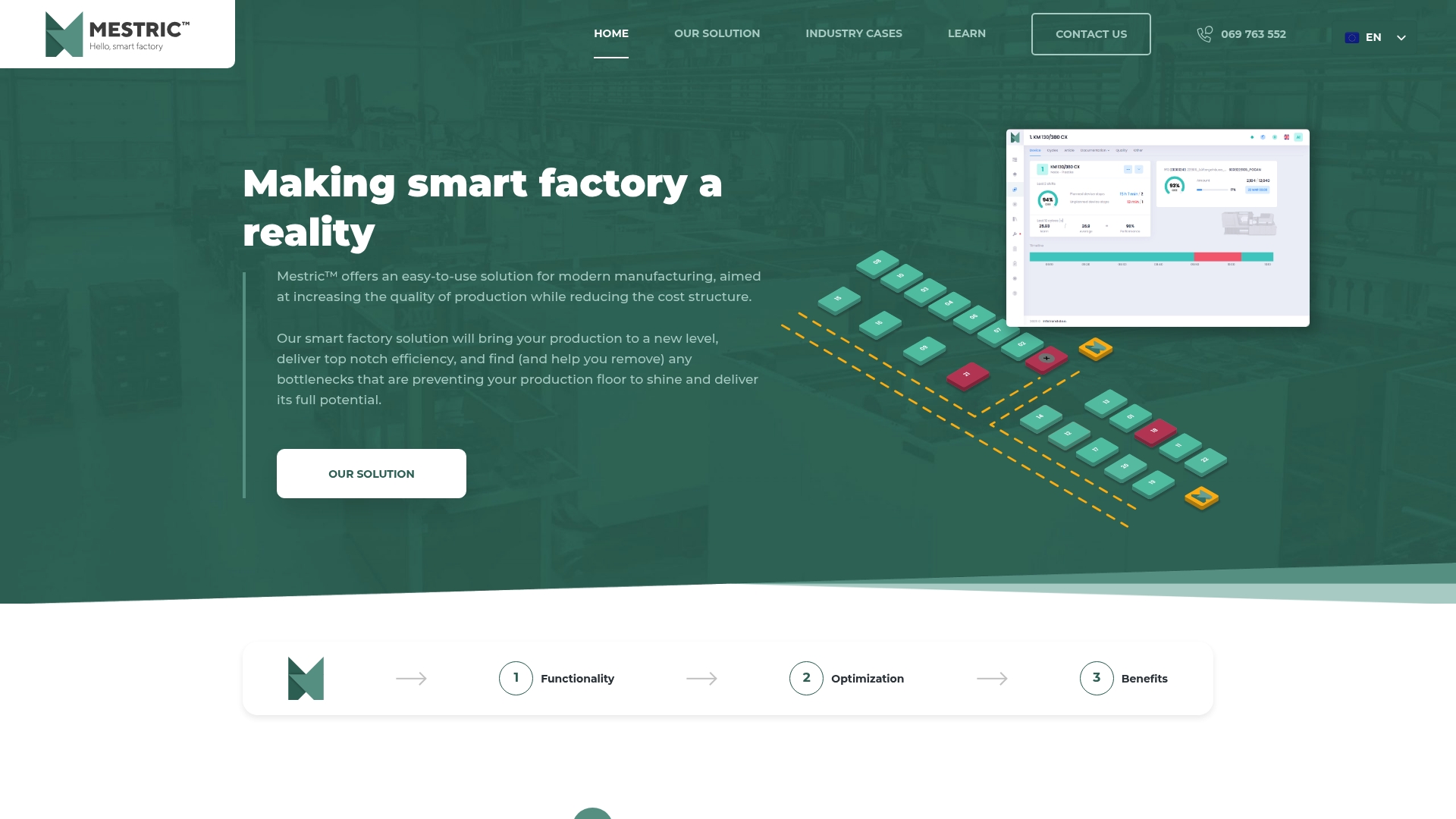
We support a pilot-first path by design, starting on a single line so you can validate fit before committing to a wider rollout, and our AI-powered recommendations help flag process bottlenecks as they emerge rather than after the fact. If you want to see how connected equipment looks in a working production environment, we run onsite demonstrations that show the system handling real shop-floor data. To explore real-time WIP visibility on a single pilot line, get in touch and we will scope a technical pilot around your actual production line.
An MES is shop-floor execution software that sits at ISA-95 Level 3, managing work orders, quality and data collection in real time. ERP plans and finances production at Level 4, so the two systems work together rather than replacing one another.
Process fit for your manufacturing type comes first, followed by proven connectivity to your machines and ERP, low-code configuration, and a realistic total cost of ownership that includes services. A staged pilot on one line is the most reliable way to test all of these before committing further.
A lightweight SaaS pilot can show measurable results in around eight weeks, while a fully validated rollout in a regulated industry often takes 6 to 18 months. The difference mostly comes down to integration testing, validation documentation and training rather than the software itself.
Yes: under the NIS2 directive, medium and large entities in many manufacturing sub-sectors must apply proportionate cybersecurity risk-management measures, and this extends to MES and connected systems. Ask any vendor about their incident handling process and supply chain security checks before signing.
Mestric™ MES connects directly to production equipment to deliver real-time KPIs and offers low-code configuration so a single-line pilot can be set up without a lengthy custom build. We also offer onsite demonstrations to show the system working against real shop-floor data before you commit to a wider rollout.


 069 763 552