


Manufacturing professionals face an overwhelming array of metrics, making it difficult to choose which truly drive operational improvements. Selecting the wrong metrics wastes resources and obscures real performance issues. This guide provides a structured framework to identify and understand the manufacturing metrics that align with your specific operational goals, helping you cut through data noise and focus on what matters most for optimising process performance and achieving measurable results.
| Point | Details |
|---|---|
| Strategic alignment | Select metrics that directly support your specific manufacturing goals and operational priorities. |
| Metric categories | Quality, efficiency, cost, safety, and maintenance metrics address distinct performance areas. |
| Combined insight | Using complementary metrics together delivers stronger performance improvements than single-metric approaches. |
| Digital enhancement | Real-time monitoring and AI analytics dramatically improve metric accuracy and actionability. |
| Context matters | Tailor metric selection to your production environment, industry standards, and available data infrastructure. |
Selecting effective manufacturing metrics requires careful evaluation against specific criteria. The right metrics illuminate operational bottlenecks and guide meaningful improvements, whilst poorly chosen ones generate noise without actionable insights.
Start by ensuring metrics align with your operational and business objectives. A metric tracking machine uptime matters little if your priority is reducing defect rates. Choosing metrics aligned with business objectives and process type improves operational insights and effectiveness. Match each metric to a specific question you need answered about your operations.
Data availability and reliability strongly influence which metrics you can effectively track. You cannot measure what you cannot capture accurately. Assess your current data collection capabilities, equipment connectivity, and workforce capacity for manual data entry. Metrics requiring unavailable or unreliable data become frustrating exercises in guesswork rather than decision-making tools.
Industry-specific standards and benchmarks provide crucial context for metric relevance. What matters in pharmaceutical manufacturing differs from automotive production. Research common metrics in your sector and understand typical performance ranges. These benchmarks help you set realistic targets and identify when your operations deviate significantly from industry norms.
Key selection criteria:
Consider how easily your team can interpret and act on each metric. Complex calculations requiring statistical expertise may be valid but impractical if plant supervisors cannot quickly understand results. The best metrics are those that streamline manufacturing processes by clearly signalling when and where to intervene.
Pro Tip: Start with three to five core metrics rather than attempting to track everything. Master these thoroughly, then expand your measurement portfolio as your team develops proficiency in metric-driven decision making.
Understanding fundamental manufacturing metrics provides the foundation for effective performance management. Each metric reveals different aspects of operational health, from equipment reliability to quality outcomes.
Overall Equipment Effectiveness (OEE) combines three critical factors: availability, performance, and quality. OEE is a widely used composite metric that drives productivity improvements. Calculated as Availability × Performance × Quality, OEE scores above 85% indicate world-class manufacturing, whilst scores below 60% signal significant improvement opportunities. A machine running at 90% of designed speed, experiencing 10% downtime, and producing 95% quality parts achieves an OEE of 76.95%.
Cycle time measures the duration from starting one unit to starting the next. This metric directly influences throughput capacity and customer lead times. Reducing cycle time by even seconds per unit compounds into substantial productivity gains across thousands of units. Compare actual cycle times against engineered standards to identify process inefficiencies or equipment degradation.
First Pass Yield (FPY) indicates the percentage of units manufactured correctly without rework or scrapping. High FPY reduces waste, lowers costs, and shortens lead times by eliminating repeat work. Calculate FPY by dividing units passing initial quality checks by total units started. Production quality monitoring becomes far more effective when FPY trends are tracked consistently.
Downtime metrics highlight productivity losses from equipment failures, changeovers, or other stoppages. Track both planned downtime (scheduled maintenance, changeovers) and unplanned downtime (breakdowns, material shortages) separately. Unplanned downtime particularly signals reliability issues requiring immediate attention. Breaking downtime into specific categories helps prioritise improvement efforts.
Essential metrics at a glance:
Cost per unit provides financial perspective on production efficiency. Calculate by dividing total manufacturing costs (materials, labour, overhead) by units produced. This metric connects operational performance to business outcomes, helping justify improvement investments by quantifying savings potential.
Manufacturing metrics fall into distinct categories, each serving specific performance management needs. Understanding these categories helps build balanced measurement systems that capture comprehensive operational health.

Quality metrics focus on output conformance and defect prevention. Beyond FPY, track defect rates (defects per million opportunities), scrap rates, and rework percentages. Customer return rates and warranty claims provide external quality validation. These metrics reduce waste and protect brand reputation whilst lowering costs associated with poor quality. High-performing manufacturers typically achieve defect rates below 500 parts per million.
Efficiency metrics measure resource utilisation and production speed. OEE leads this category, supported by metrics like cycle time, changeover time, and labour productivity (units per labour hour). These indicators reveal how effectively you convert inputs into outputs. Combining complementary metrics such as quality, efficiency and cost metrics yields better performance than single-metric focus.
Cost metrics translate operational performance into financial impact. Beyond cost per unit, monitor material yield (usable output divided by material input), energy consumption per unit, and labour cost as a percentage of total cost. These metrics identify where resources are consumed inefficiently and quantify improvement opportunities in financial terms stakeholders understand.
Safety metrics ensure workforce wellbeing whilst supporting regulatory compliance. Total Recordable Incident Rate (TRIR) measures injuries and illnesses per 100 full-time workers annually. Near-miss reporting rates and safety observation completion track proactive safety culture. Lost time injury frequency demonstrates the severity and impact of incidents. Safety metrics should never be compromised for productivity gains.
Maintenance metrics for reliability:
Customer and order metrics connect internal operations to external satisfaction. On-time delivery percentage, order lead time, and perfect order rate (delivered complete, on time, damage-free) directly impact customer retention. Schedule attainment measures actual production against planned schedules. These metrics ensure manufacturing quality operational excellence translates into customer value.
Pro Tip: Create a metrics dashboard that displays quality, efficiency, cost, and delivery metrics together. This balanced view prevents optimising one area at another’s expense and reveals hidden trade-offs in your operations.
Digital transformation fundamentally changes how manufacturers collect, analyse, and act on metrics. Traditional manual data collection introduces delays and errors, whilst modern digital systems provide real-time accuracy that enables proactive management.
Real-time data collection through connected equipment eliminates the lag between events and awareness. Sensors and PLCs stream performance data continuously, allowing immediate response to quality deviations or equipment issues. This responsiveness prevents small problems from becoming costly failures. Operators receive alerts within seconds of metrics exceeding thresholds, rather than discovering issues hours later through manual checks.
AI and machine learning enhance predictive maintenance and process optimisation by identifying patterns humans miss. Algorithms analyse thousands of data points to predict equipment failures days or weeks before they occur. This enables scheduled interventions during planned downtime rather than emergency repairs during production runs. AI also optimises process parameters, automatically adjusting settings to maintain quality whilst maximising throughput.
Digital platforms reduce manual reporting errors and free personnel for value-adding activities. Automated data capture eliminates transcription mistakes and ensures consistency. Workers spend time solving problems rather than recording numbers. Manufacturing efficiency with MES tools multiplies as teams focus on improvement rather than data collection.
“Manufacturers using digital MES report 25-35% improvement in OEE and downtime reduction via focused metrics application. These gains stem from faster problem identification, data-driven decisions, and continuous monitoring that manual systems cannot match.”
Metrics like OEE and downtime become far more powerful with AI analytics. Systems identify correlations between variables, revealing that specific material batches correlate with quality issues, or that certain operator shift patterns coincide with efficiency peaks. These insights drive targeted improvements that manual analysis rarely uncovers.
Digital metric advantages:
Integration with Manufacturing Execution Systems (MES) enables continuous monitoring across entire production lines. Real-time production monitoring connects individual machine metrics to line-level and plant-level performance, providing visibility at every operational level. Managers view enterprise-wide dashboards whilst operators access station-specific metrics, all from the same integrated system.
Different metrics serve distinct purposes, with unique strengths and limitations. Understanding these differences helps prioritise which metrics deserve your limited attention and resources.
| Metric | Primary Focus | Ideal Use Case | Key Advantage | Main Limitation |
|---|---|---|---|---|
| OEE | Overall equipment productivity | Comprehensive equipment performance assessment | Combines availability, performance, quality into single score | Can mask specific issues if not broken down into components |
| First Pass Yield | Quality at first attempt | Quality-critical manufacturing, waste reduction | Directly measures quality effectiveness, reveals rework costs | Does not capture severity of defects or customer impact |
| Cycle Time | Production speed | High-volume production, bottleneck identification | Easy to measure and understand, immediate throughput impact | May encourage speed over quality without balancing metrics |
| Downtime | Equipment availability | Maintenance planning, reliability improvement | Highlights lost production capacity, guides maintenance priorities | Does not distinguish between different downtime causes without categorisation |
| Cost Per Unit | Financial efficiency | Cost reduction initiatives, pricing decisions | Connects operations to business outcomes, easy executive communication | Can lag operational changes, may hide quality or safety trade-offs |
OEE provides the broadest productivity view, making it ideal for general equipment performance management. Its composite nature means a single number summarises complex performance, but this simplicity can obscure whether availability, performance, or quality drives poor scores. Always analyse OEE components to identify specific improvement targets.
First Pass Yield focuses specifically on quality outcomes, making it invaluable for industries where defects carry high costs or safety risks. FPY immediately shows quality system effectiveness. However, it treats all defects equally, whether minor cosmetic issues or critical functional failures. OEE and FPY combined offer stronger performance improvements and cost savings than either alone.
Cycle time excels in high-volume environments where small time savings multiply across thousands of units. It is straightforward to measure and understand, making it accessible to frontline workers. The risk is prioritising speed over quality or safety. Always pair cycle time with quality metrics to ensure balanced improvement.
Downtime metrics reveal equipment reliability and maintenance effectiveness. They are particularly valuable for capital-intensive operations where equipment represents significant investment. Break downtime into categories (mechanical failure, material shortage, changeover) to target root causes effectively. Without categorisation, downtime remains a symptom without diagnosis.
Cost per unit bridges operations and finance, translating performance into language executives understand. It helps justify improvement investments by quantifying savings. However, cost per unit can lag operational changes and may encourage short-term cost cutting that damages long-term capability. Monitor cost per unit alongside quality and production quality monitoring to maintain balanced performance.
Your specific manufacturing environment and strategic priorities should drive metric selection. Different production philosophies and industry contexts demand tailored measurement approaches.
Lean and just-in-time manufacturing operations prioritise flow and customer responsiveness. Focus on lead time from order to delivery, schedule attainment, and inventory turns alongside OEE. Just-in-time manufacturing relies heavily on customer order and lead time metrics for inventory minimisation and delivery reliability. On-time delivery percentage becomes critical, as does changeover time that enables small-batch flexibility. These metrics support the lean objective of waste elimination and responsive production.
High-volume production environments emphasise efficiency and unit cost control. Cycle time, downtime, and cost per unit take priority. Track machine utilisation rates and labour productivity to maximise output from existing capacity. Quality metrics like defect rates remain important but often with higher acceptable thresholds than in specialised manufacturing. The goal is consistent, high-volume output at competitive cost.
Quality-critical sector priorities:
Industries like pharmaceuticals, medical devices, or aerospace must prioritise quality metrics above all else. FPY and defect rates become non-negotiable, often with Six Sigma targets (3.4 defects per million). Process capability indices ensure processes remain statistically controlled. Regulatory compliance metrics track audit readiness. In these sectors, streamlining manufacturing processes must never compromise quality standards.
Safety-heavy industries like chemicals or heavy manufacturing integrate TRIR and lost time injury frequency alongside productivity KPIs. Safety metrics receive equal or greater emphasis than efficiency. Near-miss reporting rates encourage proactive hazard identification. These organisations succeed by making safety and productivity mutually reinforcing rather than competing priorities.
Align your metric portfolio to your unique operational context and strategic goals. A job shop manufacturer needs different metrics than a continuous process plant. Review your manufacturing optimisation checklist regularly to ensure metrics evolve with changing business needs. Start with metrics addressing your most pressing challenges, then expand coverage as measurement maturity increases.
Metric selection is never truly finished. As you solve current problems and operational priorities shift, your measurement focus should adapt. Regular quarterly reviews ensure metrics remain relevant and actionable, monitoring manufacturing quality operational excellence as your capabilities mature.
Tracking the right metrics is only valuable when paired with systems that capture accurate data and enable swift action. Mestric offers integrated solutions designed specifically to help plant managers and production supervisors turn metrics into measurable improvements.
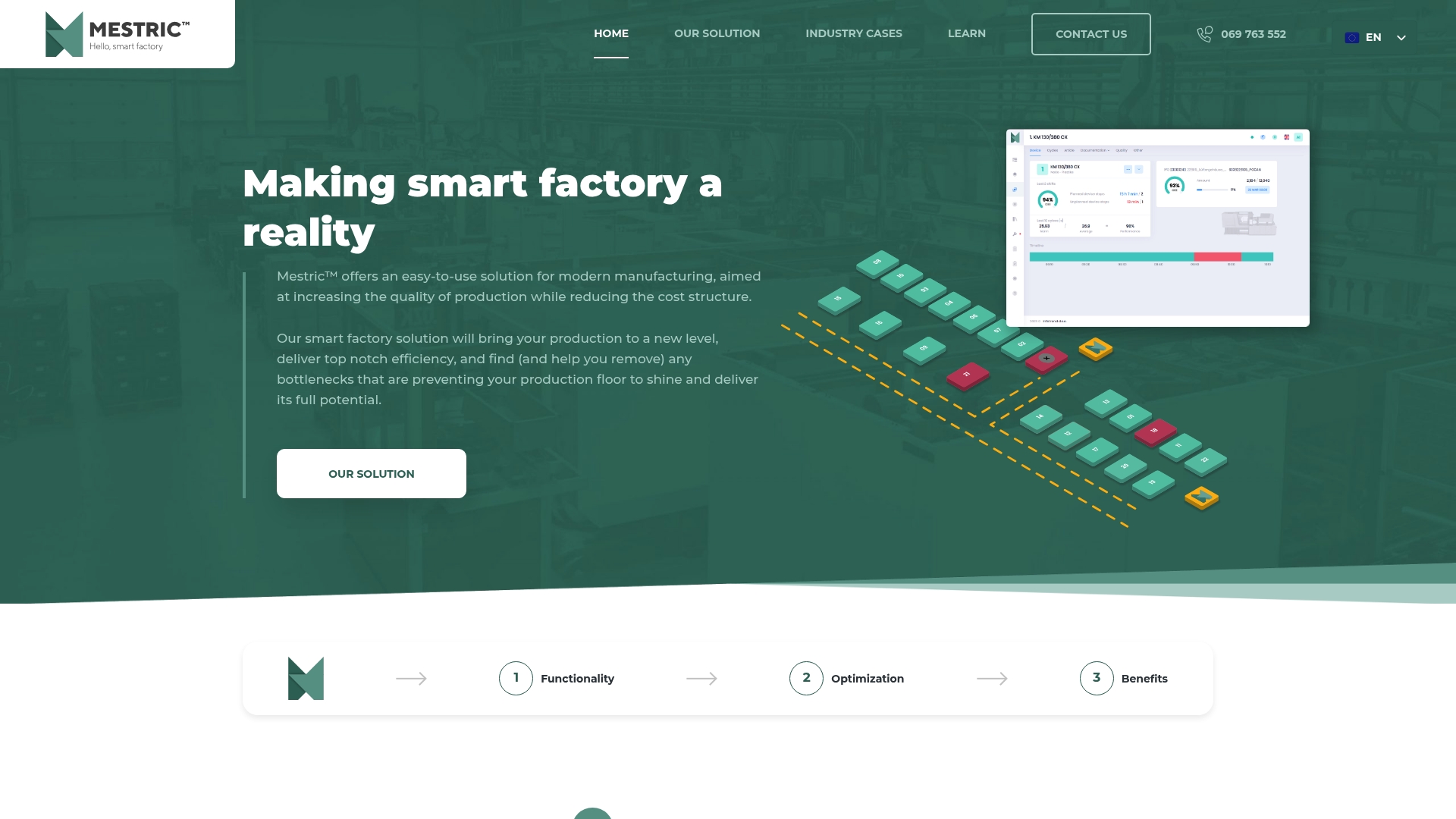
Our Manufacturing Execution System connects directly with your equipment, automatically collecting performance data that feeds real-time dashboards for quality, efficiency, and cost metrics. This eliminates manual data entry whilst providing the instant visibility needed for proactive management. Explore manufacturing software for plant managers that integrates seamlessly with your existing infrastructure.
Implementing effective metrics requires more than software. Our guides help you streamline manufacturing processes by identifying which metrics matter most for your specific operations. Access our manufacturing optimisation checklist to benchmark your current performance and discover targeted improvement opportunities that deliver measurable cost reductions.
Prioritise OEE, First Pass Yield, cycle time, downtime, and cost per unit as foundational metrics. These five cover equipment productivity, quality, speed, availability, and financial efficiency. Start with these core indicators before expanding to specialised metrics addressing your specific operational challenges.
Evaluate your business goals, production processes, and data availability before selecting metrics. Identify your top three operational challenges, then choose metrics that directly measure performance in those areas. Ensure you have reliable data sources for each metric and that your team understands how to interpret results and take action.
Digital tools enable real-time data capture and AI-driven insights for predictive maintenance and optimisation. Connected equipment automatically streams performance data, eliminating manual collection errors and delays. AI analyses patterns to predict failures and optimise processes, whilst integrated dashboards provide instant visibility across all operational levels.
Conduct formal metric reviews quarterly to ensure they remain aligned with operational priorities and business goals. Monitor metric performance daily or weekly for operational management, but assess whether you are tracking the right metrics every three months. Update your metric portfolio when strategic priorities shift or when specific metrics no longer drive meaningful improvements.


 069 763 552