


TL;DR:
- Effective manufacturing digital transformation combines AI automation, process standardization, and phased implementation with clear metrics. Success depends more on governance, culture, and stakeholder buy-in than on technology choice. Organizations that follow structured roadmaps and build trust early see faster and more sustainable results.
Digital transformation strategy is defined as a structured plan to replace manual and legacy processes with connected digital systems that deliver measurable operational gains. The best examples of digital transformation strategies in manufacturing share three traits: AI-driven automation, disciplined process standardisation, and phased implementation backed by strong governance. Organisations like Covestro, Levi Strauss, Pfizer, and BASF have each demonstrated that technology alone does not drive results. The combination of clean core processes, clear metrics, and genuine stakeholder buy-in determines whether a programme succeeds or joins the 75% that fail from poor change adoption.
AI automation is the fastest route to cycle time reduction in manufacturing operations. The evidence is not theoretical. Covestro cut master data creation time from 12 hours to 6 minutes, a 99% reduction, by deploying AI agents on AWS to handle master data governance. That single change freed up hundreds of hours of skilled labour per month and eliminated a bottleneck that had slowed order processing across multiple sites.
Levi Strauss achieved a comparable result through a different route. By standardising global business processes first, the company created the clean data environment that AI agents need to function reliably in order processing. The lesson is direct: AI automation works best when it operates on standardised, well-governed data, not on the messy outputs of legacy systems.
Pro Tip: Before selecting an AI tool, map every step of the process you want to automate. If the process has more than three manual decision points with no documented rules, standardise those decisions first. AI cannot reliably automate what humans have not yet agreed on.
You can see how AI optimises production workflows in manufacturing environments where data quality is already controlled.
Process standardisation is the backbone of every successful large-scale digital transformation. Levi Strauss standardised more than 80% of global processes and retired over 90 legacy systems while consolidating onto a single SAP ERP instance. That is not a technology story. It is a governance story. The company had to make hundreds of decisions about which local variations to eliminate and which to preserve, and those decisions required executive authority and cross-functional agreement.
The practical steps Levi Strauss followed offer a replicable model for manufacturing leaders:
The balance between standardisation and local flexibility is where most programmes struggle. Sites with unique regulatory requirements or product specifications need defined exceptions, not workarounds. Building a formal exception process into the governance model prevents the slow drift back to fragmentation that undermines many ERP programmes.
Pro Tip: Treat your global process template as a living document. Review it every six months and retire exceptions that have become standard practice. This keeps your core clean without creating a bureaucratic barrier to legitimate local needs.
Pfizer’s manufacturing transformation reduced cycle times by over 11% through a modular Manufacturing Execution System (MES) and Electronic Batch Record (EBR) deployment. The technology was not the hard part. Building shared ownership between operators, digital teams, and site leadership was. Pfizer’s approach treated each site as a partner in design, not a recipient of a central IT decision.
The phased model works because it generates early wins that build credibility for the wider programme. When operators at the first site see their cycle times fall and their batch records become easier to complete, they become advocates rather than resistors at the next site.
“Avoid ‘big bang’ technology launches. Sequence initiatives starting with low-complexity, high-value projects to secure stakeholder enthusiasm before tackling the most complex deployments.”
Source: University of Phoenix, digital transformation research
Transparent performance tracking is the mechanism that sustains momentum between phases. When site teams can see their own KPIs improving in real time, they connect daily effort to programme outcomes. That connection is what phased delivery enables that a single large deployment cannot.
Digital twins are virtual models of physical supply networks that update in real time as conditions change. BASF deployed AlphaEvolve, a Google AI system, to build supply chain digital twins that improved model accuracy by over 80% compared to the initial version. That accuracy gain translates directly into better inventory decisions, fewer stockouts, and more coordinated production scheduling across a global network.
The critical design choice BASF made was to integrate human decision patterns into the AI algorithm, not just system data. Supply chain managers make judgement calls that do not appear in transaction records. Capturing those patterns and encoding them into the model is what makes the twin applicable to real-world conditions rather than just historical averages.
| Capability | Outcome |
|---|---|
| Real-time inventory modelling | Reduces excess stock and prevents stockouts |
| Human decision pattern integration | Improves model applicability to live conditions |
| Network-wide coordination | Aligns production schedules across multiple sites |
| Accuracy improvement vs. baseline | Over 80% relative gain in predictive accuracy |
Manufacturing leaders evaluating digital twins should prioritise use cases where the cost of a wrong decision is high and the decision frequency is also high. Inventory replenishment and production sequencing both meet that test. A manufacturing optimisation checklist can help you identify which processes in your facility carry the highest decision cost before you commit to a twin deployment.
Every successful digital transformation programme defines its metrics before it selects its technology. This sequence matters because technology vendors will always present their tools as the answer. Your job as a business leader is to define the question first. Organisations with formal transformation roadmaps reach milestones 47% faster than those without structured plans. That gap exists because a roadmap forces you to agree on what success looks like before spending begins.
A phased roadmap for manufacturing digital transformation follows five stages: assess current performance, define a shared vision, prioritise initiatives by value and complexity, execute in 90-day cycles, and measure outcomes against pre-agreed targets. The 90-day cycle is not arbitrary. Organisations using agile 90-day cycles are 1.7 times more likely to hit their financial targets in transformation programmes. Short cycles force prioritisation and create regular checkpoints where you can redirect investment if a workstream is underperforming.
| Metric type | Examples | Purpose |
|---|---|---|
| Outcome metrics | Cycle time, yield rate, cost per unit | Measure business impact |
| Capability metrics | Data quality score, system uptime | Measure technical readiness |
| Delivery metrics | Milestones completed on time, adoption rate | Measure programme execution |
A shared vision that aligns CFO priorities with operator motivation is the starting point for this roadmap. Without it, financial targets and frontline engagement pull in opposite directions, and the programme stalls. You can explore how factory digitisation connects technology investment to business outcomes in manufacturing contexts.
The most effective digital transformation strategies in manufacturing combine AI automation, process standardisation, and phased execution with clear metrics defined before technology selection begins.
| Point | Details |
|---|---|
| AI automation requires clean data | Standardise processes before deploying AI agents to avoid unreliable outputs. |
| Process standardisation enables scale | Retiring legacy systems and standardising 80%+ of processes creates the foundation for AI and ERP gains. |
| Phased delivery builds adoption | Starting with high-value, low-complexity sites generates early wins that drive wider programme support. |
| Digital twins need human input | Integrating human decision patterns into AI models improves real-world accuracy by over 80%. |
| Metrics come before technology | Organisations with formal roadmaps reach milestones 47% faster than those without structured plans. |
I have spent years reviewing manufacturing digital transformation programmes, and the pattern is consistent. The programmes that fail do not fail because the technology was wrong. They fail because the organisation was not ready to change how it works.
The Pfizer case is the clearest illustration I know. The MES and EBR technology was available to any pharmaceutical manufacturer. What Pfizer did differently was invest in building trust between operators and digital teams before go-live, not after. That investment is not visible in a project plan. It shows up in adoption rates six months after launch.
The Levi Strauss example teaches a harder lesson. Standardising 80% of global processes means telling local teams that their way of doing things is being replaced. That conversation requires executive courage and a governance structure that can hold the line when sites push back. Most programmes compromise too early and end up with a fragmented ERP that delivers a fraction of the promised value.
My honest view is that the technology selection decision is the easiest part of a transformation programme. The hard decisions are about governance, ownership, and the willingness to retire processes that people have built careers around. If your leadership team is not aligned on those questions before you sign a software contract, the contract will not save you.
Agile execution with 90-day cycles is the mechanism that keeps programmes honest. Short cycles surface problems early, when they are still cheap to fix. They also create a rhythm of achievement that sustains organisational energy across what is often a multi-year programme.
— Andraž
Mestric connects directly with your manufacturing equipment to give production managers real-time visibility of performance metrics, downtime, quality parameters, and cost analysis. For business leaders evaluating how to implement digital transformation on the shop floor, that visibility is the starting point for every improvement cycle.
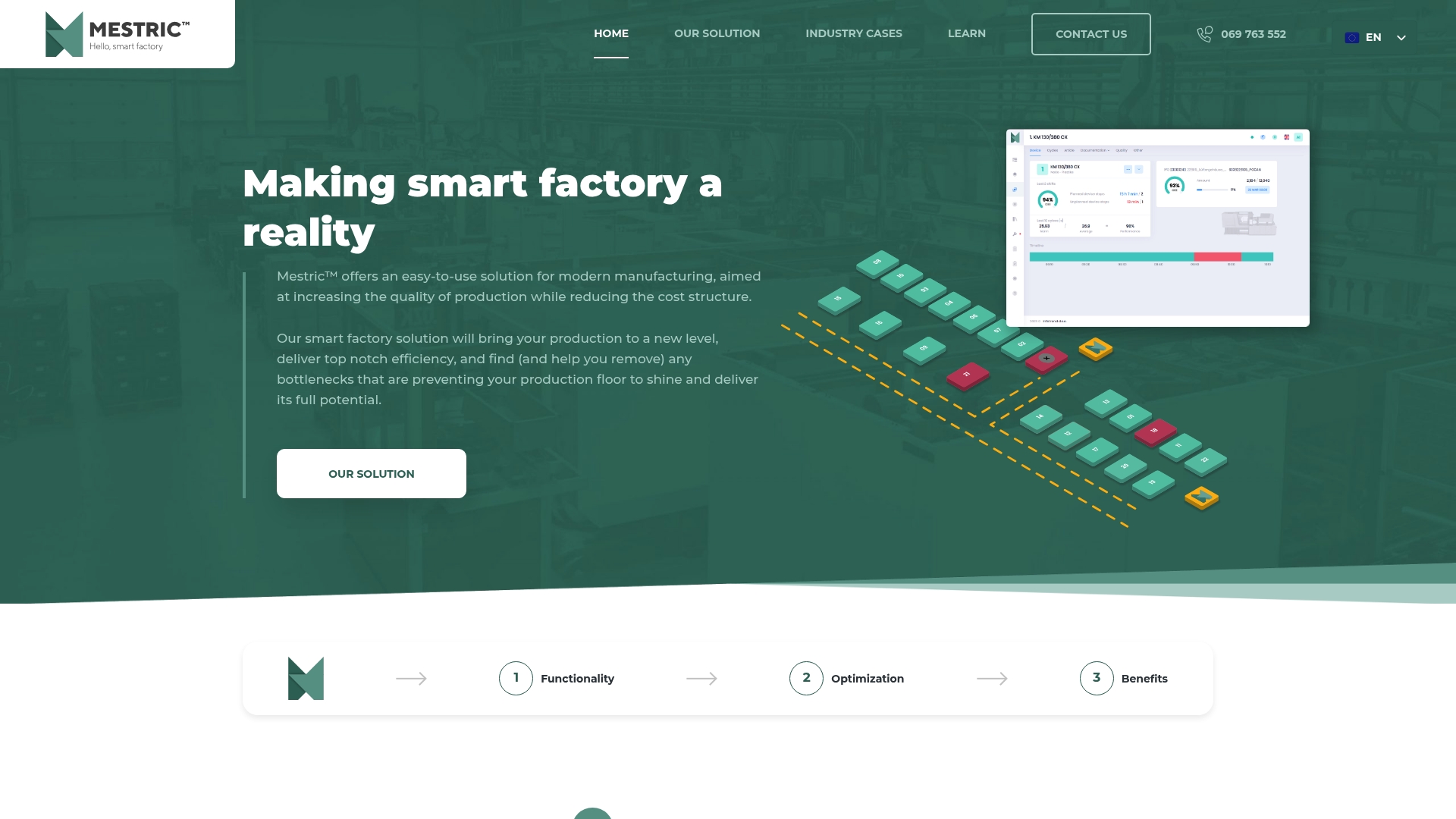
Mestric’s Manufacturing Execution System is built for manufacturers who need measurable results, not a lengthy IT project. You can see how MES compares to traditional manufacturing approaches and what the efficiency gains look like in practice. The platform’s AI-powered tools identify bottlenecks, reduce manual errors, and give your team the production KPIs needed to make confident decisions. If you are ready to see Mestric in action at your facility, request an onsite demonstration and see connected machinery working in your own production environment.
The most common examples include AI-driven automation of repetitive processes, ERP consolidation with process standardisation, phased MES deployment, and digital twin modelling for supply chain decisions. Each strategy works best when paired with clear metrics and strong change management.
Phased and modular deployment is the most reliable method. Start with one site, measure results, share them openly, and use early wins to build confidence before expanding to more complex sites.
Three out of four programmes fail due to poor change adoption rather than technology failure. Success requires aligning business goals, securing stakeholder buy-in, and defining measurable outcomes before selecting any software.
A digital twin is a virtual model of a physical process or supply network that updates in real time. BASF’s use of AlphaEvolve improved supply chain model accuracy by over 80%, enabling better inventory decisions and fewer production disruptions.
Timelines vary by scope, but programmes using agile 90-day execution cycles are 1.7 times more likely to hit financial targets. A phased approach typically delivers measurable results within the first 90 days at the pilot site, with full rollout spanning one to three years depending on the number of sites and systems involved.


 069 763 552