


Obvladovanje sprememb v proizvodnji, or operational change control in manufacturing, works when a Manufacturing Execution System pushes authoritative recipes to line equipment, gates every internal step behind a positive confirmation, and blocks the next order from starting until a first piece passes. The result is a changeover that finishes in a predictable window, leaves an audit trail, and repeats the same way on the next shift. This logic can be built directly into a workflow engine, and it forms the foundation this guide works from.
Kurzfassung:
- Recipe control systems that auto-configure equipment can reduce changeover times from hours to minutes, especially with accurate structured recipe data.
- External preparation tasks should be completed before stops, and internal tasks must be gated with positive confirmation to prevent process drift under pressure.
- Tracking changeover duration by transition pair reveals patterns, enabling focused improvements, while reason-code analysis identifies persistent delays.
- A pilot line with existing PLC signals can generate faster results by applying SMED audits and MES workflows before scaling across multiple lines.
- MES platforms with built-in change control features simplify implementation by automating recipe transfer, gating workflows, and detailed reporting, reducing manual oversight.
You don’t need a six-month project to begin controlling changeovers properly. Start with five moves that expose where your real time is going before you touch a single line of MES configuration.
Most plants already have a changeover checklist. The mistake is assuming digitising it, as it stands, delivers the gains SMED promises. It doesn’t, because a laminated sheet full of “fake internal” tasks just becomes a faster way to do the same slow thing. Real time savings usually come from reclassifying those hidden tasks as external prep, not from a nicer screen.
Before you build anything in MES, capture five fields for every checklist line:
Once those fields exist, the workflow logic follows naturally: external tasks get pushed and completed before the scheduled stop, and internal steps stay locked until their prerequisites confirm. The final gated step should always be first-piece verification, with failures routed back into a defined corrective loop rather than left to operator judgement. Gating tasks and forcing positive confirmation at each stage is what stops a changeover from silently drifting back to the old sequence under pressure.
Pro-Tipp: If your current changeover sheet has more than three “internal” tasks that only need information, not the stopped machine, you’ve found your fastest win before writing a single MES workflow rule.
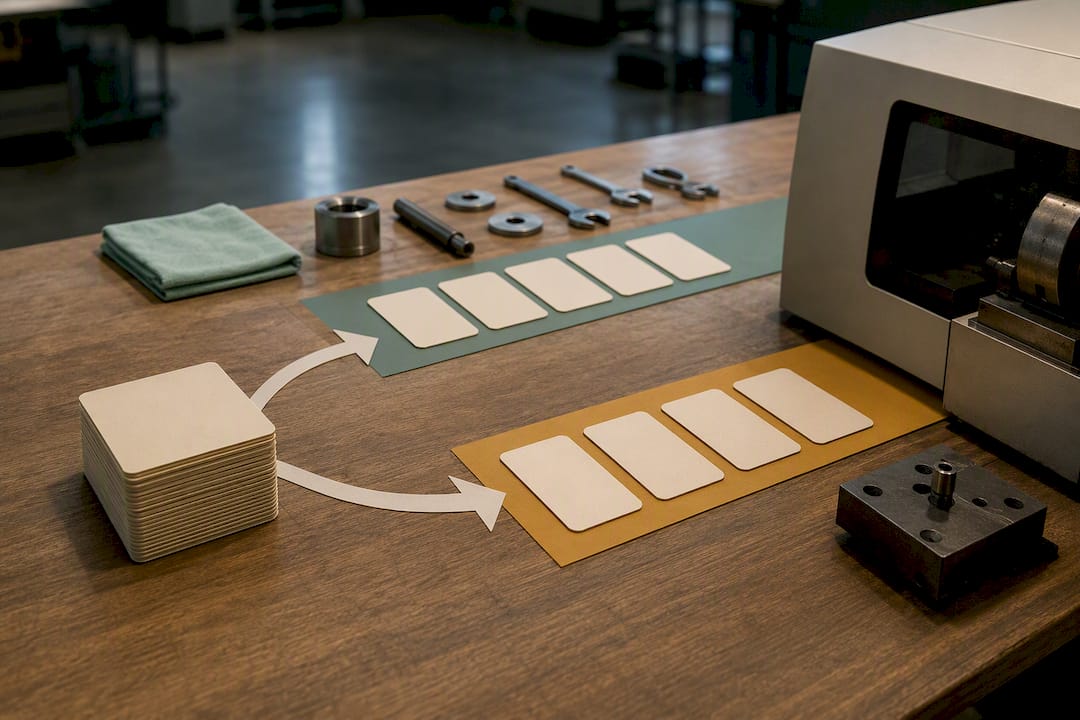
For a deeper walk through classifying tasks, our guide on shrinking changeovers toward 10 minutes with SMED covers the audit method in more detail.
Not every automation pound buys the same reduction in setup time. Recipe-based control is usually the highest-leverage investment, because recipe transfer straight from scheduling to line equipment can cut changeover times from hours to minutes by automatically adjusting conveyors, fillers, coders, and packers to the new product’s parameters.
Priorities worth mapping against your own product variance:
The decision on how far to automate should follow your SKU variance, not a generic benchmark. A line running four SKUs a month doesn’t need the same servo investment as one running forty. Automation hardware such as auto pallet changers shows the same logic applied to machining: the equipment closes the loop, but only when it’s fed accurate, structured recipe data from above.
A Manufacturing Change Request (MCR) and its resulting Manufacturing Change Order (MCO) don’t need to be bureaucratic. They need to answer four things clearly: scope, impact, who approved it, and what happens if it goes wrong.
A structured framework with defined phases and attributes helps companies adapt a generic change process to their own operation rather than forcing every change through a one-size-fits-all template. Re-validation triggers are worth defining upfront rather than debating case by case: system upgrades, significant configuration changes, process changes affecting electronic records, and audit findings are the four that come up repeatedly across regulated environments. Our guide to managing manufacturing changes walks through building this governance flow inside MES.
An average changeover time across all product transitions tells you almost nothing, because switching from Product A to Product B rarely takes the same time as B to C. Track changeover duration by transition pair, and the patterns that matter start showing up within a few cycles.
Statistic callout: Recipe transfer and servo-driven automation together are among the levers documented to cut changeover durations from hours to minutes, which is why transition-pair reporting matters: it shows you exactly which pairs still run on the old hourly logic.
Reports should differ by audience. Planners need transition-pair duration to build realistic schedules; maintenance needs reason-code frequency to prioritise fixes; operations needs adherence rate to know whether the trained sequence is actually being followed on the floor.
Pick a pilot line that changes over often and already has usable machine signals. A line switching twice a shift with existing PLC connectivity will surface results faster than a line that changes over monthly.
Pro-Tipp: Watch for three pitfalls that quietly sink pilots: digitising a sequence nobody has actually SMED-audited, confirmation methods that operators can skip under pressure, and skipping first-piece checks when the line is running behind schedule.
Our step-by-step guide to streamlining manufacturing workflow covers the training and role-assignment side of scaling across multiple lines.
Quick wins cluster around high-variant packaging lines and contract manufacturing, where changeovers happen daily and the cost of a slow one compounds fast. Temper expectations on manual-only lines with little I/O; you’ll need to add basic signals before MES gating has anything to gate. None of this works without planner, maintenance, and executive alignment on the same reason codes and the same definition of “done.”
— Andraž
Some MES platforms handle the mechanics described above directly: recipe transfer from scheduling into line equipment, gated workflows that block a start until prerequisites confirm, KPI dashboards that split changeover time by transition pair, and reason-coded reporting that feeds straight into OEE.
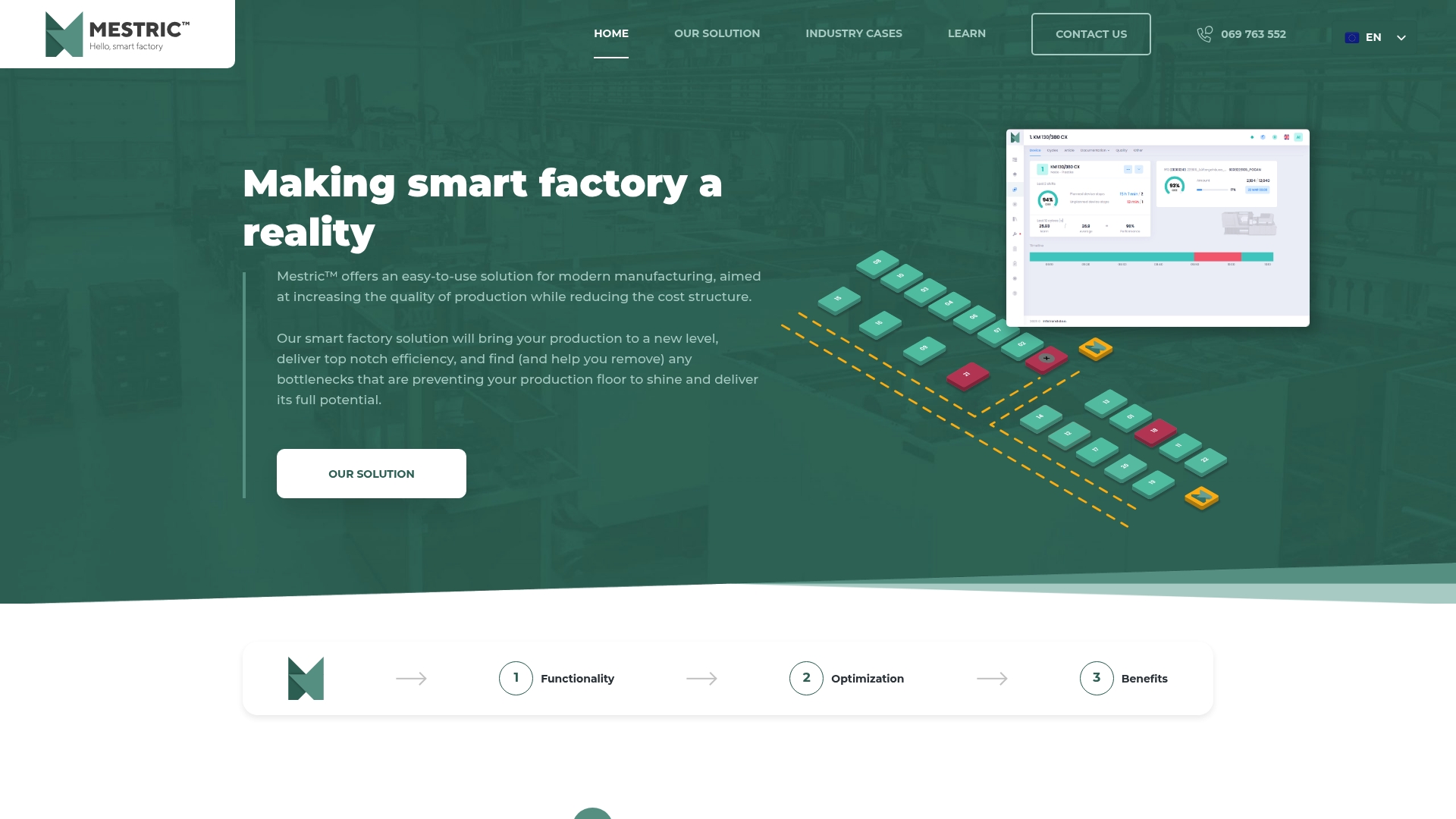
Instead of building this logic from scratch across separate systems, such solutions can be configured around existing lines and PLCs. An onsite assessment of one pilot line can map your current changeover sequence against the gaps this article covers, and quantify where the time is going before committing to a wider rollout. If you want to see how that assessment works against your own equipment, book a demo workshop and bring your worst-performing transition pair.
It means using a Manufacturing Execution System to control production changes: pushing authoritative recipes to equipment, gating workflow steps, and verifying first pieces before a new run starts.
Recipe-based control combined with servo-driven adjustments and MES integration can cut changeover times from hours to minutes by automatically adjusting machine parameters.
Common triggers include system upgrades, significant configuration changes, process changes affecting electronic records, and audit findings.
No. Digitising a bad sequence just speeds up the wrong process; run a SMED audit first to reclassify hidden internal tasks before building MES workflows around them.
Mestric™ enforces gated MES workflows, recipe authority from scheduling to equipment, and reason-coded reporting, so changeovers stay auditable and measurable on every line.


 069 763 552