


Kurzfassung:
- Many manufacturers lose significant output due to undetected bottlenecks, often relying on delayed reports.
- Real-time performance tracking continuously gathers and displays live data, enabling immediate issue identification.
- Adopting this approach improves responsiveness, reduces waste, and enhances strategic decision-making.
An undetected bottleneck running for just one hour can cost a mid-sized manufacturer thousands of pounds in lost output, waste, and reactive firefighting. Yet many plants still rely on end-of-shift summaries or weekly reports to understand how production actually performed. That gap between when a problem occurs and when you learn about it is where efficiency quietly bleeds away. This article explains what real-time performance tracking genuinely involves, why it matters now more than ever, and how your team can adopt it in a measured, practical way.
| Punkt | Details |
|---|---|
| Immediate issue detection | Real-time tracking reveals problems as they happen, enabling swift action and less downtime. |
| Agile decision-making | Managers make smarter, faster choices with up-to-the-minute production data. |
| Continuous improvement | Live data supports ongoing optimisation in quality, cost and output efficiency. |
| Risk reduction | Spot and solve issues before they escalate, preventing costly setbacks. |
Real-time performance tracking is the continuous collection, processing, and display of production data as events happen on the shop floor. Rather than waiting for a supervisor to collate figures at the end of a shift, your systems capture and surface that information the moment it is generated. Real-time production monitoring is transforming how manufacturers identify problems, respond to deviations, and maintain consistent output quality.
The data typically comes from several interconnected sources:
The fundamental difference between real-time and batch reporting is timing. Batch reporting collects data over a fixed period and presents it after the fact. Real-time systems process data continuously, often within seconds of an event occurring. For a production manager, that distinction is enormous.
Here is a quick comparison of what each approach typically captures and how quickly:
| Metric tracked | Batch reporting | Real-time tracking |
|---|---|---|
| Machine output rate | End of shift | Every cycle |
| Unplanned downtime | Daily summary | Instant alert |
| Quality deviations | Post-inspection batch | At point of detection |
| Energy consumption | Monthly billing data | Per machine, per hour |
| Overall Equipment Effectiveness (OEE) | Weekly review | Live dashboard |
The most commonly tracked metrics in a real-time environment include production output per line or cell, machine downtime and its root cause, quality deviations such as scrap rate and rework, energy consumption per unit produced, and adherence to planned production schedules. Together, these KPIs (key performance indicators) give operations managers a complete, living picture of the plant rather than a historical snapshot.
With a clear sense of what real-time performance tracking entails, it is easier to see why so many manufacturers are making the shift. The tangible advantages extend across operations, quality, and cost.
1. Faster reaction to production issues
When a machine stops unexpectedly, every minute of inaction compounds the loss. Real-time alerts notify the right person immediately, rather than waiting for a supervisor to notice during a walkround. Teams that reduce manufacturing downtime this way often report significant savings in planned versus unplanned maintenance costs alone.
2. Continuous feedback for leaner operations
Real-time data feeds back into production planning continuously. If a line is running faster than target, you can adjust material supply. If it is underperforming, you can investigate before the issue cascades. This creates a tighter, leaner loop between actual performance and planned performance.
3. Reduced waste through early quality intervention
Quality deviations caught after hundreds of non-conforming parts have been produced are far more costly than those caught after ten. Real-time systems allow you to monitor production quality at every stage, triggering alerts the moment a parameter drifts outside acceptable limits.
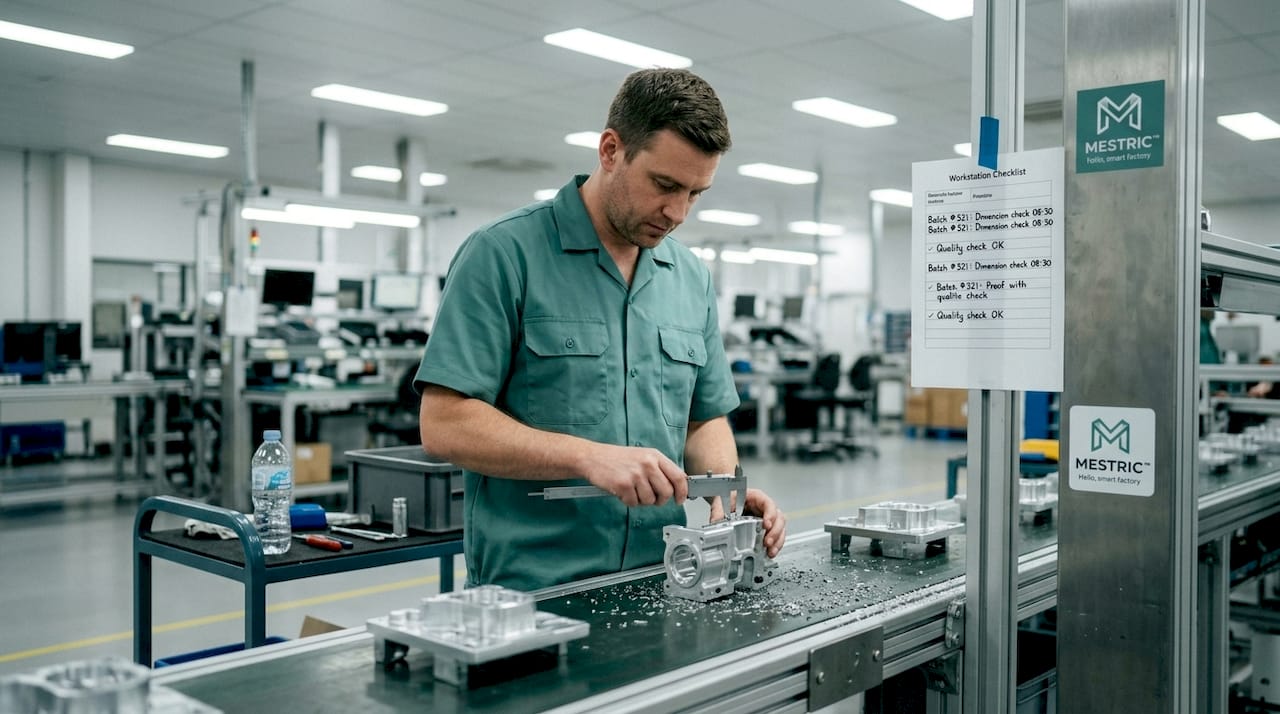
4. Better resource utilisation
When you can see machine occupancy, staff deployment, and material flow in real time, you allocate resources where they are needed most. This visibility directly supports manufacturing revenue optimisation by ensuring your highest-value assets are not sitting idle.
5. Data-driven confidence in planning
Accurate live data makes production planning more reliable. Schedulers can commit to customer delivery dates with greater certainty because they are working from current performance rather than historical averages.
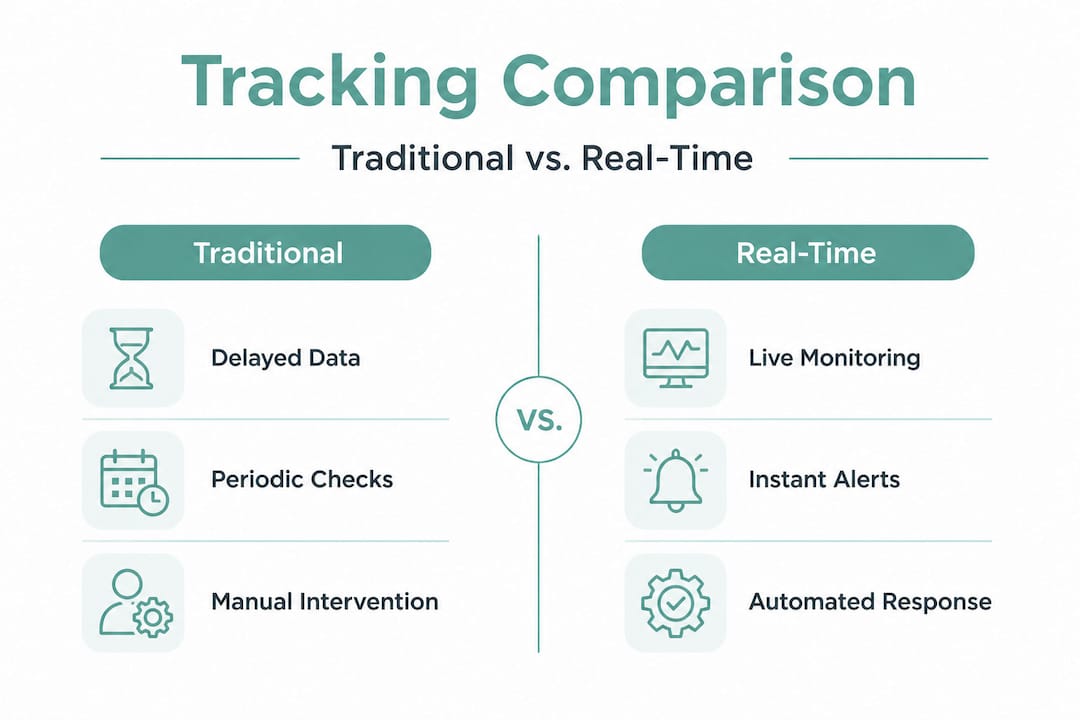
Here is a direct comparison to illustrate the operational difference:
| Factor | Traditional tracking | Real-time tracking |
|---|---|---|
| Issue detection speed | Hours to days | Seconds to minutes |
| Data accuracy | Prone to manual entry errors | Automated, consistent |
| Cost impact of downtime | High, often unquantified | Measurable and reduced |
| Quality defect volume | Discovered in batches | Caught early, fewer units lost |
| Planning reliability | Based on averages | Based on live actuals |
Pro Tip: One of the most common mistakes manufacturers make when rolling out performance tracking is focusing exclusively on output volume. High output with growing scrap rates is not a success. Make sure your dashboards surface quality metrics alongside throughput numbers, so your team sees the full picture rather than an optimistic partial view.
Having examined the pay-offs, it is worth looking at how live data reshapes the way you and your managers actually make decisions, at both the tactical and strategic level.
Operational decisions on a production floor rarely wait for a convenient moment. A quality failure, an unexpected machine stoppage, or a surge in demand all demand an immediate, informed response. When your data is hours old, any decision you make is based on an outdated picture of the plant. Real-time analytics in manufacturing change this dynamic entirely.
“The ability to act on data within minutes rather than hours is not a marginal improvement. It is the difference between preventing a problem and recovering from one.”
Here are the key decisions that real-time data accelerates and improves:
Beyond the immediate tactical benefits, the role of data in manufacturing extends into strategic planning. When you have months of reliable real-time data, you can identify systemic performance patterns, plan capital investment with greater accuracy, and scale production with confidence. Leaders who rely on data-driven manufacturing outcomes are consistently better positioned to respond to market shifts and customer demands.
The strategic value becomes most apparent during periods of change. If you are launching a new product, expanding to a new shift pattern, or responding to a sudden increase in orders, real-time data gives you a verified baseline and live feedback during the transition. Guesswork is replaced with evidence.
Knowing the advantages is only half the picture. The most common hurdles for manufacturing firms considering real-time tracking are practical, and each one has a workable solution.
Common barriers:
How manufacturers are overcoming them:
The key is a structured, phased approach rather than attempting full-plant deployment immediately. Automating production tracking demonstrates that even automotive plants with complex legacy environments can achieve meaningful results when the rollout is planned carefully.
Here is a step-by-step path to adoption:
Pro Tip: Start with the area of your plant that causes the most disruption when things go wrong. Tracking a critical bottleneck machine or your highest-value line delivers faster, more visible results. Early wins build internal confidence and create advocates for wider adoption across the facility.
There is a temptation in manufacturing to view real-time tracking as a technology trend, something worth watching but not urgent. That view carries significant risk.
The plants that delayed adopting earlier generations of manufacturing technology, whether that was statistical process control, lean production methods, or ERP systems, did not simply fall behind temporarily. Many found themselves locked into operational patterns that were increasingly difficult and expensive to correct. Real-time performance tracking follows a similar trajectory.
The competitive landscape is shifting. Customers expect shorter lead times, higher consistency, and greater transparency from their supply chain partners. Regulators in many sectors require documented evidence of process control. Investors and senior leadership increasingly expect quantified performance data rather than anecdotal reporting. All of these pressures point in the same direction: the need for continuous, verified, and actionable operational data.
There is also a deeper shift in what it means to lead a manufacturing operation well. The mindset of waiting for problems to surface through manual reporting is not simply inefficient. It is increasingly incompatible with the pace of modern production environments. Real-time tracking enables a culture of transparency and continuous improvement, where teams act on evidence rather than instinct and problems are prevented rather than managed after the fact.
The good news is that adoption does not require a complete overhaul of your facility. A step-by-step optimisation approach means you can build capability progressively, validating each stage before committing to the next. The question is not whether real-time tracking will become standard practice. It already is for the most competitive manufacturers. The question is how quickly you want to be among them.
If the principles in this article resonate with you, the practical next step is finding a platform that puts them into action without adding unnecessary complexity to your operations. Mestric™ is built specifically for manufacturing teams who want live performance data, quality monitoring, and AI-powered insights in a single, connected system.
Explore how MES vs. traditionelle Fertigung stacks up in practical terms, or browse the full guide to manufacturing software types to understand where real-time tracking fits within your broader technology strategy. You can also learn more about the direct operational impact of real-time production data benefits and how facilities like yours are using it today. When you are ready, the Mestric™ team can walk you through a live demonstration on your own shop floor.
Begin by identifying the most critical bottlenecks or high-value assets in your facility, then pilot a focused tracking solution before scaling. MES tools make it straightforward to start small and build from there.
It provides immediate alerts and live performance data, allowing your maintenance and operations teams to address issues before they escalate into full stoppages. Early detection through MES-driven monitoring is one of the most direct ways to protect production uptime.
Most modern solutions offer APIs and standard integration options that work alongside legacy equipment, though a phased rollout significantly reduces implementation risk. Automating production tracking in established plants is achievable with the right approach.
The highest-priority metrics are typically machine uptime, production output rates, quality deviations, and unplanned stoppages, as these have the most direct impact on cost and delivery. Real-time production monitoring platforms are designed to surface exactly these indicators without requiring manual data entry.


 069 763 552