


Manufacturing managers struggle daily with choosing productivity checklists that deliver measurable results. Unplanned downtime costs globally $1.4 trillion annually, making the right checklist selection business critical. This article provides a practical framework for implementing integrated productivity checklists covering maintenance, communication, analytics, ergonomics, and standardised procedures. You will learn actionable steps to reduce downtime, improve team alignment, track KPIs effectively, and enhance workplace safety whilst boosting overall equipment effectiveness.
| Punkt | Details |
|---|---|
| Integrated checklists drive adoption | Selecting checklists integrated with real-time data systems improves team engagement and measurable performance gains. |
| Preventive maintenance reduces downtime | Structured preventive maintenance programmes drastically cut unplanned stoppages and boost OEE above 85%. |
| Digital tools enhance communication | Digital platforms reduce errors, improve task visibility, and increase throughput across production shifts. |
| KPI tracking enables improvement | Real-time analytics and performance dashboards support continuous optimisation and informed decision-making. |
| Ergonomics increase safety | Workplace ergonomics reduce musculoskeletal injuries by one-third whilst sustaining high productivity levels. |
Selecting an effective productivity checklist requires careful assessment of your plant’s unique operational context. Integration with MES and analytics platforms is critical for actionable insights, ensuring your checklist works seamlessly with existing systems rather than creating data silos. Managers must balance maintenance investment against downtime risk to allocate resources optimally.
Consider these essential criteria when evaluating checklists:
Usability determines success or failure. A technically perfect checklist that operators find cumbersome will gather dust whilst production suffers. Digital compatibility accelerates improvement cycles, allowing managers to spot bottlenecks quickly and implement corrective actions before minor issues become major problems.
Pro Tip: Engage operators and supervisors directly in checklist design sessions to ensure practical applicability and build ownership from day one.
Preventive maintenance forms the foundation of manufacturing productivity. Plants lose an average of 323 hours yearly to unexpected breakdowns, translating directly into lost revenue and missed delivery commitments. World-class preventive maintenance programmes achieve OEE above 85% with less than 10% reactive work, demonstrating the enormous potential for improvement in most facilities.
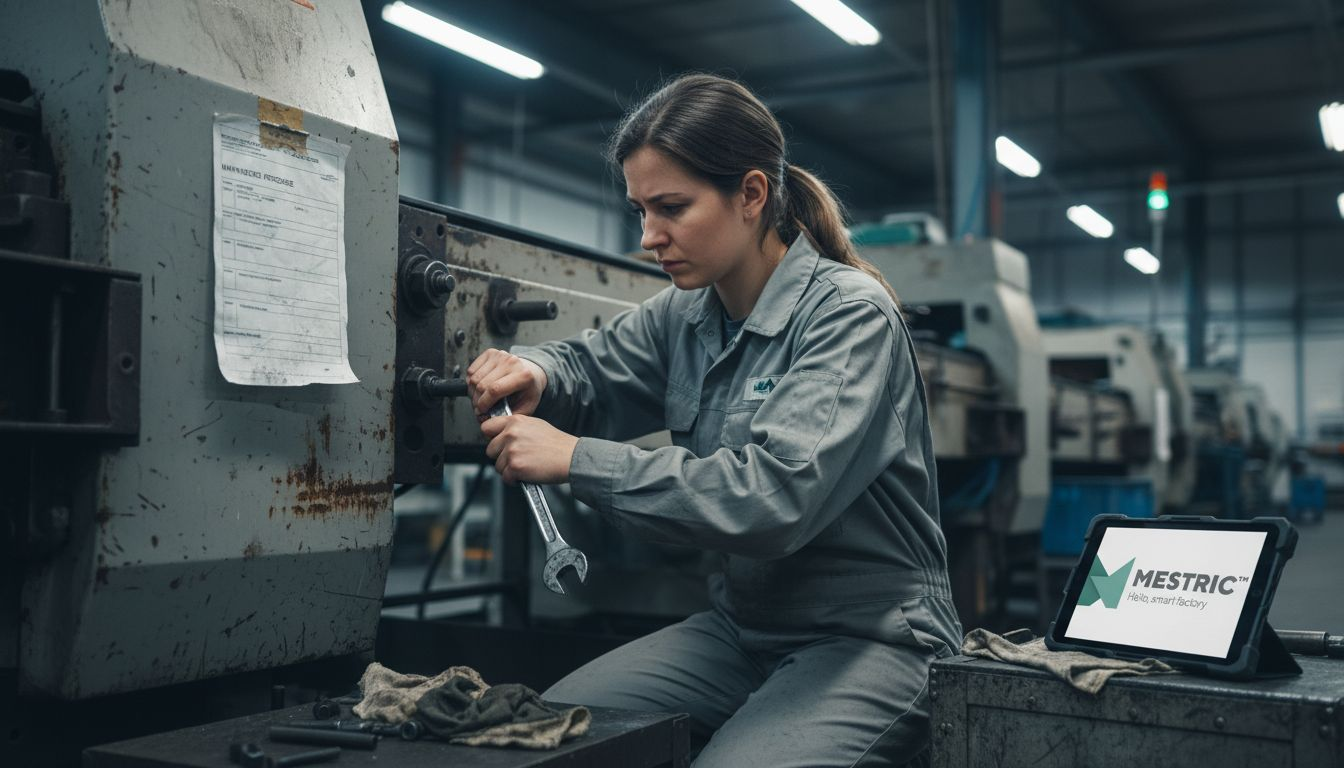
Schedule maintenance intervals based on asset criticality rather than arbitrary calendar dates. Critical equipment feeding bottleneck operations demands more frequent attention than redundant backup systems. Use failure history data to refine intervals continuously, identifying patterns that predict problems before they occur.
Implement these proven preventive maintenance practices:
Global manufacturing facilities lose $1.4 trillion annually to unplanned downtime, with individual plants averaging 323 hours of lost production each year.
Standardised procedures eliminate guesswork during maintenance activities. When technicians follow identical steps regardless of shift or individual, you achieve consistent quality and can diagnose problems by comparing current readings against historical baselines. Failure codes create searchable databases revealing which components fail most frequently, guiding spare parts inventory and capital replacement decisions.
Production floors operate as complex ecosystems where miscommunication creates costly ripple effects. Digital communication platforms transform how teams coordinate, providing real-time visibility into task assignments, completion status, and emerging issues requiring immediate attention. Structured communication reduces errors whilst increasing throughput measurably.
Digital platforms replace informal handoffs with documented task transfers. When one shift ends and another begins, critical information no longer depends on verbal conversations that may be forgotten or misunderstood. Instead, incoming teams see exactly what happened during previous hours, which machines need attention, and what priorities demand immediate focus.
Implement these digital communication practices:
Improved engagement through intuitive digital tools reduces absenteeism and fatigue-related errors. When operators feel heard and see their input driving real improvements, they invest more effort in optimising production workflow with AI and other advanced initiatives. This psychological ownership translates into tangible productivity gains.
Pro Tip: Select platforms with intuitive interfaces requiring minimal training to achieve high adoption rates across all shifts, including less tech-savvy team members.
You cannot improve what you do not measure. Tracking KPIs like OEE, MTBF, MTTR, downtime, and scrap rate enables process optimisation by revealing exactly where production loses efficiency. Real-time dashboards transform raw data into actionable insights, allowing managers to spot trends before they become problems.
Integrated analytics platforms connect equipment sensors, quality systems, and maintenance records into unified views. This integration eliminates manual data collection whilst providing instant visibility into manufacturing efficiency workflow with MES systems that drive continuous improvement.
| KPI | Definition | Productivity relevance |
|---|---|---|
| OEE | Overall Equipment Effectiveness measuring availability, performance, and quality | Primary metric showing total productive capacity utilisation |
| MTBF | Mean Time Between Failures tracking reliability | Predicts maintenance needs and identifies chronic problem equipment |
| MTTR | Mean Time To Repair measuring response effectiveness | Highlights maintenance efficiency and spare parts readiness |
| Downtime rate | Percentage of scheduled production time lost to stoppages | Direct measure of availability losses requiring immediate attention |
| Scrap rate | Defective units as percentage of total production | Quality indicator revealing process control issues |
Leverage AI-powered analytics to predict maintenance requirements and performance trends. Machine learning algorithms identify subtle patterns humans miss, forecasting failures days or weeks before they occur. This predictive capability allows scheduling repairs during planned downtime rather than enduring emergency stoppages.
Align KPIs with business objectives to focus improvement efforts where they matter most. A plant prioritising delivery reliability might emphasise uptime metrics, whilst another competing on quality would weight scrap rates more heavily. Regular data reviews engage teams in continuous improvement, transforming abstract numbers into concrete action plans.
Das operational efficiency real-time impact becomes visible when dashboards update every few seconds rather than daily or weekly. Managers intervene immediately when metrics drift, preventing small deviations from snowballing into major problems.
Workplace design directly impacts productivity through worker health, fatigue, and injury rates. Musculoskeletal disorders account for around one-third of manufacturing injuries, creating enormous hidden costs through absenteeism, reduced output from injured workers, and replacement labour training expenses. Prioritising ergonomics delivers measurable returns through sustained high performance.
Ergonomic assessments identify risks before they cause injuries. Analyse workstation heights, repetitive motion patterns, lifting requirements, and environmental factors like lighting and temperature. Small adjustments often yield disproportionate benefits, such as raising a conveyor belt 15 centimetres to eliminate constant bending.
Implement these safety and ergonomics practices:
Reducing worker fatigue lowers errors and unplanned downtime directly. Tired operators make mistakes, miss quality issues, and operate equipment less efficiently than alert colleagues. Ergonomic improvements sustain energy levels throughout entire shifts, maintaining consistent output rather than seeing productivity decline as shifts progress.
Digital monitoring systems track near-miss incidents and minor discomfort reports, revealing problems before they escalate into lost-time injuries. This proactive approach protects both worker wellbeing and production continuity.
Documenting best practices through standard operating procedures preserves institutional knowledge and ensures consistent execution regardless of personnel changes. SOPs supported by detailed checklists reduce process variability whilst providing clear training materials for new operators. This standardisation drives sustainable productivity gains rather than temporary improvements that fade over time.
Accessible SOPs must be readily available at point of use, not locked in filing cabinets or buried in shared drives. Digital platforms deliver procedures to mobile devices operators carry, providing step-by-step guidance exactly when needed. Visual aids like photos and videos enhance understanding beyond what text alone achieves.
Implement these SOP and lean manufacturing practices:
Lean tools minimise waste systematically. The 5S methodology (Sort, Set in Order, Shine, Standardise, Sustain) creates organised workspaces where operators find tools instantly rather than wasting minutes searching. Kaizen events bring cross-functional teams together solving specific problems through structured improvement sprints.
| Aspect | Lean SOP approach | Ad hoc process approach |
|---|---|---|
| Consistency | Standardised steps ensure identical execution | Variability based on individual interpretation |
| Training | Clear documented procedures accelerate onboarding | Knowledge transfer depends on availability of experienced workers |
| Improvement | Regular updates capture best practices systematically | Improvements remain isolated to individuals |
| Waste reduction | Structured elimination of non-value activities | Waste persists unrecognised |
| Quality | Predictable outcomes from controlled processes | Inconsistent results requiring extensive inspection |
Standardised operations drive consistent quality and efficiency by eliminating the variation that creates defects and delays. When every operator follows identical procedures, you can confidently trace problems to specific process steps rather than wondering whether execution differed.
Different manufacturing environments demand tailored checklist combinations. Small plants with limited staff benefit from simplified integrated checklists, whilst large facilities with dedicated specialists can implement comprehensive programmes across all categories. Digital maturity also influences which approaches deliver optimal returns.
Best maintenance and project management practices can boost productivity up to 45%, but only when matched appropriately to operational context. A small plant forcing enterprise-grade systems onto a dozen operators wastes resources, whilst a large facility using spreadsheets leaves enormous potential unrealised.
| Checklist category | Am besten geeignet für | Primary benefit | Implementation complexity |
|---|---|---|---|
| Preventive maintenance | All plants regardless of size | Reduces unplanned downtime and extends asset life | Moderate, scales with asset count |
| Digital team management | Medium to large plants with multiple shifts | Enhances communication and reduces coordination errors | Low to moderate, depends on platform |
| KPI tracking with AI analytics | Large digitally mature facilities | Enables predictive insights and rapid optimisation | High, requires data infrastructure |
| Ergonomics and safety | All plants with manual operations | Reduces injuries and sustains output quality | Moderate, requires expertise |
| Lean SOPs | All plants seeking process stability | Minimises waste and ensures consistent quality | Moderate, requires cultural commitment |
Preventive maintenance delivers universal value across all manufacturing contexts. Even tiny facilities with minimal equipment benefit from scheduled upkeep preventing costly emergency repairs. Digital team management shines in medium-sized operations where coordination complexity justifies platform investment but budgets remain constrained.
Full KPI tracking with AI analytics suits large plants possessing both data infrastructure and analytical talent to extract insights. Smaller facilities achieve better returns from simpler dashboards tracking core metrics manually. Ergonomics matter everywhere humans work, scaling implementation intensity to injury risk levels and workforce size.
Lean SOPs provide foundational stability enabling all other improvements. Without standardised processes, you cannot measure improvement accurately because baseline performance keeps shifting. Start with SOPs, then layer additional checklist components as capabilities mature.
Implementing comprehensive productivity checklists requires robust digital infrastructure supporting data collection, analysis, and team coordination. Understanding 7 types of manufacturing software every plant manager should know helps you select tools matching your operational requirements and integration capabilities.
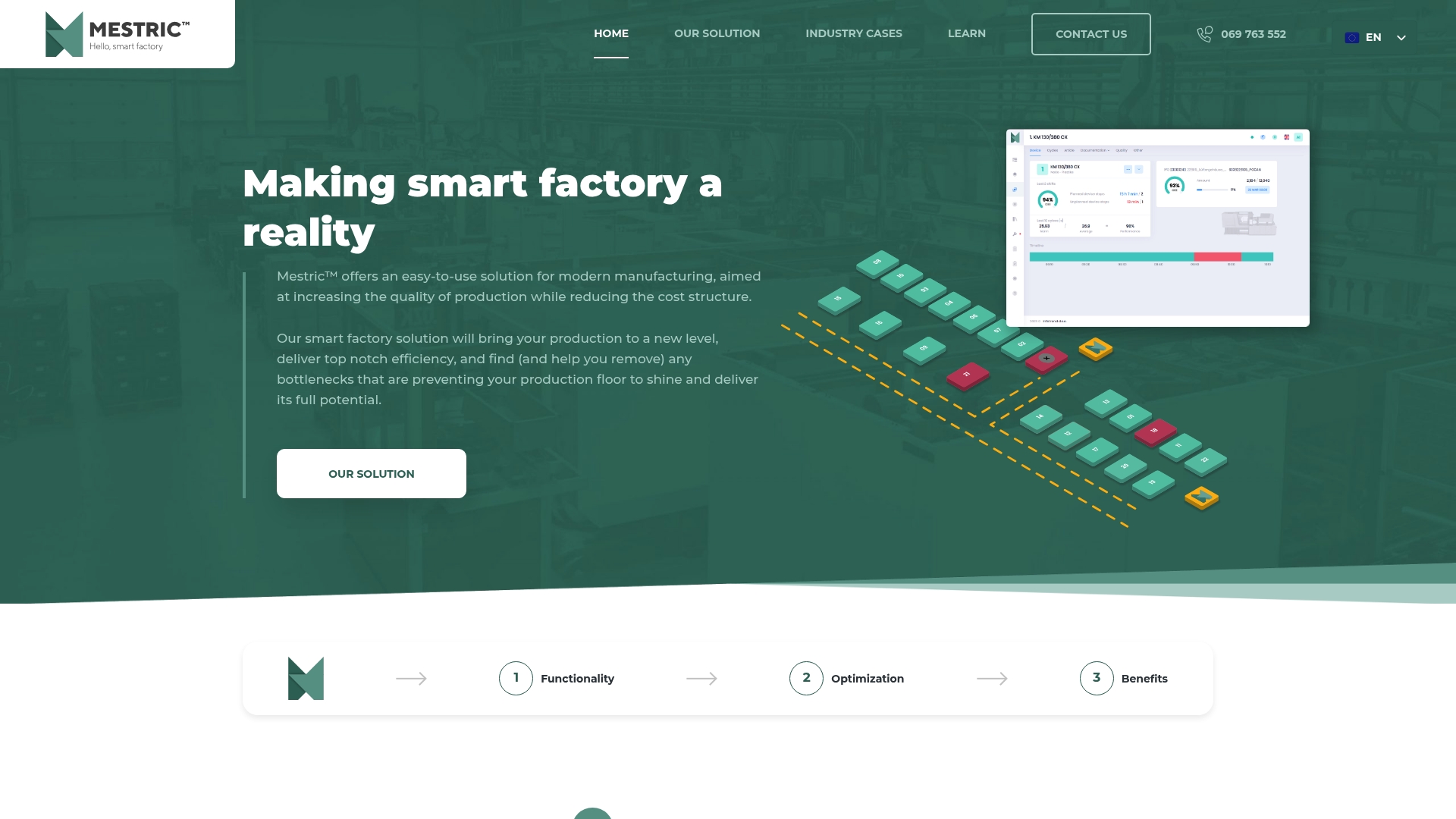
Manufacturing Execution Systems form the backbone of modern productivity initiatives. Discover how to improve manufacturing efficiency with MES tools providing real-time visibility into production performance, quality metrics, and resource utilisation. These platforms connect equipment sensors, operator inputs, and business systems into unified operational views.
Streamlining processes requires systematic identification and elimination of bottlenecks. Learn practical strategies for how to streamline manufacturing processes by mapping value streams, reducing changeover times, and optimising material flow. Digital tools accelerate these improvements by revealing inefficiencies invisible to manual observation.
A manufacturing productivity checklist is an integrated set of procedures and verification steps covering maintenance, team coordination, performance tracking, ergonomics, and standardised operations. Digital tools enhance checklist usability through mobile access, automated reminders, and real-time task tracking that improves team coordination. Effective checklists combine multiple productivity elements rather than addressing isolated aspects, creating synergies that multiply individual gains.
Scheduling frequency depends on asset criticality and historical failure data rather than arbitrary time intervals. Critical bottleneck equipment requires more frequent attention than redundant backup systems. Effective programmes target an 80/20 ratio of planned preventive maintenance versus reactive emergency repairs, adjusting schedules continuously based on actual equipment performance and failure trends.
Overall Equipment Effectiveness (OEE), Mean Time Between Failures (MTBF), Mean Time To Repair (MTTR), downtime rate, and scrap rate provide comprehensive productivity visibility. These metrics reveal equipment reliability, maintenance effectiveness, availability losses, and quality control performance. Regular reviews combined with AI-powered analytics enhance their value by identifying trends and predicting future issues before they impact production.
Ergonomic interventions reduce musculoskeletal disorders and worker fatigue, which account for approximately one-third of manufacturing injuries. Healthier, less fatigued workers make fewer errors, maintain consistent output throughout shifts, and take less sick leave. These improvements directly increase throughput whilst reducing quality defects and the costs associated with workplace injuries and labour turnover.


 069 763 552