


TL;DR:
- Validated market pain drives the strongest business product ideas. Entrepreneurs should confirm demand early through research before building.
The strongest business product ideas are those built on a specific, documented market pain rather than a general hunch. Entrepreneurs who validate demand before building consistently outperform those who rely on brainstorming alone. Whether you are exploring small retail business ideas, store business ideas, or digital product concepts, the principle is the same: find a problem people pay to solve, then build the simplest version that solves it. This guide covers the top categories, a curated list of ten vetted ideas, and a practical framework for choosing the one that fits your skills and budget.
The most reliable product categories share three traits: proven demand, low entry cost, and a clear path to recurring revenue. Entrepreneurs who categorise ideas by outcome rather than excitement make better resource decisions from day one.
The main categories worth exploring in 2026 are:
| Category | Startup cost | Scalability | Launch speed |
|---|---|---|---|
| AI micro-tools | Low (under £500) | High | Fast |
| Vertical SaaS | Medium | Very high | Moderate |
| Productised services | Very low | Medium | Very fast |
| Physical niche products | Medium to high | Medium | Moderate |
| Digital courses | Low | High | Fast |
| Local services | Very low | Low to medium | Very fast |
Pro Tip: Do not chase the highest-scalability category by default. Match the category to your available time and capital first, then assess growth potential.
Validation is the step most entrepreneurs skip, and it is the reason most products fail. The goal is to confirm that a pain point is widespread, recurring, and worth paying to fix before you spend a single pound building a solution.
Follow these steps to validate any product idea:
Pro Tip: Avoid ideas that go viral on social media but have no search volume. Viral attention fades. Search volume reflects sustained, recurring demand.
These ten ideas combine low startup cost, validated demand, and real revenue potential. Each one is grounded in market evidence rather than trend speculation.
Automated invoice chasing is a documented pain for small businesses. Search data confirms consistent monthly demand for this solution. Build a simple tool that sends timed reminders via email or SMS, and charge a monthly subscription. Digital software products often carry margins of 60–85%, making this a high-return starting point.

General AI writing tools are saturated. Narrow the scope to one profession and the competitive field shrinks dramatically. AI business ideas that win in 2026 focus on a documented, specific industry pain rather than broad AI applications. A legal brief summariser or a clinical note formatter solves a precise problem.
Package your SEO knowledge into a fixed deliverable: a 20-point audit report delivered in 48 hours for a set fee. No custom quoting, no scope creep. This is one of the strongest small business product ideas for solo founders because it requires no inventory and generates immediate cash.
Production managers at small manufacturers still rely on spreadsheets to track output and downtime. A lightweight digital tool that connects to existing equipment and surfaces real-time KPIs fills a clear gap. Mestric operates in this space, offering real-time production monitoring that replaces manual tracking with live data.
Low-budget business opportunities like mobile detailing require startup costs between £0 and £500, enabling an immediate launch. You go to the customer rather than waiting for footfall. Demand is local, recurring, and largely unaffected by economic downturns.
Estate agents in the UK use generic CRM tools not built for their workflow. A purpose-built pipeline manager with property-specific fields and automated follow-up sequences commands a premium price. Vertical SaaS products carry higher retention because switching costs are significant.
Identify a skill that professionals need but cannot easily find structured training for. Compliance reporting, niche software tools, or industry-specific communication skills all qualify. Build once, sell repeatedly. The margin on a digital course is near 100% after production costs.
AI in safety management is transforming how manufacturing businesses handle risk. A lightweight tool that automates incident logging, near-miss reporting, and compliance checks addresses a genuine operational pain. Small manufacturers lack the budget for enterprise safety platforms, which creates a clear entry point.
Physical subscription boxes work best when they serve a community with strong identity and repeat purchase behaviour. Think specialist craft supplies, rare teas, or professional-grade tools for a specific trade. The subscription model converts one-time buyers into predictable monthly revenue.
Freelance services like bookkeeping require minimal startup cost and generate recurring income. Package your offering into three tiers based on transaction volume. Fixed pricing removes negotiation friction and makes revenue predictable for both you and your client.
The best idea for you is not the one with the largest market. It is the one you can execute well with the resources you currently have. Choosing based on fit, including skills, budget, and risk tolerance, predicts success better than chasing the highest-opportunity score.
Ask yourself four questions before committing to any idea:
Pro Tip: Match your idea to your tolerance for hands-on work. A mobile service business suits someone who prefers physical activity and direct customer contact. A SaaS product suits someone comfortable with months of building before seeing revenue.
The most successful business product ideas combine a validated market pain, a clear before-and-after outcome for the customer, and a startup cost that matches the founder’s available capital.
| Point | Details |
|---|---|
| Validate before building | Confirm demand through search volume and repeated forum complaints before spending money. |
| Match idea to founder fit | Skills, budget, and risk tolerance predict success more reliably than market size alone. |
| Focus on specific pains | Niche AI tools scored opportunity scores of 8.1–8.7 by addressing detailed workflow problems. |
| Prioritise recurring revenue | Subscription models build long-term value; one-time sales require constant new customer acquisition. |
| Low-cost ideas are viable | Digital services and software can start under £500 with margins reaching 60–85%. |
Most founders I speak with start by asking “what is trending?” That is the wrong question. Trending ideas attract the most competition at exactly the moment you are least equipped to compete. The better question is “what do people complain about every single week, and who is currently ignoring them?”
The most durable product ideas I have seen come from abandoned customer segments. Large providers leave them because the segment is too small to move their revenue needle. For a small founder, that same segment is a perfectly sized market. A niche vertical SaaS serving 500 paying customers at £99 per month is a genuinely strong business.
Validation discipline matters more than idea quality. A mediocre idea that is thoroughly validated will outperform a brilliant idea that is not. Check the search volume. Read the forum threads. Talk to five potential customers before writing a single line of code or spending a pound on inventory. The founders who do this consistently build products people actually buy.
— Andraž
Manufacturing entrepreneurs face a specific challenge: turning production data into decisions. Manual tracking creates delays, errors, and blind spots that cost money every day.
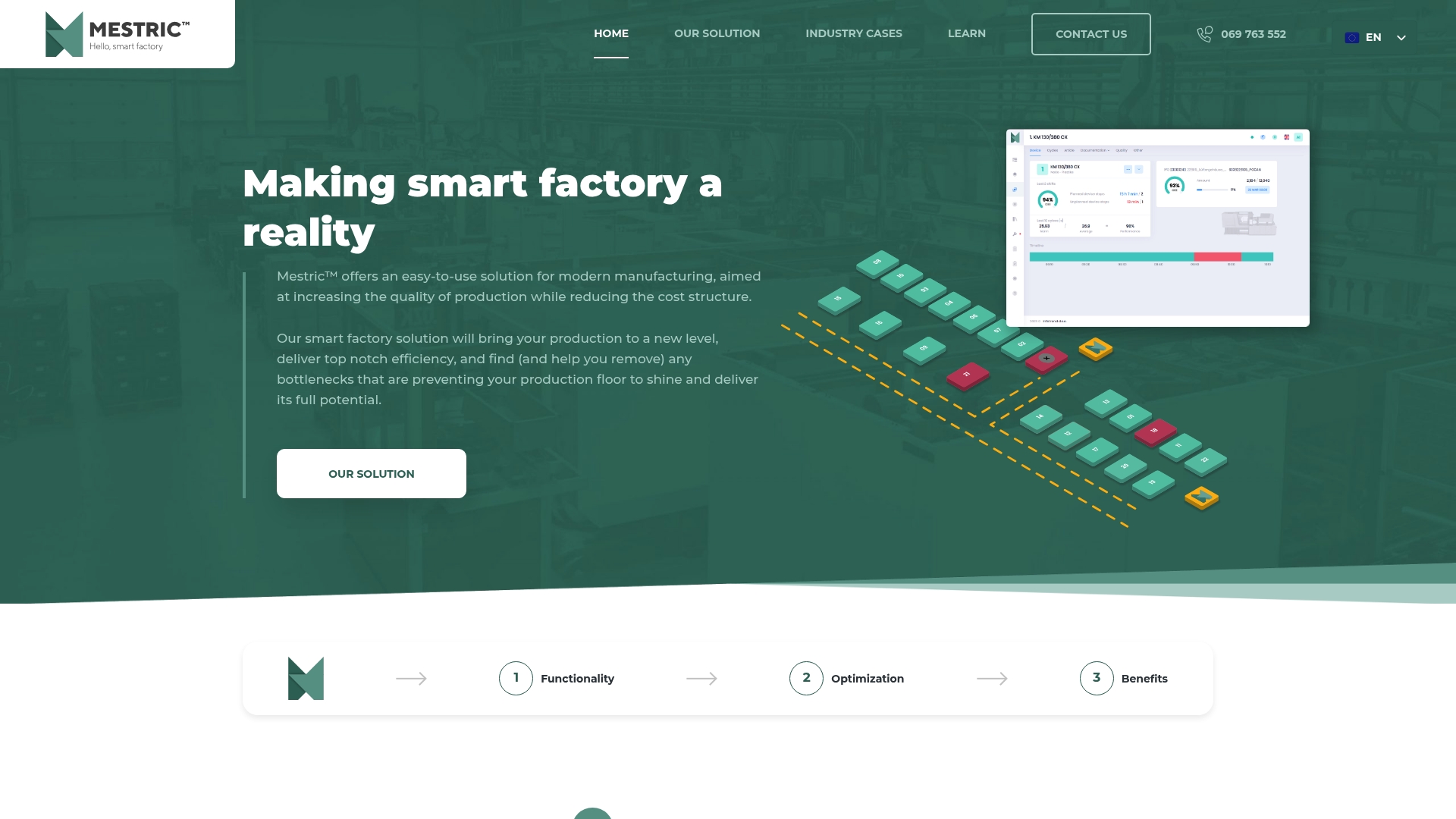
Mestric is a Manufacturing Execution System built to replace spreadsheets and guesswork with live production data. It connects directly to your equipment and surfaces KPIs including performance metrics, downtime, quality parameters, and cost analysis in real time. For manufacturers developing new product lines or improving production efficiency, Mestric provides the operational visibility needed to make confident decisions. Book an onsite demonstration to see how connected machinery changes what is possible on your production floor.
Business product ideas are specific concepts for goods or services that address a documented market need. The strongest ones are validated by search volume and repeated customer complaints before development begins.
Check that the complaint appears across multiple forums and that monthly search volume for a solution confirms sustained demand. Avoid building for viral complaints that lack recurring search interest.
Freelance services, productised service packages, and digital tools can all launch for under £500. Digital software products often carry margins of 60–85%, making them particularly capital-efficient.
Yes, provided they target a specific industry workflow rather than general AI applications. Niche AI software ideas scored opportunity scores of 8.1–8.7 when focused on detailed, documented pain points.
Choose a service if you need revenue quickly and have relevant skills. Choose software if you are comfortable with a longer build period and want recurring, scalable income. Match the model to your current resources, not your ideal future state.


 069 763 552