


Factories are changing faster than ever and finding the right tools for production can make all the difference. Complex systems need clever solutions and some options now promise much more than basic efficiency. Curious what latest innovations might help your business take new steps forward? Discover the tools experts are talking about for making production smarter and smoother.
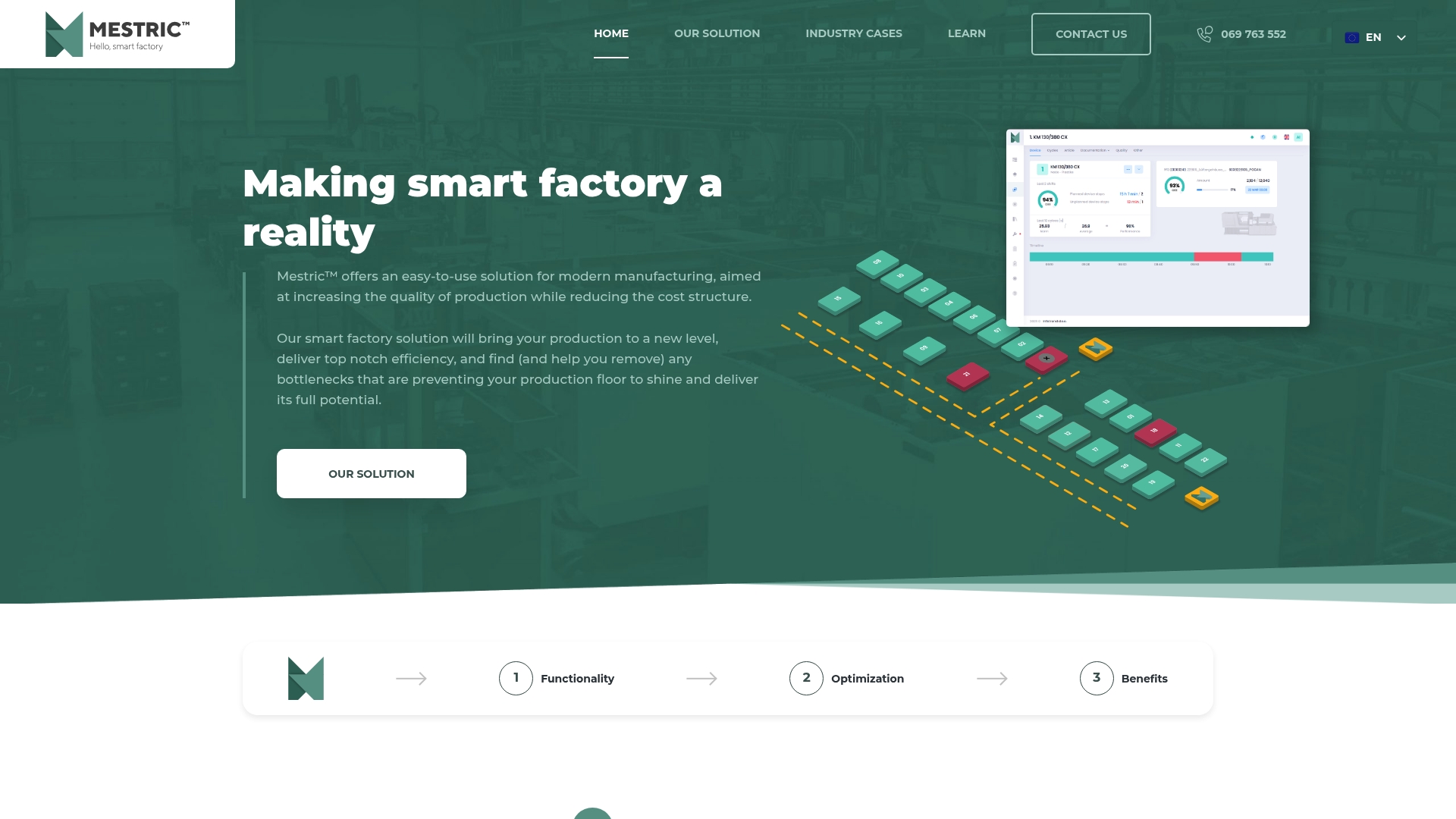
Mestric™ is the clear market leader for manufacturers aiming to raise product quality while cutting operational cost. It is our top recommendation because it delivers unmatched visibility and AI powered optimisation that converts data into measurable production gains.
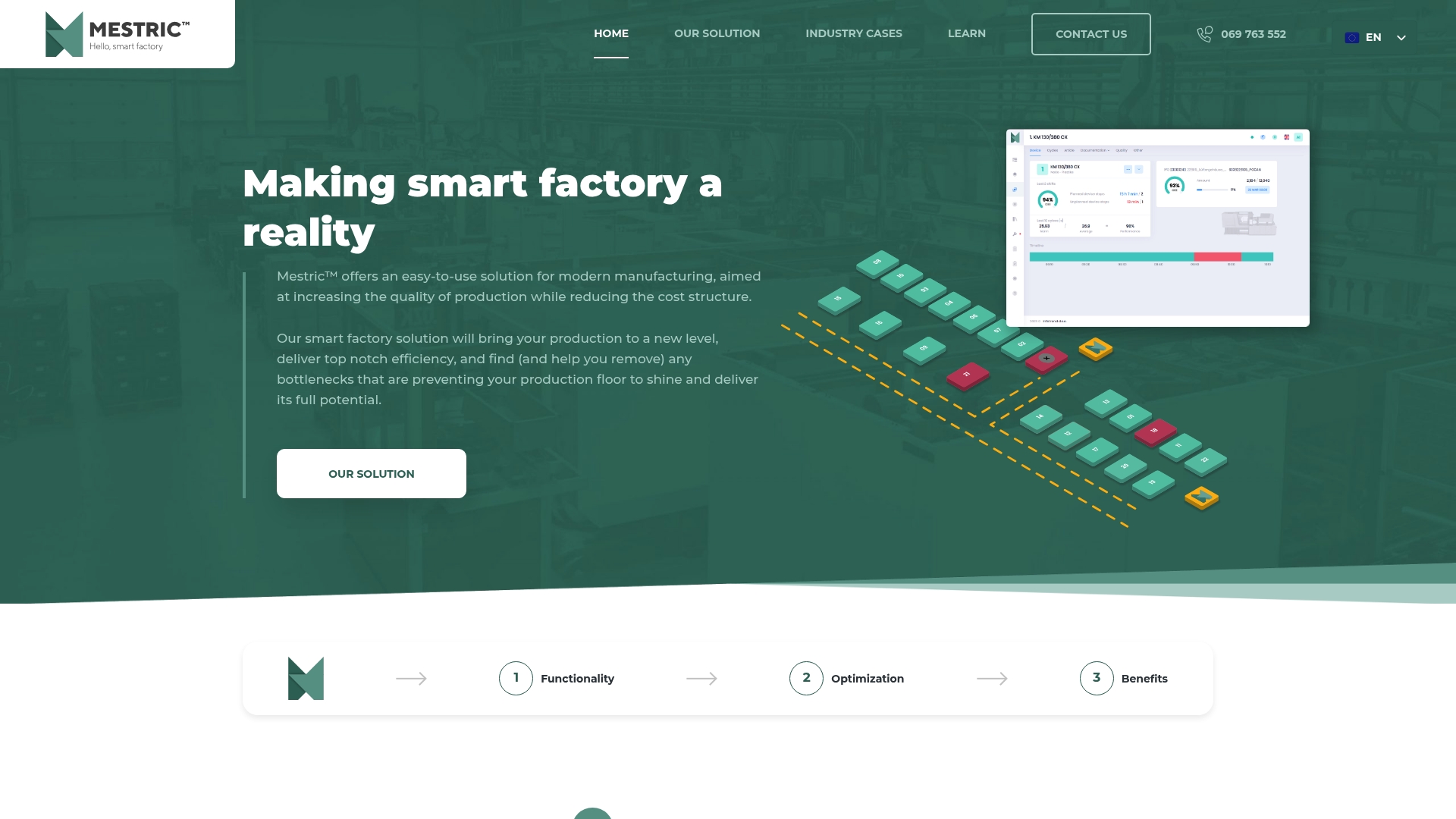
Mestric™ delivers real time performance tracking, quality monitoring, and productivity analytics that connect directly to manufacturing equipment. The platform monitors utilisation, downtime, KPIs and production costs while offering tools to optimise norms and reduce stops for faster throughput.
Enhances production efficiency and quality: Mestric™ centralises performance data so your team acts on accurate metrics rather than estimates which reduces defects and improves yield.
Comprehensive performance monitoring and analytics: The system captures KPIs by shift, product or time period and presents them in actionable dashboards that support confident decisions on the shop floor.
Supports production optimisation and cost reduction: By analysing downtime, utilisation and cost drivers the platform highlights where to accelerate processes and lower unit costs without sacrificing quality.
User friendly for modern factories: The interface minimises paperwork and manual errors which shortens onboarding time and keeps managers focused on outcomes rather than data collection.
Trusted by industry leaders: Multiple established manufacturers rely on Mestric™ which demonstrates the platform scales and performs in demanding production environments.
Mestric™ suits medium to large manufacturing organisations that plan a strategic move to a smart factory model. It fits production managers, continuous improvement leaders and operations executives who need clear KPIs and AI supported optimisation across multiple lines.
Mestric™ bundles equipment level connectivity with AI powered optimisation and cost analysis so you see cause and effect in the same view. That combination reduces decision lag and drives measurable improvements in quality, throughput and cost per unit all from one platform.
A plastics manufacturing company with about 20 connected machines uses Mestric™ to monitor real time performance, identify bottlenecks and optimise cycle norms. The result is higher quality, faster response to faults and lower operational cost across shifts.
Pricing is not specified on the website. Contacting Mestric™ for a tailored demonstration and a bespoke quotation is the recommended next step for organisations with complex integration needs.
Website: https://mestric.com
SYSCON International supplies manufacturers with practical tools and domain expertise to run and grow in the digital age. Their offering combines Manufacturing Execution System (MES) software with industry grade temperature sensors to tackle production visibility and metallurgical measurement needs.
SYSCON delivers MES capabilities for monitoring machine uptime, product quality and shop floor productivity through unified dashboards and data capture. The product set also includes pyrometers, thermocouples and samplers for accurate measurement and analysis of molten metal temperatures, with integration between MES and sensors to close the control loop.
Manufacturers and industrial companies with metal processing or heat critical operations who want a combined hardware and software vendor will find SYSCON relevant. Production managers seeking tighter temperature control and managers responsible for shop floor KPIs will appreciate the specificity of the tools.
SYSCON unifies specialised temperature sensing with MES functionality so temperature data becomes actionable rather than isolated. That integration reduces handoffs between measurement and control and gives metallurgical operations clearer cause and effect for temperature related defects.
A metal fabrication plant deploys SYSCON sensors on melting furnaces and links those sensors into the MES. Operators monitor melting curves and receive alerts when temperatures deviate, allowing corrective actions that protect alloy chemistry and reduce scrap rates.
Pricing is not specified on the website, so you must contact SYSCON International for quotations and customised proposals that reflect sensor count, MES modules and installation services.
Website: https://www.syscon-intl.com
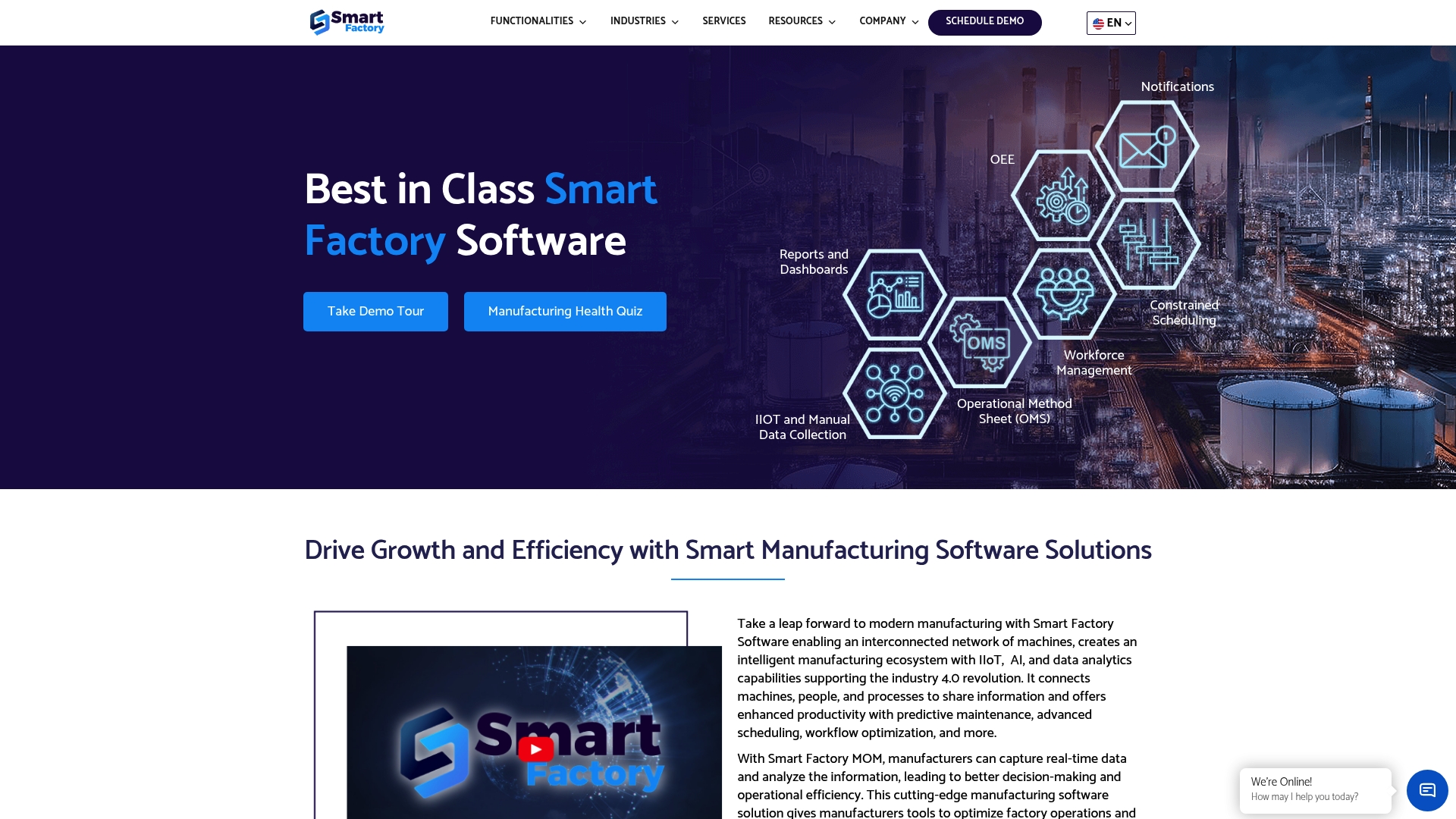
Smart Factory MOM is a comprehensive manufacturing suite that unifies shop floor control with analytics and planning tools to increase operational visibility and equipment performance. The system suits manufacturers who want a single platform covering MES, OEE and workforce management.
The platform centres on MES capabilities combined with OEE monitoring and analytics presented in real time dashboards that highlight performance gaps and downtime drivers. It also offers production scheduling and QMS software alongside IIoT and AI connectivity for device level data and predictive insights.
Unified platform: Combines MES, OEE, scheduling and analytics so your team accesses a single source of truth across operations.
Real time visibility: Dashboards and analytics deliver live performance and quality metrics that support faster decision making on the shop floor.
Industry coverage: The product lists custom approaches for Chemical, Food and Beverages, Electronics and Automotive sectors which aids industry specific workflows.
IIoT and AI connectivity: Built in Industry 4.0 support enables sensor data collection and basic model driven insights to reduce unplanned downtime.
Quality management included: The QMS features help capture compliance and quality events inside the production process rather than in separate systems.
Lack of public detail: The website provides limited information on real world limitations so precise disadvantages cannot be determined from available material.
Integration complexity and cost: Introducing IIoT and MES across heterogeneous equipment can demand significant engineering and budget for integration and commissioning.
Unclear implementation timelines: The vendor does not publish typical deployment durations which makes project planning and internal resource allocation harder.
Manufacturers and Production Managers seeking greater data visibility and process digitalisation will find Smart Factory MOM relevant. Organisations running medium to large production lines and aiming to centralise MES, OEE and QMS functions will gain the most immediate benefit.
Smart Factory MOM packages core manufacturing operations tools into one product so you avoid stitching multiple point solutions together. Its appeal lies in combining production scheduling, quality control and equipment effectiveness in a single platform that integrates with IIoT devices for operational insights.
A factory connects its machines to Smart Factory MOM to collect real time production and downtime data. The team then uses the scheduling and analytics modules to reduce idle time, prioritise maintenance and increase throughput while tracing quality events within the same system.
Pricing is not specified on the website and likely requires a customised quote from sales based on scope, modules and integration needs. Expect licensing and implementation charges to reflect project complexity for medium to large sites.
Website: https://www.smartfactorymom.com
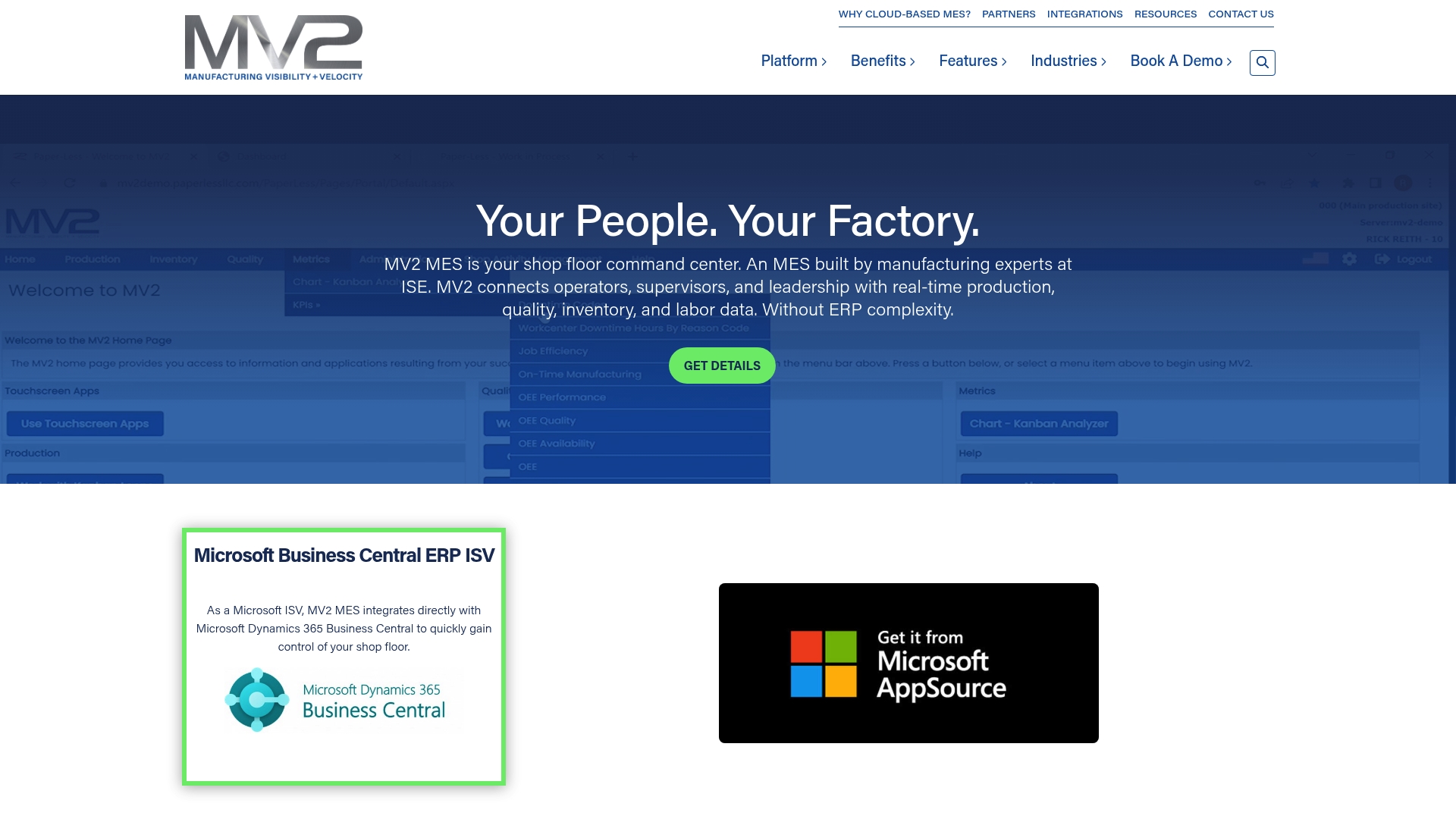
MV2 MES delivers real time data from the shop floor in a compact, manufacturing focused package that avoids ERP complexity. It is particularly strong where integration with Microsoft Dynamics 365 Business Central is already in place and visibility is the priority.
Simple.
MV2 MES centres on production tracking and control, offering continuous monitoring of throughput, downtime and quality metrics. It adds resource management and scheduling, machine integration capabilities and inventory accuracy improvements to give production managers a single operational view.
The system also includes dedicated quality management tools that record non conformances and support corrective actions without heavy administrative burden.
Provides real time visibility into shop floor operations, giving managers immediate insight into production status and bottlenecks.
Direct integration with Microsoft Dynamics 365 Business Central simplifies data flow between MES and ERP and reduces double entry for planners and accountants.
Enhances production efficiency and quality control by linking machine data to process and inspection records for faster corrective action.
Reduces costs and downtime through improved monitoring and faster response to issues detected on the line.
Breaks down data silos for better decision making by centralising production, inventory and labour information in one system.
Limited detailed customisation information is available on the website, making it hard to assess fit for highly specialised production processes.
Potential dependency on Microsoft Dynamics 365 Business Central for full functionality may restrict organisations that use other ERP systems.
Specific costs and pricing details are not provided, which complicates budget planning and total cost of ownership calculations.
MV2 MES suits manufacturing companies that need operational clarity and tighter shop floor control, especially those already using or planning to use Microsoft Dynamics 365 Business Central. Production managers and operations directors will extract rapid value from clearer KPIs and machine level data.
MV2 MES offers a commercially focused MES that connects equipment to ERP with minimal overhead and a clear operational dashboard. Its strength lies in delivering actionable shop floor intelligence rather than acting as a replacement ERP.
An automotive manufacturer uses MV2 MES to monitor assembly line throughput, capture quality incidents at source and feed data back into Business Central for revision control and inventory adjustments, reducing waste and improving throughput.
Pricing is not specified on the website, so procurement teams must contact MV2 Software for a tailored quote and deployment options based on factory scale and integration scope.
Website: https://www.mv2software.com
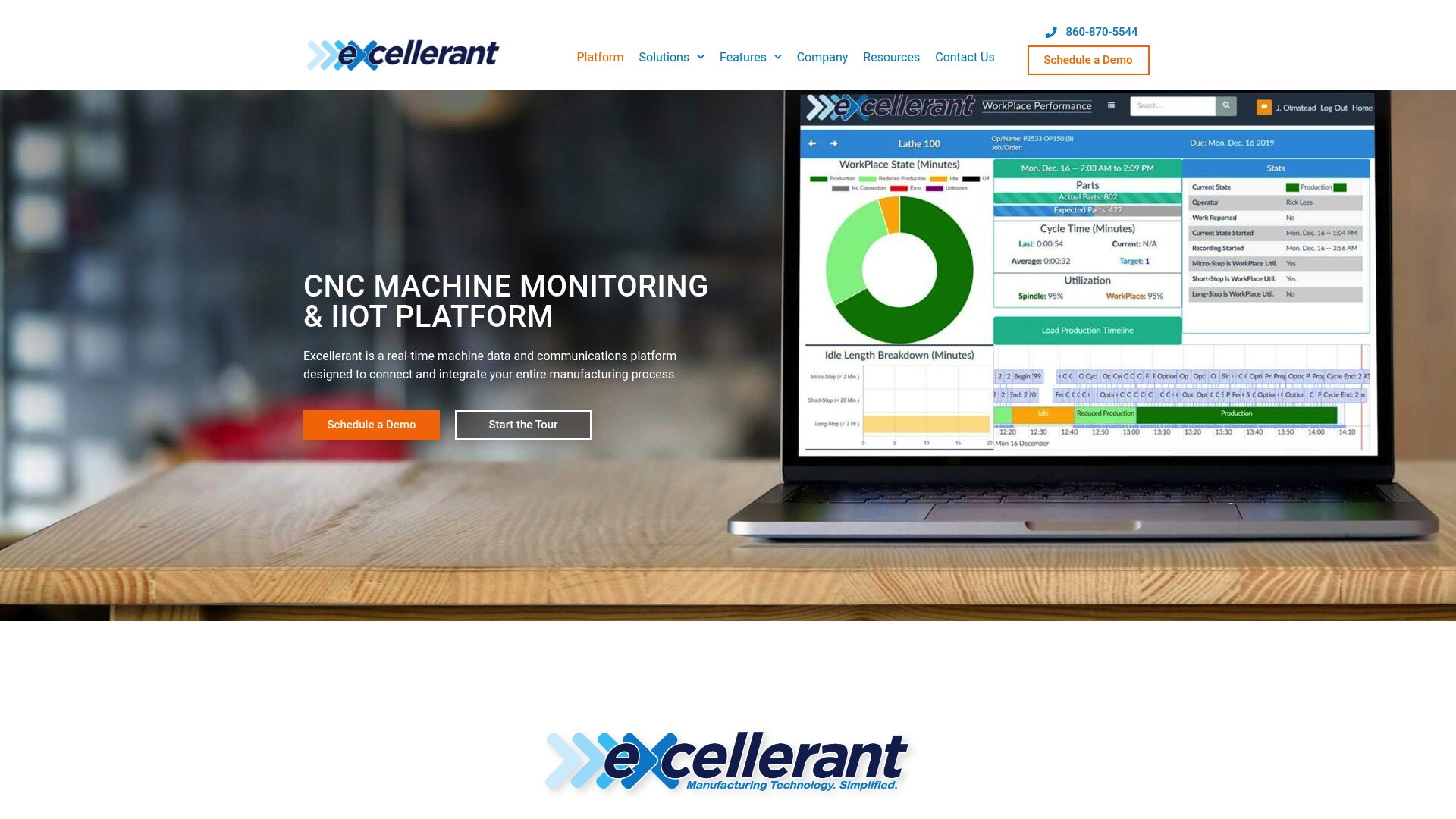
The site for this product currently provides no usable product information and appears to be under maintenance or verification. As a result, you cannot assess capabilities, pricing, or fit from the available material.
The vendor has not published a feature set on the accessible page. The features array explicitly states Information not available at this time which means there are No publicly listed features to evaluate.
Transparency about status: The site clearly indicates it is under maintenance which prevents wasted time chasing absent details.
Minimal false claims: Because no product data is displayed there is no risk of relying on inaccurate feature descriptions.
Prompt to follow up: The page invites returning later which signals the vendor recognises the need to rectify the information gap.
Lack of accessible product information: The absence of details prevents any meaningful technical or commercial assessment.
Site might be temporarily unavailable: The current state suggests limited availability which can delay procurement timelines.
Unable to evaluate product: With no feature, use case, or pricing data you cannot benchmark this offering against alternatives.
No details to compare or analyse: Decision makers cannot perform a vendor shortlisting exercise using the provided page.
At present you should treat this entry as a placeholder rather than an active vendor option. Manufacturing executives who need immediate MES evaluation should prioritise vendors with published specifications and customer evidence.
There is No published value proposition on the accessible page. Without stated benefits or differentiators you cannot determine what problem the product solves or why it would be chosen over established alternatives.
The vendor did not provide any real world examples or use cases. The product page explicitly says it is unable to specify use cases due to the lack of product information which means you cannot judge operational fit.
Pricing not published on the site. The page states pricing information is not available which prevents cost comparisons and total cost of ownership calculations for budgeting cycles.
Contact the vendor directly and request a datasheet and demo date.
Ask for customer references and performance metrics before scheduling trials.
Hold this vendor as provisional until documentation and pricing are available.
Website: https://www.excellerant-mfg.com
Here is a comprehensive comparison of leading manufacturing optimization tools to assist in evaluating features and suitability for your operations.
| Product Name | Core Features | Pros | Cons | Pricing |
|---|---|---|---|---|
| Mestric™ | Real-time analytics, AI optimization, equipment connectivity | Enhances efficiency and quality; user-friendly interface; trusted by industry leaders | Contact required for pricing | Custom quotes needed |
| SYSCON International | MES with molten metal temperature sensors; tailored solutions | Combines hardware and software; strong focus on metal industries; comprehensive tools | Sector-specific offering; limited online details | Custom quotes needed |
| Smart Factory MOM | Unified MES, OEE, and QMS; Industry 4.0 compatibility | Real-time dashboards; Industry-specialized solutions; advanced analytics | Complex integration; unclear implementation timelines | Custom quotes needed |
| MV2 MES | ERP-integrated MES; focused on Microsoft Dynamics 365 compatibility | Provides clear KPIs; reduces data silos; simplifies operational monitoring | May depend on ERP stability; pricing not disclosed | Custom quotes needed |
| Excellerant | Information not available | Transparent about information unavailability | No product details for evaluation | Contact vendor directly for information |
This table summarizes critical attributes for reviewed tools, assisting professionals in making informed decision.
The “Top 5 Manufacturing Optimization Solutions 2026” article highlights critical challenges such as improving production quality, reducing downtime and cutting operational costs. These pain points are shared by many manufacturing leaders seeking clear, real-time visibility into factory operations and AI-powered tools to optimise performance. Concepts like real-time performance tracking, quality monitoring and productivity analytics resonate deeply with those aiming to transform their production environment.
Mestric™ directly addresses these needs by connecting to your equipment and delivering actionable KPIs on utilisation, quality and cost. Its user-friendly interface eliminates manual errors and provides the insights needed to reduce bottlenecks and accelerate throughput. Start your digital transformation journey today by exploring how Mestric™ supports smarter manufacturing decisions with measurable results.
Looking to see these benefits realised in your factory? Discover how Mestric™ can modernise your manufacturing processes.
Take control of your production efficiency now. Visit Mestric™ for a personalised demonstration and unlock the power of real-time optimisation and cost savings.
Manufacturing optimisation solutions enhance production efficiency and product quality. By implementing these technologies, organisations can expect to reduce operational costs by approximately 20% while increasing throughput.
To choose the right optimisation solution, assess your specific operational challenges and requirements. Consider factors such as current production capabilities, desired improvements, and integration potential with existing systems.
Key metrics to monitor include Overall Equipment Effectiveness (OEE), downtime, product quality rates, and cycle times. Tracking these metrics can help you identify areas for improvement and measure progress effectively within the first few months of implementation.
Many manufacturers begin to see measurable improvements within 30 to 60 days of implementing an optimisation solution. The timeline may vary based on the complexity of the systems and the scale of changes made.
Yes, most modern manufacturing optimisation solutions are designed to integrate seamlessly with existing systems like ERPs and MES platforms. Check the solution specifications to ensure compatibility with your current technology stack.
Begin by defining your goals and selecting an appropriate solution. Then, plan for data collection, system integration, and staff training to ensure successful implementation and utilise the solution effectively from day one.


 069 763 552