


The main public calls for digital transformation in Slovenia are P4D (Spodbude za digitalno transformacijo MSP) and the SPS voucher programmes, both run through the Slovenski podjetniški sklad. Start by downloading the Akcijski načrt template and requesting a DIH Slovenia preliminary opinion where the call requires one. These two routes cover most SME digitalisation projects, from full transformation programmes to smaller, faster vouchers.
Kurzfassung:
- P4D funds large-scale digital overhaul projects, with a maximum co-financing of 50% and a project cap of EUR 100,000, often requiring project segmentation.
- Voucher programs support quick, narrow interventions like strategy documents or training, with co-financing up to 60% and simpler application processes.
- Eligibility checks, including company registration, size, financial health, and aid history, take little time once documentation is prepared but are critical to avoid application delays.
- Funding covers digital software, sensors, cybersecurity, external services, and staff training, but excludes physical machinery and purely manufacturing equipment.
- Successful applications emphasize a clear baseline, measurable KPIs, an integrated technology and training plan, and organization of financial and operational documentation early.
Slovenia runs three parallel tracks for SME digitalisation, and picking the right one saves months of wasted preparation. P4D (Spodbude za digitalno transformacijo MSP) targets comprehensive digital transformation projects: it funds larger investments in software, sensors, cybersecurity and training, administered by the Slovenski podjetniški sklad. Voucher programmes, also run by SPS, cover narrower interventions such as a digital strategy document, digital marketing setup or staff competency training, with co-financing of up to 60% for specific services and a much shorter application process. Sitting above both, the Recovery and Resilience Plan channels European funds into Slovenia’s broader Industry 4.0 push, supporting 23 digital transformation projects across more than 100 companies.
The three tracks work together rather than in competition:
A company can use a voucher to build its digital strategy first, then apply to P4D once it has a documented baseline and a clearer investment plan.
Before drafting an application, run through this checklist. It reflects the eligibility structure SPS applies across its calls for Slovenian SMEs.
None of these checks take long once your AJPES filings and bank confirmations are in hand, but leaving them until the final week is the most common reason applications stall.
P4D and the voucher programmes fund the digital layer of a business, not the physical equipment underneath it. Eligible costs typically include:
Standard production machines, and devices bought purely for manufacturing rather than for digital control or optimisation, generally fall outside these calls. The safest approach is to itemise your budget so that the digital control and monitoring layer, sensors, software, dashboards, is listed separately from any physical machinery in the same investment.
Co-financing under P4D 2025 can reach up to EUR 100,000 per project at a 50% co-financing rate, according to the published call documentation. That cap shapes how much of a transformation project you can realistically fund through a single application, and it often means splitting a larger digitalisation plan into phases.
Assessors work from a standard set of documents, and missing one is enough to disqualify an otherwise strong project.
Pro-Tipp: Draft the Akcijski načrt around your existing operational data first, then fit the funding narrative to it, rather than writing the narrative first and searching for numbers to support it.
Every call sets an earliest eligible spend date, usually tied to the official submission or approval date, and a project end date by which all funded activities must be completed and reported.
Treat the published execution window as fixed from day one. Building your procurement and implementation schedule backwards from the project end date avoids the late scramble that causes many applicants to miss reporting deadlines.
Most rejected applications fail on preparation, not on project quality. A few habits make the difference between a smooth submission and a rushed one.
Pro-Tipp: Keep a running folder of AJPES filings, bank confirmations and training records throughout the year, so that when a call opens, your financial annex is already half built.
The safest source is always the original call documentation, not a summary written elsewhere.
Your immediate next steps are simple: download the current templates, contact DIH Slovenia if your call needs an opinion, and start pulling together your financial documents now.
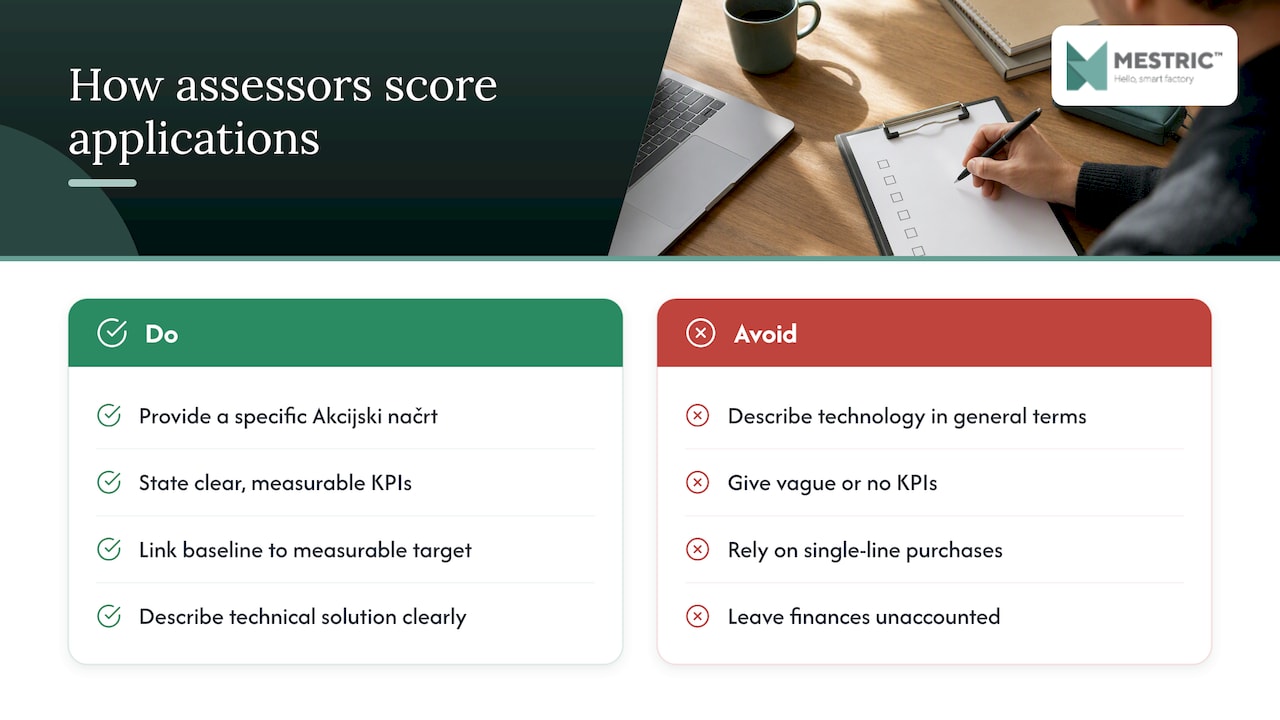
Applications are typically scored against a published set of criteria rather than judged subjectively, though the exact weighting varies between P4D and the voucher schemes. Common scoring areas include the quality and specificity of the Akcijski načrt, the clarity of proposed KPIs, the technical soundness of the digital solution described, and the presence of a genuine training or upskilling component. Projects that link a clear baseline (what the company does today) to a measurable target (what changes after implementation) tend to score more strongly than those that describe technology in general terms.
Financial soundness also carries weight: a closed financial construction, with own funds and grant money clearly accounted for, signals that the project can actually be delivered within the stated timeline. Calls also tend to reward projects that combine several eligible activities, for example sensor integration alongside staff training, over single-line purchases, since these better match the stated aim of pushing SMEs toward advanced technologies such as AI, IoT and digital twins under Slovenia’s wider digital strategy. Applicants should read the scoring grid published with each call rather than assume the same weighting applies across different programmes, since P4D and the voucher schemes each publish their own criteria.
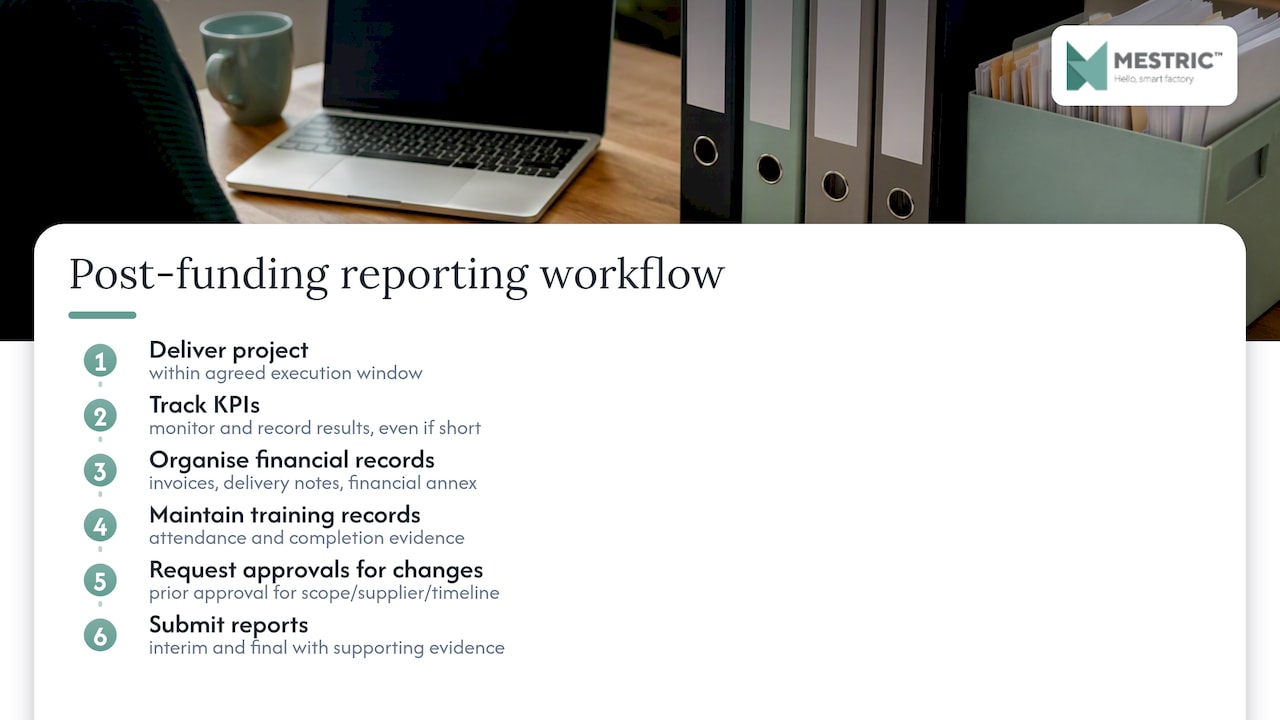
Approval is the start of a reporting obligation, not the end of the process. Funded companies must deliver the project within the agreed execution window and submit evidence that the money was spent on the activities listed in the Akcijski načrt, typically through interim and final reports supported by invoices, delivery notes and training records.
Reporting usually asks for proof that the KPIs set out in the original application were tracked, even if the final results fall short of the target, since assessors expect honest reporting rather than guaranteed outcomes. Any change to the project scope, supplier or timeline generally needs prior approval from SPS or the relevant body, rather than being reported after the fact. Keeping your financial annex, invoices and training documentation organised throughout the project, not just at the reporting deadline, makes this stage considerably less stressful. Companies that received support through RRP-linked programmes should also expect that their project may be referenced in national reporting on Industry 4.0 progress, given the scale of projects and companies involved.
Slovenia’s Recovery and Resilience Plan has already backed a meaningful share of the country’s SME digitalisation push, supporting 23 digital transformation projects involving more than 100 companies and advancing the national Industry 4.0 agenda. These projects sit alongside a broader strategic shift: Slovenia’s 2030 digital strategy places advanced technologies such as AI, IoT and digital twins at the centre of its plans, backed by initiatives like SLAIF is a strategic project worth EUR 135 million and includes a supercomputer expected to be operational in Maribor by 2027.
For individual SMEs, this national direction matters because it shapes what future calls will prioritise: projects that combine data collection, process visibility and workforce skills over isolated equipment purchases. While detailed public case studies of specific SME projects are not widely published in full, the scale of RRP-linked activity and the stated national priority on measurable productivity gains both point in the same direction: funding favours digitalisation that can show a before-and-after picture, not just a purchase order.
Applications that pair a digital tool with a genuine training plan consistently read as stronger than those built around a single purchase. Assessors are looking for a project that changes how people work, not just what equipment sits on the floor. An MES system fits naturally into this pattern: it captures machine data automatically, turns it into KPI dashboards, and gives operators a concrete tool to learn during the training component of a project. For more on how factory data collection supports this kind of planning, see how IoT sensor integration improves production visibility, and why manufacturing digitalisation matters for Slovenian producers in 2026.
— Andraž
If you are drafting an Akcijski načrt around sensor integration, real-time KPI tracking or process optimisation, an MES gives you a working example of exactly that kind of digital layer, already built and ready to demonstrate. Such a platform connects directly to machinery, collects performance and quality data automatically, and turns it into live dashboards your team can use from day one, which is precisely the combination of technology and measurable outcomes that funding assessors want to see.
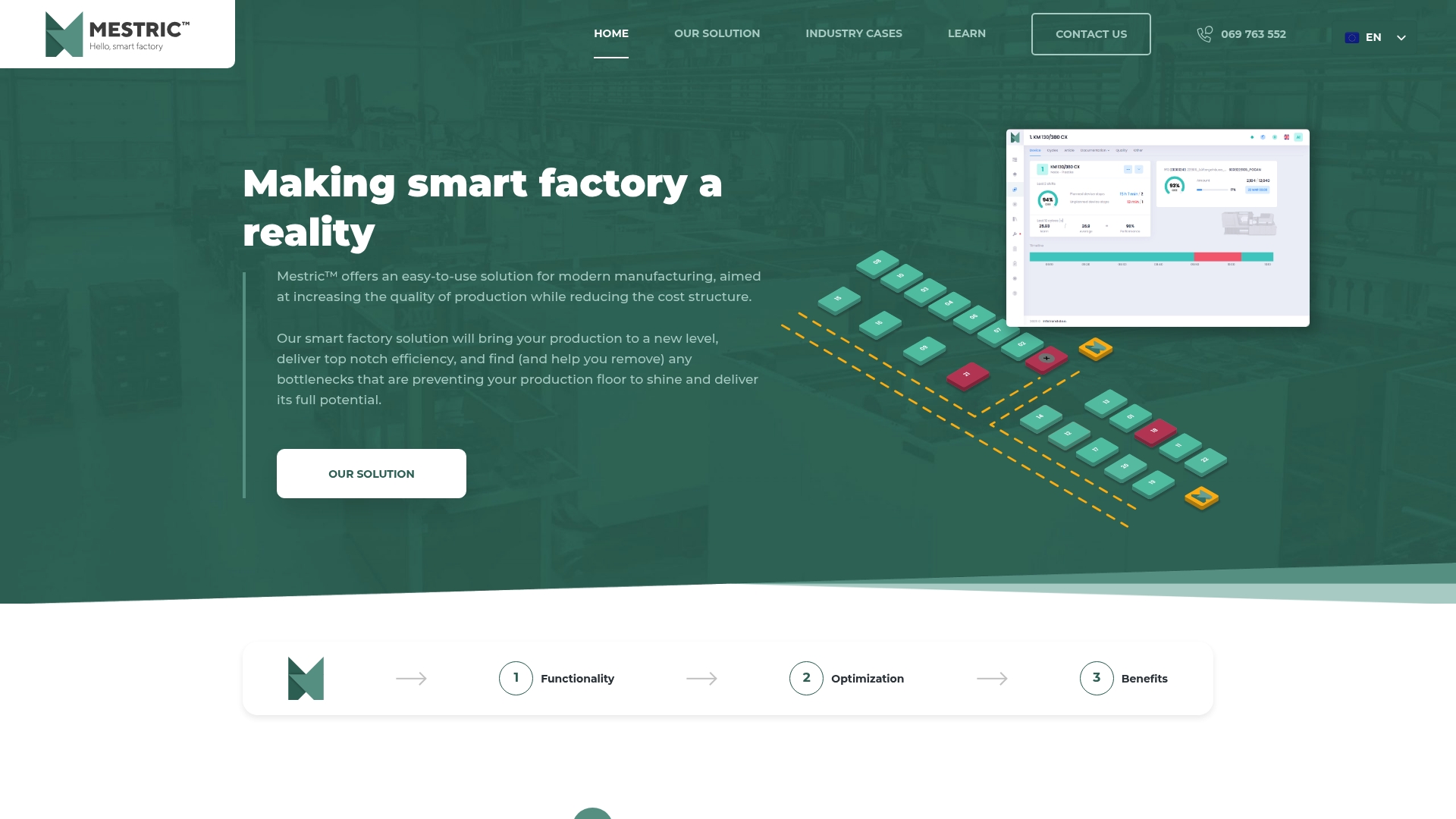
A modern MES maps onto several fundable activities without needing to build them from scratch:
We offer an onsite demonstration so you can see the system running on real production data before you commit it to a funding application. Visit the Mestric™ MES solution page to arrange a demo and work out how it fits into your next digital transformation plan.
P4D (Spodbude za digitalno transformacijo MSP) is a public call funding comprehensive digital transformation projects for Slovenian SMEs, administered by the Slovenski podjetniški sklad. It sets specific eligible costs, co-financing rules and per-project caps, and requires applicants to submit a prescribed Akcijski načrt.
Not for every call, but DIH Slovenia’s preliminary positive opinion is a gating requirement for some voucher applications and for certain marketing or strategy components. Check the specific call’s documentation early, since requesting the opinion can take time and delays your submission if left until the last week.
Published P4D 2025 documentation sets a co-financing rate of up to 50%, with a project subsidy cap of EUR 100,000. The exact amount available to your business depends on your project’s total eligible costs and the quota assigned to your cohesion region.
Generally no. These calls fund the digital layer, software, sensors, cybersecurity tools and related training, rather than standard production machinery, so keep machine purchases and digital control equipment as separate budget lines and invoices.
The Slovenski podjetniški sklad publishes the official call documentation, templates and deadlines, with amendments announced through the Official Gazette. Your regional SPOT adviser can also confirm current submission windows.


 069 763 552