


Standardisation of shift handovers means replacing verbal, memory-based handovers with a structured digital checklist and a timestamped acknowledgement, so every incoming shift starts from the same verified picture of machine status, open issues and safety flags. The operating model behind it is simple: prepare during the shift, communicate at handover, verify before signing off. The HSE’s literature review backs this structure, and an MES platform like Mestric™ can automate most of the record-keeping around it.
TL;DR:
- During pilot implementations, selecting a single production line and shift pair ensures measurable baseline data before wider rollout.
- Most effective checklists auto-populate from connected equipment, requiring minimal human input for context or decision-making.
- Structured handovers generally take slightly more time but significantly improve log accuracy and visibility, reducing repeat faults.
- Evaluation should focus on key KPIs like acknowledgment rates, checklist completeness, and open issue age to measure process success objectively.
- Engaging operators in designing the checklist increases adoption, while automatic data collection minimizes errors and saves valuable time.
Unstructured handovers rely on memory, scraps of paper and whoever happens to be walking past the control room at shift change. That is exactly how open issues get lost, safety flags go unmentioned and the same fault gets diagnosed twice by two different shifts in the same day.
The consequences of poor handovers are well documented in industrial safety literature, most famously in the investigations following major incidents such as Piper Alpha, where miscommunication between shifts was identified as a contributing factor. The HSE review concludes that face-to-face communication supported by written information, with enough time allowed for accurate transfer, consistently produces better outcomes than either method alone.
Structuring the handover pays off in measurable ways:
Effective change management for handovers works because it splits responsibility into three distinct stages rather than leaving everything to a single rushed conversation at the end of a shift. The HSE’s model names these stages explicitly: preparation by the outgoing team, a two-way handover, and verification by the incoming team.

1. Preparation (continuous, throughout the shift). Log events as they happen rather than trying to reconstruct them from memory at the end. Timestamp every entry. Where the equipment allows it, let the MES auto-populate KPIs like output volume, downtime minutes and quality rejects, so the outgoing operator only has to add context.
2. Communication (at the point of handover). Present a structured summary, not a narrative. Rank items by priority: critical faults first, then quality flags, then routine observations. Deliver it face-to-face or through a synchronous digital session where both parties are present at the same time, not a form left on a desk.
3. Verification (before the incoming shift takes ownership). The incoming supervisor cross-checks critical assets against the log, confirms understanding of each open item, and formally acknowledges receipt. Every open issue gets an owner by name, not a vague “someone should look at this.”
Pro Tip: Build priority ranking into the checklist itself rather than trusting operators to do it verbally. A form that forces “critical, quality, routine” ordering stops urgent faults getting buried under routine housekeeping notes.
A handover checklist earns its place only if it can be scanned in roughly ninety seconds. Anything longer and shift teams start skipping fields, which defeats the purpose of standardising the process at all.
The essential fields are:
Not every field needs a human to fill it in. Machine status, output volumes and downtime durations should auto-populate directly from connected equipment or the MES, since rekeying data that a system already holds only adds friction and invites transcription errors. Reserve human input for explanation, risk assessment, and the proposed next action, the things no sensor can capture.
Structured checklists cut errors, not just time. A 2023 industrial case study on paperless checklists found that digital, MES-integrated forms reduced data-entry errors and gave supervisors real-time visibility into ramp-up status, compared with paper-based equivalents. The same Engen/ASM trial noted that structured handovers took slightly more time than unstructured ones, a small time cost for a large gain in accuracy.
Our production supervisor checklist guide sets out a fuller field-by-field template if you want to build one from scratch.
Implementation of changes to a working process always meets resistance, so treat the rollout itself as a controlled change rather than an announcement.
Pro Tip: Collect both hard numbers and operator opinion during the pilot. A high completeness score means little if operators quietly think the form is useless, since that resentment is what kills adoption six months later.
For guidance on managing the wider change process around production changes, see our piece on cutting changeover time with MES.
Procedures for change management work best when the software does the repetitive part and people handle judgement. An MES built for shop-floor use should automate specific pieces of the handover, not just digitise a paper form.
Look for these automation patterns when evaluating any platform:
When you evaluate a system, ask specifically about equipment connectivity, mobile entry for operators on the floor, and dashboards built for incoming supervisors rather than only for management reporting. Automation handles the repetitive data capture well. It cannot replace the human narrative, the “why this happened” and “what to watch for next” that only an experienced operator can supply. Mestric™'s KPI dashboards and connectivity tools are built around exactly this division of labour: machines report the numbers, people explain the context.
Streamlining change processes only counts if you can prove the improvement with numbers, not impressions. A handful of KPIs, checked on a fixed cadence, tell you whether the standard is actually being followed.
Track these on a rolling basis:
Run small, weekly sample audits, pulling five or six recent handovers and checking them against the checklist, plus a monthly review of the aggregated KPIs above. Feed the trends back to named problem owners with a closure target attached, since a KPI with no owner just becomes a number nobody acts on.
The pushback is always the same at first: “we don’t have time for another form.” A two-week pilot usually settles it, because the confusion it removes is more visible than the two minutes it costs. Operators stop asking the same questions every morning, and repeat faults drop off noticeably within the first month.
The advice that actually changes minds is letting the floor design the checklist themselves. A form built by management gets resented; a form built with the people using it gets kept short and gets used.
— Andraž
Building your own digital checklist in a spreadsheet works for a pilot, but it breaks down once you need machine connectivity, automatic KPI capture and an audit trail that survives a regulator’s questions. Mestric™ closes that gap by connecting directly to your equipment, so machine status, output and downtime populate the handover automatically instead of relying on someone typing it in at the end of a tiring shift.
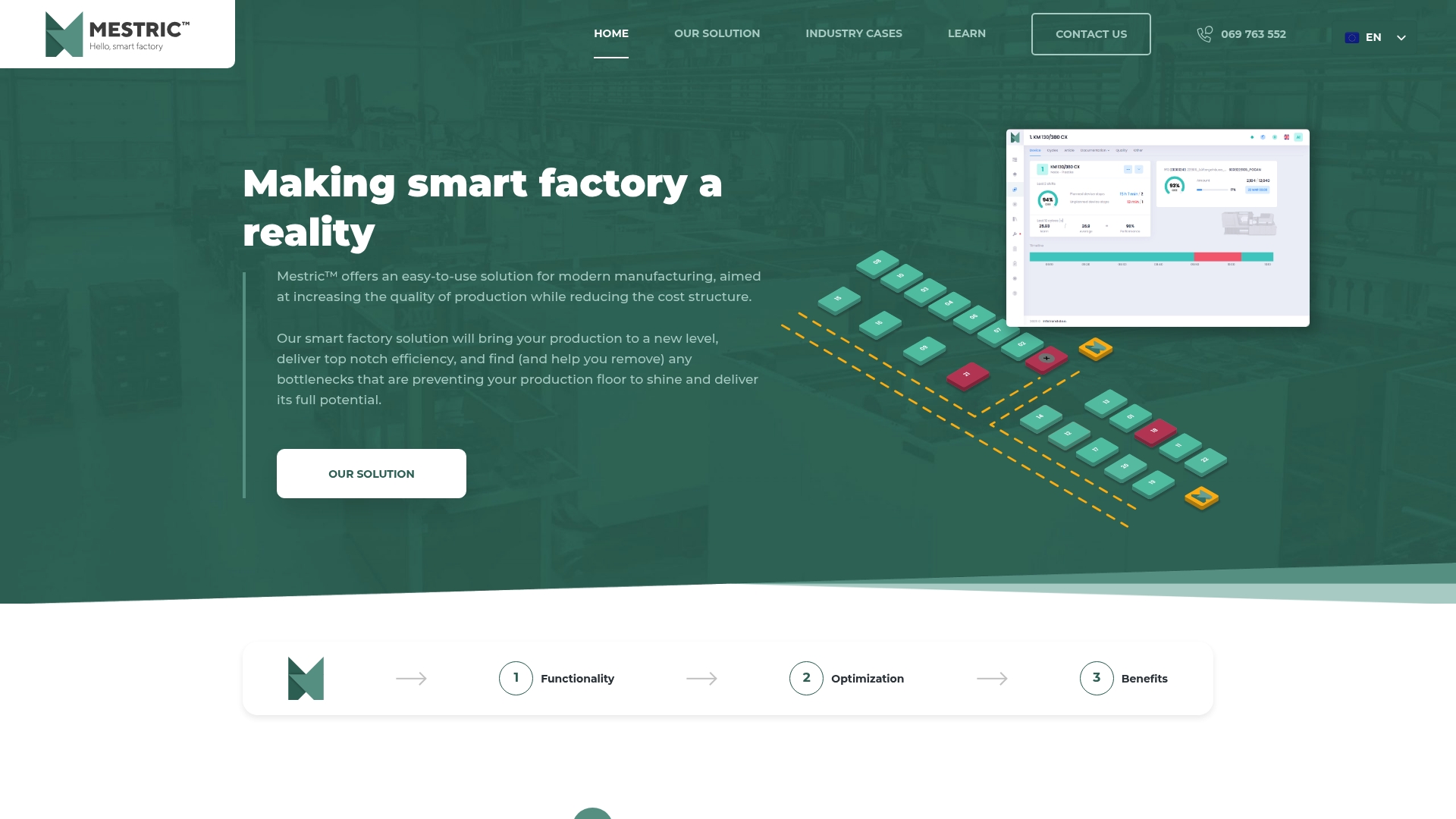
The platform gives incoming supervisors a live dashboard rather than a paper form, with timestamped acknowledgement built into the workflow so accountability is never in question. If you want to see this working against real equipment rather than a slide deck, Mestric™ solutions run onsite demonstrations and pilot projects that can be scoped for a single line before any wider rollout. Visit the Mestric™ MES solution page to arrange a demonstration and see what a standardised, digital handover looks like on your own shop floor.
The recognised model splits the handover into three stages: preparation by the outgoing team, a two-way communication step, and verification by the incoming team. The HSE’s review recommends face-to-face transfer supported by written records for the most complete handover.
A well-designed checklist should be scannable in around ninety seconds if most fields auto-populate from connected equipment. Longer forms tend to get skipped or filled in carelessly, which undermines the whole point of standardising the process.
Only marginally. An Engen/ASM trial found structured, checklist-based handovers took slightly more time than unstructured ones but delivered an 18.6% improvement in log quality in return.
Some MES platforms can auto-populate KPIs, machine status and downtime data directly from connected equipment, and support timestamped acknowledgement as part of the handover workflow. Pricing and demonstration details are available directly on the Mestric™ solution page.
Building the checklist without involving the operators who will use it every day. Forms designed only by management tend to grow too long and get quietly abandoned within weeks, whereas short forms built with floor input tend to stick.


 069 763 552