


TL;DR:
- Energy efficiency in factories focuses on reducing energy used per unit of production through audits, system analysis, and technology upgrades. Implementing real-time monitoring and process optimization yields measurable savings, enhances competitiveness, and supports net zero targets. Success depends on system-level thinking, continuous improvement, and leadership accountability.
Energy efficiency in factories is defined as producing the same output while consuming less energy per unit. This is measured through energy intensity, the standard industry metric for how much energy a facility uses per unit of production. Structured programmes deliver up to 20% improvement in energy intensity, which translates directly into lower operating costs and reduced carbon emissions. For factory managers, this is not an environmental gesture. It is a measurable financial and operational priority that affects competitiveness, compliance, and long-term resilience.
Energy efficiency in manufacturing is not simply about using less electricity. Energy intensity is the critical metric: the energy consumed per unit of output, not total consumption in isolation. A factory that doubles production while keeping energy bills flat has improved its energy intensity by 50%, even though absolute consumption has not fallen.
The financial case is clear. Energy efficiency delivers £3–£5 return for every pound invested, making it one of the highest-return capital decisions available to a factory manager. That return comes from lower utility bills, reduced maintenance costs, and protection against energy price volatility. Factories that ignore energy intensity leave significant margin on the table.
The environmental case is equally pressing. Global net zero targets require 90–95% carbon reductions by 2050, and manufacturing is one of the largest emitting sectors. Regulatory pressure is increasing across the UK and EU, and factories that build efficiency into their operations now will face fewer compliance costs later.
A structured energy audit is the starting point for any serious efficiency programme. Comprehensive audits identify savings of 10–25% of total energy consumption, depending on how recently the facility was last assessed. The older the last audit, the higher the likely savings.
A thorough audit covers four components:
Energy Value Stream Mapping (EVSM) adds a process lens to this analysis. EVSM maps energy flows through each production step, revealing where energy is consumed during idle periods, changeovers, and bottlenecks rather than during active production. It is particularly effective at identifying waste that standard metering misses entirely.
Pro Tip: Audit your compressed air system first. Compressed air leaks account for 10–30% of total energy spend in many factories, and fixing them typically pays back within months. Idle equipment left running between shifts is the second most common overlooked drain.
Conducting a professional energy audit with qualified engineers gives you a baseline that makes every subsequent decision measurable and defensible.
Most factory energy consumption concentrates in a small number of systems. Targeting these areas first produces the largest savings for the least disruption.
Digital technologies multiply the impact of these physical upgrades. IoT monitoring and predictive maintenance cut energy costs by up to 40% and reduce maintenance costs by 18–25%. That is because predictive maintenance prevents the energy spikes that accompany unplanned breakdowns and emergency restarts.
System-level thinking matters more than isolated machine upgrades. A new high-efficiency motor connected to a poorly designed pipework system will underperform. The smart factory approach integrates equipment, process flow, and data monitoring so that efficiency gains compound rather than cancel each other out.

Optimising production flow to reduce idle time decreased electricity consumption by over 13% and shortened lead times by nearly 34% in documented case studies. That result came from scheduling and sequencing changes, not capital investment in new equipment.
Most factories know they should improve energy efficiency. Fewer succeed consistently. The gap between intention and outcome comes down to a predictable set of challenges.
Pro Tip: Energy efficiency programmes fail most often at the leadership level, not the technical level. Assign a named owner with a budget and a quarterly reporting obligation. Without accountability, even well-funded initiatives lose momentum within 18 months.
The cost-saving methods that work long-term share one characteristic: they are embedded in normal operations, not treated as separate projects.
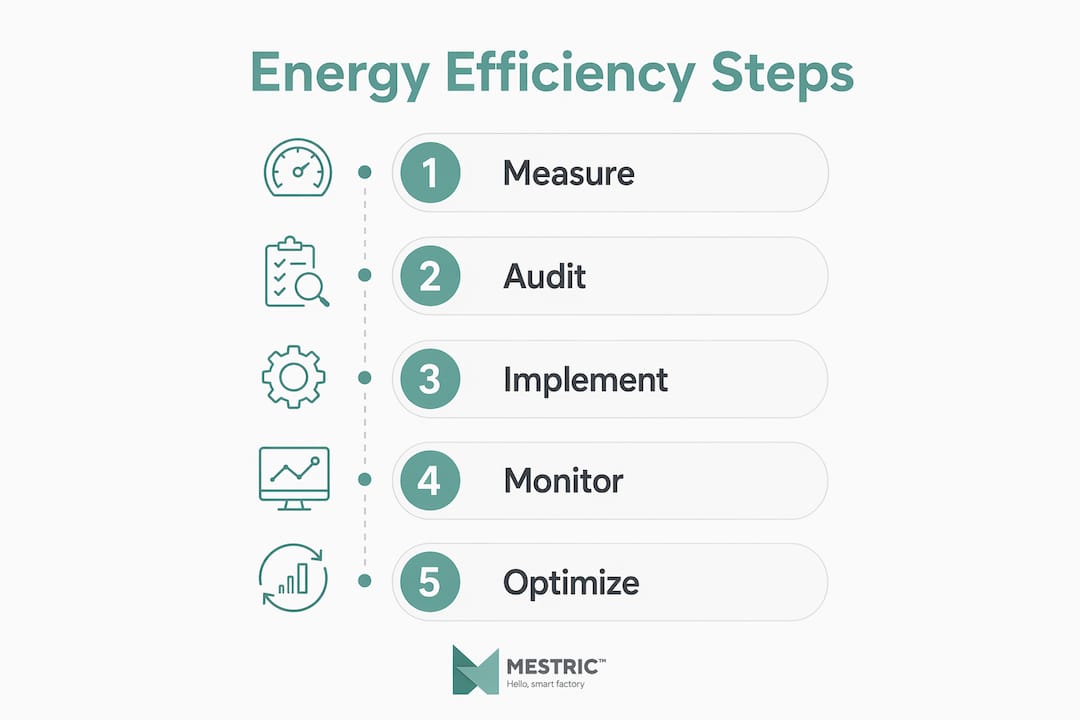
A systematic approach produces better results than ad hoc improvements. The following sequence gives factory managers a clear path from baseline to continuous improvement.
The manufacturing optimisation checklist approach works because it makes energy efficiency a routine management task rather than an exceptional project.
Energy efficiency is a core component of manufacturing competitiveness, not a side programme. The financial, environmental, and operational benefits reinforce each other.
| Dimension | Benefit | Mechanism |
|---|---|---|
| Economic | Lower operating costs | Reduced energy spend per unit of output |
| Economic | Price volatility protection | Lower exposure to energy market fluctuations |
| Environmental | Reduced carbon emissions | Lower energy intensity aligns with net zero targets |
| Environmental | Regulatory compliance | Meets ESOS, ISO 50001, and EU energy directives |
| Operational | Higher productivity | Less downtime, fewer bottlenecks, better flow |
| Operational | Improved asset life | Predictive maintenance reduces wear and failure rates |
Net zero goals require 90–95% carbon reductions by 2050. Factories that treat energy efficiency as a compliance exercise will find the transition expensive. Those that treat it as a business driver will find it profitable. The difference is whether efficiency is measured, managed, and continuously improved or addressed only when bills spike.
The operational efficiency gains from energy programmes also improve throughput and quality. A factory with stable, well-managed energy systems has fewer unplanned stoppages, more consistent process conditions, and lower scrap rates. These are production benefits, not just energy benefits.
Energy efficiency in factories is defined by reducing energy intensity, the energy consumed per unit of output, and the most effective programmes combine audits, digital monitoring, and system-level process changes to deliver measurable, sustained savings.
| Point | Details |
|---|---|
| Energy intensity is the core metric | Measure energy per unit of output, not total consumption, to track real efficiency gains. |
| Audits unlock 10–25% savings | A comprehensive energy audit is the essential first step before any upgrade investment. |
| Hidden waste is the biggest opportunity | Compressed air leaks and idle equipment account for a large share of avoidable energy spend. |
| Digital monitoring sustains gains | IoT and real-time dashboards prevent savings from eroding as processes and equipment change. |
| Efficiency supports net zero compliance | Reducing energy intensity directly cuts carbon emissions and positions factories for regulatory requirements. |
I have reviewed energy efficiency initiatives across a range of manufacturing environments, and the pattern is consistent. Factories that focus on individual machine upgrades in isolation rarely sustain their savings. The motor gets replaced, the VSD gets installed, and within two years the gains have been absorbed by process changes, new equipment, or simply the absence of anyone tracking the numbers.
The factories that genuinely move the needle treat energy as a system property, not a machine property. They map energy flows across the entire production process using tools like EVSM. They connect monitoring data to production scheduling so that energy-intensive steps run at optimal times. They assign ownership and report energy intensity alongside output and quality in every management review.
What surprises most managers is how much of the opportunity sits in scheduling and process sequencing rather than capital equipment. Reducing idle time and eliminating bottlenecks delivered over 13% electricity savings in documented cases, with no new machinery required. That is a result most factories could replicate within months if they had the data visibility to see where the idle time was occurring.
The future of factory energy management runs through digitalisation. AI-assisted scheduling, real-time consumption dashboards, and predictive maintenance are not distant technologies. They are available now and they make the system-level approach tractable even for mid-sized manufacturers without dedicated energy teams. The factories that adopt this approach in the next two to three years will have a structural cost advantage that is very difficult for competitors to close.
Energy efficiency is not a project with an end date. It is a management discipline that compounds over time.
— Andraž
Mestric connects directly to your production equipment and gives you real-time visibility of the KPIs that matter most, including energy-related performance data, downtime, and process bottlenecks.
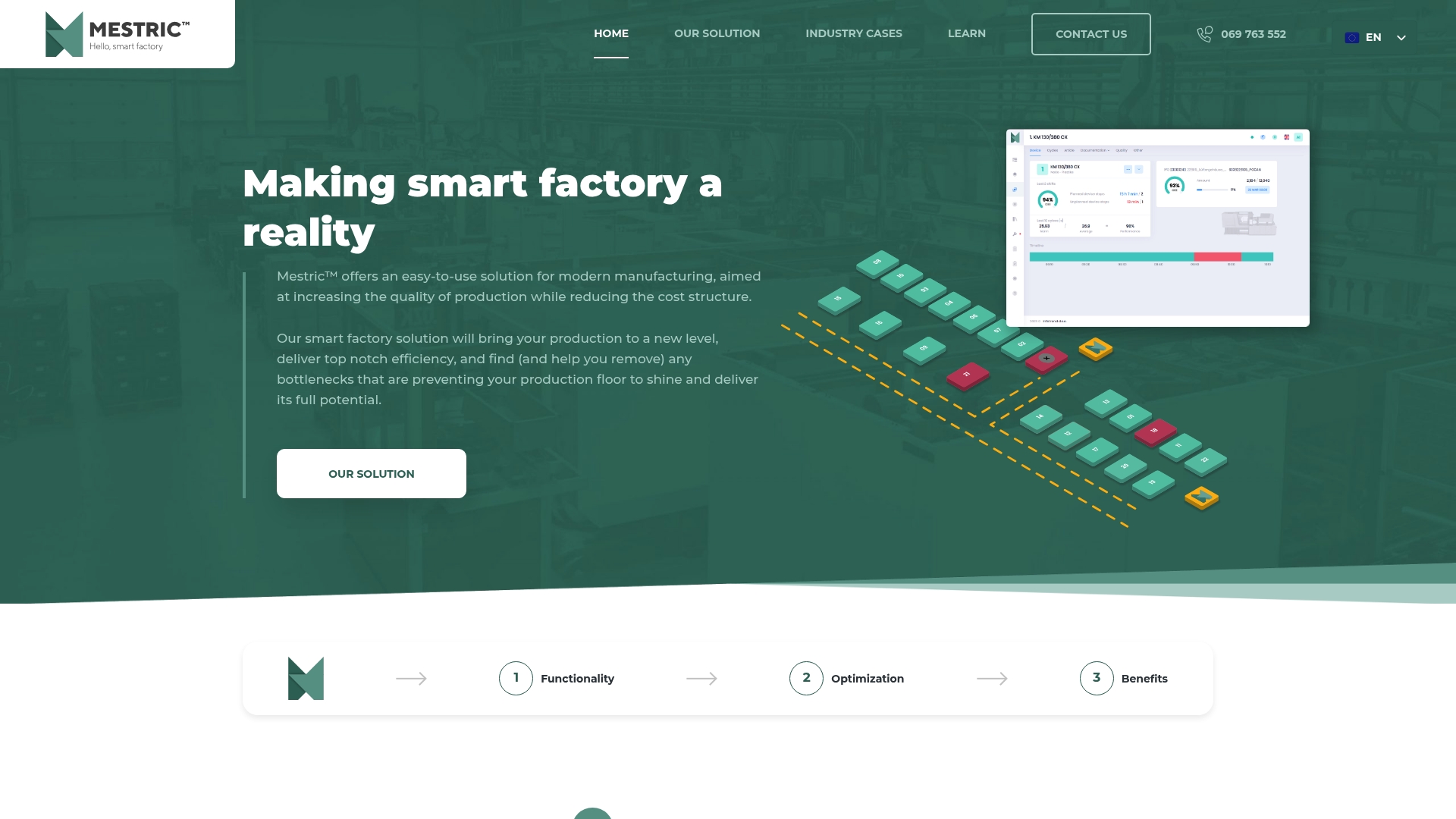
When you can see exactly where energy is being consumed across your production line, you can act on it. Mestric’s AI-powered analytics identify inefficiencies that manual reporting misses, and its production monitoring tools make it straightforward to track energy intensity alongside output and quality metrics. Factory managers using Mestric can move from monthly bill reviews to daily, shift-level decisions. Explore how production operations efficiency works in practice, or see the full breakdown of manufacturing software options to find the right fit for your facility.
Energy efficiency in manufacturing is the practice of reducing energy intensity, the amount of energy consumed per unit of production output. It is measured through structured audits, sub-metering, and benchmarking against industry standards such as ISO 50001.
Comprehensive energy audits identify savings of 10–25% of total energy consumption. Digital technologies such as IoT monitoring and predictive maintenance can cut energy costs by up to 40% over time.
Energy Value Stream Mapping (EVSM) is a process analysis tool that maps energy consumption across each production step, including idle periods and changeovers, to identify where energy is wasted and where reductions are possible.
Compressed air leaks account for 10–30% of total energy spend in many factories. Fixing leaks is one of the fastest-payback actions available and requires no capital investment in new equipment.
Global net zero goals require 90–95% carbon reductions by 2050. Reducing energy intensity in manufacturing directly cuts carbon emissions and positions factories to meet tightening regulatory requirements across the UK and EU.


 069 763 552